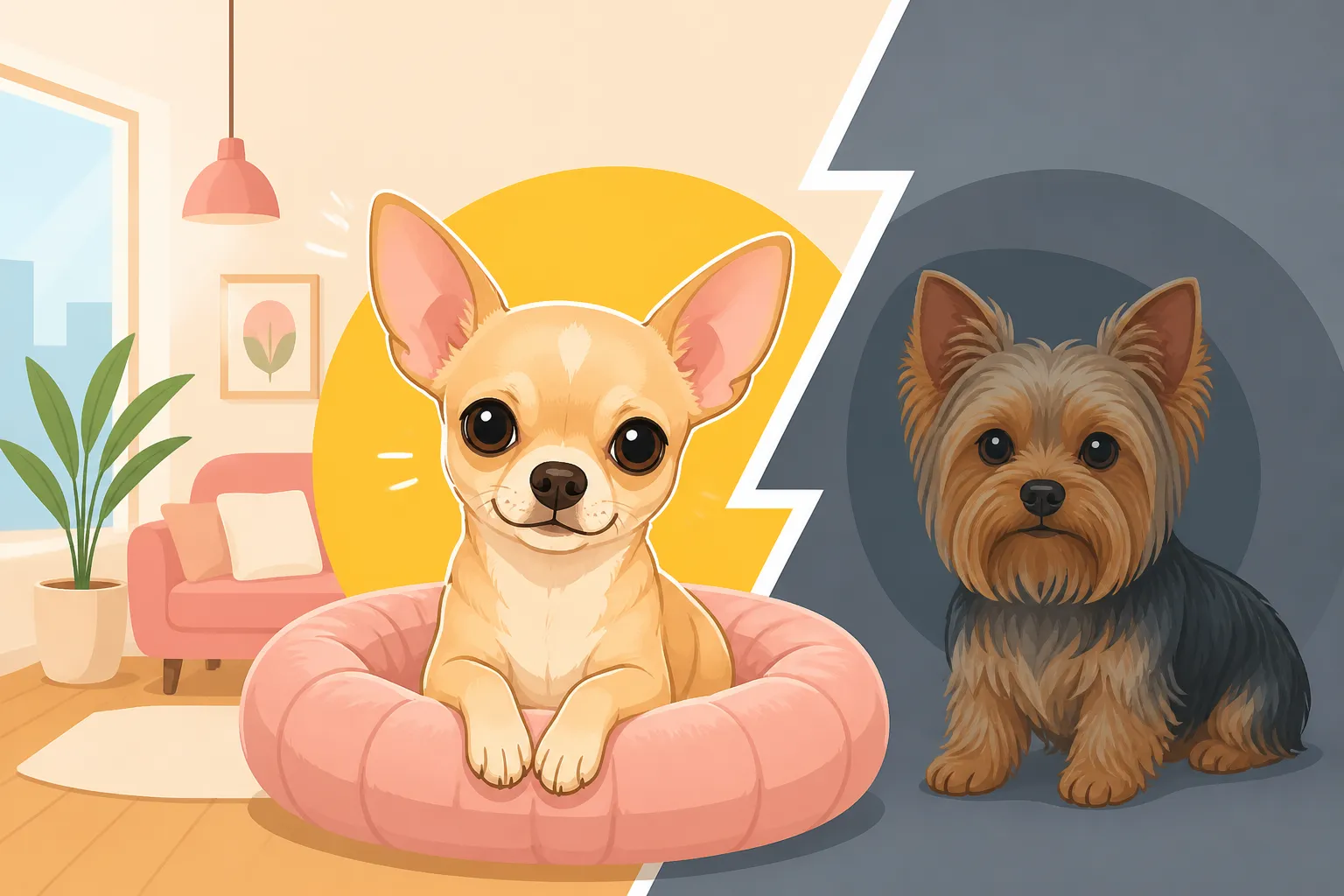
Chihuahua or Yorkie for a Small Apartment
Deciding between a Chihuahua and a Yorkshire Terrier for a small apartment can feel like choosing between two tiny, adorable peas in a pod, but anyone who's lived with either of these breeds knows they are distinct individuals. If you're grappling with this delightful dilemma, weighing their unique needs and personalities against the realities of apartment living, this guide will help you unpack the subtle differences that can make one a better fit for your specific lifestyle and small space.
Size, Exercise, and Space Requirements
When you're living in a cozy apartment, every inch counts, and understanding how a dog's physical needs and habits will mesh with your limited square footage is paramount. Both Chihuahuas and Yorkshire Terriers are famously small, making them excellent candidates for apartment life, but their activity levels and bladder capacities tell a slightly different story.
Compact Size and Apartment Fit
Both breeds fit the "toy dog" description perfectly, generally weighing under seven pounds. A Chihuahua, with its compact body and often apple-shaped head, can curl up in the smallest of spaces, whether it's a dog bed tucked into a corner or snuggled beside you on the sofa. Their minimal physical footprint is a huge advantage in tight living quarters, meaning you won't need vast open areas for them to stretch their legs indoors. They’re masters of finding warmth and comfort in a tight spot.
Similarly, the Yorkshire Terrier, with its elegant stance and silky coat, is equally adept at apartment living due to its diminutive size. They don't need sprawling rooms to feel at home; a secure spot for their crate or bed and a small area to play is often enough. The key here isn't the amount of space, but how that space is utilized. Both breeds thrive on being close to their people, so if your apartment allows for lots of lap time and shared space, they'll be content. You won't be tripping over them constantly, which is a blessing in a smaller home.
Daily Exercise Needs and Indoor Play
This is where the nuances start to emerge. While neither breed demands hours of rigorous outdoor activity, their energy levels and preferred forms of exercise can differ. Chihuahuas often have bursts of playful energy, darting around the living room or playing fetch with a tiny toy, but they are also quite content with snuggling and napping for extended periods. A couple of short walks a day, maybe 15-20 minutes each, are usually sufficient to meet their physical needs and allow for potty breaks. Indoor games, like hiding treats or a bit of gentle tug, can easily supplement their exercise routine, especially on days with bad weather. They genuinely are a breed where Chihuahua Exercise for a Dog That Fits in a Bag is a real possibility.
Yorkshire Terriers, on the other hand, tend to have a bit more terrier spunk and can be surprisingly energetic for their size. They might require slightly longer or more vigorous play sessions to burn off their youthful exuberance. While they, too, are perfectly happy with indoor play, they often enjoy the mental stimulation and physical exertion of exploring outdoors a bit more intensely than some Chihuahuas. Think more consistent, brisk walks and perhaps a dedicated indoor play session with a favorite squeaky toy or puzzle feeder. They love to chase and "hunt" their toys, which can lead to more active engagement even within a small apartment.
Potty Training and Bladder Capacity in Small Spaces
Ah, the eternal apartment dweller's question: how is potty training going to go? Both Chihuahuas and Yorkies have tiny bladders, which means frequent potty breaks are a must, especially when they are puppies. This can be a challenge in an apartment, especially if you live on a higher floor or don't have immediate access to a grassy area. You'll quickly learn that a "quick trip outside" isn't always quick when you have to navigate elevators or multiple flights of stairs. For Chihuahuas, you'll want to read up on House Training a Chihuahua With a Tiny Bladder.
Many owners of both breeds find success with indoor potty solutions, such as puppy pads or artificial grass patches. This can be a lifesaver, especially during inclement weather or if you have a demanding work schedule that prevents frequent outdoor trips. However, establishing an outdoor routine is still crucial for their overall well-being and to prevent marking behaviors. Yorkies, being terriers, can sometimes be a bit more stubborn or particular about their potty spots, while Chihuahuas, particularly sensitive to cold, might flat-out refuse to go out in rain or snow. Consistency, patience, and positive reinforcement are your best friends here, no matter which breed you choose. Having a supply of good quality puppy pads on hand from a place like Chewy can really save the day.
Temperament, Noise, and Socialization for Neighbors
Living in close proximity to others means your dog's personality and vocal habits are major considerations. A dog that is constantly barking or prone to fear-based outbursts can strain neighborly relations and your own peace of mind.
Barking Tendencies and Quiet Living
This is often the first concern for apartment dwellers, and rightly so. Both Chihuahuas and Yorkshire Terriers can be vocal, but their reasons for barking and the intensity can differ. Chihuahuas are renowned for their "alert" barking. They are excellent little watchdogs, often barking at anything they deem unusual – a leaf blowing past the window, a distant siren, or the neighbor walking by the door. This isn't usually aggressive, but a clear announcement to you that something is happening. While endearing to some, this can be problematic in an apartment building with shared walls. Training is key to managing this, teaching them a "quiet" command and understanding Chihuahua Barking and What Sets a Six Pound Dog Off can go a long way.
Yorkshire Terriers, with their terrier heritage, also have a tendency to bark, often with more of a persistent, yappy quality when they're excited, bored, or feel threatened. They can be particularly vocal if they aren't adequately stimulated or if they're left alone for long periods without proper training. Their barking can often be more demanding or attention-seeking compared to the Chihuahua's alert barks. For both breeds, early socialization and consistent training are vital to curb excessive barking. Boredom and anxiety are major triggers for vocalizations, so ensuring they have plenty of mental engagement and feel secure in their environment is critical.
Fear vs. Boldness in a Shared Environment
Chihuahuas can often be prone to fear-based reactivity if not properly socialized. Their small size makes the world seem very big and potentially threatening, leading some to be timid or even snappy when overwhelmed by strangers, loud noises, or larger dogs. This isn't "Small Dog Syndrome" in the way many people think; it's often a defense mechanism. In an apartment building, this means being mindful in shared hallways, elevators, or common areas where unexpected encounters are common. They can be incredibly devoted to their chosen person, sometimes to the exclusion of others, which requires careful management to ensure they are comfortable and confident around new people and situations.
Yorkshire Terriers, while small, often possess a more confident, sometimes even feisty, "big dog" personality. They can be incredibly bold and fearless, eager to explore and engage, sometimes even with dogs much larger than themselves. This can be a double-edged sword in an apartment. While their confidence means they might be less prone to fear-based aggression towards strangers, it can also lead to them challenging bigger dogs or getting into situations they can't handle. They can be quite tenacious and assertive, sometimes demanding attention or getting their way, which requires a firm but gentle hand in training. Their bravery can make them seem more resilient to the comings and goings of apartment life, but it still requires careful supervision.
Socializing for Apartment Life
For both breeds, proper socialization from a young age is paramount for a happy apartment life. This means exposing them to a variety of sights, sounds, people, and other friendly dogs in a controlled, positive manner. For a Chihuahua, this helps build confidence and reduces fear. Puppy classes that focus on positive reinforcement and safe interactions with other small dogs are invaluable. Allowing them to choose to approach new things, rather than forcing them, helps them feel secure.
For a Yorkie, socialization helps channel their natural boldness into polite interactions rather than bossy ones. It teaches them appropriate boundaries with other dogs and people, preventing them from becoming overly yappy or territorial. Meeting new neighbors, experiencing the sounds of the city, and becoming comfortable with guests are all part of the process for either breed. A well-socialized Chihuahua or Yorkie will be much more relaxed and a better neighbor in an apartment setting. Consider short, positive interactions in the lobby or hallway, always keeping it a good experience. Learning to Training a Chihuahua Exactly Like a Big Dog applies just as much to a Yorkie.
| Trait | Chihuahua (General Tendencies) | Yorkshire Terrier (General Tendencies) | Apartment Impact |
|---|---|---|---|
| Size | 2-6 lbs, compact, often apple-headed | 4-7 lbs, small, fine-boned, elegant | Both excellent for small spaces, can navigate tight areas easily. |
| Exercise Needs | Low to moderate, short walks, indoor play, loves to snuggle | Moderate, active play, enjoys exploring, more sustained energy | Both adaptable, but Yorkies may need slightly more structured play to avoid boredom. |
| Potty Habits | Tiny bladder, sensitive to cold/rain, indoor solutions common | Tiny bladder, can be stubborn about spots, also benefits from indoor options | Frequent breaks essential; indoor solutions crucial for convenience/weather. |
| Barking | Prone to "alert" barking at novel sounds/sights, good watchdogs | Prone to persistent "yappy" barking, can be demanding/territorial | Both can be vocal; training vital to manage noise levels for neighbors. |
| Temperament | Can be timid/fearful if not socialized, bonds strongly to one person | Bold, confident, sometimes feisty, "big dog" personality in a small body | Chihuahuas need confidence building; Yorkies need channelled assertiveness. |
| Grooming | Smooth or long coats, relatively low maintenance (smooth) or moderate (long) | High maintenance, daily brushing, professional grooming often required | Chihuahua (smooth) easier; Yorkie requires significant time commitment. |
| Cold Tolerance | Very poor, shivers easily, needs sweaters/warm bedding | Poor, fine coat offers little insulation, needs protective clothing | Both require sweaters/coats for walks and warm indoor environments. |
| Separation Anxiety | Can develop if not managed, enjoys company | Can develop if not managed, enjoys company | Both can struggle if left alone too long without proper training. |
Grooming, Health, and Daily Care in Confined Quarters
The day-to-day care of your tiny companion is another aspect that will affect your apartment routine. From grooming needs to managing common health issues, these practicalities are important to consider when living in a smaller space.
Grooming Commitments and Shedding
Chihuahuas come in two coat varieties: smooth coat and long coat. The smooth coat is remarkably low maintenance, requiring minimal brushing (perhaps once a week) to remove loose hair and keep it shiny. They do shed, but given their small size, the amount is usually quite manageable, even in an apartment. A quick vacuum or lint roller will typically take care of it. Long coat Chihuahuas, on the other hand, require more regular brushing, a few times a week, to prevent tangles and mats, especially behind the ears and on their feathering. Regular grooming prevents hair from accumulating in your smaller living space. You can get a good feel for what's involved by looking at Smooth Coat and Long Coat Chihuahua Grooming.
Yorkshire Terriers are a different story altogether. Their signature silky, flowing coat is beautiful but high maintenance. It's often compared to human hair, meaning it grows continuously and doesn't shed much, which can be a plus for allergy sufferers. However, it requires daily brushing to prevent mats and tangles, especially if you keep it long. Many Yorkie owners opt for a shorter "puppy cut" to reduce the daily grooming burden. Without proper care, their coats can quickly become a matted mess, which is uncomfortable for the dog and a nightmare to detangle. Professional grooming every 4-8 weeks is often a necessity, adding to the time and financial commitment. You'll definitely want to stock up on tiny brushes and combs from Chewy if you choose a Yorkie.
Common Health Concerns and Vet Visits
Both breeds are generally robust and long-lived, often reaching their teenage years, but they do have specific health predispositions that are important for an apartment owner to be aware of. For Chihuahuas, Chihuahua Dental Disease in a Crowded Small Jaw is a major concern. Their tiny mouths are prone to overcrowding, leading to rapid tartar buildup, gum disease, and early tooth loss. Regular vet check-ups and professional dental cleanings are crucial, sometimes even annually. Other concerns include patellar luxation (slipping kneecaps), Chihuahua Hypoglycemia and the Puppy Emergency in young pups, and collapsing trachea. These conditions often require veterinary attention, which means trips to the clinic.
Yorkshire Terriers also share some of these concerns, including patellar luxation and dental disease. Additionally, they can be prone to portosystemic shunt (a liver condition), Legg-Calve-Perthes disease (a hip joint issue), and tracheal collapse. Their delicate structure means extra care is needed to prevent injuries from falls or rough play. Understanding these potential health issues means budgeting for regular vet visits and being prepared for potential specialist care, which can add up. For both breeds, finding a vet experienced with toy breeds is a huge asset. These tiny dogs have specific needs when it comes to anesthesia, medication dosing, and general handling.
Feeding and Potty Routines
Due to their small size and fast metabolisms, both Chihuahuas and Yorkies need small, frequent meals as puppies to prevent Chihuahua Hypoglycemia and the Puppy Emergency. As adults, they still benefit from two to three smaller meals a day rather than one large one. This helps regulate their blood sugar and keeps their energy levels stable. Portion control is absolutely essential because even a half-pound of extra weight can significantly strain their tiny frames and joints.
For apartment living, this means a consistent feeding schedule is important. You'll also need a reliable potty routine. Whether it's regularly timed outdoor trips or consistent access to an indoor potty area, predictability helps prevent accidents. Cleaning up accidents in an apartment needs to be thorough to prevent lingering odors that can attract your dog back to the same spot. Having appropriate cleaning supplies on hand is just as important as having food and water bowls. Again, frequent bathroom breaks are the norm, so easy access to a designated potty area is a must, whether it's a dog run downstairs or a pee pad on the balcony.
Who Suits Which Tiny Apartment Companion Best?
Ultimately, the choice between a Chihuahua and a Yorkshire Terrier for your apartment comes down to your personal lifestyle, preferences, and what you're prepared to offer. Both breeds can be wonderful apartment companions, but they bring different energies and demands to the table.
Ideal Owners for a Chihuahua in an Apartment
A Chihuahua thrives with an owner who appreciates a devoted, often shadow-like companion. If you work from home, are retired, or simply spend a lot of time at home, a Chihuahua will likely adore being by your side. They are perfect for people who enjoy quiet evenings, cozy snuggles, and don't mind a dog that might be a little reserved with strangers at first. They fit well into a calmer household, though they can certainly enjoy playful bursts of activity.
Owners who are prepared for the potential for alert barking and are committed to early, positive socialization will find a Chihuahua to be an incredibly loyal and loving friend. They are excellent for individuals or couples seeking a portable companion who can travel easily in a carrier, but who also provides a surprising amount of personality. If you prefer a dog with slightly lower grooming demands (especially a smooth coat) and a quieter energy much of the time, a Chihuahua might be your perfect match. They often do well in homes where they are the primary focus of attention and can truly bond deeply with their person.
Ideal Owners for a Yorkshire Terrier in an Apartment
A Yorkshire Terrier, with its lively, confident, and sometimes feisty spirit, is ideal for an owner who is ready for a bit more "terrier-tude" in a tiny package. They suit individuals or families who are active, enjoy consistent engagement, and are prepared to keep up with their smart, sometimes headstrong, personality. Yorkies often appreciate having a "job" to do, whether it's learning tricks, playing extended games of fetch, or simply being the center of attention.
You'll need to be committed to a significant grooming routine, or be prepared to budget for regular professional grooming appointments. Owners who appreciate a dog with a bold, often fearless demeanor, and who can provide plenty of mental and physical stimulation, will find a Yorkshire Terrier incredibly rewarding. They are often more outgoing with strangers than some Chihuahuas, though their vocalizations can be more persistent if not managed. If you're looking for a small dog with a big personality, endless charm, and are ready for the daily commitment their beautiful coat demands, a Yorkie might be the perfect energetic, affectionate companion for your apartment.
Ultimately, both breeds can flourish in an apartment, bringing joy and companionship into your small space. The "best" choice really hinges on which set of characteristics aligns most closely with your lifestyle, your willingness to address specific needs like grooming or barking, and the kind of furry personality you're hoping to welcome into your home.
Disclaimer
This article is for general informational purposes only and does not constitute professional advice. Laws, prices and regulations vary by location and change over time. Consult a qualified professional for guidance on your specific situation.