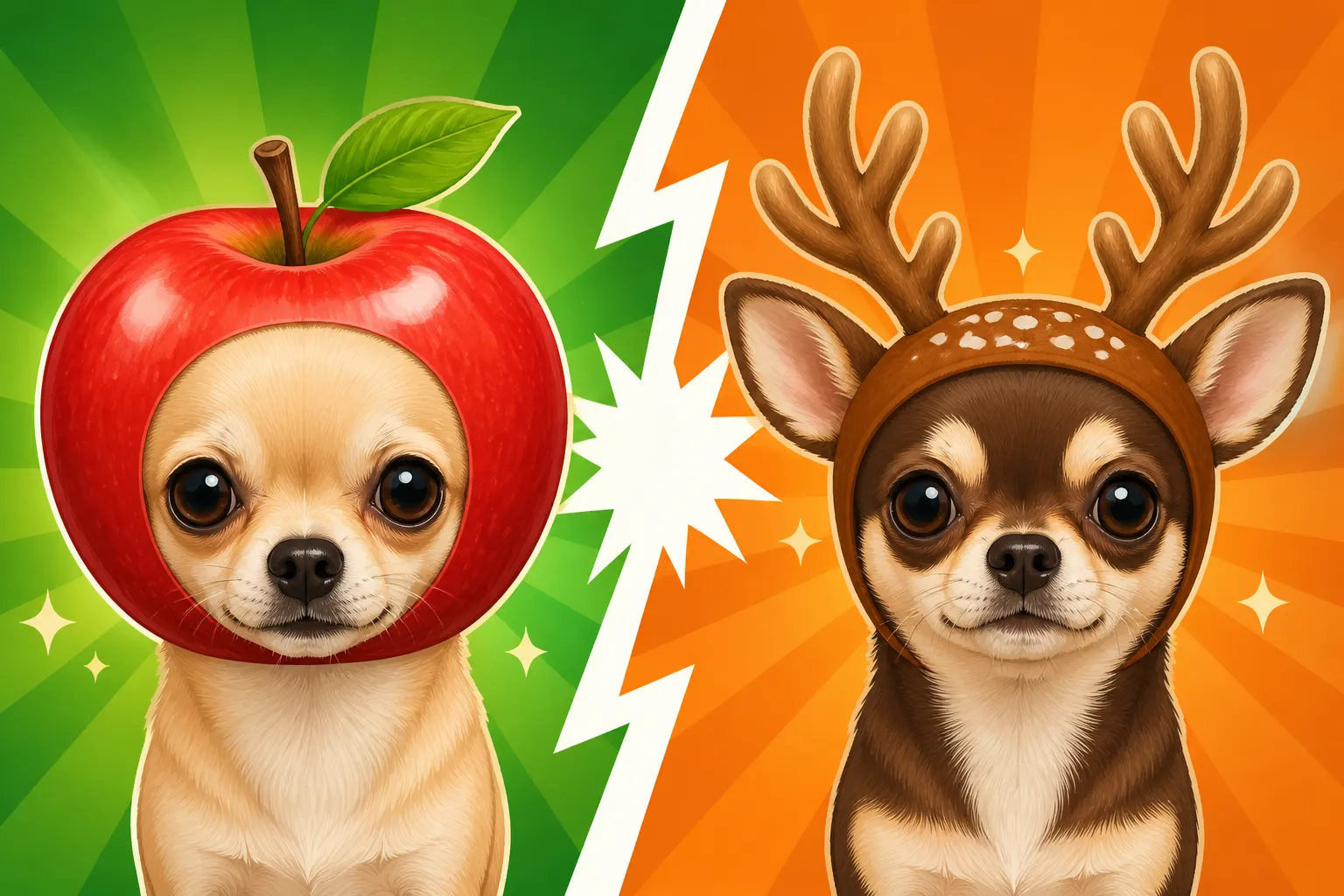
Apple Head Against Deer Head Chihuahuas
It can be incredibly confusing for new Chihuahua owners, or even seasoned enthusiasts, to navigate the language around "apple head" versus "deer head" Chihuahuas. You'll hear these terms tossed around frequently, often with strong opinions attached, making it hard to understand what's fact and what's simply a preference. This guide will cut through the noise, explaining the official breed standards, the popular variations, and why these distinctions matter for your little companion's health and happiness.
Understanding the Chihuahua Breed Standard: The Official View
Before we dive into the specifics of head shapes, it's crucial to understand what a "breed standard" actually is. Think of it as the blueprint for a purebred dog, meticulously crafted by kennel clubs like the American Kennel Club (AKC) to describe the ideal characteristics of a particular breed. These standards cover everything from temperament and coat type to ear set, tail carriage, and, yes, head shape. The purpose isn't just aesthetics; it's to preserve the unique traits and health of the breed over generations.
The Role of the AKC in Defining the Chihuahua
The American Kennel Club is a registry of purebred dog pedigrees in the United States, and they're the authority when it comes to defining what a Chihuahua should look like. Their breed standard dictates the physical traits that are considered desirable and those that are faults. When breeders talk about "breeding to standard," they're aiming to produce Chihuahuas that closely match these detailed descriptions. This is particularly important for Chihuahuas destined for the show ring, where every angle and proportion is judged against the ideal. For the Chihuahua, the AKC standard specifically calls for an "apple-dome skull," which immediately sets the stage for our discussion on head types. This means that, officially, only one head shape is considered correct for the breed.
Key Elements of the Chihuahua Standard Beyond the Head
While head shape is a major talking point, the breed standard encompasses so much more. It specifies a compact body, an erect ear set (though some puppies might have floppy ears that eventually stand), large, luminous eyes, and a sickle-shaped tail carried over the back. Weight is also a critical component, with the standard typically preferring Chihuahuas not to exceed six pounds. This isn't just a number; it speaks to the delicate nature and toy size that defines the breed. Understanding these broader elements helps you appreciate that the "apple head" isn't an isolated feature but part of an entire package of characteristics that breeders strive to maintain. When you look at a Chihuahua, everything from their stride to their expression is part of that carefully defined ideal.
The Apple Head Chihuahua: What the Standard Defines
When people talk about an "apple head" Chihuahua, they're referring to the breed's signature look, the one officially recognized by major kennel clubs. This head shape is what most people picture when they think of a classic Chihuahua. It's distinctive, often described as charming, and gives the breed its characteristic "dome" appearance. This isn't just a slight rounding; it's a pronounced, almost spherical shape to the top of the skull that truly stands out.
The Rounded Skull of an Apple Head Chihuahua
The most defining feature of an apple head Chihuahua is, as the name suggests, its distinctly rounded, apple-shaped skull. Imagine an apple resting on top of a small body – that's the visual breeders aim for. This cranial dome is broad between the ears and tapers towards a somewhat short, pointed muzzle. This particular skull shape is also often associated with a "molera," which is a soft spot on the top of the head, similar to a human baby's fontanelle. While a molera can sometimes be a concern, in Chihuahuas, it's actually mentioned in the breed standard as an acceptable characteristic. Many apple head Chihuahuas carry this open fontanelle throughout their lives, and understanding The Chihuahua Molera in the Breed Standard can help alleviate worries. This rounded head, combined with a short muzzle, contributes to the breed's often-described "pixie" or "alien" look, a charm that many enthusiasts adore.
Apple Head Chihuahua Eyes and Ear Set
Complementing the rounded skull are the large, round, often luminous eyes that are set well apart. These eyes are typically dark, though lighter shades can occur with certain coat colors. Their prominence is part of the apple head's characteristic expression – inquisitive, alert, and full of personality. However, this prominence also means that Chihuahua Eye Injuries and Prominent Eyes can be a concern. Their eyes are more exposed and vulnerable to scratches, irritations, or even more serious trauma. The ears of an apple head Chihuahua are typically large and erect, set wide apart, flaring slightly to the sides when alert. When relaxed, they may lay back, giving a softer appearance. This combination of large eyes and alert ears further enhances the apple head's unique and highly recognizable silhouette, contributing to their endearing and often comical expressions.
The Chihuahua Molera in the Breed Standard
The molera, or soft spot, on an apple head Chihuahua's skull is perhaps one of the most misunderstood aspects of the breed. Many new owners discover it and immediately panic, fearing a severe injury or neurological issue. However, for Chihuahuas, a molera is actually a recognized and accepted part of the breed standard. It's the incomplete fusion of the cranial bones, a characteristic more commonly seen in apple head Chihuahuas due to their domed skull structure. While most moleras will close or significantly reduce in size by adulthood, some Chihuahuas retain a small opening throughout their entire lives. It's important to protect this area from bumps and impacts, especially during puppyhood. In rare cases, a very large or unclosing molera can be associated with conditions like Hydrocephalus in an Apple-Head Chihuahua, but often, it's simply a normal, benign trait unique to the breed.
The Deer Head Chihuahua: Popularity Versus Pedigree
In contrast to the officially recognized apple head, the "deer head" Chihuahua describes a variation that, while incredibly common and loved by many, does not conform to the AKC breed standard. These Chihuahuas have a different look, one that some people find more traditionally "dog-like" or aesthetically pleasing. Despite not being show-ring material, deer head Chihuahuas are just as much Chihuahuas at heart – with all their fiery spirit and affectionate nature.
The Flat Skull of a Deer Head Chihuahua
A deer head Chihuahua gets its name from its resemblance to a fawn, with a flatter skull, a longer muzzle, and a less pronounced stop (the indentation between the eyes). Instead of the rounded dome, their head often has a more sloped or wedge-like appearance from the top of the head to the nose. This creates a profile that is smoother and less abrupt than the apple head. They don't typically have a molera, or if they do, it's usually much smaller and closes more reliably than in their apple-headed counterparts. This distinct The Flat Skull of a Deer Head Chihuahua is often what draws people to them, as it can give them a softer, perhaps even more elegant, appearance. It's a look that, while not recognized for show, certainly holds its own in terms of charm.
Deer Head Chihuahua Legs and Muzzle
Beyond the skull shape, deer head Chihuahuas often exhibit slightly different body proportions. They tend to have longer legs and a more slender build overall, contributing to their "deer-like" physique. Their muzzles are also typically longer and more tapered compared to the very short, almost pushed-in muzzle of the apple head. This longer muzzle can be a practical advantage, as some owners believe it may reduce the likelihood of certain respiratory issues like Collapsing Trachea and the Chihuahua Honking Cough, which can sometimes be exacerbated by very short muzzles and breathing passages. While both head types are prone to joint issues, the slightly longer limbs of a deer head might make them appear a bit more agile, though this is purely anecdotal and not a scientific health advantage. Regardless of these subtle differences, their small size and spirited demeanor remain unmistakably Chihuahua.
Why the Deer Head Chihuahua Lost the Standard
It's a common misconception that deer heads are a "new" or "mutant" type of Chihuahua. In reality, Chihuahuas likely exhibited a range of head shapes historically. As the breed developed and moved into the show ring, specific traits were selected for, and the domed, apple head became the preferred and eventually codified standard. The decision to favor the apple head wasn't about health or superiority, but rather about creating a consistent, distinctive look for the breed that would set it apart. Over time, the deer head was simply excluded from the ideal show conformation. This doesn't mean deer heads are less "purebred" – they are still genetically Chihuahuas and can be registered with kennel clubs, though they won't meet the requirements for showing under the AKC standard. Understanding Why the Deer Head Chihuahua Lost the Standard helps clarify that it's a matter of aesthetic preference within the breed community, not a judgment on the dog's worth or heritage.
Why the Distinction Matters: Health, Breeding, and Show Ring
The differences between apple head and deer head Chihuahuas go beyond just appearance; they touch upon important aspects of health, breeding practices, and their place in the world of dog shows. While both are undeniably Chihuahuas, the emphasis on the apple head in the breed standard has created specific implications for owners and breeders alike. Navigating these distinctions can help you make more informed decisions when choosing a Chihuahua or understanding your current companion.
The Six Pound Ceiling for a Show Chihuahua
One of the most defining characteristics of the Chihuahua breed, as stipulated by the AKC standard, is its maximum weight of six pounds. This isn't just a guideline; it's a critical factor, especially for Chihuahuas competing in conformation shows. While an apple head skull is explicitly called for, the overall conformation must also fit within this weight limit. A Chihuahua with a beautifully domed head but that exceeds six pounds would be disqualified from the show ring. This strict weight ceiling influences breeding decisions, as breeders strive to produce dogs that are not only apple-headed but also perfectly sized. The combination of The Six Pound Ceiling for a Show Chihuahua and the specific head shape requirement ensures that the breed maintains its distinctive tiny, elegant form, making it a true toy breed in every sense.
Whether a Deer Head Chihuahua Can Be Registered
A common myth is that deer head Chihuahuas cannot be registered with reputable kennel clubs. This is simply not true. As long as both parents are registered purebred Chihuahuas, their offspring – whether apple head or deer head – are eligible for registration. The registration simply verifies their purebred lineage, not their conformation to the breed standard. This means you can have a perfectly legitimate, purebred deer head Chihuahua with papers. However, their inability to compete in conformation events that require adherence to the specific apple head standard does impact their role in the show breeding world. They are still wonderful companions, but their bloodlines wouldn't contribute to producing champion show dogs in the same way. Understanding Whether a Deer Head Chihuahua Can Be Registered helps dispel the notion that they are somehow "lesser" Chihuahuas.
How the Chihuahua Standard Has Shifted
Breed standards, while seemingly rigid, aren't entirely static. They evolve over time, albeit slowly, as breed clubs refine their understanding of the ideal dog. For the Chihuahua, the emphasis on the apple-dome skull has been a consistent feature for a very long time, defining the breed's iconic silhouette. While minor nuances in interpretation or emphasis might shift, the core requirement for an apple head has remained firm. Historical photographs of early Chihuahuas show a range of head types, suggesting that the breed was once more diverse in its cranial presentation before the standard became so tightly focused. This historical context highlights that the current standard is a product of careful selection and refinement over decades, aiming to solidify the unique "Chihuahua look."
Common Misconceptions and Marketing Ploys
The popularity of Chihuahuas has unfortunately led to a lot of misinformation and unethical breeding practices, particularly around head types and size. Many new owners fall victim to marketing terms that are not recognized by official kennel clubs and can even indicate potential health problems. It's vital to be savvy and understand what's real versus what's just a sales pitch.
Whether a Teacup Chihuahua Is Worth the Premium
One of the most persistent and problematic marketing ploys is the "teacup Chihuahua." This term refers to Chihuahuas bred to be exceptionally small, often weighing significantly less than the six-pound breed standard. Many so-called "teacup" Chihuahuas are, in fact, deer heads, as their more delicate bone structure can sometimes result in a smaller overall package. Breeders often charge exorbitant prices for these tiny dogs, marketing them as rare or special. However, these extremely small Chihuahuas are frequently born runts, more susceptible to serious health issues like Chihuahua Hypoglycemia and the Puppy Emergency, fragile bones, and a higher risk of complications during routine procedures like anesthesia. The perceived cuteness often comes at a steep price in terms of potential vet bills and heartache. Understanding Whether a Teacup Chihuahua Is Worth the Premium means recognizing that responsible breeders prioritize health and temperament, not extreme, potentially unhealthy miniaturization.
Why No Registry Recognizes a Teacup Chihuahua
No reputable kennel club or breed registry officially recognizes the term "teacup" Chihuahua. It's purely a marketing label, designed to command higher prices from unsuspecting buyers. The AKC, for instance, only recognizes "Chihuahua" as the breed, with no size variations beyond the overall six-pound weight limit for showing. This lack of recognition from official bodies should be a huge red flag. Breeders using the "teacup" label are often prioritizing extreme smallness over health and adherence to established breed standards. They might be breeding runts, or even puppies with underlying health conditions, to achieve that tiny size. If you see a listing advertising a "teacup" Chihuahua, it's a strong indicator that the breeder may not be reputable or knowledgeable about breed health. Why No Registry Recognizes a Teacup Chihuahua really boils down to protecting the health and integrity of the breed against trends that can cause suffering.
Fake Teacup Chihuahua Listings Online
The internet is rife with listings for "teacup" Chihuahuas, often accompanied by pictures of impossibly tiny puppies. Buyers need to be extremely cautious. These listings might come from puppy mills or backyard breeders who care more about profit than the well-being of the dogs. They might misrepresent the age of a puppy to make it appear smaller, or breed unhealthy dogs to achieve miniature sizes. Furthermore, some unscrupulous sellers might even try to pass off Chihuahua mixes as purebred "teacups." It's essential to research any breeder thoroughly, ask for health clearances for the parents, and insist on seeing the puppy in person and meeting its parents. Never buy a puppy sight unseen based solely on online photos. Look for breeders who prioritize genetic testing and adherence to the actual breed standard, not marketing fads.
Living with Either Head Type: Care Considerations
Whether your Chihuahua has an apple head or a deer head, they both share the fundamental needs of the breed: warmth, proper nutrition, regular exercise, and consistent training. However, there are some subtle care considerations that might be more prominent depending on your dog's head shape, particularly when it comes to safeguarding their delicate features.
Protecting a Chihuahua Puppy With a Soft Spot
For apple head Chihuahuas, especially puppies, the presence of a molera or soft spot requires a bit of extra vigilance. While it's a normal characteristic for many in the breed, it does mean the skull isn't fully fused, leaving a slightly vulnerable area. This doesn't mean you need to treat your puppy like glass, but it does warrant common-sense precautions. Avoid situations where they might get a direct blow to the head, such as rough play with larger dogs or unsupervised time with rambunctious children. Ensure their environment is safe, free from falling objects, and that they have soft, comfortable bedding. Teaching children how to gently interact with a Chihuahua is crucial, and supervision is always key. Knowing Protecting a Chihuahua Puppy With a Soft Spot means being mindful without becoming overly anxious – most Chihuahuas with moleras live perfectly normal, healthy lives.
Harness Fitting on a Chihuahua Chest
Regardless of head type, all Chihuahuas benefit greatly from wearing a harness instead of a collar for walks. Their tiny necks and delicate tracheas are highly susceptible to damage from collar pressure, which can lead to issues like Collapsing Trachea in a Chihuahua and Its Triggers. This is true for both apple and deer heads. A well-fitting harness distributes pressure across their chest and shoulders, protecting their windpipe. When selecting a harness, look for one that fits snugly but comfortably, without restricting movement or chafing. The straps should sit well away from the throat. Since Chihuahuas come in such a wide range of chest sizes, even within the same weight class, it's best to try a few styles to find the perfect fit. Many retailers, like Chewy, offer a good selection of small-dog harnesses specifically designed for tiny breeds, so you can find one that truly supports your little one.
Chihuahua Eye Injuries and Prominent Eyes
Apple head Chihuahuas, with their typically larger and more prominent eyes, can be more prone to certain eye issues. Their eyes are more exposed, making them susceptible to scratches from rough play, stray branches during walks, or even dust and debris. These injuries can quickly escalate into painful Corneal Ulcers in a Chihuahua. Keeping their faces clean and free of tear stains, and regularly checking their eyes for redness, discharge, or squinting, is important. While deer heads might have less prominent eyes, all Chihuahuas can experience various Chihuahua Eye Problems in a Shallow Socket due to their breed characteristics. It's wise to have any changes in your Chihuahua's eyes checked by a vet promptly, regardless of their head type. A good general rule is to maintain regular vet check-ups to catch any emerging issues early.
Making Informed Choices: Breeder Selection and Responsible Ownership
Choosing a Chihuahua is a commitment for many years, as these little dogs can live Why Chihuahuas Live Twelve to Twenty Years. Making an informed decision about where your puppy comes from, and understanding the nuances of their physical traits, is a cornerstone of responsible ownership. Don't let trends or misinformation guide your choice; prioritize health, temperament, and ethical breeding practices.
Questions Worth Asking a Chihuahua Breeder
When seeking a Chihuahua, whether you prefer an apple head or a deer head, the most critical step is finding a reputable breeder. A good breeder will be transparent, knowledgeable, and genuinely care for the well-being of their dogs. Don't be shy about asking questions! Inquire about the health testing performed on the parent dogs, specifically asking for proof of Chihuahua Patella Certification Before Breeding, and cardiac clearances. Ask about the puppy's parents' temperaments and how the puppies are socialized. A responsible breeder will be eager to answer these questions and often has a waiting list. They'll also likely ask you plenty of questions to ensure their puppies go to good homes. Be wary of breeders who offer multiple litters at once, don't allow you to meet the parents, or are vague about health records.
Whether a Deer Head Chihuahua Is Healthier
There's a common belief that deer head Chihuahuas are inherently healthier than apple heads, often attributed to their longer muzzles and flatter skulls potentially reducing risks of breathing issues or hydrocephalus. While it's true that a longer muzzle might offer some small advantage for breathing compared to a severely short one, and the flatter skull might lessen the risk of a severe molera or hydrocephalus, these are not guarantees of overall health. Many apple head Chihuahuas live long, healthy lives, and many deer heads can still be prone to common Chihuahua ailments like patellar luxation or dental disease. Health primarily comes down to responsible breeding practices, genetic testing, and excellent veterinary care. A deer head from a backyard breeder with no health testing is likely at higher risk than an apple head from a reputable breeder who screens their dogs.
The Patella and Cardiac Papers on a Chihuahua Litter
For any Chihuahua puppy, regardless of head type, sound health starts with the parents. A reputable breeder will have verifiable health clearances for the sire and dam of the litter. For Chihuahuas, key clearances include patella (knee) certification, given how common Patellar Luxation, the Chihuahua's Commonest Joint Problem is in the breed. They should also have cardiac clearances to screen for heart conditions like mitral valve disease, which can be an issue in older Chihuahuas. These clearances are usually documented by veterinary specialists or through organizations like the Orthopedic Foundation for Animals (OFA). Don't just take a breeder's word for it; ask to see the physical papers. Seeing The Patella and Cardiac Papers on a Chihuahua Litter provides assurance that the breeder is actively working to minimize genetic health risks, giving your future companion the best possible start in life.
| Feature | Apple Head Chihuahua | Deer Head Chihuahua |
|---|---|---|
| Skull Shape | Distinctly rounded, dome-shaped (like an apple) | Flatter, more sloped or wedge-like |
| Muzzle Length | Shorter, more pointed | Longer, more tapered |
| Stop (between eyes) | Very pronounced, almost a 90-degree angle | Less pronounced, smoother slope |
| Eye Prominence | Generally larger, more prominent | Slightly less prominent |
| Molera (Soft Spot) | Common, often present into adulthood | Less common, usually closes by adulthood |
| Body Build | Often more compact, sometimes shorter legs | Often more slender, longer legs |
| AKC Standard | Conforms to breed standard (preferred for show ring) | Does not conform to breed standard (not eligible for show) |
| Registration | Can be registered (if purebred) | Can be registered (if purebred) |
| Health Perceptions | Some concern for hydrocephalus, eye injuries | Often perceived as healthier, less prone to certain issues |
Disclaimer
This article is for general informational purposes only and does not constitute professional advice. Laws, prices and regulations vary by location and change over time. Consult a qualified professional for guidance on your specific situation.