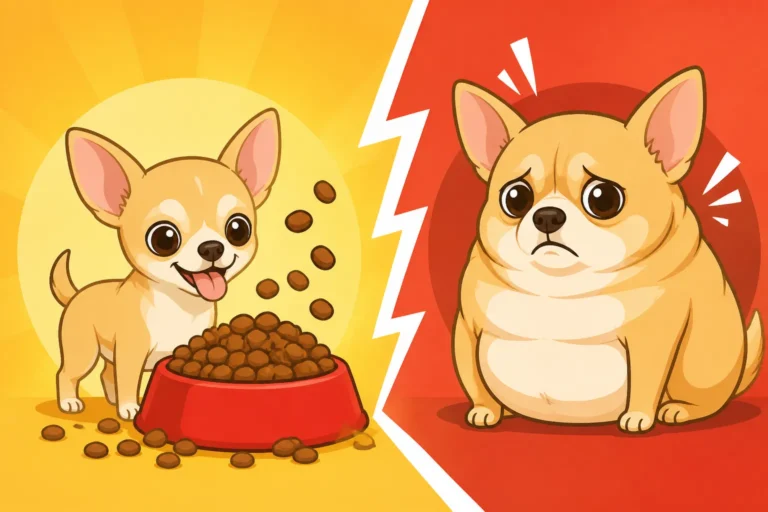
Fifty Calories a Pound for a Chihuahua Puppy
Bringing home a new Chihuahua puppy is an incredibly exciting time, but it also comes with a unique set of responsibilities, especially when it comes to their diet. These tiny bundles of joy have incredibly fast metabolisms and delicate systems, making them highly susceptible to conditions like hypoglycemia, or dangerously low blood sugar. This guide will walk you through the crucial "fifty calories a pound" guideline for feeding your Chihuahua puppy, helping you understand how to precisely calculate their needs, choose the right food, and establish a feeding schedule that keeps them healthy and thriving.
Understanding the "Fifty Calories a Pound" Guideline for Chihuahua Puppies
When you first bring home your new Chihuahua puppy, one of the most vital pieces of advice you'll likely receive, or quickly discover, is the need for extremely precise feeding. Unlike larger breed puppies, Chihuahuas don't just need a lot of food; they need a specific, consistent intake measured carefully by their weight. The general guideline many veterinarians and experienced breeders recommend is roughly fifty calories per pound of body weight per day for a growing Chihuahua puppy. This isn't just a random number; it's a critical baseline designed to meet their high energy demands and safeguard their fragile health.
Why Chihuahuas Need More Calories Per Pound Than Larger Breeds
It might seem counterintuitive that a dog weighing just a few pounds needs more calories per pound than a much larger puppy. However, Chihuahuas possess an incredibly high metabolism. Think of it like a tiny, high-performance engine running at full throttle all the time. Their small bodies burn through energy at an astonishing rate to maintain body temperature, support rapid growth, and fuel their playful, often busy, personalities. A larger dog has more body mass to insulate itself and a slower metabolic rate, meaning their caloric needs per pound are significantly lower. For a Chihuahua puppy, every calorie counts, and insufficient intake can lead to serious health issues very quickly.
This rapid energy expenditure, combined with their limited reserves, is why they are so vulnerable. Their little livers aren simply not equipped to store vast amounts of glycogen (sugar) for emergencies. This means they rely heavily on a steady, continuous supply of glucose from their diet. Without it, their blood sugar can plummet, leading to a state of profound weakness and collapse. This is particularly true for very young puppies, especially those under twelve weeks of age. Ignoring these unique metabolic demands and feeding a Chihuahua puppy like you would a Labrador puppy, for example, is a recipe for disaster.
The Critical Role of Caloric Density in Preventing Hypoglycemia
The guideline of fifty calories per pound per day isn't just about meeting general energy needs; it's specifically tailored to prevent hypoglycemia. When a Chihuahua puppy's blood sugar drops too low, it's a genuine emergency. Signs can include extreme lethargy, trembling, uncoordinated movements, and eventually seizures or loss of consciousness. Chihuahua Hypoglycemia and the Puppy Emergency is a real and present danger for these tiny pups, and consistent, appropriate feeding is your primary defense.
Providing calorie-dense food means that even small portions deliver a substantial amount of energy. This helps stabilize their blood sugar throughout the day, ensuring a steady supply of glucose to their brain and body. Imagine their tiny stomach capacity; they can't eat a huge meal to stock up. Instead, they need small, frequent meals that are packed with the right kind of energy. This is why choosing a high-quality puppy food specifically formulated for small or toy breeds is essential. These foods are designed to be nutrient-rich and calorically concentrated, making it easier for your puppy to get the energy they need without overfilling their tiny tummies. It's about efficiency and consistency, building a buffer against those sudden, dangerous sugar crashes.
Accurately Calculating and Measuring Your Puppy's Daily Food Intake
Okay, so we know the fifty-calories-per-pound guideline is crucial. But how do you actually put that into practice? This isn't a "guesstimate" situation. When you're dealing with a creature that might weigh less than a bag of sugar, precision is paramount. Eyeballing amounts or using standard measuring cups designed for larger portions just won't cut it. You need tools and a system to ensure your Chihuahua puppy is getting exactly what they need, not too much and certainly not too little.
Weighing Your Chihuahua Puppy and Their Food Accurately
The first step, and one you'll repeat frequently in the early weeks, is accurately weighing your puppy. You'll need a reliable kitchen scale for this. These are much more precise than bathroom scales and can measure down to ounces or even grams. Gently place your puppy in a small bowl or container (tare the scale first to zero out the weight of the container) and get their weight in pounds and ounces, or convert it to a decimal. For example, if your puppy weighs 2 pounds, 8 ounces, that's 2.5 pounds.
Once you have their precise weight, multiply it by 50 to get their estimated daily caloric need. So, a 2.5-pound puppy needs approximately 125 calories per day (2.5 lbs x 50 calories/lb = 125 calories). This total needs to be spread across multiple small meals, which we'll discuss next. But before that, you also need to accurately measure the food itself. This is where that same kitchen scale comes in handy again. Most high-quality puppy foods will have caloric information on their packaging, usually listed as "kcal per cup" or "kcal per gram." Convert their recommended serving size (e.g., 1 cup) into grams using the label's density information, and then weigh out the exact gram amount for each meal. Weighing Chihuahua Food on a Kitchen Scale is not optional; it's a non-negotiable step for their well-being. Trying to use a measuring cup for a tiny Chihuahua puppy's food is like trying to measure a single drop of water with a bucket – it's just not precise enough for such small, critical amounts.
Here's a quick reference table based on the 50 calories per pound guideline:
| Chihuahua Puppy Weight (lbs) | Estimated Daily Calories (50 cal/lb) |
|---|---|
| 1 lb | 50 calories |
| 1.5 lbs | 75 calories |
| 2 lbs | 100 calories |
| 2.5 lbs | 125 calories |
| 3 lbs | 150 calories |
| 3.5 lbs | 175 calories |
| 4 lbs | 200 calories |
| 4.5 lbs | 225 calories |
| 5 lbs | 250 calories |
Remember, this is a guideline. Your vet might adjust it based on your puppy's activity level, growth rate, and individual metabolism.
Choosing the Right Food for Calorie-Dense Nutrition
Selecting the right food goes hand-in-hand with accurate measurement. You need a food that is not only calorically dense but also nutritionally complete and appropriate for a growing small breed puppy. Look for brands that are specifically labeled for "puppies" or "all life stages," with a focus on "small breed" or "toy breed" formulas. These foods often have smaller kibble sizes, which are much easier for a Chihuahua puppy's tiny mouth to chew and digest. You can find a wide variety of excellent options on platforms like Chewy or Amazon, making it easy to compare ingredients and calorie counts.
When reading food labels, pay close attention to the "guaranteed analysis" and, most importantly, the caloric content (often listed as metabolizable energy or ME in kcal/kg or kcal/cup). This is the number you'll use for your precise calculations. Brands like Royal Canin, Hill's Science Diet, and Purina Pro Plan all offer reputable small breed puppy formulas. If you're considering fresh food options, companies like Ollie provide pre-portioned, human-grade meals that can be an excellent choice for consistent, calorie-dense nutrition. Just be sure to work with your vet to determine the exact portion size if you switch to a fresh food diet, as their caloric density can differ significantly from kibble. The key is finding a food your puppy thrives on that fits within their caloric budget and is easy for you to accurately measure out each day.
Designing a Safe and Consistent Feeding Schedule for Your Tiny Companion
Getting the right amount of calories is only half the battle; ensuring those calories are delivered consistently throughout the day is equally vital for a Chihuahua puppy. Their small stomachs and rapid metabolism mean they can't go long periods without food without risking a sugar crash. A well-planned feeding schedule is a non-negotiable part of responsible Chihuahua puppy ownership. It's about providing a steady fuel supply to their tiny, high-octane bodies.
Frequent Small Meals to Maintain Blood Sugar Levels
For a Chihuahua puppy, especially in the first few months, three to four small meals a day is typically the minimum, with some very young or tiny puppies benefiting from even more frequent feedings, sometimes every 3-4 hours. Think of it like a human baby who needs to be fed often; their systems are still developing. Spreading their total daily caloric intake across these multiple meals ensures a continuous trickle of glucose into their bloodstream, preventing the dangerous dips associated with hypoglycemia.
A typical schedule might look like this:
- 7:00 AM: First meal of the day.
- 11:00 AM: Second meal.
- 3:00 PM: Third meal.
- 7:00 PM – 8:00 PM: Fourth meal, usually the last one before bedtime.
This helps them maintain a stable blood sugar level throughout the active hours and gives them enough fuel to sleep through the night without a crash. Feeding a Chihuahua Puppy Every Few Hours is not an exaggeration; it's a necessary precaution. You might even consider offering a tiny, pea-sized smear of something like unflavored Pedialyte or corn syrup on their gums right before bed if they are particularly tiny or prone to crashes, but always check with your vet first for personalized advice. Consistency is key – try to feed them at roughly the same times each day.
Monitoring for Hunger Cues and Signs of Low Blood Sugar
Even with a consistent feeding schedule, it's crucial to be vigilant and know your puppy's normal behavior. Chihuahuas are generally good eaters, but sometimes excitement, stress, or even just being distracted can make them skip a meal. Learn to recognize their individual hunger cues. They might start circling your feet, looking expectantly at their food bowl, or even give a soft whine. If your puppy seems disinterested in food, try to entice them gently.
More importantly, be acutely aware of the signs of low blood sugar. Trembling and Weakness in a Chihuahua Puppy are classic indicators. Other signs can include:
- Lethargy or unusual stillness
- Uncoordinated walking or stumbling
- Dull, glazed-over eyes
- Shivering or trembling (more than just from cold or excitement)
- Seizures or collapse
If you notice any of these symptoms, act immediately. Rub a small amount of a sugary solution (like corn syrup, honey, or a glucose gel made for puppies) on their gums. Even if they are unconscious, their gums can absorb the sugar. Then, contact your veterinarian right away. This is not a situation to "wait and see." Quick action can save your puppy's life. Having emergency sugar on hand, readily available on Chewy or Amazon, is a must-have for any Chihuahua owner.
Adapting Your Chihuahua Puppy's Diet as They Grow and Mature
The "fifty calories a pound" guideline is fantastic for the early, rapid growth phase of a Chihuahua puppy, but it's not a lifelong rule. Just like human children, puppies grow and their nutritional needs evolve. As your Chihuahua puppy transitions into adolescence and then adulthood, their caloric requirements per pound will actually decrease. Keeping them on the same high-calorie-per-pound diet indefinitely could lead to significant health problems down the line, most notably obesity.
Transitioning from Puppy to Adult Food Needs
Most Chihuahuas reach their adult size and weight between 9 to 12 months of age. Around this time, their intense growth spurts slow down significantly, and their metabolism begins to regulate. This is the point when you'll start to transition them from a puppy formula to an adult maintenance diet. Generally, adult Chihuahuas need closer to forty calories a pound for an adult Chihuahua or even slightly less, depending on their activity level and individual metabolism.
The transition should be gradual, typically over 7-10 days, by mixing decreasing amounts of puppy food with increasing amounts of adult food. This helps prevent digestive upset. Always consult your veterinarian before making this switch. They can assess your puppy's body condition, growth trajectory, and overall health to recommend the precise timing and amount for their adult diet. They might also suggest specific adult formulas tailored to small breeds, which still offer appropriate kibble size and nutrient balance. The Month a Chihuahua Moves to Adult Food is an important milestone to discuss with your vet.
Avoiding Overfeeding and Underfeeding as Growth Slows
Once your Chihuahua is an adult, maintaining their ideal body weight becomes your primary focus. Overfeeding, even by a small amount, can quickly lead to obesity in such a tiny dog. An extra half-pound on a five-pound Chihuahua is equivalent to a significant weight gain for a larger dog, putting undue stress on their joints, heart, and other organs. What a Half Pound Means on a Chihuahua is substantial. Conversely, continued underfeeding can lead to nutrient deficiencies and a lack of energy, though this is less common once they are past the critical hypoglycemia-prone puppy stage.
Monitor your adult Chihuahua's body condition regularly. You should be able to easily feel their ribs without pressing hard, and they should have a discernible waist when viewed from above. If their ribs are difficult to feel, or they look round, it's time to slightly reduce their portion size and increase their exercise. If their ribs are very prominent and you can see them clearly, they might need a slight increase in food. Continue to use your kitchen scale to measure their food precisely, even as an adult. This careful attention to their diet will contribute significantly to their long and healthy lifespan, ensuring they remain a happy, energetic companion for years to come.
Disclaimer
This article is for general informational purposes only and does not constitute professional advice. Laws, prices and regulations vary by location and change over time. Consult a qualified professional for guidance on your specific situation.