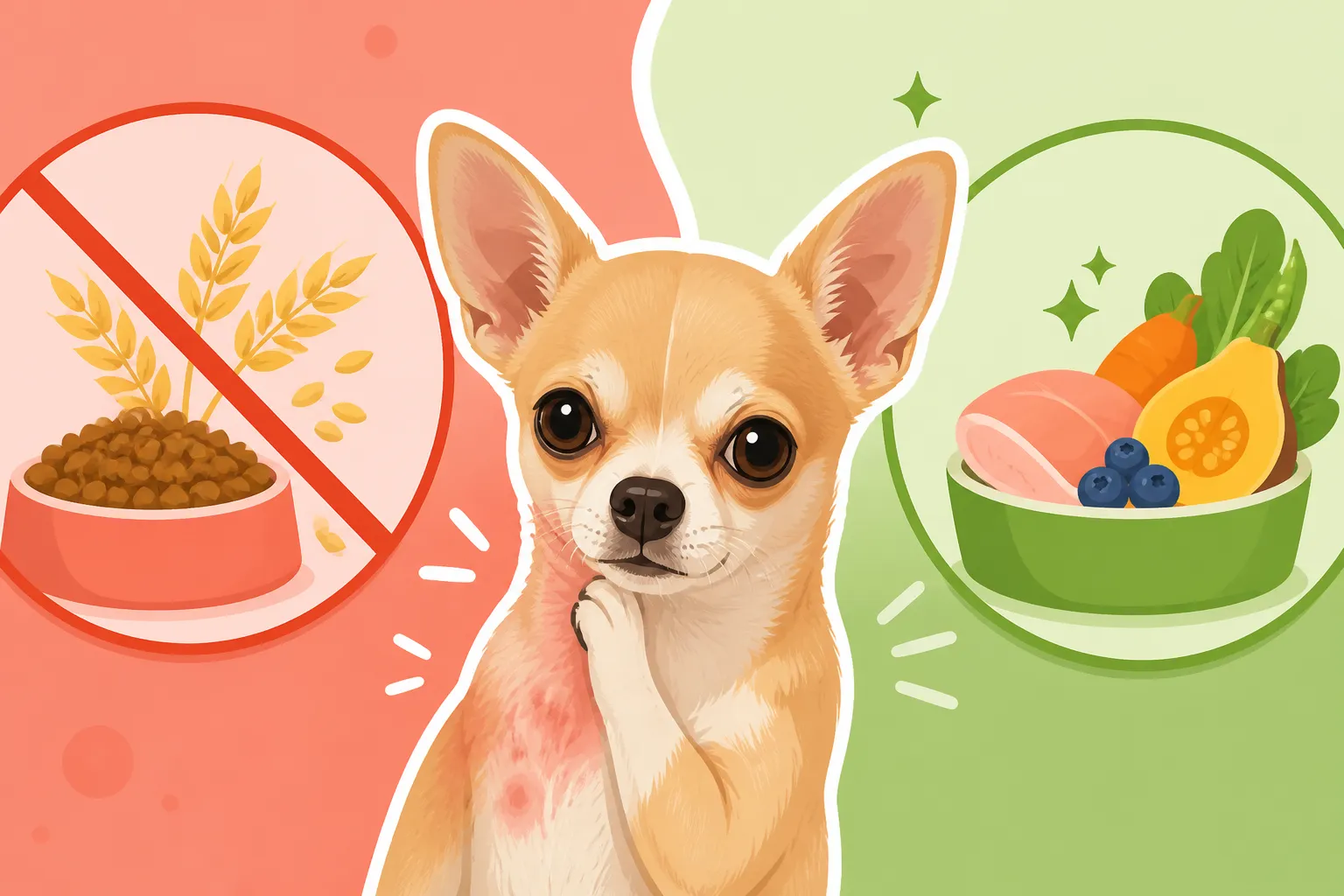
Whether Grain-Free Helps a Chihuahua’s Skin
It’s incredibly frustrating when your sweet little Chihuahua starts scratching relentlessly, chewing at their paws, or develops irritating bald patches and flaky skin. You scour the internet, talk to other Chihuahua parents, and invariably, the topic of "grain-free" food comes up as a potential savior for sensitive skin. But does taking grains out of your Chihuahua’s diet really make a difference for their skin, or is it a widely misunderstood approach? This guide will dive deep into the world of Chihuahua skin health, exploring whether grain-free diets are the answer to your tiny companion's dermatological woes.
Understanding Chihuahua Skin Sensitivities and Allergies
Before we even get to grain-free food, it’s crucial to understand that a Chihuahua's skin issues can stem from a multitude of factors, not just what's in their food bowl. These little dogs, despite their hardy nature in many respects, can be quite delicate when it comes to their skin, and pinpointing the exact cause can feel like a detective mission.
Common Causes of Skin Problems in Chihuahuas
Chihuahuas, with their fine coats (whether smooth or long-haired) and sometimes exposed skin, are susceptible to various skin irritations. Environmental factors often play a huge role. Think about it: your Chihuahua is low to the ground, sniffing everything, walking through grass, and potentially coming into contact with pollen, dust mites, mold spores, or even certain cleaning chemicals used on your floors. These airborne or contact allergens can cause a reaction known as atopy, leading to generalized itchiness, redness, and inflammation. You might notice your little one furiously licking their paws after a walk or rubbing their face against the carpet. Just like people get hay fever, Chihuahuas can get environmental allergies that make their skin miserable.
Beyond environmental culprits, parasites are another massive contender. Fleas, even just one or two, can trigger a severe allergic reaction in some Chihuahuas, leading to intense itching and hotspots. Mites, like those causing sarcoptic mange or demodex, can also wreak havoc on their delicate skin, resulting in hair loss, scabbing, and extreme discomfort. Even bacterial or yeast infections, often secondary to an initial allergic reaction, can cause significant skin issues, creating a vicious cycle of itch-scratch-infection. These are things your vet will want to rule out quickly, as they often have straightforward treatments. Sometimes, a seemingly minor issue can quickly escalate on such a small dog. For more on these types of issues, you might find Chihuahua Skin Allergies and Hair Loss helpful.
Identifying the Signs of a Food Allergy
So, how do you even begin to suspect a food allergy versus all these other possibilities? It's tricky because the symptoms often overlap. However, there are some patterns that can hint at a food-related problem. Typically, skin issues related to food allergies tend to be non-seasonal, meaning your Chihuahua might be itchy year-round, regardless of pollen counts or humidity. While environmental allergies often cause paw licking, ear infections, and generalized itchiness, food allergies can present similarly, but sometimes with additional gastrointestinal upset like vomiting, diarrhea, or excessive gas. It’s also common for Chihuahuas with food allergies to have recurrent ear infections that just don't seem to clear up, even with treatment.
The itching from a food allergy can be generalized, but often focuses around the face, paws, belly, and rear end. You might see red, irritated skin, small bumps, or patches of hair loss where your Chihuahua has been scratching or chewing. They might develop a dull, greasy coat, or even have a peculiar odor coming from their skin. It's important to remember that a true food allergy is an immune response to a specific protein in the food, not necessarily just grains. Many owners mistakenly jump to grains, when in reality, the culprit is far more often a common protein source like chicken, beef, or dairy. Understanding this distinction is absolutely key before making any drastic dietary changes. If you’re seeing these kinds of persistent skin issues, it’s definitely time for a serious conversation with your veterinarian.
The Grain-Free Debate for Canine Skin Health
The term "grain-free" has become a buzzword in the pet food industry, often touted as the solution for all manner of canine woes, especially skin problems. But what does it truly mean, and is the hype justified when it comes to your Chihuahua's itchy skin? Let's peel back the layers of this dietary trend.
What "Grain-Free" Actually Means
When a dog food is labeled "grain-free," it simply means that traditional grains like corn, wheat, soy, rice, barley, or oats have been omitted from the ingredient list. It does not mean the food is carbohydrate-free. Far from it! To provide a similar texture and binding properties, as well as energy, grain-free foods often substitute these grains with other carbohydrate sources. Common substitutes include peas, potatoes (sweet and white), lentils, tapioca, and chickpeas. These ingredients are perfectly fine for most dogs and offer their own nutritional benefits.
The idea behind the grain-free movement originated from a belief that dogs, as descendants of wolves, are not naturally equipped to digest grains, and that grains are a common allergen. While some dogs can indeed have allergies to specific grains (like wheat or corn), the vast majority of food allergies in dogs are actually to protein sources, not carbohydrates. This distinction is vital because many owners will switch to a grain-free diet, see no improvement, and assume their dog doesn't have a food allergy, when in fact, the actual allergen (e.g., chicken) is still present in the "grain-free" recipe. It’s a common misconception that can lead to a lot of wasted time and money, not to mention continued discomfort for your Chihuahua.
Grains vs. Other Ingredients as Allergy Triggers
As mentioned, true food allergies in dogs are overwhelmingly directed at protein sources. The most common culprits are beef, dairy, chicken, lamb, fish, chicken eggs, and soy. Notice anything about that list? Grains are noticeably absent from the top spots. While a Chihuahua could theoretically be allergic to corn or wheat, it's far less common than an allergy to chicken or beef, which are staples in many commercial dog foods, including many grain-free formulations. This is why simply removing grains often doesn't solve a suspected food allergy. You might be feeding a grain-free chicken formula, and if your Chihuahua is allergic to chicken, the problem persists.
The focus should really be on identifying the specific protein your Chihuahua reacts to, rather than making a blanket assumption about grains. A well-formulated diet, whether it contains grains or not, provides balanced nutrition. Grains themselves offer valuable nutrients, including fiber, vitamins, and minerals. They are not inherently "bad" for dogs. In fact, some grain-inclusive diets use highly digestible grains that can be beneficial for gut health. If your Chihuahua has Chihuahua Dental Disease in a Crowded Small Jaw, for example, overall nutrition and minimizing inflammation can be just as important as the specific ingredients.
Potential Downsides and Considerations of Grain-Free Diets
While the allure of a grain-free diet for skin issues is strong, there are some important considerations and potential downsides to be aware of. One of the most significant concerns that emerged in recent years involves a potential link between certain grain-free, legume-rich diets and dilated cardiomyopathy (DCM) in dogs. This is a serious heart condition that can be life-threatening. While research is ongoing and the exact mechanisms are still being investigated, regulatory bodies have noted an association between certain "boutique," "exotic ingredient," and "grain-free" (BEG) diets and atypical cases of DCM in breeds not typically predisposed to the condition.
For a tiny Chihuahua, who might already be prone to other heart issues as they age, like Mitral Valve Disease in an Older Chihuahua, adding another potential cardiac risk factor, however small, is something to discuss carefully with your vet. This isn't to say all grain-free diets are dangerous, or that grains are always harmless, but it highlights the complexity of canine nutrition. It’s a good reminder that dietary trends, while well-intentioned, can sometimes have unforeseen consequences. It’s always best to rely on diets formulated by veterinary nutritionists and backed by research, rather than just marketing claims. For specialized food, whether grain-free or not, you might find a wide selection of options on online retailers like Chewy, allowing you to filter by specific ingredients and brands. Alternatively, fresh food services such as Ollie often offer limited ingredient and sometimes grain-free options which can be great for dogs with sensitivities, provided you discuss them with your vet first.
How to Approach a Potential Food Allergy in Your Chihuahua
If you suspect your Chihuahua's skin issues are indeed related to their food, the path forward requires patience, precision, and collaboration with your veterinarian. Simply switching to a random grain-free bag off the shelf is unlikely to yield lasting results and could even mask the true problem.
The Elimination Diet: Your Best Tool
The gold standard for diagnosing a food allergy in dogs is an elimination diet. This isn't a quick fix; it's a diagnostic tool that involves feeding your Chihuahua a novel protein source (one they've never eaten before) and a novel carbohydrate source for a strict period, usually 8-12 weeks. The idea is to remove all potential allergens from their diet. This means no treats, no table scraps, no flavored medications, no sneaking bits of cheese – absolutely nothing outside the prescribed food. It sounds simple, but it's incredibly challenging in practice. Imagine trying to explain to your tiny, adorable Chihuahua why they can't have that crumb that fell on the floor!
Novel proteins often include ingredients like venison, duck, rabbit, kangaroo, or even specific types of fish, paired with carbohydrates like sweet potato or tapioca. The goal is to "reset" their immune system. If their symptoms significantly improve during this period, you then reintroduce ingredients from their old diet one by one, watching for a return of symptoms. If, for instance, you reintroduce chicken and the itching flares up, you've likely found your culprit. This process is meticulous but effective. You might need to source specific ingredients for a homemade elimination diet, and sites like Amazon can sometimes be surprisingly useful for finding unique proteins or carbohydrate sources. For a more detailed guide on this challenging but rewarding process, check out Getting Through an Elimination Diet With a Chihuahua.
Working with Your Veterinarian and Nutritional Resources
Embarking on an elimination diet or making any significant dietary changes should always be done under the guidance of your veterinarian. They can help you select an appropriate novel protein diet, whether it's a prescription hydrolyzed protein diet (where proteins are broken down so small the immune system can't recognize them), or a carefully chosen novel protein commercial diet. Your vet can also rule out other concurrent issues, like secondary infections, which might need separate treatment to allow the skin to heal properly. For some Chihuahuas, especially those with other health concerns or those on long-term medications, a veterinary nutritionist might be consulted to ensure the diet is complete and balanced.
They can also help you understand the caloric needs of your tiny companion. For example, How Many Calories a Six Pound Chihuahua Needs is surprisingly precise, and getting it wrong can lead to obesity or undernutrition, both of which can impact overall health and complicate allergy diagnosis. Your vet might also recommend specific supplements to support skin barrier health, such as omega-3 fatty acids, but these are typically an adjunct to dietary management, not a standalone solution. They are also crucial for discussing the ongoing research regarding grain-free diets and heart health, helping you weigh the pros and cons for your individual Chihuahua's health profile.
Monitoring and Long-Term Management
Once you've identified the offending ingredients (if a food allergy is indeed present), long-term management involves avoiding those triggers diligently. This means carefully reading ingredient labels on all food, treats, and even dental chews. It can be surprising how many products contain common allergens. You might find yourself gravitating towards limited ingredient diets that explicitly state their protein and carbohydrate sources.
Consistency is key. Even a small slip-up can trigger a reaction and set back progress. This is where those external resources like Chewy come in handy, allowing you to easily sort and purchase specific limited-ingredient or novel protein foods without having to hunt them down at multiple stores. Many Chihuahuas thrive on these specialized diets once their triggers are identified and avoided. It's a commitment, but seeing your Chihuahua comfortable, itch-free, and with a healthy coat is absolutely worth the effort. It's about giving them the best quality of life for their Chihuahua Lifespan and Why the Breed Reaches Sixteen, which can be wonderfully long!
| Symptom Type | Common Signs in Chihuahuas | Potential Causes | Typical Onset |
|---|---|---|---|
| Itching/Scratching | Constant scratching, rubbing face, licking paws, chewing tail | Allergies (environmental, food, flea), parasites, dry skin, infections | Seasonal or year-round |
| Redness/Inflammation | Red patches on skin, ear canals, belly, armpits | Allergies, infections (bacterial/yeast), irritation from scratching | Localized or generalized |
| Hair Loss/Thinning | Bald spots, thin coat, dullness, excessive shedding | Allergies, parasites (mites), hormonal imbalances, stress, poor nutrition, specific breed conditions like Color Dilution Alopecia in a Blue Chihuahua | Patches or generalized |
| Skin Lesions | Bumps, scabs, pustules, "hot spots" (moist lesions) | Infections (bacterial, fungal), severe allergic reactions, self-trauma from scratching | Localized, often rapid onset |
| Ear Problems | Redness, discharge, odor, head shaking, scratching ears | Allergies (environmental or food), ear mites, yeast/bacterial infections | Frequent recurrence common |
| Foot Licking/Chewing | Red, irritated paws, brown staining on fur between pads | Allergies (environmental or food), yeast infection, anxiety, pain | Persistent |
| Gastrointestinal Upset | Vomiting, diarrhea, excessive gas, loose stools | Food allergy/intolerance, parasites, infections, sudden diet change, pancreatitis | Often accompanies skin signs |
In conclusion, while "grain-free" is a popular phrase, it's not a magic bullet for all Chihuahua skin problems. A true food allergy is more likely to be triggered by a protein source than by grains themselves. The best approach involves careful observation, a strict elimination diet under veterinary guidance, and a long-term commitment to avoiding specific triggers. Focus on what truly nourishes your individual Chihuahua, not just what's trending.
Disclaimer
This article is for general informational purposes only and does not constitute professional advice. Laws, prices and regulations vary by location and change over time. Consult a qualified professional for guidance on your specific situation.