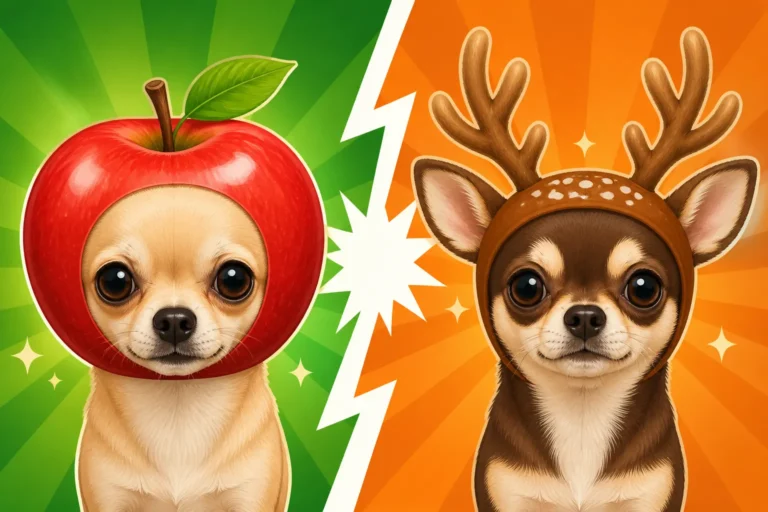
The Apple Head Chihuahua Under the Standard
It can be incredibly confusing trying to understand all the different terms thrown around when people talk about Chihuahuas. You hear "apple head," "deer head," "teacup," and it leaves you wondering what's real, what's just a cute nickname, and what truly defines the breed. This guide is here to cut through the noise and explain exactly what an "Apple Head Chihuahua" is according to the official breed standard, so you can appreciate this tiny powerhouse for its true, well-defined characteristics.
Understanding the Chihuahua Breed Standard
When we talk about a "breed standard," it’s not just some fancy concept for show dog enthusiasts. It’s the blueprint, the ideal description that responsible breeders strive to achieve in their puppies, aiming for both physical soundness and characteristic temperament. For the Chihuahua, this standard is particularly important because of their unique physical traits and often misunderstood personalities.
Why Breed Standards Exist
Think of a breed standard as the rulebook that keeps a breed consistent and healthy over generations. Without it, every breeder would go their own way, and soon enough, you’d have a hodgepodge of dogs vaguely resembling a Chihuahua, but lacking the distinct qualities that make the breed so special. Standards help ensure that a Chihuahua born today shares the same essential features and temperament as Chihuahuas from decades past. They outline everything from head shape and ear set to body proportions and gait, even describing the ideal personality. This consistency is crucial not just for showing, but for predicting health tendencies and temperament, making it easier for potential owners to know what to expect from their future companion. It’s about preserving the integrity and heritage of the breed.
The AKC and the Chihuahua Standard
In the United States, the American Kennel Club (AKC) sets the official breed standard for the Chihuahua. This detailed document is the gold standard for breeders and judges alike. It describes the "perfect" Chihuahua in painstaking detail, ensuring that efforts to breed are focused and aligned. For instance, the AKC standard specifically calls for a "well rounded 'apple dome' skull," which is where the "Apple Head" term originates. This isn't just an aesthetic preference; it's a defining characteristic of the breed as recognized by one of the oldest and most respected canine registries. Understanding this document helps you differentiate a well-bred Chihuahua that adheres to the established norms from one that might be marketed with misleading terms. It helps you, as an owner, appreciate the structure and health that a good breeder is aiming for when producing a litter.
Beyond "Show Dog": The Standard's Impact
While the breed standard is undeniably critical for those involved in conformation shows, its influence extends far beyond the show ring. Every Chihuahua, whether they're destined for a glittering show career or a cozy spot on your lap, benefits from breeders who adhere to the standard. Breeders who prioritize the standard are typically focused on genetic health, proper structure that supports a long, active life, and the stable temperament that defines the breed. This means a pet Chihuahua from a reputable breeder is more likely to be free from common structural defects like severe patellar luxation or serious dental issues, simply because the breeder is aiming for overall soundness as described in the standard. This focus on the standard means they're aiming to produce a healthy, happy companion that embodies the best qualities of the breed. You'll find these breeders often register their litters with organizations like the AKC, providing clear lineage and an indication of their commitment to breed integrity.
The Distinctive Features of the Apple Head
The term "Apple Head" isn't just a cute nickname; it refers to the very specific and highly desired skull shape outlined in the Chihuahua breed standard. This particular head structure is what truly sets them apart visually and is a hallmark of the purebred Chihuahua.
The Dome-Shaped Skull
The most defining characteristic of an Apple Head Chihuahua is, without a doubt, its distinctive, well-rounded, dome-shaped skull. Imagine a perfect, smooth apple sitting on top of a tiny body – that's the ideal. This dome should be noticeably rounded, not flat, and contribute to the breed's alert, intelligent, and often mischievous expression. When you gently run your hand over the top of an Apple Head's skull, you should feel this prominent curve. This curvature is directly linked to the breed's genetic makeup and is a key identifier for breeders adhering to the standard. This isn't something that can be faked or developed; it's either present from birth or it isn't. The pronounced dome also affects how the eyes are set and how the ears are carried, contributing to the overall classic Chihuahua look.
Eye Placement and Expression
With that characteristic rounded skull comes a specific eye placement that gives the Apple Head Chihuahua its famously expressive gaze. The eyes are typically large, luminous, and set well apart, but crucially, they should not be bulging or excessively prominent. While Chihuahuas are known for their big eyes, the standard calls for a balanced, intelligent, and alert expression rather than a wide-eyed, startled look. When you look at an Apple Head, their eyes should convey curiosity and confidence, peering out from beneath that lovely domed forehead. It’s this combination of skull shape and eye set that creates the quintessential Chihuahua "face" we all adore. Proper eye placement is also important for health, as excessively prominent eyes can be more prone to injuries or conditions like dry eye. You can often tell a lot about a Chihuahua's health and even their mood just by looking into those deep, expressive eyes.
Ear Set and Carriage
Another critical feature of the Apple Head, as outlined by the standard, is the ear set and carriage. Chihuahuas possess relatively large, erect ears that are set wide apart on the skull, but not so wide that they look like they're flying off the sides of the head. When the dog is alert, these ears should stand proudly upright, sometimes with a slight flare to the sides, framing that apple-shaped head perfectly. The tips might be slightly rounded or pointed, but the overall impression is one of attentiveness and liveliness. In relaxed moments, a Chihuahua might drop their ears slightly, but they should always be capable of perking them right back up. This ear structure works in harmony with the domed skull and expressive eyes to create the iconic Chihuahua silhouette. Without the correct ear set, even an otherwise beautiful Apple Head might lose some of its classic charm, appearing less alert or less 'Chihuahua-like' in its overall expression.
The Molera: A Standard Trait Unique to Apple Heads
One of the most surprising and often misunderstood traits of the Apple Head Chihuahua is the molera, or soft spot on their skull. While it might sound alarming, it's actually quite common and even accepted within the breed standard for this specific head type.
What a Molera Is
A molera is essentially an unclosed fontanelle, similar to the soft spot found on a human baby's head. It's an area where the skull bones have not fully fused, leaving a gap covered only by skin and a tough membrane. For Chihuahuas, especially the Apple Head variety, this is not necessarily a defect, but rather a common characteristic linked to their distinctive skull development. It typically feels like a small indentation or gap on the top of the head, often towards the front or center. While the size can vary, a molera can range from tiny, barely noticeable gaps to larger, more pronounced openings. Many smaller breeds, particularly those with domed skulls, can exhibit this trait, but it is most frequently associated with the Chihuahua. Understanding what a molera is can ease a new owner's mind, distinguishing a normal breed characteristic from a potential injury or concern. The Molera as a Normal Chihuahua Trait
Why It's Common in Apple Heads
The prevalence of moleras in Chihuahuas, especially Apple Heads, is directly related to the genetic factors that create their characteristic rounded skull. The dome shape requires a particular growth pattern of the skull bones, and in many instances, these bones simply don't fully knit together at the very top. It’s thought that the genes responsible for the apple-dome head shape also predispose them to this open fontanelle. It’s a natural consequence of their unique cranial structure. While some moleras will close partially or completely as the puppy matures, many Chihuahuas will retain a small molera throughout their lives. Reputable breeders will often mention the presence of a molera to potential owners, educating them about this normal aspect of the breed. It’s important to remember that while it's a soft spot, it's typically covered by a durable membrane, offering a degree of protection.
Managing Life with a Molera
Living with a Chihuahua who has a molera requires a bit of extra awareness, but it's generally not a cause for constant worry. The key is to be mindful of protecting your Chihuahua's head from potential bumps or trauma, just as you would protect a human baby's soft spot. This means preventing falls from high places, being cautious during playtime with larger or rougher dogs, and gently handling their head. Most Chihuahuas with a molera live perfectly normal, long lives. It's rare for a molera to be the cause of serious issues unless there's direct, significant trauma. However, a molera can sometimes be an indicator or associated with conditions like hydrocephalus, especially if it's unusually large or accompanied by other neurological symptoms. If you notice any changes in its size, or if your Chihuahua starts exhibiting signs like circling, head pressing, or unusual lethargy, it’s always best to consult your veterinarian. When choosing toys or grooming tools, just be extra careful around their head.
Body Proportions and Overall Appearance
While the head is undoubtedly the most defining feature of an Apple Head Chihuahua, the breed standard also meticulously describes the rest of their body, emphasizing compactness, balance, and a confident stance. It's the full package that creates the classic Chihuahua silhouette.
Compact Body and Level Topline
The ideal Apple Head Chihuahua possesses a compact, sturdy body that conveys strength despite its small size. The body should be slightly longer than it is tall, providing a sense of balance and not appearing overly leggy or elongated. A common way to describe this is that the length of the body, measured from the point of the shoulder to the point of the rump, is slightly greater than the height at the withers. This proportion contributes to their agile and energetic movement. The topline, running from the withers to the tail, should be level, indicating a strong back. There should be no dip or arch, but rather a smooth, strong line that supports their structure. This compact build means they often have a deep chest and well-sprung ribs, allowing for good lung capacity. You can find excellent quality food that supports their energetic metabolism, with brands like Chewy offering a range of small-breed specific formulas. A well-built Chihuahua, adhering to these proportions, is not only beautiful but also structurally sound, capable of a good Chihuahua Lifespan and Why the Breed Reaches Sixteen.
Tail Set and Carriage
The Chihuahua's tail is another expressive part of their overall appearance, and its set and carriage are clearly defined in the breed standard. The tail should be of medium length, set high on the rump, and carried in a graceful arc over the back or slightly to one side. It should never be tucked between the legs or curled so tightly that it touches the back, which can be seen as a sign of timidity or poor structure. A well-carried tail contributes to the Chihuahua's alert and confident demeanor, acting almost like a flag that signals their mood and presence. When they're excited or attentive, that tail often curls up with a flourish, adding to their lively charm. In repose, the tail might drop, but it should never look lifeless or dejected. This tail carriage is part of their terrier-like attitude, a small dog with a big personality that isn't afraid to show it. It completes the picture of a balanced, self-assured tiny companion.
Leg and Foot Structure
Despite their delicate appearance, the Apple Head Chihuahua is expected to have a sturdy and well-constructed leg and foot structure according to the breed standard. The front legs should be straight, set well under the body, and not appear bowed or out at the elbows. Similarly, the hindquarters should be well-muscled and angled to allow for good propulsion. Their feet are small and dainty, often described as "hare" or "cat" feet, with well-arched toes and firm pads. These small, compact feet contribute to their nimble movement and balance. The entire leg structure works in concert to provide a free, brisk, and active gait. While Chihuahuas are prone to conditions like patellar luxation, a responsible breeder following the standard aims for strong, well-formed joints and proper angulation to minimize such risks. This focus on sound leg and foot structure ensures that your Chihuahua can enjoy walks, play, and comfortably navigate your home without undue strain, especially important given their Chihuahua Patella Certification Before Breeding.
Temperament and the Apple Head Standard
It's easy to get caught up in the physical appearance of the Apple Head Chihuahua, but the breed standard also places significant emphasis on temperament. A truly well-bred Chihuahua is more than just a pretty face; they embody a specific personality that is alert, lively, and full of character.
"Terrier-Like" Alertness and Expression
The AKC breed standard describes the Chihuahua's temperament as "A graceful, alert, swift-moving compact little dog with saucy expression, and with terrier-like qualities of temperament." This "terrier-like" quality is crucial. It means they are observant, full of spirit, and possess a keen awareness of their surroundings. They are not meant to be timid or overly shy, but rather confident and inquisitive. Their saucy expression often comes from that combination of their large, dark eyes and their alert ear carriage. They watch everything, often with a tilted head and an air of intense concentration. This alertness makes them excellent watchdogs, quick to sound the alarm at anything unusual, though sometimes this can extend to the mail carrier or a leaf blowing past the window. It’s a vital part of their charm and why so many owners fall for their captivating personalities. The Terrier-Like Chihuahua Spirit the Standard Wants is a cornerstone of the breed, a testament to their long history as companions and guardians.
Fear vs. Fierceness
Unfortunately, some Chihuahuas have gained a reputation for being overly aggressive or "fierce." However, the breed standard describes a confident and self-possessed dog, not a fearful or reactive one. Often, what is perceived as fierceness in a small dog is actually rooted in fear. Because of their tiny size, Chihuahuas can feel easily overwhelmed or threatened by the big world around them. If they aren't properly socialized or are constantly picked up and carried (which can actually make them feel more vulnerable), they might resort to barking, snapping, or lunging as a defensive mechanism. This is not the inherent temperament the standard seeks; rather, it’s a behavioral issue that often stems from inadequate training or exposure. A well-adjusted Apple Head Chihuahua should be lively, curious, and friendly, even if a little reserved with strangers at first. It's a fine line, but one that responsible owners and breeders strive to understand and manage. This confusion often leads to what people mistakenly call Small Dog Syndrome and Why It Is Not Genetic.
Socialization for a Confident Chihuahua
Given their predisposition to being cautious and their "terrier-like" alertness, early and consistent socialization is absolutely critical for an Apple Head Chihuahua to develop into the confident, well-adjusted companion described in the standard. Without proper socialization, a Chihuahua can become overly fearful, leading to shyness or reactive behaviors. This means carefully exposing them to a variety of sights, sounds, people, and other well-behaved animals from a young age, in a positive and controlled manner. Puppy classes specifically designed for small breeds can be incredibly beneficial. The goal isn't to make them love every stranger or dog, but to teach them that the world is a generally safe place and that new experiences don't always warrant a strong defensive reaction. This builds their confidence and allows their naturally curious and affectionate personality to shine through. Even simple things like using a comfortable harness for walks, readily available at retailers like Chewy, can help make outdoor experiences more positive and reduce stress. Socializing a Chihuahua Without Overwhelming It is a delicate art, but one that pays immense dividends in creating a happy, stable dog.
Distinguishing Apple Heads from Deer Heads and "Teacups"
The world of Chihuahuas can be a bit of a maze with all the different terms floating around. It's important for prospective owners and enthusiasts alike to understand the distinctions between recognized breed types and popular, often misleading, marketing terms.
Apple Head vs. Deer Head
The most common comparison when discussing Chihuahua head types is between the Apple Head and the Deer Head. As we’ve discussed, the Apple Head is characterized by its prominent, rounded, dome-shaped skull, a short, often pointed muzzle, and large, expressive eyes that are set somewhat apart. This is the head type explicitly preferred by the AKC breed standard. The Deer Head Chihuahua, on the other hand, has a flatter skull, resembling more closely the head of a young deer (hence the name). They typically have a longer muzzle, a less pronounced stop (the indentation between the eyes), and their eyes tend to be set closer together, giving them a more "dog-like" appearance rather than the distinctive "Chihuahua" look. While Deer Heads are still purebred Chihuahuas, and many are beloved pets, they do not conform to the current AKC breed standard's description of the ideal head. This difference in head shape also often correlates with slightly larger body size and sometimes longer legs, although this isn't a strict rule. Understanding this difference is key to appreciating the specific aesthetics valued in the Apple Head. For a visual comparison, you might find it helpful to look at resources that highlight Apple Head Against Deer Head Chihuahuas.
The "Teacup" Misconception
Perhaps one of the most frustrating and often harmful misconceptions in the Chihuahua world is the term "Teacup Chihuahua." It’s absolutely crucial to understand that "Teacup" is not a recognized size, type, or variety of Chihuahua by any reputable kennel club, including the AKC. It is purely a marketing term used to describe Chihuahuas that are unusually small, often bred to be under the typical breed standard's weight limit of six pounds. While the idea of a tiny Chihuahua that can fit in a teacup might sound appealing, dogs marketed as "teacups" often come with a host of health problems precisely because they are bred for extreme smallness. These can include severe hypoglycemia (low blood sugar), fragile bones, organ problems, and increased vulnerability to cold. Why Teacup Chihuahua Is Not a Real Size is a critical piece of information for anyone looking to bring a Chihuahua into their home. Responsible breeders focus on health and adherence to the breed standard, not on breeding for dangerously small sizes. If you encounter a breeder advertising "Teacup Chihuahuas," proceed with extreme caution and skepticism.
Importance of Reputable Breeders
Given the nuances of breed standards and the proliferation of misleading terms, choosing a reputable breeder is paramount. A good breeder will prioritize the health, temperament, and adherence to the breed standard (which includes the Apple Head characteristics) over fleeting trends or exaggerated features. They will be transparent about their breeding practices, provide health clearances for the parent dogs, and be knowledgeable about potential breed-specific health concerns like Chihuahua Dental Disease in a Crowded Small Jaw or Patellar Luxation, the Chihuahua's Commonest Joint Problem. They won't use terms like "Teacup" to market their puppies. Instead, they will focus on producing sound, healthy puppies that embody the best qualities of the Apple Head Chihuahua, ensuring they grow into loving and robust companions. They will happily discuss the lineage, the parents' health history, and what to expect from their puppies, often providing resources or recommending products like appropriate small-breed food or harnesses from pet suppliers like Chewy. Asking for The Health Tests a Chihuahua Breeder Should Run is a good starting point to gauge their credibility.
Here’s a quick comparison of the two main head types:
| Feature | Apple Head Chihuahua | Deer Head Chihuahua |
|---|---|---|
| Skull Shape | Distinctive, rounded, dome-shaped (like an apple) | Flatter, more sloped forehead |
| Muzzle | Shorter, often more pointed | Longer, more tapered |
| Stop | Pronounced indentation between the eyes | Less pronounced, gentler slope |
| Eyes | Large, round, set apart, expressive | Can be smaller, set closer together, more "dog-like" |
| Molera | Common and accepted within the standard | Less common |
| Standard | Conforms to AKC breed standard for head type | Does not conform to AKC breed standard for head type |
| Overall Look | Classic Chihuahua appearance, distinctive "bug-eyed" | More proportionate, often resembles a miniature deer |
Disclaimer
This article is for general informational purposes only and does not constitute professional advice. Laws, prices and regulations vary by location and change over time. Consult a qualified professional for guidance on your specific situation.