Private Trainers for a Reactive Chihuahua
It’s incredibly tough when your tiny Chihuahua, who you adore, starts barking, lunging, or even nipping at things that seem trivial to others – whether it’s the mail carrier, another dog across the street, or even a visiting friend. This kind of "reactive" behavior can feel isolating and frustrating, making walks stressful and home life tense. This guide will walk you through why your little companion might be acting this way and, crucially, how a private trainer can be your best ally in transforming that fear and reactivity into confidence and calm.
Understanding Chihuahua Reactivity and Why It Happens
When your Chihuahua seems to explode with barks and lunges, it's rarely about them being "mean" or "dominant." In almost all cases, especially with small breeds like Chihuahuas, reactivity is rooted deeply in fear, anxiety, or a lack of appropriate coping skills. They're often trying to make the scary thing go away.
What Fear-Based Reactivity Looks Like in a Small Dog
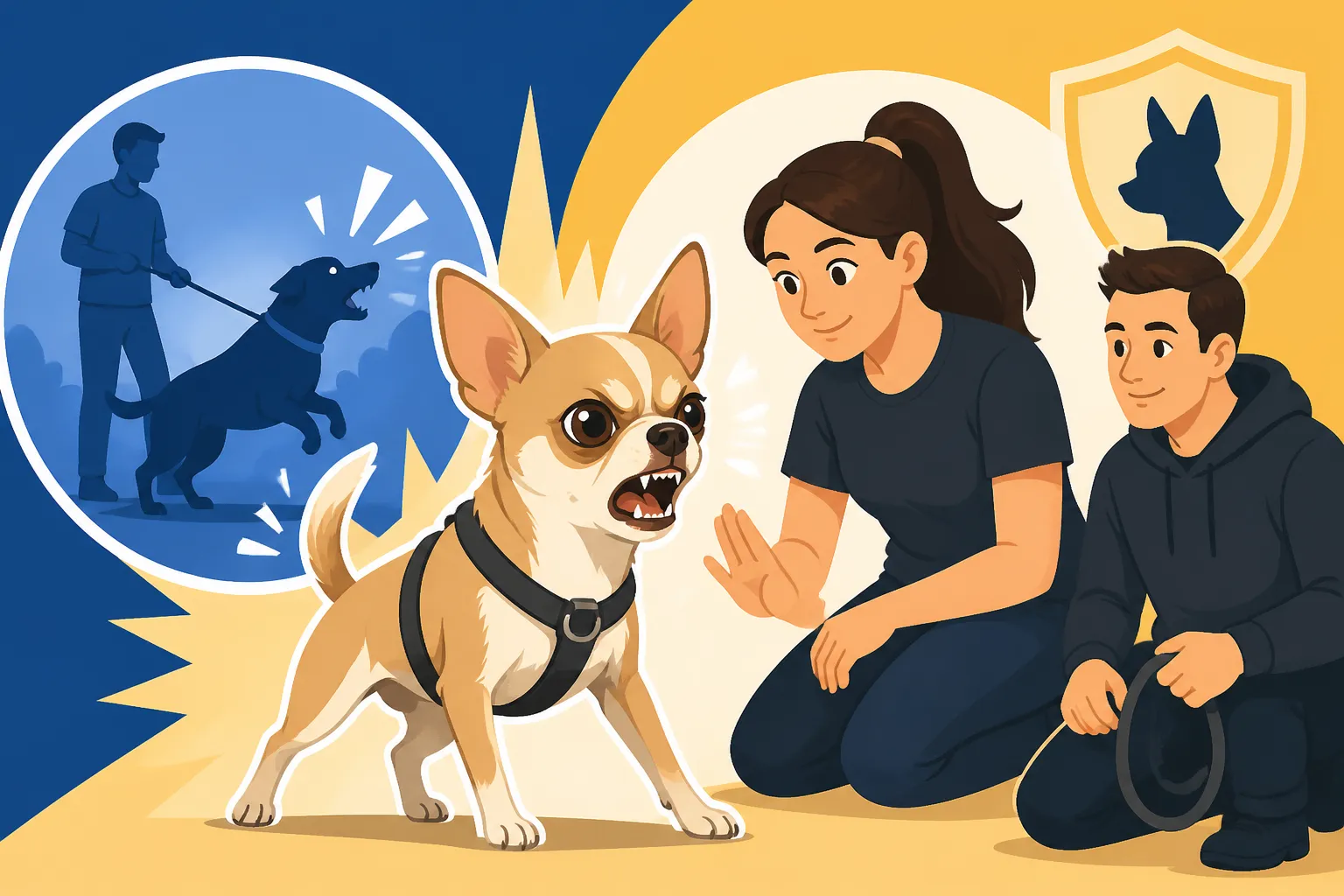
It's easy for people to dismiss a reactive Chihuahua's behavior as "small dog syndrome" or just being "feisty." But imagine being six pounds and constantly feeling vulnerable in a world full of giants. Your Chihuahua might resort to a loud, assertive display – the frantic barking, lunging on the leash, or even a quick snap – because it's their best defense mechanism. It's an attempt to create distance from a perceived threat, whether that threat is a passing jogger, a large dog, or an unfamiliar sound. They're saying, "Go away! You're too big, too loud, too close!"
This isn't them being deliberately naughty; it's a genuine survival instinct kicking in. They learn that if they make enough noise or a big enough fuss, the scary thing often does eventually move away, reinforcing their reactive behavior as a successful strategy. It’s a vicious cycle where their fear dictates their actions, and those actions, in turn, often lead to more fear or frustration from their surroundings. You might notice your Chihuahua exhibiting behaviors described in our post on Fear-Based Reactivity in a Chihuahua, which delve deeper into these nuanced expressions of fear.
Common Triggers for a Reactive Chihuahua
Chihuahuas, with their keen senses and often prominent eyes, are particularly susceptible to certain triggers. Loud noises can be terrifying, as can sudden movements. Other dogs, especially larger ones, are a huge source of anxiety for many Chihuahuas because they represent a physical threat that your tiny dog simply cannot match. Strangers approaching too quickly, or even just making eye contact, can be perceived as an invasion of their personal space.
Environmental factors also play a massive role. A crowded park, a bustling city street, or even just the sound of the doorbell can set off a reactive episode. Think about how vulnerable your Chihuahua might feel if they're constantly encountering triggers they can't escape. It's exhausting for them, and it's certainly exhausting for you, their human, trying to navigate these daily challenges. Understanding Why a Frightened Chihuahua Gets Loud First can help you recognize these triggers and the underlying emotions.
The Dangers of Ignoring Reactivity
Allowing reactivity to continue unchecked is a disservice to your Chihuahua and can have serious consequences. For your dog, it means living in a constant state of stress and anxiety, which can impact their overall health and well-being over time. Chronic stress can lead to other behavioral issues, a weakened immune system, and a generally lower quality of life.
For you, the owner, it often means avoiding walks, feeling embarrassed, or even developing anxiety yourself around certain situations. This can lead to your Chihuahua becoming more isolated, missing out on important socialization opportunities, and further cementing their reactive patterns. In severe cases, unchecked reactivity can lead to bites, even if they are "warning" nips, which can result in legal issues or, tragically, your dog being deemed dangerous. Addressing these behaviors proactively, perhaps with the help of a private trainer, is crucial for both your peace of mind and your Chihuahua's welfare.
Why a Private Trainer is Often the Best Choice for a Reactive Chihuahua
When dealing with a reactive Chihuahua, the typical group obedience class setting, while great for some dogs, often isn't the most effective – and can even be detrimental. Private training offers a tailored, focused approach that can make all the difference.
The Limitations of Group Classes for Fearful Chihuahuas
Imagine taking your already stressed Chihuahua, who barks at other dogs, into a room with five other dogs. It's a recipe for disaster. Group classes, by their very nature, introduce multiple triggers at once: other dogs, new people, strange smells, and an unfamiliar environment. For a fearful or reactive Chihuahua, this can be incredibly overwhelming, pushing them far past their threshold for learning. Instead of building confidence, such an experience can actually reinforce their fears, making them even more reactive in the future.
Your Chihuahua might spend the entire class hiding, trembling, or barking incessantly, unable to focus on any instruction. The pressure to "perform" in front of others can also be stressful for you as the owner, making it harder to learn and implement new techniques. While some puppy classes might be structured for very young dogs, for an adult Chihuahua with established reactivity, a quieter, more controlled environment is usually a much better starting point. This is why many owners struggle when their Chihuahua is in a general puppy class with big dogs.
Tailored Approaches for Tiny Dogs
A private trainer can develop a behavior modification plan specifically designed for your Chihuahua's unique personality, triggers, and learning style. They can start training in a low-distraction environment, gradually introducing triggers at a distance your dog can comfortably handle. This might involve slow, methodical Counter-Conditioning a Fearful Chihuahua, where positive associations are built around previous triggers. For instance, if your Chihuahua lunges at other dogs, a private trainer can help you practice rewarding calm behavior from a distance, slowly decreasing that distance over time.
This individualized attention means that every session is productive, focusing on your dog's specific needs rather than a generic curriculum. They can help you teach your Chihuahua appropriate coping mechanisms, like redirecting their attention to you or engaging in a calming activity when a trigger appears. This type of nuanced training is difficult to achieve in a group setting where one size is expected to fit all.
Addressing Specific Household Dynamics
Another huge advantage of private training is that sessions can often take place in your home or in your immediate neighborhood – the very places where your Chihuahua's reactivity is most apparent. A trainer can observe your Chihuahua in their natural environment, identifying subtle household triggers you might not even realize exist. Is it the neighbor's cat walking past the window? The sound of the mail truck? A specific family member's movement?
They can help you implement management strategies right where you live, like setting up management barriers, adjusting your walking routes, or creating "safe spaces" for your Chihuahua. This holistic approach ensures that the training isn't just a classroom exercise, but a practical, integrated solution that fits seamlessly into your daily life. They can also address how your family interacts with your Chihuahua, ensuring everyone is on the same page with training protocols.
Finding the Right Private Trainer for Your Chihuahua
Choosing a private trainer is a significant decision, and it's vital to find someone who understands the unique challenges of training a reactive Chihuahua. Not all trainers are created equal, and their philosophy and experience matter immensely.
Key Qualifications and Training Philosophies to Look For
When you're searching for a private trainer, look for someone who prioritizes positive reinforcement and humane training methods. This means avoiding trainers who advocate for punishment, intimidation, or methods that rely on physical corrections like leash jerks, shock collars, or alpha rolls. These methods, especially with a fearful Chihuahua, can severely damage their trust in you and the trainer, escalate their fear, and worsen their reactivity. Instead, you want a trainer who adheres to the "LIMA" principle: Least Intrusive, Minimally Aversive.
Certifications can also be a good indicator of a trainer's professionalism and knowledge. Look for certifications from reputable organizations like the Certification Council for Professional Dog Trainers (CCPDT), Karen Pryor Academy (KPA), or the Academy for Dog Trainers. These certifications usually require extensive knowledge, practical experience, and a commitment to continuing education. A trainer with specific experience in "fear-based reactivity" or "small dog behavior" is a huge plus. Our post on Finding a Trainer Who Takes a Chihuahua Seriously offers more insight into what to prioritize.
Questions to Ask Potential Trainers
Before committing to a trainer, have a detailed conversation with them. Here are some key questions to ask:
- What is your training philosophy and methodology? (Ensure it aligns with positive reinforcement.)
- Do you have experience working with reactive Chihuahuas or other small, fearful breeds? (Ask for specific examples or case studies if possible.)
- How do you handle situations where a dog becomes overly stressed or reactive during a session? (They should emphasize managing the environment and not pushing the dog.)
- What does a typical training plan look like for a reactive dog? (They should talk about gradual exposure, desensitization, and counter-conditioning.)
- What kind of homework or practice will be expected of me between sessions? (A good trainer empowers you to continue the work.)
- Are you certified, and with what organizations?
- Can you provide references from previous clients?
A good trainer will be transparent, patient, and focused on educating you as much as they are on training your dog. They should make you feel comfortable and confident in their approach. If you're considering Whether Anxiety Medication Helps a Chihuahua, a trainer should also be willing to collaborate with your veterinarian.
Understanding the Cost of Private Training
The cost of private training can vary quite a bit depending on your location, the trainer's experience, their certifications, and whether you opt for individual sessions or a package. While private training is an investment, many owners find it invaluable for the personalized attention and accelerated progress it offers, especially for complex behavioral issues like reactivity. Instead of a fixed hourly rate, some trainers offer packages that include multiple sessions, follow-up support, and even video analysis, which can sometimes provide a better value.
Think of it as an investment in your Chihuahua's long-term well-being and your own peace of mind. While the upfront cost might seem higher than group classes, the effectiveness and tailored approach can save you time, stress, and potentially more money down the line if reactivity goes unaddressed and leads to larger problems. It's also worth noting that some pet insurance providers, like Healthy Paws, might offer coverage for behavioral modification therapies when recommended or prescribed by a licensed veterinarian. Always check your specific policy details to see what's covered.
What to Expect from Private Training Sessions
Once you've chosen a trainer, your first session will likely involve an in-depth assessment of your Chihuahua's behavior, history, and your specific goals. The trainer will want to understand all the nuances, perhaps even observing your Chihuahua in situations where they typically become reactive. They'll then start to outline a tailored plan, breaking down complex behaviors into manageable steps.
Each subsequent session will build on the last, with the trainer demonstrating techniques and guiding you through practice. You'll learn how to read your Chihuahua's body language more effectively – noticing subtle signs like a tucked tail or "whale eye" before they escalate into a full-blown reaction. Homework is a critical component; successful training relies on consistent practice between sessions. The trainer will teach you exercises to build your Chihuahua's confidence, improve their focus on you, and help them cope more calmly with triggers. They might also advise on gear, such as the importance of a well-fitting harness for a Chihuahua's windpipe, as discussed in Harness Fitting on a Chihuahua Chest, rather than a collar, to protect their delicate throat from pressure during reactive episodes.
Beyond the Trainer: Supporting Your Reactive Chihuahua at Home
While a private trainer provides invaluable guidance, the real work continues long after they leave. Your active participation and consistent effort at home are crucial for your reactive Chihuahua's progress.
Continuing Desensitization and Counter-Conditioning Work
The techniques a private trainer teaches you, especially desensitization and counter-conditioning, need to be practiced regularly and patiently. Desensitization means gradually exposing your Chihuahua to their triggers at a distance or intensity where they remain calm and comfortable, slowly reducing that distance or increasing intensity over time. Counter-conditioning involves changing your Chihuahua's emotional response to a trigger from negative (fear, aggression) to positive. This is often done by pairing the trigger with something wonderful, like high-value treats from Chewy, special toys, or praise.
For example, if your Chihuahua reacts to other dogs, you might practice sitting far away from a dog park, rewarding your Chihuahua every time another dog appears and they remain calm. Over many, many repetitions, your Chihuahua starts to associate other dogs with good things happening. Remember, progress isn't always linear, and some days will be harder than others. It's a marathon, not a sprint, and consistency is key. Keep working on helping your Chihuahua choose to approach when they're ready, as highlighted in Letting a Chihuahua Choose to Approach.
Managing the Environment to Reduce Triggers
Until your Chihuahua has built stronger coping skills, effective management of their environment is paramount. This means actively preventing them from being put in situations where they are likely to react. For a Chihuahua reactive to dogs on walks, this might mean walking at off-peak hours, choosing quieter routes, or even driving to a less stimulating park. If they react to people or dogs outside the window, consider using window film or keeping curtains drawn during certain times of the day.
Inside the home, create a safe, quiet space where your Chihuahua can retreat if they feel overwhelmed. This could be a crate with a blanket over it, a dog bed in a quiet room, or a cozy blanket nest where they can burrow. The goal is to minimize their exposure to overwhelming triggers while you're actively working on training, reducing their overall stress load and preventing them from practicing unwanted behaviors. Sometimes, just avoiding an intense trigger for a while can give your Chihuahua a much-needed break from being constantly on edge.
The Role of Enrichment and Confidence Building
Beyond direct training for reactivity, providing ample mental and physical enrichment can significantly boost your Chihuahua's overall confidence and reduce anxiety. Puzzle toys, snuffle mats, and controlled chew sessions (with appropriate chews for their tiny mouths) can provide mental stimulation and a healthy outlet for energy. Even short, structured indoor games can be beneficial.
Focus on activities that your Chihuahua genuinely enjoys and excels at. This could be learning new tricks, playing fetch in a secure yard, or engaging in scent work games around the house. Success in these activities builds self-esteem and creates a more resilient dog, better equipped to handle novel situations. A confident Chihuahua is often a less reactive Chihuahua. Consider their natural alertness, as described in The Chihuahua Alertness the Standard Calls Terrier-Like, and channel it into positive, engaging activities that build confidence instead of fear.
Disclaimer
This article is for general informational purposes only and does not constitute professional advice. Laws, prices and regulations vary by location and change over time. Consult a qualified professional for guidance on your specific situation.