Where the Breed Went After the Spanish Arrived
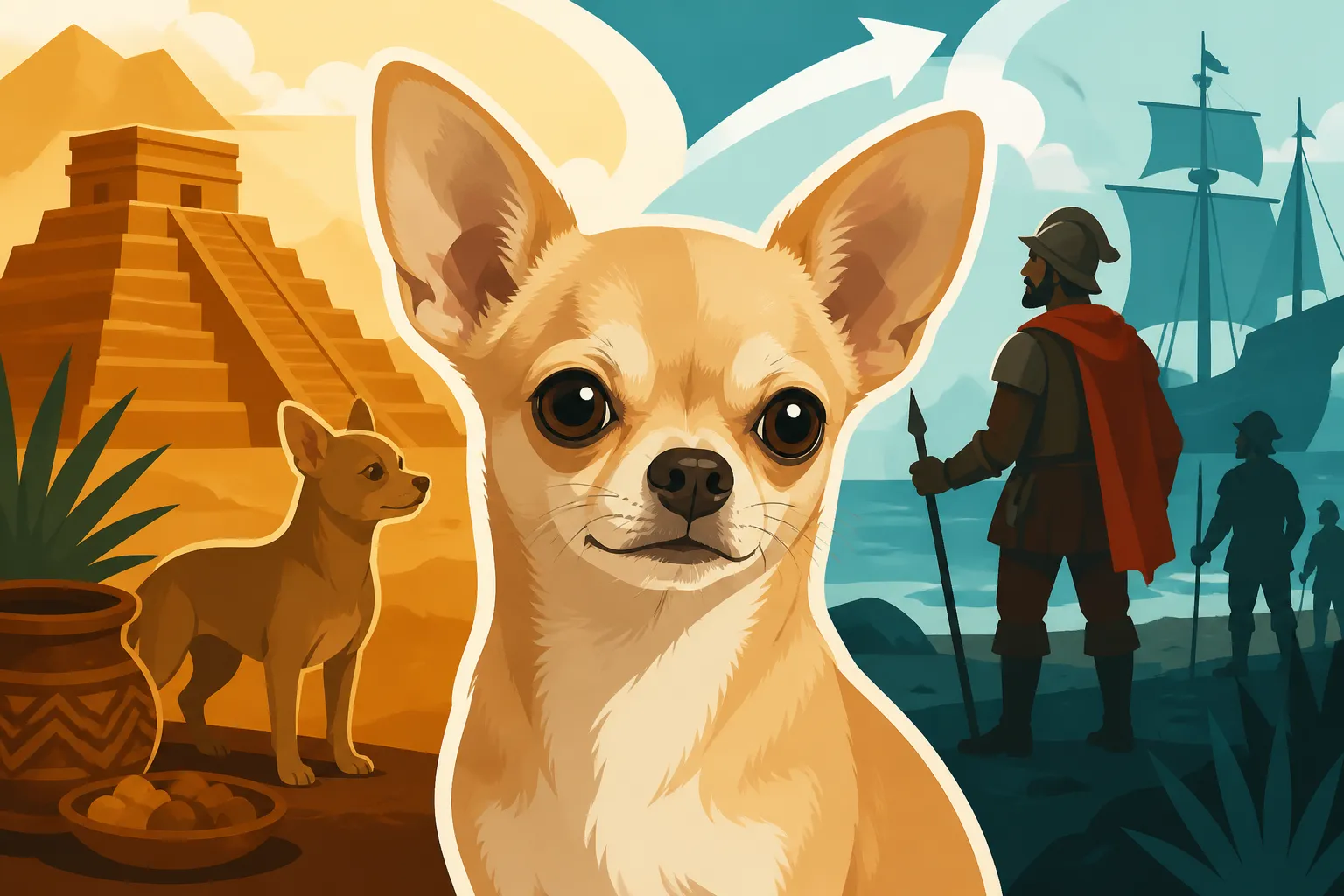
It's easy to look at our tiny Chihuahuas today, curled up on a warm blanket from Chewy, and forget they have an ancient, complex history stretching back centuries. We often talk about their roots with the Techichi, revered by the Toltecs and Aztecs, but what happened after the Spanish Conquistadors arrived in what is now Mexico? The narrative often jumps from ancient civilizations to American travelers "discovering" them in the 1800s, leaving a huge historical blank. This guide will delve into that lost period, exploring how these tiny, tenacious dogs managed to survive the dramatic upheaval of colonization and emerge centuries later to become the beloved breed we know today.
The Disruption of the Spanish Conquest on Indigenous Dog Breeds
The arrival of the Spanish in the Americas was a monumental event that completely reshaped the landscape, culture, and even the animal populations of the continent. Indigenous societies, which had their own established relationships with various animal species, including dogs, faced unprecedented disruption. For the native dogs like the Techichi, their carefully cultivated roles and significance within these cultures were suddenly undermined, and in many cases, outright destroyed. It wasn't just about new people arriving; it was a fundamental shift in values, beliefs, and practices that impacted every living thing.
The Techichi's Role in Pre-Columbian Societies
Before the Spanish set foot on American soil, the ancestors of our modern Chihuahuas, often referred to as Techichi, held a truly unique and important place in the indigenous cultures of Mesoamerica. These small dogs were far more than just pets; they were integral to the spiritual, ceremonial, and daily lives of the Toltecs and later the Aztecs. Evidence suggests they were considered sacred, sometimes even believed to guide souls through the afterlife. Imagine a tiny dog, not much different from the one snoozing on your lap, being viewed with such profound reverence and spiritual importance! You can learn more about What the Toltecs Kept the Chihuahua's Ancestor For. Their presence wasn't just tolerated; it was celebrated and deeply woven into the fabric of society, from intricate carvings to burial rituals.
Archaeological findings and ancient texts depict these dogs as companions, guardians, and even sources of warmth, embodying a deep connection between humans and animals that often gets lost in modern interpretations. They weren't just decorative; they served practical purposes too, perhaps as alarm systems for approaching strangers, or keeping pests away from homes. This profound relationship meant they were carefully bred and valued, living alongside humans in a way that ensured their continued lineage and cultural significance. Understanding this pre-conquest status is crucial to grasping the sheer scale of the challenges they faced when European influences swept through their world.
A Cultural Clash: New Dogs, New Values
When the Spanish arrived, they brought with them not only their own culture, religion, and social structures but also their own animals, including European dog breeds. These larger, often more utilitarian dogs, like mastiffs and greyhounds, were employed for hunting, guarding, and even warfare, tasks far removed from the ceremonial and companion roles of the Techichi. This influx of new dog breeds, combined with a starkly different worldview, spelled trouble for the native canine populations. The Spanish often viewed indigenous practices, including the reverence for native dogs, with disdain or as pagan rituals to be suppressed. What the Spanish Conquest Did to the Chihuahua was a cultural and genetic shockwave.
The European dogs quickly dominated, not just in numbers but also in the new societal hierarchy. Native dog breeds, which were accustomed to being valued members of their communities, suddenly found their roles diminished or outright eliminated. Many were likely culled, starved, or simply pushed aside as resources became scarce and priorities shifted. The traditional care and selective breeding that had preserved the Techichi for centuries would have faltered under these new conditions, forcing them to adapt or face extinction. It was a harsh new reality where their traditional value was no longer recognized, and their very existence was threatened by indifference, neglect, or outright hostility.
The Chihuahua's Retreat and Resilience
Despite the immense pressures and drastic changes brought by the Spanish Conquest, the ancestral Chihuahua line didn't vanish entirely. Instead, they retreated, moving out of the spotlight and finding ways to persist on the fringes of the new colonial society. Their survival during these centuries of relative obscurity is a testament to their resilience and perhaps to the quiet loyalty of the indigenous populations who continued to cherish them, even if covertly. It wasn't a grand re-establishment, but rather a stubborn continuation, an underground existence that kept their tiny spark alive.
Rural Sanctuaries and Hidden Pockets
The most plausible theory for the Chihuahua's survival points to their withdrawal into the more remote, rural areas of what eventually became Mexico. As the Spanish established their major settlements and imposed their culture on urban centers, the indigenous populations who held onto their ancestral traditions and animals would have moved away from these hubs. Small villages, secluded farms, and isolated communities became unintentional sanctuaries for the Techichi. In these hidden pockets, far from the prying eyes and changing values of the colonialists, the small dogs could continue to exist as companions, alarm systems, and perhaps still hold a quiet, personal significance for their owners.
Their diminutive size, which makes them seem so fragile today, might have actually been a significant advantage during this period. A small dog is much easier to conceal, to feed with limited resources, and to keep within a small, private space. They didn't require vast amounts of food or land, making them sustainable companions for families living subsistence lifestyles. Imagine a family needing to keep their cherished traditions alive; a small, quiet dog would be far less conspicuous than a large, boisterous breed. This period of quiet survival allowed the breed to endure, adapting to new circumstances while retaining the core characteristics that would one day make them famous.
Blending In: The Survival of the Fittest (and Smallest)
During these centuries of obscurity, the Techichi likely underwent some natural selection pressures that further honed their survival traits. Their small stature and agility would have allowed them to navigate harsh environments, perhaps even finding food sources that larger dogs couldn't access. They would have also become incredibly wary of strangers, a trait that some Chihuahuas still exhibit today, reflecting a deep-seated instinct for self-preservation developed during a time when being noticed by the wrong person could be dangerous. You can see how this plays into Chihuahua Fear Reactivity, the Breed's Real Problem.
It's also possible that, in some areas, they interbred with smaller European dogs that had been brought over, creating a slightly altered genetic makeup while still retaining the distinct "Chihuahua type." However, the prevailing evidence suggests a strong indigenous lineage, meaning they primarily survived by simply existing, largely unnoticed by the wider colonial world. They weren't being actively "bred" in a formal sense for specific traits as they once were by the Toltecs; their survival was more about who could adapt to a humble, hidden existence. This period underscores their incredible hardiness and adaptability, proving that sometimes, the smallest creatures have the most enduring spirit.
Rediscovery and Re-emergence in the 19th Century
The long period of obscurity for the Chihuahua eventually came to an end in the mid-19th century. As Mexico gained independence from Spain and its borders opened up more to international travel and commerce, curious outsiders began to venture into the country's interior. It was during this time that the small, distinctive dogs began to capture the attention of American travelers and merchants, marking the beginning of their journey from hidden local curiosities to globally recognized companions. This re-emergence wasn't a sudden explosion, but a gradual process of discovery and fascination.
American Travelers and Border Town Finds
The "rediscovery" of the Chihuahua often traces back to American travelers visiting Mexico, particularly in the border regions and the state of Chihuahua, in the mid-to-late 1800s. These intrepid individuals, often looking for unique souvenirs or experiences, started encountering these small, spirited dogs being sold in markets or kept by locals. Imagine a bustling Mexican market, full of vibrant colors and sounds, and suddenly, you spot a tiny dog, perhaps peeking out from a vendor's basket, utterly unlike anything you've ever seen before. These were not the large, powerful European breeds; these were small, delicate, yet fiercely independent little canines. This is How Americans Found Chihuahuas in the 1800s.
Stories abound of these dogs being purchased from vendors, often by the trainload, and brought back across the border to the United States. They were exotic, charming, and perfectly sized for travel, making them an instant hit with those seeking something new and different. The dogs were often simply referred to by the region they came from, hence the eventual adoption of the name "Chihuahua," after the state where they were most frequently found. This burgeoning interest marked a turning point, pulling the breed out of centuries of relative anonymity and placing it on a new path toward international recognition. Many were sold as simple curiosities, without much thought to their lineage, but their unique appearance spoke for itself.
From Local Curio to International Fascination
Once these little dogs crossed the border into the United States, their popularity began to grow rapidly. They quickly transitioned from being mere local curiosities to objects of international fascination. Their distinct appearance—those large, expressive eyes, erect ears, and tiny stature—made them instantly recognizable and adorable. They were a departure from the larger, more robust breeds popular at the time, offering something truly unique. People were captivated by their small size and spunky personalities, finding them both endearing and surprisingly intelligent.
As their popularity spread, so did the demand for them. Early breeders and enthusiasts began to work towards standardizing the breed, moving beyond simply collecting interesting specimens. Dog shows and kennel clubs started to take notice, creating a more formal pathway for the Chihuahua to be recognized as a legitimate breed. This period saw the foundations laid for the modern Chihuahua, as people started to appreciate them not just as quirky pets but as a distinct and valuable canine lineage. Think of how a unique product can spread by word-of-mouth; these little dogs did the same, captivating hearts and homes across the continent. You might find a whole section of toys for them on Chewy, designed for their small size and big personality.
Establishing the Modern Chihuahua Line
With growing interest and a clear demand, the journey to formally recognize and standardize the Chihuahua breed began in earnest. This was a crucial phase that solidified their place in the canine world, moving them from anonymous survivors to a celebrated, distinct breed with defined characteristics.
Early Breeding Efforts and Standardisation
The late 19th and early 20th centuries were pivotal for the formal establishment of the Chihuahua breed. Enthusiastic breeders, both in Mexico and the United States, began the dedicated work of selectively breeding these dogs to consistently produce animals that embodied a certain look and temperament. This was a significant step beyond simply finding dogs in markets; it involved understanding genetics, lineage, and carefully pairing dogs to refine traits. The goal was to create a breed standard—a written description of the ideal Chihuahua—which would guide future breeding efforts and ensure uniformity.
This period involved meticulous record-keeping and a shared vision among early fanciers to preserve what made the Chihuahua unique. They focused on refining the distinct apple head shape, the large, round eyes, the erect ears, and of course, the tiny body size that we associate with the breed today. This process wasn't without its challenges, as there would have been variations in the dogs initially discovered. However, through persistent effort and a growing understanding of canine genetics, the foundational lines of the modern Chihuahua began to take shape. This dedicated work meant the difference between a collection of small dogs and a recognized, enduring breed.
Here's a comparison of the Techichi's perceived status before and after the Spanish Conquest:
| Aspect | Pre-Spanish Conquest (Techichi) | Post-Spanish Conquest (Obscurity Period) |
|---|---|---|
| Societal Role | Sacred, ceremonial, companion, spiritual guide | Hidden companion, alarm dog, local curiosity |
| Cultural Status | Revered, integrated into religious/daily life | Largely overlooked by dominant culture, marginalized |
| Breeding Focus | Intentional, selective for cultural/spiritual traits | Informal, survival-driven, localized |
| Visibility | Prominent in art, rituals, daily life | Largely absent from formal records, rural/hidden |
| Survival Strategy | Protected by cultural value | Resilience, adaptability, inconspicuousness |
| Geographic Spread | Widespread across Mesoamerican civilizations | Concentrated in remote Mexican regions |
The Name "Chihuahua": A Lasting Legacy
The name "Chihuahua" itself is a lasting tribute to the region where these dogs were "rediscovered." As the breed gained recognition, particularly in the United States, it became crucial to give them a formal name. Unlike many breeds named for their function or appearance, the Chihuahua's name directly links it to the Mexican state of Chihuahua, where American traders and travelers first encountered and began bringing them north. This geographical naming tradition is quite common in the canine world, and in this case, it served to honor their origins while also providing a clear, simple identity for the emerging breed.
This name solidified their identity as they moved into dog shows and formal registries. The American Kennel Club, for instance, first recognized the Chihuahua in 1904, solidifying its place among the official dog breeds and marking the culmination of its journey from ancient reverence, through centuries of quiet survival, to international stardom. It’s a powerful reminder of how a breed can endure profound historical shifts and re-emerge, carrying a rich legacy from its past into the modern world. Today, when you look at a tiny Chihuahua enjoying a new toy from Chewy or nestled comfortably on a bed, you're seeing the product of centuries of survival, adaptation, and eventual celebration. They are truly living history, a testament to the enduring bond between humans and their canine companions, no matter how small or how turbulent the times.
Disclaimer
This article is for general informational purposes only and does not constitute professional advice. Laws, prices and regulations vary by location and change over time. Consult a qualified professional for guidance on your specific situation.