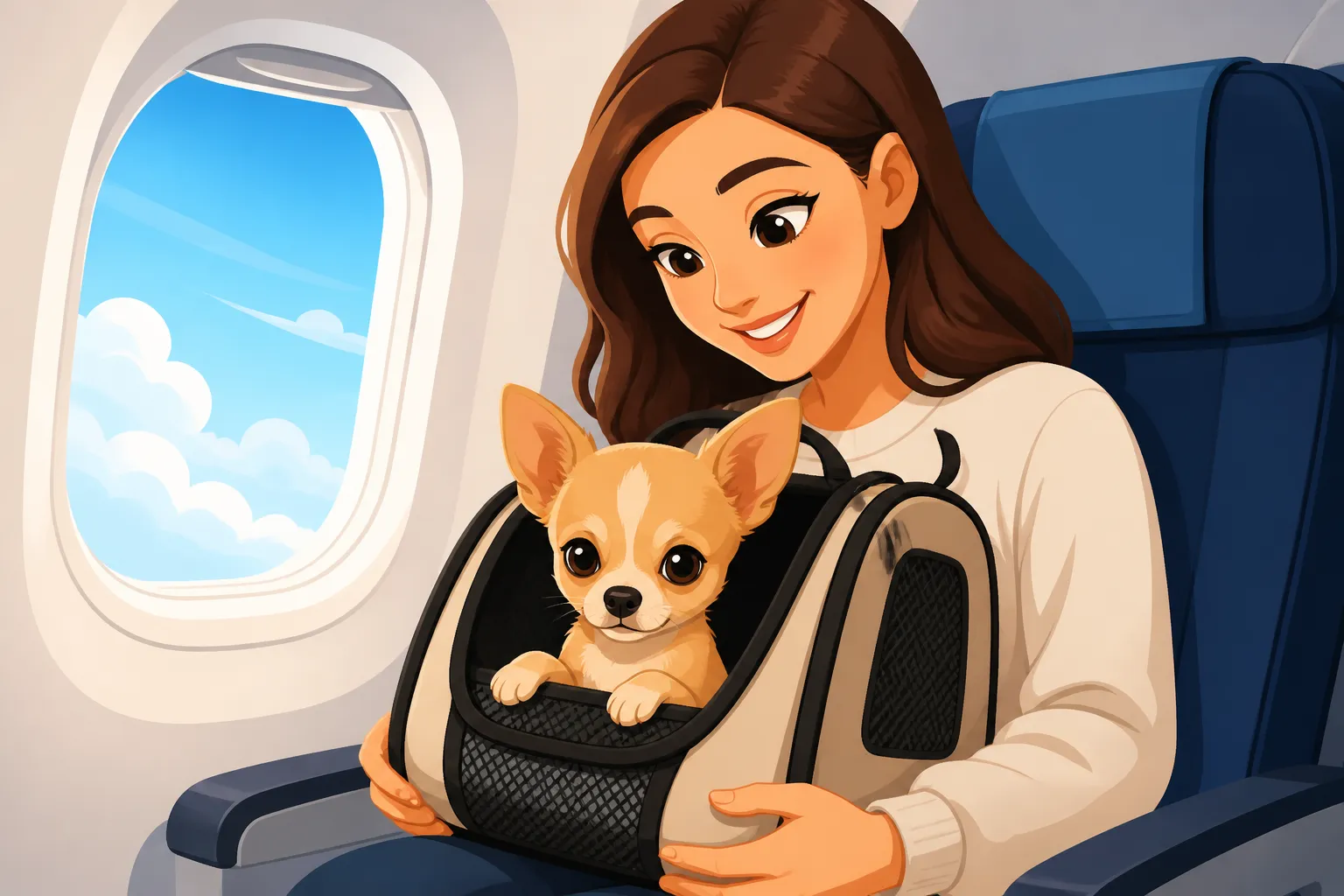
Flying a Chihuahua Puppy Home in Cabin
Bringing home a new Chihuahua puppy is such an exciting time, full of anticipation and joy! However, if that little bundle of fur needs to travel by air to get to you, especially if you're crossing state lines or a significant distance, the logistics can feel incredibly overwhelming and frankly, a little scary. You're not just thinking about yourself, but this tiny, vulnerable creature. This guide will walk you through everything you need to know about successfully flying your Chihuahua puppy home in the cabin with you, ensuring a safe and smooth journey for your new family member.
Understanding Airline Regulations for Traveling with a Puppy
The very first hurdle you'll encounter when planning to fly with your Chihuahua puppy is the maze of airline regulations. It's not just about booking your ticket; you're essentially booking a ticket for your dog, and their rules are often far more stringent and complex than human passenger guidelines. It’s absolutely critical to research your specific airline’s pet policy before you even book your flight, as policies can vary dramatically between carriers and even change without much notice. Don't assume anything. A quick phone call to their dedicated pet travel line can save you a world of headaches, and potential heartbreak, down the road.
Most airlines have a strict limit on the total number of pets allowed in the cabin per flight, often as few as two or three. This means space is very limited and often booked on a first-come, first-served basis. If you don't reserve your puppy's spot when you book your own ticket, you run the risk of getting to the airport and being told there's no room for your furry companion, forcing you to scramble for alternative arrangements or even rebook your entire trip.
Another major consideration is the combined weight limit for your puppy and its carrier. While Chihuahuas are famously small, many airlines set this limit around 20-25 pounds. A typical Chihuahua puppy, even a robust one, is unlikely to exceed this with a proper soft-sided carrier, but it’s still important to confirm. Furthermore, there are often age restrictions; puppies usually need to be at least 8 to 10 weeks old to fly, having completed their initial vaccinations and been fully weaned. Some airlines might even require them to be older, perhaps 12 weeks, especially for international travel, so this is another crucial detail to verify. You might also want to check if the breeder has already addressed critical health milestones, like initial vaccinations. You can read more about Chihuahua Vaccination and Anesthesia at Toy Size to understand what your puppy might have already received.
Beyond weight and age, documentation is paramount. You will almost certainly need a health certificate issued by a licensed veterinarian within a specific timeframe – often 10 days – prior to your travel date. This certificate confirms your puppy is healthy enough to fly and free from any signs of communicable disease. It's not just a formality; it’s a necessary safeguard for your puppy, other animals, and the airline. Some states or countries might have additional entry requirements, such as specific vaccinations (like rabies, though a young puppy might not have this yet) or even microchipping. Always check the regulations for both your departure and arrival locations.
Selecting the Right In-Cabin Carrier for Your Chihuahua
The carrier isn't just a box to transport your puppy; it's their safe haven for the entire journey. It needs to meet airline specifications while also providing comfort and security for your tiny Chihuahua. Airlines have very specific requirements for in-cabin carriers, primarily centered around dimensions. The carrier must fit comfortably under the seat in front of you without blocking the aisle, and it needs to be small enough that you can stow it away quickly during takeoff and landing. These dimensions can vary slightly between aircraft types and airlines, so once again, verifying with your specific airline is non-negotiable. Many owners find that soft-sided carriers, which have a bit more give and can be compressed slightly, tend to be more versatile and often fit better than rigid ones.
Beyond size, consider the construction of the carrier. It must be well-ventilated, with mesh windows on at least two or three sides to ensure proper airflow for your puppy. This isn't just for comfort; it's a safety requirement. The carrier should also be leak-proof, typically with a waterproof bottom or a removable, absorbent pad. This is critical in case of accidents during the flight, preventing any spills from reaching the aircraft floor. The closure mechanism should be secure, preventing any accidental escapes, but also easy for you to open quickly if needed. Handles are a must for easy carrying, and a shoulder strap can be a lifesaver when navigating busy airports with luggage. You can find many suitable options by looking up Chihuahua Carriers and Travel Bags online or at pet stores like Chewy.
The goal is to create a cozy, den-like environment. Place a soft blanket or a small towel inside that smells like home or the breeder, offering a familiar scent that can provide a sense of security for your puppy. A small, familiar toy can also be comforting. While it might seem tempting to add a water bowl, most airlines advise against open water containers in the carrier due to spillage risk. Instead, a small, leak-proof water bottle that attaches to the mesh, or offering small sips from a collapsible bowl during layovers, is usually a better approach. Food is generally not recommended during the flight itself to avoid upset stomachs, though a few small treats can be handy for positive reinforcement. Consider exploring Chihuahua Crate Size and Setup to ensure your carrier choice is appropriate not just for travel, but for initial settling at home too.
Here's a quick reference table for general in-cabin carrier guidelines, but remember to always check with your specific airline:
| Feature | General Airline Guideline | Importance for Chihuahua Puppy |
|---|---|---|
| Dimensions | Must fit under seat (approx. 18"L x 11"W x 11"H) | Essential for airline acceptance; ensures puppy can stand, turn, lie down naturally. |
| Construction | Soft-sided or rigid; leak-proof bottom | Soft-sided offers flexibility for tighter spaces. Leak-proof protects cabin and other passengers. |
| Ventilation | Mesh on at least 2-3 sides (usually 4) | Critical for airflow, preventing overheating, and allowing puppy to see out. |
| Closure | Secure zipper or latch | Prevents escape, especially in a busy airport or during turbulence. |
| Weight Limit | Combined pet + carrier, typically 20-25 lbs | Chihuahuas easily meet this, but always double-check. |
| Comfort Items | Absorbent pad, blanket, small toy | Reduces stress, provides warmth, absorbs accidents. Familiar scents are key. |
Preparing Your Chihuahua Puppy for a Smooth Flight
Successful in-cabin flight with a puppy isn't just about picking the right carrier and booking the ticket; it's about preparing your puppy for the experience. A calm, well-adjusted puppy makes for a much less stressful journey for everyone involved. This preparation should ideally begin weeks before your travel date.
First, schedule a veterinary check-up. This is non-negotiable for obtaining the required health certificate, but it’s also an opportunity to discuss travel anxiety, motion sickness, and overall puppy health with your vet. Small breeds like Chihuahuas are particularly susceptible to issues like Chihuahua Hypoglycemia and the Puppy Emergency, which can be exacerbated by stress and missed meals during travel. Your vet can advise you on how to manage feeding schedules and what to do if you notice signs of low blood sugar. They might even suggest carrying emergency glucose gel, just in case. They can also confirm if your puppy has met the minimum age and health requirements for air travel.
Next, focus on carrier training. This is absolutely vital. Start by introducing the carrier as a positive, safe space. Leave it open on the floor with treats and toys inside. Encourage your puppy to go in and out voluntarily. Once they're comfortable, practice zipping it up for short periods, gradually increasing the duration. Carry them around the house in the carrier, simulating movement. This desensitization process will make the real event far less frightening. You want the carrier to feel like a familiar den, not a scary prison.
Potty training, even rudimentary, is crucial for travel. While accidents happen, having a puppy that understands where to relieve itself can minimize mess and stress. Aim for frequent potty breaks before heading to the airport and during any layovers. Consider bringing puppy pads for emergency use in airport family restrooms, though most airlines encourage outdoor relief areas. Remember, your puppy's tiny bladder means they can't hold it for long, so planning for frequent breaks is essential. Find out How Often a Chihuahua Puppy Must Eat to help regulate their bathroom schedule.
Food and water management are also key. While you might be tempted to withhold food to prevent accidents, a young Chihuahua puppy can quickly become hypoglycemic, especially under stress. Discuss a feeding strategy with your vet. Often, a small, easily digestible meal a few hours before the flight is recommended, with a very light snack during a long layover if necessary. For hydration, offer water frequently before you board and during layovers using a collapsible bowl. On the plane, a small, lick-style water bottle attached to the carrier can provide sips without spillage. You should also be aware of Why Cold and Stress Drop Chihuahua Blood Sugar and how to react, perhaps keeping some emergency sugar gel close at hand.
On the day of travel, try to keep things as calm and routine as possible. Exercise your puppy lightly before heading to the airport to burn off some excess energy, but don't exhaust them. Avoid any new foods or treats that could cause an upset stomach. Dress your puppy in a comfortable harness, not a collar, for airport navigation and quick handling. A harness is far safer for a delicate Chihuahua trachea. You can find suitable Harnesses and Leads Sized for a Chihuahua at most pet supply stores. Brands like Healthy Paws pet insurance might also offer resources or tips for traveling with pets, which could be helpful to review beforehand, knowing you have support if an unexpected illness or injury occurs while you're away from your regular vet.
Navigating the Airport and Ensuring a Safe Flight
Airport security can be daunting even for humans, let alone a tiny puppy. Be prepared. When going through TSA checkpoints, you will need to remove your Chihuahua puppy from its carrier and carry it through the metal detector with you while the empty carrier goes through the X-ray machine. This can be a high-stress moment for both you and your puppy, so practice holding your puppy securely beforehand and ensure they are comfortable being held close. Double-check that your harness is secure and that your puppy cannot slip out of your grasp or try to bolt.
Once past security, find a quiet area to let your puppy have a final potty break before boarding, ideally in a designated pet relief area. Offer a small amount of water if they seem thirsty. Resist the urge to let your puppy out of the carrier in the terminal unless in a private, secure area; airports are busy, often noisy places, and a small puppy can easily get overwhelmed or injured.
When it's time to board, remember that your puppy's carrier must be stowed under the seat in front of you. This means your puppy will be in darkness and unable to see you for the duration of the flight. This can be distressing for a young puppy, so having familiar scents, a comforting blanket, and perhaps a very quiet chew toy (if allowed and safe) can help. Don't open the carrier during the flight, no matter how much your puppy whines or cries. This is an airline rule, but more importantly, it's a safety rule for your puppy.
During the flight, keep an eye on your puppy's well-being as best you can. Listen for unusual sounds or signs of distress. If you notice any concerning symptoms like excessive panting, trembling that isn't due to cold, or unusual vocalizations, speak to a flight attendant. For a small Chihuahua, the cabin temperature can sometimes feel too cold, so make sure their carrier has a warm, cozy blanket. If your puppy seems chilly, you can drape a light blanket over part of the carrier, making sure not to block ventilation. Remember that if your puppy is showing signs of distress or unusual behavior, it could be a sign of Emergency Sugar for a Collapsing Chihuahua Puppy, so be ready to act if your vet has given you instructions for this.
Upon arrival, your first priority should be to find a pet relief area for your puppy to stretch its legs and relieve itself. Re-offer water and a very small snack if appropriate. The post-flight period is also important for adjusting your puppy to its new surroundings. It can be a lot for a small creature to process, so patience and a calm environment are key. Products from pet supply giants like Chewy can be helpful for everything from travel carriers to a first-aid kit for travel, ensuring you have all the essentials on hand. And for their first meals at home, fresh dog food brands like Ollie can provide pre-portioned, nutritious options tailored to a puppy's delicate stomach, helping them settle in without digestive upset.
Bringing a puppy home is a marathon, not a sprint, and the travel portion is just the beginning. Once home, focus on providing a quiet, safe space for your puppy to decompress. Avoid overwhelming them with too much attention immediately. Let them explore their new environment at their own pace. Getting your new puppy settled is a critical next step, and you can learn more about Settling a Two Pound Chihuahua Puppy Into the House to ensure a smooth transition.
Disclaimer
The information provided in this guide is for educational and informational purposes only and does not constitute veterinary advice. Always consult with a qualified veterinarian regarding your Chihuahua puppy's health, travel readiness, and any medical concerns. Airline policies can change frequently, so it is imperative to verify all pet travel requirements directly with your chosen airline before making any travel plans.