A Chihuahua That Cries Out and Then Walks On
Your Chihuahua is trotting across the kitchen when it suddenly yelps, holds up a leg or freezes for a second, and then carries on as if nothing happened. By the time you kneel down, it is wagging and asking for a treat. That quick cry followed by normal walking is one of the most common, and most confusing, things small dog owners see. This guide explains what usually causes it, how to tell a harmless moment from a warning sign, and what to do next.
Why a Chihuahua Yelps and Then Seems Fine
A sudden cry that fades within seconds is usually a sign of brief, sharp pain that resolves just as fast as it started. In a dog that weighs four to six pounds, the list of likely causes is fairly short, and most of them involve the knees, the spine, or a small injury to the foot. The fact that your Chihuahua walks on normally afterwards is reassuring in one sense, because it suggests nothing is broken, but it does not mean nothing is wrong.
The slipping kneecap, by far the most common cause
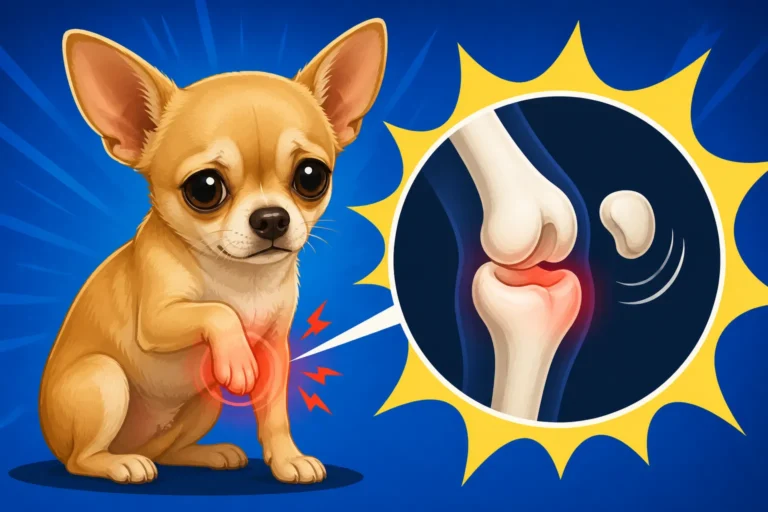
Patellar luxation is the single most likely reason for a Chihuahua to cry out and then walk on. The kneecap sits in a groove at the end of the thigh bone. In many toy breeds that groove is shallow, and the muscles and ligaments pulling on the kneecap are slightly misaligned, so the kneecap can pop out of place to the inside of the leg.
When it slips, the leg locks for a moment. Some dogs yelp because the movement is sudden and uncomfortable. Others simply skip, holding the leg up for three or four steps, then the kneecap slides back into its groove and the dog carries on. If you have seen that hop and skip pattern, The Skipping Step That Means a Chihuahua Knee describes it in detail. For a broader overview, Patellar Luxation, the Chihuahua’s Commonest Joint Problem covers why the breed is so prone to it.
The tricky part is that early stages of this condition can look almost invisible. A dog with a grade one or grade two kneecap may go weeks between episodes, and owners often assume they imagined the first one.
Neck and back pain
A Chihuahua that cries out when it turns its head, jumps off a sofa, or is picked up under the chest may be feeling a twinge in its neck or spine. Intervertebral disc problems are less common in Chihuahuas than in long-backed breeds, but they do happen, and small dogs can also strain neck muscles by pulling hard against a collar.
Spinal pain often behaves differently from knee pain. Rather than skipping, the dog may hunch, hold its head low, move stiffly, or yelp when touched in a particular spot. It may then seem fine for hours. Chihuahua Back and Neck Pain goes through the signs that point towards the spine rather than the legs.
A paw, a nail, or a small sprain
Not every yelp is a chronic problem. A thorn, a cracked nail, a stubbed toe on a door frame, or a minor sprain from a bad landing can all produce a sudden cry. These causes tend to leave clues: licking at a paw, a nail that looks split or bleeding, swelling between the toes, or a limp that stays the same rather than coming and going.
Less common but important causes
A few other possibilities are worth knowing about, even if they are not the first things to consider:
- Legg-Calve-Perthes disease, where the top of the thigh bone loses its blood supply and slowly breaks down, usually shows up in young Chihuahuas under about a year old, often with a limp that gradually worsens.
- Hypoglycemia in a puppy can cause weakness, trembling or collapse, but it is rarely a single yelp followed by normal walking.
- Dental pain can make a dog cry out when chewing something hard, then seem fine once it stops.
- Abdominal discomfort may cause a yelp when the dog is picked up around the belly.
How the main causes compare
| Likely cause | What you usually see | Pattern over time | How urgent it tends to be |
|---|---|---|---|
| Slipping kneecap | Yelp or skip, leg held up for a few steps, then normal | Comes and goes, often more frequent with time | Book a vet exam within days |
| Neck or back pain | Cry when turning, jumping or being lifted, hunched posture | Can flare and settle | Same day if wobbly, weak or unwilling to move |
| Paw or nail injury | Licking a foot, visible damage, steady limp | Improves as the injury heals | Check promptly, vet if bleeding or swollen |
| Perthes disease | Limp in a young dog, muscle loss on one hind leg | Gradually worsens | Vet visit soon, imaging needed |
| Minor sprain | Limp after a fall or jump | Improves over a few days of rest | Vet if not clearly better in two to three days |
This table is a rough guide only. Many Chihuahuas have more than one issue at once, and a vet exam is the only way to know for sure.
What to Do in the Minutes and Days After
When your dog yelps, your instinct is to rush over and start feeling legs. A calmer approach usually gives you more useful information and avoids making the pain worse.
Right after the cry
- Stay still for a moment and watch. Note which leg, if any, your Chihuahua lifted, and whether it skipped, limped, or held its head oddly.
- Let your dog move on its own before you pick it up. If it walks normally within a few steps, that suggests the problem resolved quickly, which is typical of a kneecap that slipped and returned.
- Gently check the paws and nails on the leg that seemed to be involved, looking for anything stuck, split or bleeding.
- Avoid flexing and stretching the joints repeatedly yourself, since this can be painful and can make a nervous dog snap.
- If your Chihuahua cannot stand, drags its legs, cries continuously, or seems wobbly, treat it as an emergency and go to a vet straight away.
Keeping a short diary
Owners often struggle to describe these episodes once they get to the clinic, because the dog seems perfectly normal on the exam table. A simple diary makes a big difference. Write down the date, the time, what your dog was doing, which leg was affected, and how long it lasted.
If you can, take a short video on your phone the next time it happens. Vets love videos of intermittent limps because they rarely see them in person. Even a ten second clip of a dog hopping on three legs across a rug can point clearly towards a kneecap problem.
Behavior changes to watch for
Some Chihuahuas hide pain very well, and the first clues may be behavioral rather than physical. Look for:
- Reluctance to jump onto the sofa or bed where it used to leap happily.
- Growling or snapping when picked up or touched on the hindquarters.
- Sitting with one leg sticking out to the side.
- Spending more time lying down and less time playing.
Chihuahua Behavior Shifts That Mean a Knee Hurts explores this in more depth, and A Chihuahua Snapping Because Its Knee Hurts is worth a read if your normally sweet dog has started to grumble when handled.
A real-world scenario
Picture a three year old Chihuahua named Pepita. Her owner notices she yelps once while running down the hallway, then carries on. A week later, it happens again on the way to the garden. Over the following month, the owner sees Pepita skip on her back right leg a handful of times, each time recovering within a few steps.
At the vet, Pepita walks perfectly. But when the vet gently pushes on the kneecap with the leg straightened, it slides out of the groove and back in. The diagnosis is a grade two medial patellar luxation. The plan is weight management, gentle muscle-building exercise, and keeping Pepita off high furniture, with a recheck in a few months to see whether it is getting worse.
How Vets Work Out What Is Going On
A vet exam for an intermittent cry usually involves more hands-on testing than owners expect, and sometimes imaging.
The physical exam
Your vet will watch your Chihuahua walk and trot, then feel each leg, joint and the spine. For knees, they will check whether the kneecap can be pushed out of its groove and whether it returns on its own. This is how the grade is assigned. The four grades of patellar luxation are summarized below, and The Four Grades of a Slipping Chihuahua Kneecap gives a deeper explanation.
| Grade | What the vet finds | What owners usually notice |
|---|---|---|
| Grade one | Kneecap can be pushed out but returns immediately | Often nothing, or a rare skip |
| Grade two | Kneecap slips out on its own at times and returns with movement | Occasional skipping or a sudden cry, then normal walking |
| Grade three | Kneecap sits out most of the time but can be pushed back in | Frequent limping, odd stance, reluctance to jump |
| Grade four | Kneecap stays out and cannot be put back | Constant abnormal gait, bowed legs |
A dog that cries out and then walks on very often turns out to be grade two, which is the stage where the kneecap slips in and out by itself.
Imaging and further tests
If the physical exam does not give a clear answer, or if the vet suspects hip, spine or bone problems, X-rays are the usual next step. They can show the shape of the knee groove, signs of arthritis, Perthes changes in the hip, or narrowed spaces between vertebrae. More advanced imaging, such as CT or MRI, is reserved for suspected disc or spinal cord problems and is usually done at a specialist center.
When surgery comes into the conversation
Many Chihuahuas with grade one or grade two kneecaps live their whole lives without surgery, managed with weight control, muscle strength and sensible activity. Surgery becomes more likely when episodes are frequent, when the grade climbs, or when the dog is clearly in pain or developing arthritis. Whether a Chihuahua Knee Needs Surgery at All lays out the reasoning vets use, and Recovery After Chihuahua Kneecap Surgery explains what the weeks afterwards look like.
Preventing Future Episodes and Planning Ahead
You cannot change the shape of your Chihuahua’s knees, but you can reduce how often they cause trouble and how much damage they do over time.
Daily habits that protect small joints
- Keep your Chihuahua lean. Even half a pound of extra weight is a large percentage of body weight for a toy dog and puts real strain on the knees and spine.
- Use ramps or pet steps for sofas and beds, and discourage leaps from height. Keeping a Chihuahua Off Furniture to Protect Knees has practical setups that work in real homes.
- Put rugs or runners on slippery floors so your dog does not skid and twist when it runs.
- Switch from a collar to a harness for walks to protect the neck and trachea.
- Build muscle with steady, controlled exercise such as walks on grass and gentle hill work rather than frantic ball chasing on hard floors.
- Trim nails regularly so your dog’s feet grip properly.
Supplements and pain relief
Some owners add joint supplements containing omega-3 fatty acids, glucosamine or similar ingredients. Evidence for these is mixed, but they are generally considered low risk when chosen with your vet’s guidance. Never give human pain medication to a Chihuahua. Common human painkillers can be dangerous for dogs, especially at such a small body weight. Only use pain relief prescribed by your vet, at the dose they set.
Thinking about cost and insurance early
Knee and spine problems are among the most common reasons toy breed owners end up with large vet bills. Diagnostics, imaging and possible surgery can add up quickly, and surgery on both knees costs more again. Pet insurance can help, but the timing matters a great deal.
Healthy Paws and similar insurers generally exclude conditions that showed signs before the policy began or during the waiting period. If your vet notes a slipping kneecap before you enroll, that knee, and possibly both, may be excluded for life. This is why many owners look at Healthy Paws or another provider while their Chihuahua is still a young puppy and has had a clean exam. Coverage details, waiting periods and any specific rules for knee conditions vary between companies, so always read the policy wording directly. Patellar Luxation as a Pre-Existing Chihuahua Condition explains how insurers commonly treat this issue, and Enrolling a Chihuahua Before the First Knee Exam covers the timing question.
If you already have a policy, such as one from Healthy Paws, keep your diary and any videos. Clear records of when symptoms began make conversations with the insurer far easier.
When to stop watching and start acting
It is fine to watch and wait after a single yelp in a dog that otherwise seems perfectly well. But book a vet visit if:
- The episodes happen more than once, even weeks apart.
- The limp lasts longer than a few minutes or keeps returning.
- Your dog is reluctant to jump, play or be handled.
- You notice any wobbliness, weakness, dragging of the feet or crying when the neck is moved.
Go to an emergency clinic immediately if your Chihuahua cannot walk, cries continuously, collapses, or seems confused.
A Chihuahua that cries out and then walks on is usually telling you something real, even if the moment passes quickly. Paying attention early, keeping a few notes and getting a proper exam gives you the best chance of keeping those small joints comfortable for years.
Disclaimer
This article is for general informational purposes only and does not constitute professional advice. Laws, prices and regulations vary by location and change over time. Consult a qualified professional for guidance on your specific situation.