The Skipping Step That Means a Chihuahua Knee
That sudden little hop, that momentary lift of a back leg before your tiny Chihuahua puts it back down and carries on as if nothing happened – it's a sight that can send a jolt of worry through any loving owner. While it might look like a quirky dance move or a fleeting stumble, this "skipping step" is actually a common, tell-tale sign of an underlying orthopedic issue in Chihuahuas: a luxating patella, more commonly known as a slipped kneecap. This guide is here to walk you through exactly what that skipping step means for your furry friend, why it happens so often in our pint-sized companions, and what you can do about it.
Understanding the "Skipping Step" Phenomenon
It’s completely natural to feel a pang of concern when you first notice your Chihuahua exhibiting that peculiar gait. You might wonder if they hurt themselves, if they’re in pain, or if it’s just a funny habit. But for most Chihuahuas, this skipping is far more than a quirk; it’s a symptom of their kneecap temporarily moving out of its normal groove.
What Does a Skipping Step Look Like?
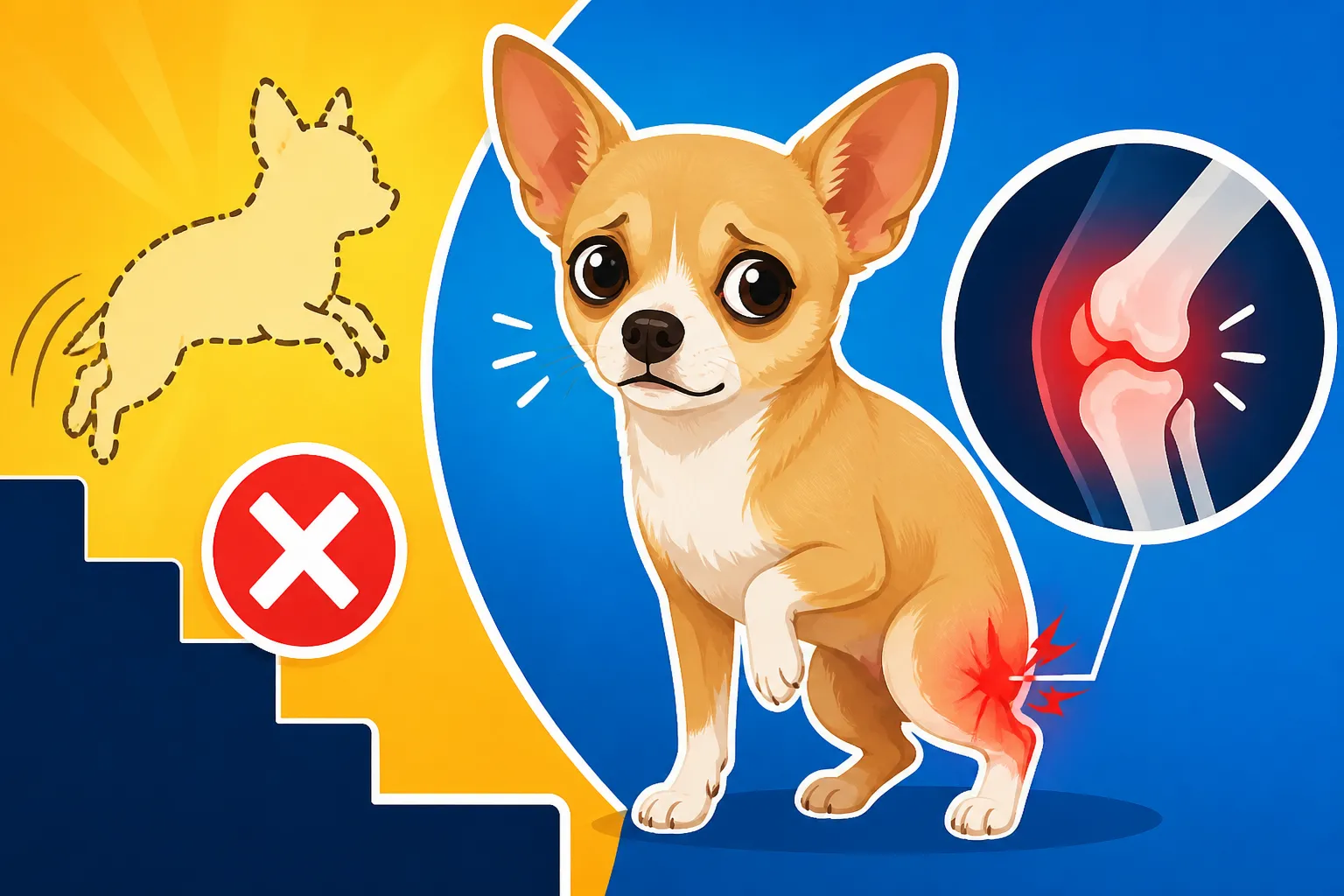
The classic "skipping step" is pretty distinctive once you know what to look for. Your Chihuahua will be walking or running normally, and then suddenly, one of their hind legs will be lifted up for a step or two, sometimes held at an odd angle. They might hop forward on the other three legs, shake the lifted leg, or give it a little kick before placing it back down. Within seconds, they'll usually resume walking perfectly fine, leaving you scratching your head.
Sometimes, the skip is almost imperceptible, just a brief hesitation or a slight hitch in their gait. Other times, it's more pronounced, with your dog holding the leg up for several steps. You might even hear a little click or pop if you’re close enough, though this isn't always present. While many Chihuahuas don't seem bothered by it initially, some might yelp or show a fleeting sign of discomfort when the kneecap slips. It’s easy to dismiss it as a momentary lapse, but consistently seeing this indicates that something is indeed going on structurally within their knee joint.
Why Chihuahuas Are Prone to This Gait
Chihuahuas, along with many other small and toy breeds, have a genetic predisposition to this condition, known scientifically as patellar luxation. It's so common that it's often referred to as Patellar Luxation, the Chihuahua's Commonest Joint Problem. Their unique anatomy plays a huge role. Unlike larger breeds that typically have deeper, more defined grooves in their femur (thigh bone) for the kneecap to sit in, many Chihuahuas are born with shallower grooves.
Furthermore, their leg bones might not be perfectly aligned, leading to an abnormal pull on the kneecap. This means the kneecap (patella) has less stability and can more easily pop out of its designated track (the trochlear groove). When it pops out, it causes that characteristic skipping step until it either slides back into place on its own or with a little manipulation from the dog's movement. It's a structural issue they often inherit, rather than something caused by injury, though trauma can certainly exacerbate an existing predisposition.
The Mechanics Behind a Slipping Kneecap
To truly understand what's happening when your Chihuahua does that little hop, it helps to visualize the knee joint itself. It's a surprisingly intricate system, and when even one small part isn't perfectly aligned, it can lead to problems.
How a Chihuahua Kneecap Slips Out of Place
The kneecap, or patella, is a small, sesame seed-shaped bone embedded within the quadriceps tendon. This tendon connects the large thigh muscles (quadriceps) to the shin bone (tibia). The patella is supposed to glide smoothly up and down within a specific groove on the end of the femur, called the trochlear groove. This setup allows for efficient extension of the leg.
In a Chihuahua with patellar luxation, the trochlear groove might be too shallow, or the attachment point of the quadriceps tendon on the tibia might be misaligned, pulling the kneecap either inwards (medial luxation) or outwards (lateral luxation). Medial luxation is overwhelmingly more common in Chihuahuas. When the kneecap slips out, it can no longer act as a fulcrum for the quadriceps muscle. This means the leg can't fully extend, causing the dog to lift it and take weight off it—that's the skipping step you observe. Once the tension on the tendon changes, or the dog shakes its leg, the kneecap might pop back into place, and the leg can function normally again. This cycle is precisely How a Chihuahua Kneecap Slips Out of Place.
The Grades of Patellar Luxation
Veterinarians classify patellar luxation into four distinct grades, ranging from mild to severe. These grades are essential for determining the severity of the condition and guiding treatment decisions. Understanding The Four Grades of a Slipping Chihuahua Kneecap can help you comprehend your vet's diagnosis.
- Grade 1: This is the mildest form. The kneecap can be manually luxated (pushed out of the groove) by a vet but will immediately return to its normal position once released. Your Chihuahua might exhibit an occasional skipping step, sometimes only once or twice a week, or when they're particularly active. Often, dogs with Grade 1 luxation show no pain and the kneecap corrects itself quickly. This is often described as Grade One Patellar Luxation That Corrects Itself.
- Grade 2: The kneecap spontaneously luxates (slips out) more frequently, but it can still be manually returned to the groove, and sometimes it will self-correct with the dog shaking its leg or stretching. Dogs with Grade 2 luxation will show more frequent skipping, possibly holding the leg up for longer periods. They might show some discomfort or even a momentary yelp when it happens. This grade often progresses over time if not managed.
- Grade 3: In this stage, the kneecap is luxated most of the time, though it can still be manually reduced (put back into the groove) by a veterinarian. However, it will slip out again very easily, often as soon as the manual pressure is released. Chihuahuas with Grade 3 luxation will exhibit consistent lameness, a noticeable crouch in their stance, and a reluctance to bear full weight on the affected leg. They will almost certainly be in pain, and their quality of life is significantly impacted without intervention. This is often the point where A Chihuahua Kneecap That Never Goes Back without intervention.
- Grade 4: This is the most severe form. The kneecap is permanently luxated and cannot be manually returned to the groove. The trochlear groove is often absent or extremely shallow, and the bones of the leg may be severely deformed. Dogs with Grade 4 luxation experience severe, persistent lameness and often walk with a very abnormal gait, sometimes even unable to fully extend their leg. They are in chronic pain, and their mobility is severely compromised.
Here’s a quick overview of what each grade means for your Chihuahua:
| Grade | Description of Luxation | Clinical Signs (Skipping Step) | Prognosis (Without Intervention) |
|---|---|---|---|
| Grade 1 | Kneecap slips out occasionally, often self-corrects quickly. | Intermittent skipping, brief leg shake; usually pain-free. | Good, often managed conservatively; low progression risk. |
| Grade 2 | Kneecap slips out more frequently, may stay out longer. | Frequent skipping, may hold leg up; might show discomfort. | Fair to good, but often progresses; surgery often recommended. |
| Grade 3 | Kneecap is usually out, can be manually put back in, but slips out again. | Consistent lameness, inability to bear weight fully; pain evident. | Guarded, significant impact on quality of life; surgery highly recommended. |
| Grade 4 | Kneecap is permanently out and cannot be manually reduced. | Severe, constant lameness, often unable to extend leg fully. | Poor, severely debilitating; complex surgery often required. |
What to Do When You Notice the Skipping Step
Spotting that first skip can be alarming, but acting quickly and proactively can make a world of difference for your Chihuahua's long-term comfort and mobility. Don't ignore it, even if your dog seems unfazed.
When to Contact Your Veterinarian
The moment you notice a skipping step, even if it's infrequent and seems to resolve quickly, it’s time to schedule an appointment with your veterinarian. This isn't something to "wait and see" about. Early diagnosis is crucial because it allows for early intervention, which can slow progression and prevent more severe problems down the line, including secondary issues like Chihuahua Cruciate Tears After Years of Slipping due to chronic instability.
When you go to the vet, be prepared to describe exactly what you've observed: how often the skipping happens, how long it lasts, if your dog shows any signs of pain (like yelping or guarding the leg), and what activities seem to trigger it. Your vet will perform a thorough physical examination, manipulating your Chihuahua's knee joint to assess the patella's stability and grade the luxation. They might also recommend X-rays to get a clearer picture of the bone structure, the depth of the trochlear groove, and to rule out any other concurrent orthopedic issues. Having pet insurance like Healthy Paws can be a huge relief here, as it can help cover the costs of these diagnostic tests and vet visits, ensuring you can pursue the best course of action without undue financial stress.
Conservative Management and Lifestyle Adjustments
For Chihuahuas with Grade 1 or sometimes Grade 2 luxation, your vet might initially recommend a course of conservative management. This approach focuses on alleviating symptoms, preventing progression, and improving joint health without surgery.
One of the most critical aspects of conservative management is weight management. Every extra ounce on a tiny Chihuahua frame puts disproportionate stress on their joints. Keeping your Chihuahua at a lean, healthy weight is paramount. Your vet can help you determine the ideal weight for your dog and recommend a suitable diet plan. Another key element is joint supplementation. Supplements containing ingredients like glucosamine, chondroitin, and MSM can help support joint cartilage health and reduce inflammation. While not a cure, they can certainly help maintain comfort and joint function. You can find these at most pet stores, but always check with your vet for appropriate dosing for your small dog.
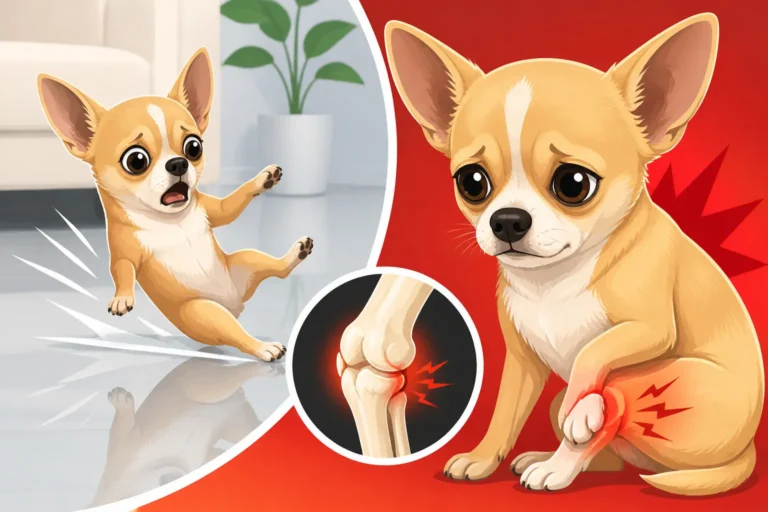
Controlled exercise is also important. While vigorous, high-impact activities like jumping off furniture can worsen the condition, consistent, low-impact exercise like short, controlled leash walks can help strengthen the muscles around the knee, providing more stability. To protect those delicate joints, consider investing in Ramps and Steps for a Chihuahua Sofa and Keeping a Chihuahua Off Furniture to Protect Knees. These simple additions to your home can greatly reduce the strain on their knees from repeated jumping. For flare-ups of discomfort, your vet might prescribe non-steroidal anti-inflammatory drugs (NSAIDs) to manage pain and inflammation.
When Surgery Becomes Necessary
While conservative management can be effective for milder cases, there comes a point for many Chihuahuas where surgical intervention becomes the best, or even only, option for long-term comfort and mobility.
Surgical Interventions for Patellar Luxation
When a Chihuahua's patellar luxation reaches Grade 2 (especially if it's causing consistent lameness or pain) or Grade 3-4, surgery is typically recommended. The goal of surgery is to anatomically correct the issues that allow the kneecap to slip. This usually involves one or more procedures:
- Trochleoplasty: This procedure deepens the trochlear groove in the femur, creating a more secure channel for the kneecap to sit in. Think of it like carving a deeper track for a train wheel to run on.
- Tibial Tuberosity Transposition: If the attachment point of the quadriceps tendon on the tibia is misaligned, this procedure involves cutting the bone where the tendon attaches and reattaching it in a more appropriate position, ensuring the patella is pulled straight.
- Capsular Overlap: The joint capsule surrounding the knee can be tightened on one side and loosened on the other to help stabilize the patella.
It's completely normal to feel apprehensive about your tiny Chihuahua undergoing surgery. However, these procedures are highly effective, and performed by experienced veterinary orthopedic surgeons, they can dramatically improve your dog's quality of life, alleviating pain and restoring normal mobility. You might be concerned about the financial aspect, and rightly so. Chihuahua Kneecap Surgery Costs can be substantial, often ranging from $1,500 to $5,000 per knee. This is where a robust pet insurance plan like Healthy Paws truly shines, as it can cover a significant portion of these expenses, allowing you to prioritize your Chihuahua's health without financial burden.
Post-Operative Care and Long-Term Outlook
The journey doesn't end with surgery; post-operative care is just as critical for a successful outcome. Your Chihuahua will require a period of strict rest, often involving crate confinement for several weeks to allow the surgical site to heal properly. Leash walks will be short and controlled, gradually increasing in duration as your vet advises. Pain management will be paramount, with prescribed medications to keep your dog comfortable during recovery.
Many vets also recommend physical therapy or rehabilitation exercises to help strengthen the muscles, improve range of motion, and ensure your Chihuahua regains full use of the leg. This can include passive range of motion exercises, gentle massage, and eventually, controlled exercises. For a detailed guide on this crucial phase, read about Recovery After Chihuahua Kneecap Surgery.
The long-term outlook after successful surgery is generally excellent, with most Chihuahuas regaining full or near-full function and living pain-free lives. However, it's important to understand that even with surgical correction, the underlying predisposition and years of joint instability mean that your Chihuahua may still be more prone to developing Chihuahua Arthritis in the Teenage Years. Continued weight management, appropriate exercise, and potentially lifelong joint supplements, even after surgery, will be key to managing this risk and ensuring your beloved companion enjoys a comfortable, active life for many years to come. Remember, consistent vet check-ups and open communication with your veterinary team, supported by reliable pet insurance like Healthy Paws, are your best allies in ensuring your Chihuahua's ongoing joint health.
Disclaimer
This article is intended for informational purposes only and does not constitute veterinary advice. Always consult with a qualified veterinarian for any health concerns or before making any decisions about your Chihuahua's care.