How a Chihuahua Kneecap Slips Out of Place
It's incredibly frustrating and alarming to see your beloved Chihuahua suddenly yelp, hold up a back leg, and then, just as quickly, put it down and act like nothing happened. This common scenario often points to a condition called patellar luxation, where your little dog's kneecap actually slips out of its normal groove. Understanding exactly how a Chihuahua kneecap slips out of place can help you better identify the problem, manage it with your vet, and provide the best care for your tiny companion.
Understanding the Anatomy of a Chihuahua Knee
Before we dive into how things go wrong, let's quickly chat about how a healthy Chihuahua knee is supposed to work. It’s actually quite a marvel of engineering, even in such a tiny package! The knee joint, or stifle joint as it’s medically known in dogs, is a hinge joint that connects three main bones: the femur (thigh bone), the tibia (shin bone), and the patella (kneecap).
The Patella's Crucial Role
The patella, or kneecap, is a small, sesamoid bone nestled within the quadriceps tendon. Think of it like a pulley system. This tendon, attached to the strong quadriceps muscles in the thigh, runs over the kneecap and then attaches to the tibia. When your Chihuahua’s quadriceps muscles contract, the patella acts as a lever, helping to extend the lower leg. Without the patella, the leverage would be lost, and extending the leg would be much harder and less efficient. It’s absolutely vital for smooth, powerful leg movement, whether your little one is doing zoomies across the living room or just stepping off the sofa.
The Patellar Groove: A Bony Track
The patella isn't just floating freely; it glides within a specific groove on the end of the femur, known as the trochlear groove. This groove is like a track that keeps the kneecap aligned and moving correctly as the knee flexes and extends. Ideally, this groove is deep enough and shaped just right to hold the patella firmly in place. Ligaments and soft tissues also play a supporting role, like tiny guy wires, ensuring the kneecap stays centered and doesn't wander off its track. If any of these components—the bones, the groove, the tendons, or the ligaments—aren't quite right, that's when you start to see problems.
The Mechanics of Patellar Luxation: How the Kneecap Derails
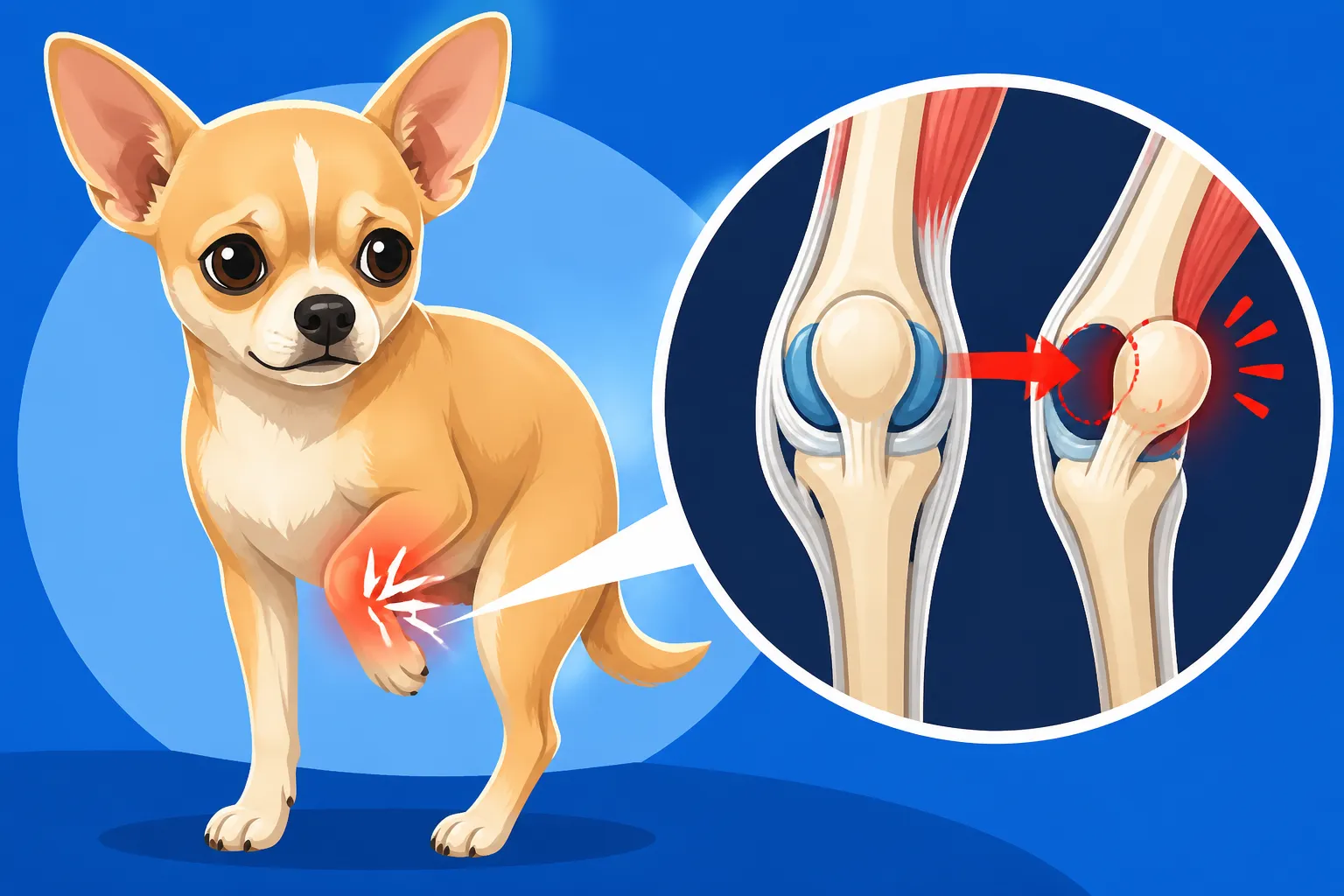
So, now that we know how it should work, let's talk about what happens when it doesn't. When a Chihuahua's kneecap "slips out of place," it's officially called patellar luxation. "Luxation" is simply the medical term for dislocation. This can happen to the inside of the leg (medial luxation, which is far more common in Chihuahuas and other small breeds) or to the outside (lateral luxation, less common but still possible).
Anatomical Abnormalities Leading to Slippage
The root cause of patellar luxation is often a combination of inherited anatomical abnormalities rather than a sudden injury (though an injury can certainly exacerbate it). Imagine if the track on a train isn't quite right; the train car is bound to derail. The same principle applies here.
Firstly, the trochlear groove itself might be too shallow. Instead of a deep, secure valley, it's more like a subtle dip, offering little resistance to the patella sliding out. Secondly, the point where the patellar ligament attaches to the tibia might be shifted either too far to the inside or outside. This effectively pulls the patella off-center, constantly tugging it away from its correct alignment in the groove. Think of it like a rope pulling a sled; if the rope is tied off to the side of the sled, the sled will want to veer off course. Over time, or with particular movements, this constant lateral or medial pull will eventually cause the kneecap to pop out.
The Moment of Luxation
When a Chihuahua with these predispositions runs, jumps, or even just takes a sudden turn, the quadriceps muscle contracts, pulling the patella. If the groove is too shallow or the pull is off-center, the kneecap can literally jump out of its track. Your Chihuahua might yelp, hold up the leg for a few steps, and hop on three legs. This is the classic "skipping gait" that often signals a Chihuahua knee issue. Sometimes, they might quickly shake the leg, or extend it out behind them, and then pop—the kneecap slides back into place on its own. It's a sudden, jarring event, even if it self-corrects almost immediately. For more information on what this looks like, you can read about The Skipping Gait That Signals a Chihuahua Knee.
Not every slip is the same; vets grade patellar luxation from Grade 1 to Grade 4, depending on the severity and how easily the kneecap luxates and reduces. A Grade 1 might only luxate occasionally and pop right back, causing minimal discomfort. A Grade 4, however, means the kneecap is permanently luxated and can't be put back into the groove manually, leading to constant pain and significant mobility issues. You can learn more about this in The Four Grades of a Slipping Chihuahua Kneecap.
Why Chihuahuas Are Prone to Slipping Kneecaps
Chihuahuas, like many other small and toy breeds, are unfortunately overrepresented when it comes to patellar luxation. It’s not just bad luck; there are several breed-specific factors that make them particularly susceptible.
Genetic Predisposition and Conformation
The primary reason Chihuahuas are so prone to this condition is genetics and their unique conformation. Selective breeding for their tiny size and specific body shape has inadvertently led to certain musculoskeletal traits that predispose them to patellar luxation. These include:
- Shallow Trochlear Grooves: As mentioned, the groove on the femur that houses the kneecap is often naturally shallower in Chihuahuas.
- Deviation of the Tibial Tuberosity: The spot on the shin bone (tibia) where the patellar ligament attaches can be abnormally rotated or displaced, pulling the kneecap out of alignment.
- Angulation of the Femur and Tibia: The way their thigh and shin bones are angled can create an imbalanced pull on the kneecap, encouraging it to slip.
- Loose Ligaments: Some Chihuahuas may also have looser supporting ligaments around the knee, offering less stability to the patella.
Because these are often inherited traits, it's incredibly important for responsible breeders to screen their breeding stock for patellar luxation. This is why you often hear about things like Chihuahua Patella Certification Before Breeding, which helps ensure that puppies have the best possible start in life, free from this painful condition.
The Impact of Their Tiny Size
While genetics lays the groundwork, their diminutive size also plays a role in how the condition manifests and is managed. Their small bones and delicate joints are simply more vulnerable to the stresses that can cause a kneecap to pop out. Even a slight twist or jump that a larger dog might easily absorb can cause a luxation in a Chihuahua. This is why even seemingly innocuous activities like jumping off furniture can be detrimental to their knees over time. It’s crucial to take steps like providing Ramps and Steps for a Chihuahua Sofa to minimize impact on their joints.
Consider the force on such small joints. Every jump, every landing, places stress on the knee. Over years, this cumulative stress can worsen mild luxation or contribute to secondary issues like Chihuahua Arthritis in the Teenage Years or even Chihuahua Cruciate Tears After Years of Slipping. Early recognition and management are key to preventing these more severe long-term complications.
Recognizing the Signs: What to Look For When It Happens
Identifying patellar luxation can sometimes be tricky because the signs can vary widely depending on the grade of luxation and how often it occurs. Sometimes, your Chihuahua might show very obvious signs, and other times, it's so subtle you might miss it.
Acute Signs of a Slipping Kneecap
When the kneecap actually slips out, the signs are usually quite sudden and noticeable:
- Holding Up the Leg: This is the classic sign. Your Chihuahua will suddenly pick up their hind leg and hold it aloft, often for several steps or even a few minutes. They might hop along on three legs.
- Skipping or Hopping Gait: As mentioned, they might run a few steps, suddenly hold the leg up, then stretch it out or shake it, and then put it back down and resume normal walking. This intermittent lameness is a hallmark.
- Yelping or Crying Out: While not every dog will vocalize, some Chihuahuas, especially with a fresh or painful luxation, might yelp or cry out in pain when the kneecap slips. This could be a quick, sharp cry, as described in A Chihuahua That Cries Out and Then Walks On.
- Reluctance to Bear Weight: If the kneecap remains luxated, or if it's particularly painful, your Chihuahua might avoid putting weight on that leg altogether.
- Stiffness or Awkward Movement: Even if the kneecap reduces (slips back into place) quickly, you might notice a temporary stiffness or an awkwardness in their gait for a few moments afterward.
Chronic or Subtle Indicators
For Chihuahuas with lower-grade luxation, the signs might be more subtle or chronic:
- Intermittent Lameness: Your dog might seem fine one minute, then lame the next, without any clear trigger. This can be confusing for owners.
- Decreased Activity: They might become less enthusiastic about walks, playtime, or jumping onto furniture, simply because it's uncomfortable.
- Muscle Atrophy: Over time, if they consistently favor one leg, you might notice that the thigh muscles on that leg become noticeably smaller than the other, due to disuse.
- Difficulty Jumping or Using Stairs: They might struggle to jump up or down from familiar places, or hesitate when approaching stairs, indicating discomfort with these movements.
- Abnormal Leg Angle: In more severe cases (Grade 3 or 4), you might notice a bowed appearance to their leg or an abnormal angle when they stand, due to the persistent displacement of the kneecap affecting the entire leg structure.
When to See Your Veterinarian
If you notice any of these signs, it's crucial to schedule an appointment with your veterinarian. They can physically examine your Chihuahua, manipulate the knee joint to assess patellar stability, and determine the grade of luxation. X-rays might also be taken to evaluate the bone structure and identify any secondary changes like arthritis.
Early diagnosis and management are vital. Depending on the severity, your vet might recommend conservative management, which includes weight management, anti-inflammatory medications, joint supplements, and physical therapy. In more advanced cases, surgery might be necessary to deepen the trochlear groove, realign the tibial tuberosity, and tighten supporting tissues to prevent future luxations. While surgery costs can be daunting, having pet insurance like Healthy Paws can provide significant financial relief for these unexpected and often expensive procedures. Many Chihuahua owners find that a good insurance plan, such as one from Healthy Paws, offers peace of mind, especially with conditions like patellar luxation that can require ongoing care. This can make a huge difference in affording the best possible care for your dog. For instance, Healthy Paws often covers a percentage of vet bills after your deductible, which can include diagnostics, medications, and surgical interventions.
Here's a quick overview of the grades of patellar luxation and what they often mean for your Chihuahua:
| Grade of Luxation | Description of Kneecap Movement | Clinical Signs Often Observed | Recommended Management |
|---|---|---|---|
| Grade 1 | Luxates manually but reduces spontaneously; otherwise normally located. | Occasional skipping gait, may be asymptomatic. | Conservative management, joint supplements. |
| Grade 2 | Luxates spontaneously and can be manually reduced; stays luxated for short periods. | Frequent skipping, mild lameness, pain on movement. | Conservative management, potential for surgery if signs worsen. |
| Grade 3 | Patella is mostly luxated but can be manually reduced; re-luxates spontaneously. | Persistent lameness, abnormal gait, muscle atrophy. | Surgical correction often recommended. |
| Grade 4 | Patella is permanently luxated and cannot be manually reduced. | Severe, constant lameness, bowed legs, significant pain. | Surgical correction almost always required, guarded prognosis. |
Understanding how your Chihuahua's kneecap can slip out of place empowers you to be a more vigilant and proactive owner. With the right care and veterinary guidance, even Chihuahuas with patellar luxation can lead full, happy lives.
Disclaimer
The information provided in this guide is for general informational purposes only and does not constitute veterinary advice. Always consult with a qualified veterinarian for any health concerns or before making any decisions about your Chihuahua's care and treatment.