Americans Buying Chihuahuas in the Mid-1800s
It’s fascinating to look back and wonder how the tiny, beloved Chihuahua, a dog so emblematic of Mexico, first found its way into American homes. For many of us who adore these little dynamos today, it’s hard to imagine a time when they weren’t readily available, but the mid-1800s marked a pivotal era when American curiosity and increasing travel began to bridge the cultural divide, introducing this unique breed to a whole new population. This guide will explore the historical context, the circumstances of these early acquisitions, and what it meant for Americans to bring a Chihuahua home during that nascent period.
The First Glimpses: Chihuahuas Crossing the Border
Imagine a time before widespread photography or easy travel, when encountering a new animal breed from another country was a truly novel experience. For Americans in the mid-1800s, the discovery of the Chihuahua wasn't a sudden, grand event, but rather a gradual unfolding, driven by shifts in geopolitical landscapes and burgeoning trade. These tiny dogs, with their expressive eyes and undeniable charm, began to captivate the attention of those venturing south of the border.
Post-Mexican-American War Context
The close of the Mexican-American War in 1848 dramatically reshaped the relationship between the two nations, leading to significant territorial changes and, perhaps more importantly for our furry friends, an increase in American presence and travel within Mexico. Suddenly, soldiers, prospectors, and entrepreneurs were traversing regions previously less accessible to many Americans. They weren't just encountering new landscapes and cultures; they were also coming face-to-face with the local fauna, including the indigenous dogs of the region. This influx of Americans into areas like what is now the state of Chihuahua – the breed's namesake – created the perfect conditions for these small canines to be "discovered" by outsiders. It was a period of exploration and cultural exchange, albeit often under difficult circumstances, that set the stage for the Chihuahua's journey north.
Early Travelers and Traders
So, who were these pioneering Americans who first encountered Chihuahuas? They were a diverse group: soldiers returning from duty, prospectors drawn by the promise of gold and other resources, merchants establishing new trade routes, and even early naturalists and adventurers. These individuals often found themselves in small Mexican towns and villages, far from the bustling cities of the American East. It was in these local settings that they would have observed the tiny, alert dogs that scurried through markets and yards. The dogs were an integral part of Mexican life, often seen as companions, watchdogs, or even small vermin controllers. For an American used to larger farm dogs or established European breeds, these diminutive canines would have been quite a sight, sparking both curiosity and an interest in bringing a piece of this exotic culture back home.
The Dog's Appeal
What was it about these particular dogs that captured the hearts and minds of these early American visitors? Well, picture it: amidst dusty markets and unfamiliar sights, these small, often trembling, but incredibly lively dogs would stand out. Their compact size made them easy to carry, a distinct advantage for travelers on horseback or by primitive rail. Unlike larger working dogs, they didn't require much space or a huge food ration, making them practical companions for those on the move. Beyond practicality, there was an undeniable exotic appeal. These weren't your average retrievers or hounds; they were unique, with a distinctive "apple head" skull and huge, soulful eyes that were quite unlike anything commonly seen in the United States at the time. They were living souvenirs, conversation starters, and loyal companions all rolled into one tiny package, quickly evolving from mere curiosities into cherished pets.
Acquiring the Tiny Treasures: How Americans Got Their Chihuahuas
The process of acquiring a Chihuahua in the mid-1800s was a far cry from today's careful selection from a reputable breeder or rescue. There were no online listings, no health certificates, and certainly no organized transport services. It was a much more organic, often opportunistic, affair, deeply embedded in the local culture and economy of the time.
Local Markets and Villages
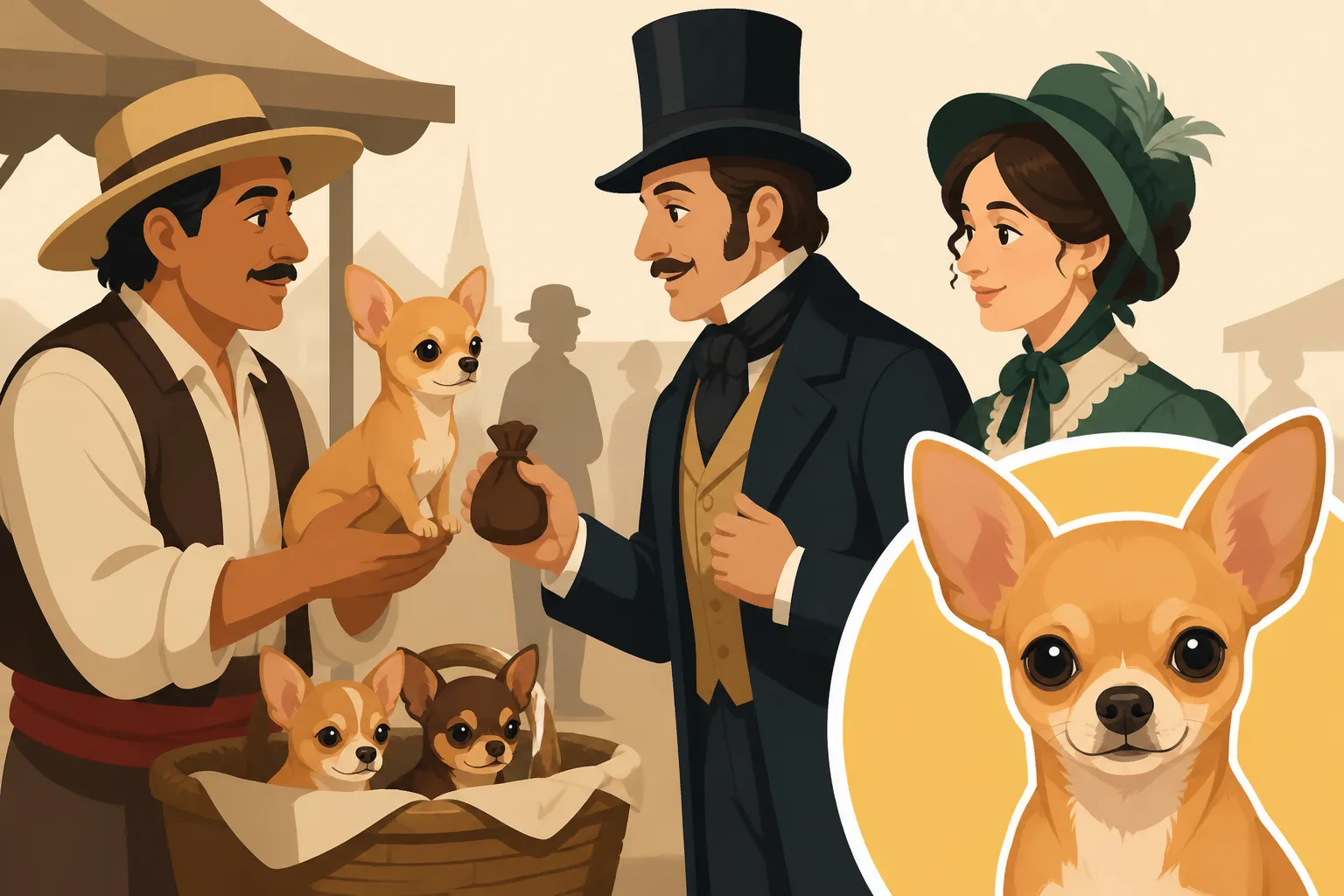
The primary venues for acquiring a Chihuahua were the bustling local markets and small village squares across Mexico, especially in the northern states bordering the US. Travelers would simply stumble upon them. Picture an American soldier or miner walking through a vibrant market, filled with the sights and sounds of Mexican life – fresh produce, handmade crafts, livestock – and there, among it all, a vendor with a small, energetic dog nestled in a basket or trotting at their heels. These weren't "pet stores" as we know them; rather, dogs were part of the general commerce, much like any other useful animal. Often, these were family dogs, or the offspring of such, not specifically bred for sale to foreigners. The transaction would likely involve a bit of bartering, hand gestures, and perhaps a few shared words in broken Spanish, a true cultural exchange for a unique companion.
The Role of Mexican Vendors
For the Mexican vendors and families selling these dogs, it was often a practical decision. While these dogs were undoubtedly cherished companions, an extra animal, especially one sought after by a relatively wealthy American, could represent a valuable source of income. They likely understood the appeal of their small, distinctive dogs to the foreign visitors. They might present the dogs as "lucky charms" or simply as loyal, intelligent pets. There was no formalized breeding industry catering to an export market; instead, it was individuals selling dogs they had, perhaps a puppy from a recent litter, to those who showed interest. This direct interaction, often between a Mexican family and an American traveler, added a personal touch to the early history of the breed in the United States, cementing an initial connection that went beyond mere commerce.
Challenges of Transport
Bringing a Chihuahua back to the United States in the mid-1800s presented a unique set of challenges. Transportation was arduous, whether by horse, stagecoach, or early, bumpy train rides. These tiny dogs were incredibly vulnerable to the elements, lack of proper nutrition, and the sheer stress of long journeys. Imagine trying to keep a fragile two-pound puppy warm and fed on a dusty, days-long trek! There was no specialized Chihuahua carriers and travel bags from Chewy or other modern retailers; owners would improvise with blankets, baskets, or even their own pockets. The lack of veterinary care along the way meant any illness could be fatal, and without knowledge of their specific dietary needs – particularly their susceptibility to Chihuahua hypoglycemia and the puppy emergency – many may not have survived the journey. It truly was a testament to the hardiness of the breed and the determination of their new owners that any made it back safely to American soil.
The Early American Owners and Their New Companions
Once these diminutive dogs arrived in the United States, they began to carve out a unique niche for themselves, transitioning from exotic curiosities to beloved household members. Their journey from the dusty Mexican markets to American parlors tells a fascinating story of evolving perceptions and the surprising impact a tiny dog can have.
From Curiosity to Companion
Initially, Chihuahuas were often seen as exotic novelties, prized for their unique appearance and small size. They were conversation starters, a tangible piece of a foreign land brought back home. However, it didn't take long for their intelligent, loyal, and often feisty personalities to shine through, transforming them from mere curiosities into deeply cherished companions. Early owners quickly discovered their Chihuahuas were not just pretty faces; they were alert, protective, and formed incredibly strong bonds with their human families. This deep loyalty, combined with their portability, made them ideal lapdogs and constant companions, especially for those living in less spacious environments or who enjoyed traveling. The transition from exotic pet to beloved family member was swift, laying the groundwork for the breed's enduring popularity.
The Beginnings of Breed Recognition
As more Chihuahuas made their way into the United States, interest began to grow beyond individual ownership. People wanted to know more about these unique dogs, their origins, and how they could be formally recognized. This period saw the very nascent stages of what would eventually become official breed recognition. Early enthusiasts and dog fanciers, captivated by their charm and distinctive features, started to gather information, share their dogs, and discuss the characteristics that defined the breed. This was a slow, organic process, long before the establishment of formal kennel clubs like the AKC would officially recognize the Chihuahua in the early 1900s. Without the internet, information exchange was limited to letters, word-of-mouth, and occasional dog shows. These initial efforts, however, were crucial in establishing the Chihuahua as a distinct and valuable breed within the burgeoning American dog culture. The Chihuahua from Techichi to American lapdog really details this long history.
What it Meant to Own a Chihuahua Then
Owning a Chihuahua in the mid-1800s was a vastly different experience than it is today. For one, specialized care products were virtually non-existent. There was no specific small-breed kibble; owners likely fed them table scraps or whatever rudimentary dog food was available, which often led to health challenges. Contrast that with today, where you can easily find Daily calories for a three to seven pound Chihuahua and precisely measured food for tiny dogs, even delivered through services like Chewy. Medical knowledge for small breeds was rudimentary, and many of the common health issues we recognize today, like Patellar luxation, the Chihuahua's commonest joint problem or Chihuahua dental disease in a crowded small jaw, would have gone undiagnosed or untreatable.
Furthermore, socialization would have been informal, often exposing these tiny dogs to environments they weren't well-suited for. Training methods were less nuanced, and concepts like Small dog syndrome and why it is not genetic were decades away from being understood. Yet, despite these limitations, these early owners clearly valued their Chihuahuas deeply. They accepted the challenges and celebrated the unique companionship these dogs offered, forging a path that ultimately led to the Chihuahua becoming one of the most beloved toy breeds in America.
Here’s a quick overview of how the Chihuahua's journey looked from a historical perspective:
| Aspect | Mid-1800s Mexico (Origin) | Mid-1800s USA (Acquisition) | Today (Modern Ownership) |
|---|---|---|---|
| Availability | Common indigenous dog | Rare, exotic, acquired through travel/trade | Widespread, easily accessible from breeders/shelters |
| Acquisition Method | Local markets, direct from families, bartering | Direct transactions with Mexican locals, often informal | Reputable breeders, rescues, pet stores (less common) |
| Primary Value/Perception | Companion, watchdog, pest control | Exotic novelty, conversation piece, then loyal companion | Cherished family member, lapdog, show dog, emotional support |
| Care & Supplies | Basic, whatever was available | Rudimentary, improvised bedding, no specialized food/vet care | Highly specialized food (e.g., small kibble on Chewy), advanced vet care, tailored accessories |
| Health Knowledge | Limited, folk remedies | Extremely limited, many conditions undiagnosed | Extensive knowledge of breed-specific issues, preventative care, specialized treatments |
| Transportation | Walking, carried locally | Arduous, by foot, horse, stagecoach, early train | Carried on planes (in-cabin), car seats, special carriers |
Disclaimer
This article is for general informational purposes only and does not constitute professional advice. Laws, prices and regulations vary by location and change over time. Consult a qualified professional for guidance on your specific situation.