How the Techichi Differed From Today’s Chihuahua
Many Chihuahua owners delight in the pint-sized perfection of their furry companions, often marveling at their big personalities in such a tiny package. However, few realize the long, complex history that shaped these dogs, stretching back to an ancient ancestor known as the Techichi. This guide will explore the profound differences between the ancient Techichi and the modern Chihuahua, uncovering how millennia of cultural reverence, natural selection, and human intervention transformed one into the other.
The Ancient Roots: Understanding the Techichi's Origins
When we talk about the Chihuahua's origins, we often hear whispers of the Techichi. This isn't just a mythical creature; it was a very real canine deeply embedded in the cultures of Mesoamerica. Imagine a dog that walked the same sacred grounds as the ancient Toltecs and Aztecs, not merely as a pet, but as an integral part of their spiritual and daily lives. The story of the Chihuahua truly begins here, in a world far removed from the cozy laps and designer carriers many Chihuahuas enjoy today.
Tracing the Techichi Through Mesoamerican History
The historical records and archaeological findings strongly suggest that the Techichi was a companion animal of the Toltec civilization, which flourished in central Mexico long before the rise of the Aztecs. Evidence, such as ancient effigies and carvings found in tombs and ruins, depicts small, dog-like creatures that bear a resemblance to some features of modern Chihuahuas. These artifacts give us a glimpse into a time when dogs were not just animals, but held significant roles in beliefs surrounding death, the afterlife, and even healing. The Chihuahua Ancestor Carved in 300 BC gives us a fascinating look into these early depictions.
The continuity of these small dog breeds through various Mesoamerican cultures, from the Toltecs to the Aztecs, indicates a sustained importance. These were not wild dogs, but domesticated animals bred and kept by human societies for generations. The sheer consistency of their presence in archaeological contexts underscores their deep integration into the lives of these ancient peoples.
The Toltec Connection and Early Beliefs
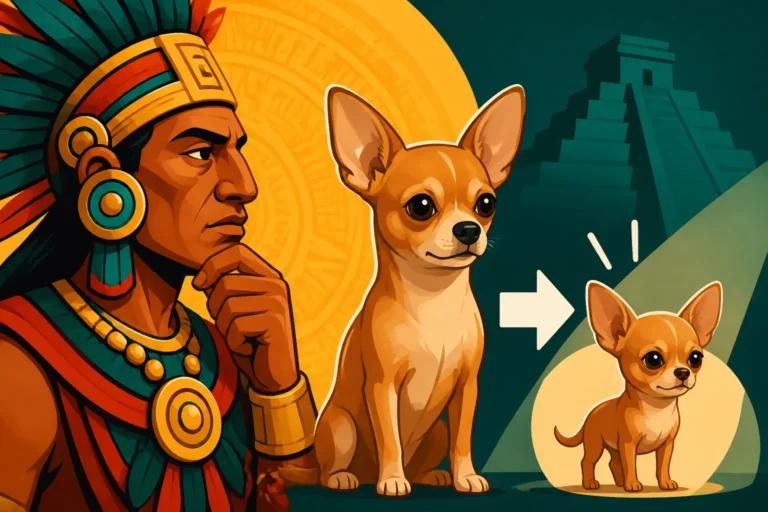
The Toltecs, who dominated central Mexico from around 900 to 1200 AD, are widely credited with cultivating the Techichi. For these people, the Techichi was far more than a simple pet. It was believed to guide the souls of the deceased through the underworld, acting as a spiritual messenger and protector. This belief highlights a profound reverence for these dogs, placing them in a sacred context that might seem foreign to us today. What the Toltecs Kept the Chihuahua's Ancestor For delves deeper into these spiritual roles.
It's important to understand that in these ancient societies, animals were often seen as embodying spiritual qualities or serving specific ritualistic purposes. The Techichi's role as a psychopomp, a guide for souls, suggests a deep connection between humans and these dogs, implying a level of care and respect that extended beyond mere utility. They were not disposable creatures but beings with intrinsic value within their cosmological framework.
Physical Disparities: Techichi Versus Today's Chihuahua
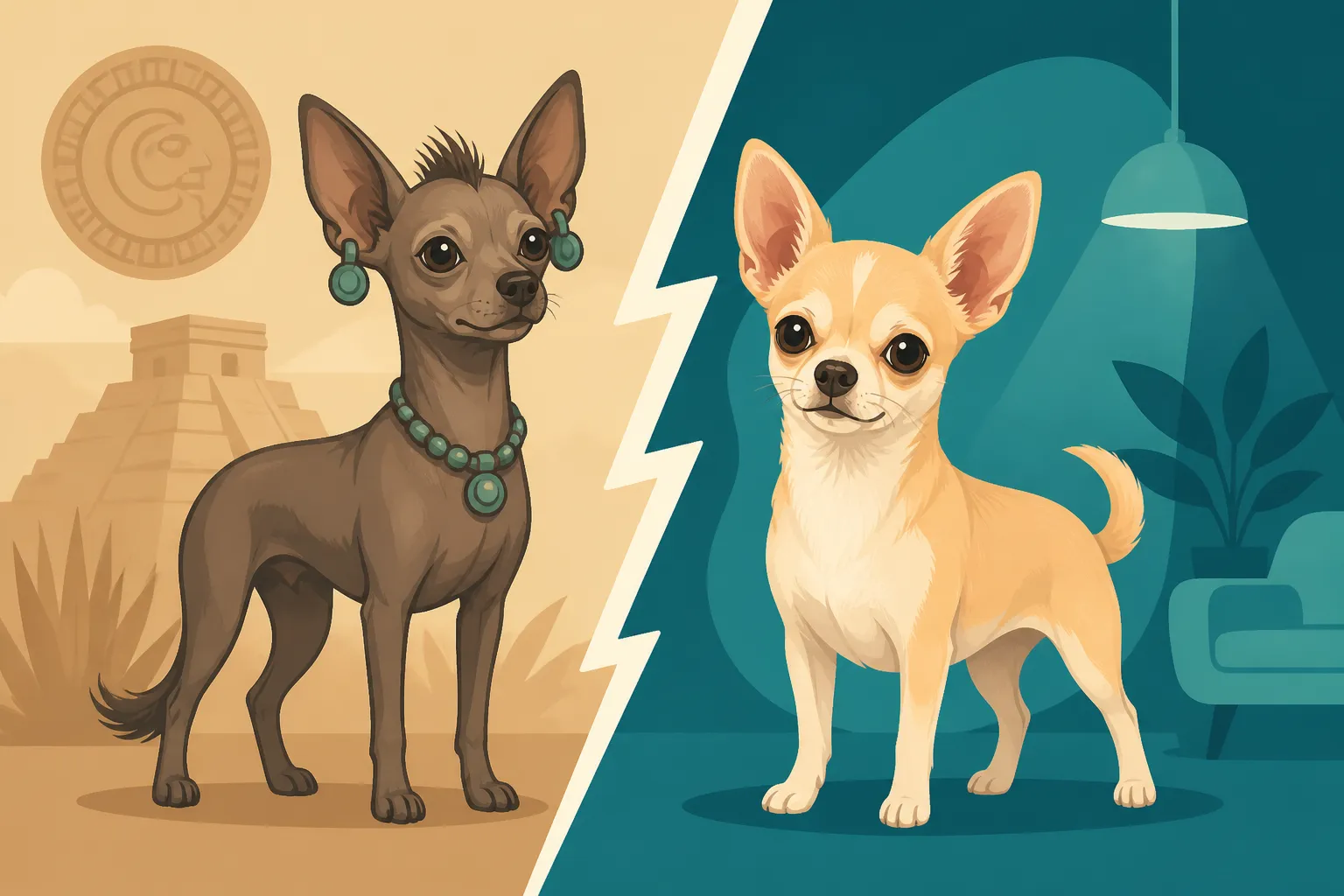
While the lineage is clear, the physical form of the Techichi was quite distinct from the Chihuahua we share our homes with today. Evolutionary pressures, both natural and human-driven, sculpted these dogs over centuries, resulting in notable differences in size, build, and overall appearance. It’s a remarkable transformation, illustrating just how much a breed can change.
Size and Stature: A Question of Scale
Perhaps the most striking difference between the Techichi and the modern Chihuahua lies in their size. While still considered small dogs, the Techichi was generally larger and sturdier than today's typical Chihuahua. Imagine a dog that might have weighed closer to 10-15 pounds, with a more robust bone structure and a somewhat stockier build. They were not the delicate, often fragile creatures we sometimes worry about stepping on today.
This larger stature would have made them more resilient to the challenges of ancient life, better equipped for hunting small game or enduring the elements. Our modern Chihuahuas, many of whom comfortably fit into a purse, are the result of deliberate breeding over centuries, a process that dramatically reduced their size. This emphasis on extreme miniaturization is a relatively recent phenomenon in the breed's history, especially in the last couple of centuries, leading to The Six Pound Limit in the Chihuahua Standard we know today.
Head Shape, Bone Structure, and Other Traits
The characteristic "apple head" that is so iconic of many Chihuahuas today, with its rounded skull and prominent eyes, was likely not as prevalent in the Techichi. While archaeological finds show some degree of brachycephaly (a shortened skull), the Techichi's head was generally less domed and its muzzle perhaps a bit longer, more akin to what we now call a "deer head" Chihuahua. The genetic traits for extreme apple-head morphology and the associated The Chihuahua Molera and What a Soft Spot Means likely became more pronounced through selective breeding much later.
Furthermore, the Techichi's overall bone structure would have been more substantial, built for durability rather than extreme delicacy. Think less fragile, more grounded. The fine boning and sometimes bowed legs seen in some modern Chihuahuas are a result of generations of selecting for smaller and smaller specimens, which can sometimes come with unintended structural consequences. When you see a modern Chihuahua scampering around, perhaps enjoying a new plush toy from Chewy, remember that its ancient ancestor was built for a tougher existence.
Coat Varieties and Early Appearance
While definitive proof is hard to come by, it's generally believed that the Techichi primarily had a smooth, short coat. This type of coat would have been practical for the warm climates of Mesoamerica, offering some protection without causing overheating. The long-haired Chihuahua, with its flowing locks and feathering, is a more recent development in the breed's history, achieved through careful breeding and likely the introduction of genes from other long-coated toy breeds much later on.
The colors and markings of the Techichi are also somewhat speculative, but depictions suggest various earth tones – fawns, creams, and reds – which would have provided natural camouflage. The vast array of colors and patterns seen in modern Chihuahuas, from solid blacks to intricate merles, is again a testament to selective breeding efforts to diversify the breed's appearance. The modern variety offers a dazzling palette, a far cry from the utilitarian appearance of its ancient predecessor.
Cultural Significance and Lifestyle Contrasts
The life of a Techichi was intrinsically tied to the spiritual and practical needs of its human companions. This deep integration into society sets it apart from the role of many modern Chihuahuas, whose primary function is often that of a beloved companion and family member. Understanding this historical context helps us appreciate the profound shift in the dog-human relationship over centuries.
Sacred Roles and Spiritual Meanings
As mentioned, the Techichi held significant spiritual importance. They were often sacrificed and buried with their owners, believed to guide them on the perilous journey through the underworld. This wasn't a casual practice; it was a deeply ingrained spiritual duty, indicating a belief in the dogs' sacred essence. The presence of these small dog remains in burial sites is common across various Mesoamerican cultures, signifying their continuous religious importance.
Contrast this with the modern Chihuahua, who, while cherished, is rarely seen as a direct conduit to the afterlife. Today, their purpose is to provide unconditional love, comfort, and companionship. This shift from a spiritual guide to a beloved pet reflects a broader change in human-animal relationships, moving away from mystical roles towards more emotional and psychological bonds. Imagine the awe and reverence an ancient Toltec might have felt for their Techichi, a feeling very different from the adoring affection a modern owner feels for their tiny pup, perhaps sleeping peacefully on a specially-sized orthopedic bed from Chewy.
Companionship, Sustenance, and Survival
Beyond their spiritual duties, Techichis also served more practical roles. They were likely kept as companions, providing warmth and a living presence in homes. However, it's also documented that these dogs, like many domesticated animals in ancient cultures, were occasionally a source of food. While this might be a difficult concept for modern pet owners to grasp, it was a practical reality in societies where food resources could be scarce. This dual role of companion and potential sustenance speaks to a different kind of relationship, one born of necessity as much as affection.
The Techichi's lifestyle would have been far more rugged. They weren't living in climate-controlled homes, being chauffeured in carriers, or strictly fed specialized diets. Their survival depended on their resilience and adaptability, traits that were naturally selected for over generations. They likely scavenged, hunted small prey, and relied on their instincts to a greater degree than any modern pet. What You Pay for a Chihuahua and What Sets It today reflects the specialized care and status of the modern breed, a stark contrast to the utilitarian value of its ancestor.
The Evolutionary Path to the Modern Chihuahua
The transition from the robust Techichi to the tiny, beloved Chihuahua we know today is a story shaped by significant historical events and centuries of deliberate breeding. It's a testament to the enduring appeal of these small dogs and the transformative power of human influence. The Chihuahua From Techichi to American Lapdog offers a broader look at this entire journey.
The Impact of Spanish Conquest and Isolation
When the Spanish Conquistadors arrived in Mexico in the 16th century, they brought with them a profound disruption to indigenous cultures, including their animal companions. The Techichi, along with many other native dog breeds, faced an uncertain future. Some were likely killed or died out due to disease and neglect, while others interbred with European dogs introduced by the Spanish. This period represents a significant genetic bottleneck and a time of immense pressure on the native dog populations. What the Spanish Conquest Did to the Chihuahua was undoubtedly transformative.
For centuries after the conquest, specific records of the Techichi or its direct descendants are scarce. It's believed that small populations of these dogs survived in remote areas, particularly in the state of Chihuahua, where they remained relatively isolated from the influences of larger European breeds. This period of isolation might have inadvertently preserved some of their unique genetic traits, allowing a distinct lineage to eventually re-emerge.
Resurgence and Refinement in the 19th Century
The modern Chihuahua truly began to take shape in the mid-19th century. American tourists and traders visiting Mexico, particularly the state of Chihuahua, discovered these tiny dogs. They were captivated by their small size and unique appearance, bringing them back to the United States. This sparked a renewed interest in the breed, leading to focused breeding efforts to further miniaturize them and refine their distinctive "apple head" features.
Breeders meticulously selected for traits like smaller size, a more domed head, and a more compact body, gradually shaping the dog into the familiar Chihuahua we recognize today. The push for smaller sizes was particularly strong, leading to the creation of the ultra-tiny Chihuahuas that became incredibly popular. This period of intense selective breeding significantly diverged the modern Chihuahua from its more robust Techichi ancestors. Genetic studies, like those explored in DNA Studies on Chihuahua Origins, continue to shed light on this fascinating journey.
Today's Chihuahua, whether an "apple head" or "deer head," is a vibrant testament to this incredible lineage. While the Techichi may have been a more substantial, spiritually revered creature of ancient times, its essence undoubtedly lives on in the spirited, tiny dogs who now grace our homes. They carry with them a history far richer and more complex than their small size might suggest.
| Feature | Ancient Techichi | Modern Chihuahua |
|---|---|---|
| Typical Size | Larger, sturdier (e.g., 10-15 lbs) | Smaller, delicate (e.g., 2-6 lbs) |
| Head Shape | Less domed, possibly longer muzzle (deer-head like) | Often pronounced "apple head," shorter muzzle |
| Bone Structure | More robust and substantial | Fine-boned, sometimes more fragile |
| Coat Type | Primarily smooth/short coat (speculated) | Smooth coat and long coat varieties |
| Primary Role | Spiritual guide, companion, occasional sustenance | Beloved companion, family member |
| Temperament | Resilient, adaptable to wilder conditions | Often spirited, sometimes prone to fear-reactivity |
| Habitat | Mesoamerican villages/wilderness | Domestic homes, often pampered |
Disclaimer
This article is for general informational purposes only and does not constitute professional advice. Laws, prices and regulations vary by location and change over time. Consult a qualified professional for guidance on your specific situation.