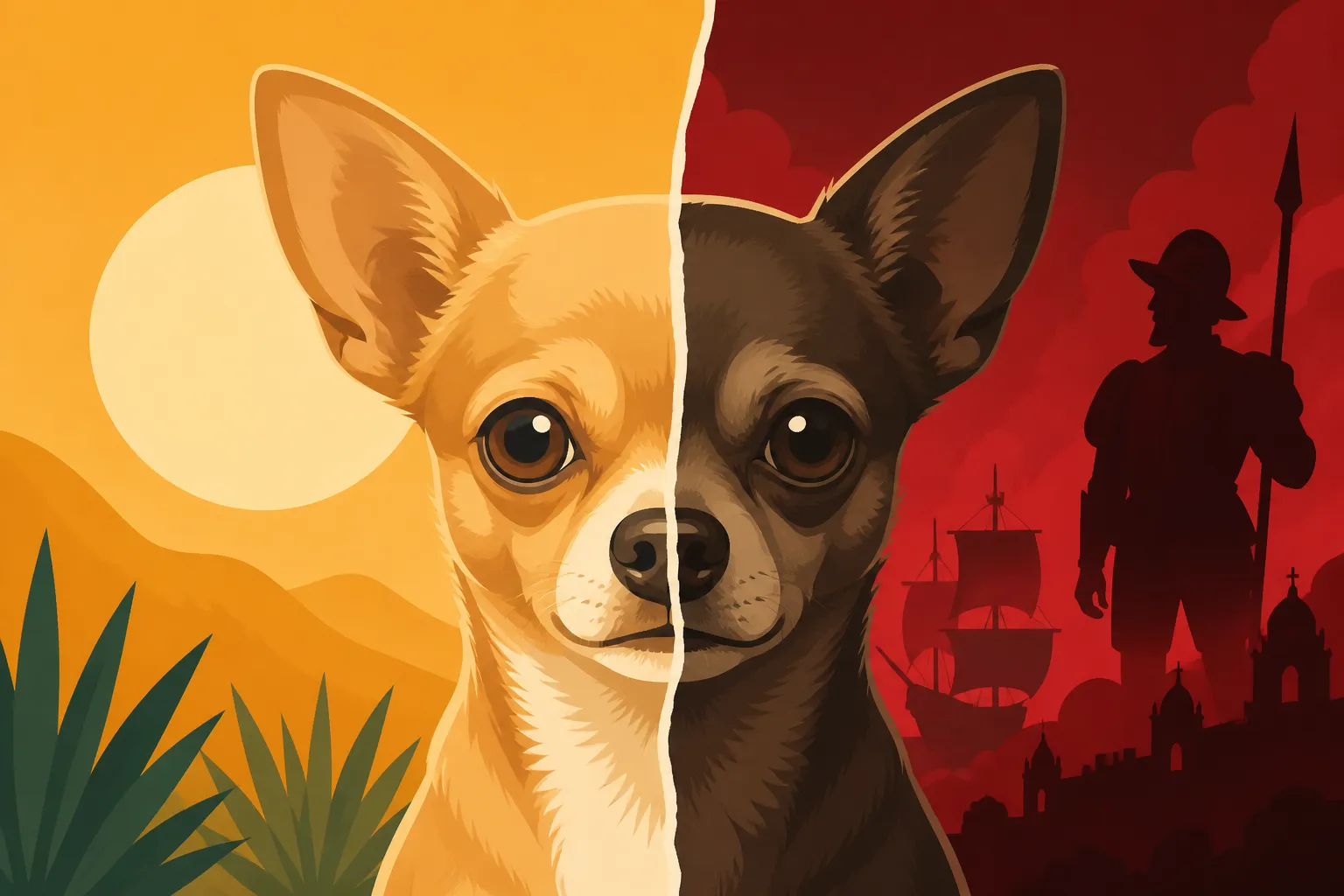
What the Spanish Conquest Did to the Chihuahua
For centuries, the ancestors of the modern Chihuahua thrived in Mesoamerica, deeply interwoven with indigenous cultures and spiritual beliefs. Then came the Spanish Conquest, a cataclysmic event that didn't just reshape human societies but also dramatically impacted the fate of native animal populations, including these tiny, cherished dogs. Understanding this turbulent period helps us grasp the incredible resilience and shrouded history of the Chihuahua breed as we know it today.
The Chihuahua's Ancestors: Before the Conquest
Long before European explorers set foot on American soil, small, delicate dogs with deep roots in the region lived alongside the Toltec and Aztec civilizations. These were the Techichi, believed to be the direct ancestors of our Chihuahuas. They weren't just pets; they held significant cultural, spiritual, and even practical roles within these complex societies.
The Techichi in Mesoamerican Culture
The Techichi were far more than simple companions. Archaeological evidence, including ancient carvings and burial sites, paints a picture of dogs deeply integrated into daily life and religious practices. They were revered, sometimes even sacrificed, believed to guide souls in the afterlife, much like psychopomps in other cultures. Imagine a dog so important that it was considered a bridge between worlds. That was the Techichi. Their presence is documented in art and artifacts dating back centuries, showing their consistent importance across various indigenous groups. They weren't an accidental part of society; they were intentionally bred and maintained for their unique qualities and roles. This long and storied past is part of why we have The Chihuahua From Techichi to American Lapdog today.
Spiritual and Symbolic Roles
For the Toltec and later the Aztec peoples, the Techichi often held spiritual significance. They were frequently buried alongside their human companions, believed to act as guides through Mictlan, the underworld. This belief stemmed from a profound understanding of life and death, where animals played a crucial role in the cycle. Evidence from tombs suggests that these dogs were intentionally interred with their owners, sometimes wearing elaborate collars or ornaments, signifying their honored status. It wasn't just a superstition; it was a deeply ingrained spiritual practice, highlighting the intimate bond these cultures shared with their dogs. They were seen as protectors, companions, and spiritual escorts, roles that would be dramatically challenged by the arrival of a new, conquering culture. This connection to the spiritual realm is clearly visible in What the Toltecs Kept the Chihuahua's Ancestor For.
The Arrival of the Conquistadors: A Collision of Worlds
When the Spanish conquistadors, led by Hernán Cortés, arrived in the early 16th century, they brought with them not just new technologies and diseases, but an entirely different worldview. This clash of cultures had devastating consequences for the indigenous peoples and, by extension, their native animals, including the Techichi.
Initial Disruption and Displacement
The conquest was a period of immense upheaval. Cities were sacked, empires fell, and established societal structures crumbled. For the Techichi, this meant a sudden loss of their traditional place. Their human caretakers were decimated by warfare, disease, and forced labor. With entire communities disrupted, the careful breeding and tending of these small dogs undoubtedly suffered. Many would have been abandoned or simply lost in the chaos. The highly organized social systems that sustained both humans and their animals were shattered, leading to widespread displacement and neglect. It's easy to imagine these tiny dogs, once cherished, suddenly finding themselves fending for themselves in a brutal, changing landscape. They were no longer the pampered companions of royalty or spiritual guides; they were simply trying to survive. Indeed, records indicate Whether Cortez Really Found the Emperor's Dogs in the wake of the upheaval.
Neglect and Misunderstanding by the Conquerors
The Spanish conquistadors, with their European sensibilities and priorities, likely had little understanding or appreciation for the native Techichi. They brought their own dogs – larger breeds like mastiffs and greyhounds, used for warfare and hunting – and saw the smaller native dogs through a utilitarian lens, if they saw them at all. To them, these small dogs were likely exotic curiosities, or perhaps even pests, rather than valued members of a spiritual community. There was no cultural framework for the Spanish to value them in the same way the indigenous people had. This lack of understanding meant neglect was almost inevitable, as the conquerors focused on resource extraction and religious conversion, not preserving native canine lines. The Techichi, once at the heart of an ancient culture, were suddenly marginalized, their existence threatened by a profound lack of interest and protection from the new rulers.
Cultural and Religious Suppression: The Canine Impact
Beyond the physical destruction and displacement, the Spanish Conquest also waged a war on indigenous cultures and religions. This had a profound, albeit often indirect, impact on the Techichi, whose roles were so deeply intertwined with these now-forbidden practices.
Devaluation of Indigenous Beliefs and Practices
The Spanish were fervent Catholics, and they viewed indigenous religions as paganism that needed to be eradicated. This meant suppressing ceremonies, destroying idols, and discouraging any practices associated with native spiritual systems. Since the Techichi were often linked to these spiritual rites – as sacrificial offerings, guides to the afterlife, or companions to the elite – their very association with these practices became a liability. To the new authorities, a dog involved in "pagan" rituals might be seen as an artifact of a belief system they were actively trying to dismantle. This led to a systematic devaluation of anything tied to the old ways, including the unique status of the Techichi. It effectively stripped them of their sacred significance and relegated them, in the eyes of the colonizers, to mere animals, if not symbols of something to be forgotten. This ideological shift was a major factor in Where the Breed Went After the Spanish Arrived.
Shift in Societal Status
With their spiritual roles stripped away, the Techichi lost their elevated status. No longer revered or intentionally bred for specific cultural functions, they might have been seen as just another dog, or perhaps even a symbol of a conquered past. The demand for their companionship among the indigenous elite would have dwindled as that elite was dismantled. This shift in status meant that the deliberate preservation of the breed, which had sustained it for centuries, simply ceased to exist in its original form. Instead of being valued for their unique attributes, their survival would have depended more on chance, adaptation, and perhaps their ability to live inconspicuously within the margins of the new colonial society. They were no longer dogs of ceremony or noble companions; their existence became a quiet struggle for continuity.
Ecological and Genetic Shifts: New Dogs, New Diseases
The arrival of the Spanish didn't just bring cultural upheaval; it introduced entirely new biological elements to the Americas. European dogs and diseases presented novel threats and opportunities for the Techichi, further shaping their evolutionary path.
Introduction of European Dog Breeds
The conquistadors and subsequent European settlers brought with them a variety of dog breeds. These were often larger, more robust dogs, suited for guarding, hunting, and herding, reflecting European canine utility. This introduction of new breeds meant a direct increase in competition for resources and, more significantly, the potential for interbreeding. Imagine a small, delicate Techichi encountering a much larger European mastiff. While direct, violent conflict was certainly a risk, so was the gradual genetic dilution through cross-breeding. This meant that the pure lineage of the Techichi, carefully maintained for generations, was now at risk of being blended with other dog types. While some might have found refuge in isolated areas, others would have inevitably intermingled, contributing to a complex genetic mosaic in the centuries that followed. This genetic mixing undoubtedly contributed to the challenges faced by How the Techichi Differed From Today's Chihuahua.
Exposure to New Diseases
One of the most devastating impacts of the European arrival on indigenous populations was the introduction of novel diseases for which they had no immunity. This biological exchange wasn't limited to humans; it affected animals too. European dogs carried their own suite of pathogens – canine distemper, parvovirus, rabies, and other illnesses – which could have been utterly catastrophic for native dog populations with no prior exposure or natural resistance. A widespread epidemic could have easily decimated entire populations of Techichi, driving them to the brink of extinction. Without the sophisticated veterinary care we have today (think about the resources available at a modern pet store like Chewy for preventative care), these diseases would have spread unchecked, posing a grave threat to the survival of any native canine. This vulnerability to new illnesses would have been a silent, but incredibly powerful, force pushing the Techichi toward rarity.
Survival in Seclusion: How the Breed Endured
Despite the immense challenges and pressures brought by the Spanish Conquest, the ancestral Chihuahua somehow persisted. Their survival wasn't a result of deliberate protection by the conquerors, but rather a testament to their resilience and perhaps their ability to retreat from the spotlight.
Retreat to Remote Areas
One prevailing theory suggests that the Techichi, or their direct descendants, survived by retreating into isolated, less accessible regions. The sheer scale of Mesoamerica meant there were many pockets of land untouched or minimally impacted by colonial expansion. Indigenous communities who fled Spanish control might have taken their cherished dogs with them, preserving them away from the new societal centers. These remote villages, often in mountainous or heavily forested areas, could have become unintentional sanctuaries where the breed continued to exist, largely unnoticed by the dominant European culture. This period of "going underground" would have been crucial for maintaining some semblance of their unique genetic makeup and behavioral traits, allowing them to weather the storm of change. It's a key part of understanding How the Chihuahua Survived Three Centuries Unrecorded.
Unintentional Preservation by Indigenous Communities
Even as their culture was suppressed, some indigenous groups likely continued to keep these dogs, perhaps less openly, but still out of tradition or affection. The bond between humans and their animals is powerful, and it's not easily broken by external pressures. While large-scale breeding programs linked to spiritual rites might have ceased, individual families or small communities could have maintained small populations of these dogs. Their compact size and adaptability would have made them relatively easy to conceal and sustain, even in challenging circumstances. These hidden pockets of Techichi would have acted as genetic reservoirs, silently carrying the lineage forward through generations, awaiting a time when they could re-emerge into the wider world. This quiet persistence is why we still have the breed today.
The Legacy of the Conquest: A Breed Reborn
The centuries following the Spanish Conquest saw the Techichi essentially disappear from historical records, only to re-emerge much later as the Chihuahua we recognize. The legacy of this tumultuous period is one of incredible resilience and an eventual rediscovery.
Rediscovery in the 19th Century
Fast forward to the mid-19th century, and small dogs fitting the description of the Techichi began to be "rediscovered" in the Mexican state of Chihuahua. This region, relatively remote and mountainous, is believed to have been one of those pockets where the breed quietly survived for centuries. American travelers and traders venturing into Mexico started to take notice of these tiny, distinctive dogs, bringing them back to the United States. This period marked the beginning of their journey from ancient indigenous companion to international breed. The dogs found in Chihuahua state were the bridge, the living link to those pre-Columbian ancestors, their lineage having somehow navigated centuries of profound change and neglect. This re-introduction to the wider world is explored in detail in Americans Buying Chihuahuas in the Mid-1800s.
Evolution into the Modern Chihuahua
Once introduced to American and later European enthusiasts, these dogs began to be selectively bred, eventually leading to the development of the modern Chihuahua breed standard. The initial "landrace" dogs from Mexico, though clearly distinct, would have undergone refinement to emphasize certain traits – perhaps smaller size, specific head shapes, or coat types. This process of formalizing the breed, with pedigrees and show rings, was a far cry from their ancient spiritual roles, but it was essential for their global recognition and preservation in a new context. Today, a responsible breeder conducting The Health Tests a Chihuahua Breeder Should Run is part of this modern preservation, ensuring the health of lines that descended from those resilient survivors. The naming of the breed after the Mexican state, as detailed in The State of Chihuahua and the Breed's Name, cemented their origin story in their very identity, a subtle nod to their ancestral home.
Enduring Resilience of the Breed
The Chihuahua's journey through the Spanish Conquest and its aftermath is a powerful testament to the resilience of both the breed and the deep connection humans have with their animal companions. Despite devastating cultural, biological, and societal pressures, the Techichi lineage endured. From spiritual guides of ancient empires to hidden survivors in remote villages, and finally to beloved modern companions, their story is one of survival against immense odds. Today, when we see a Chihuahua curled up on a sofa, perhaps enjoying a delicious treat from Chewy, it's a stark reminder of how far this tiny dog has come, carrying centuries of history in its small frame.
The Long Road to Recognition
After their "rediscovery," the path to formal recognition for the Chihuahua was a gradual one. It took time for the breed to gain a foothold in the Western dog world, moving from a regional curiosity to a recognized breed. This journey highlights the shift from an indigenous understanding to a European-centric one, where formal standards and registries became paramount.
Early Efforts and Kennel Club Interest
As more of these small dogs made their way to the United States, enthusiasts began to recognize their unique qualities. Early American dog fanciers, often fascinated by exotic breeds, started to take an interest in breeding and exhibiting them. This was a crucial step, as it meant a shift from informal preservation to a more structured approach. Individuals dedicated themselves to establishing the breed, carefully selecting dogs for desired traits and documenting their lineages. These were the pioneers who saw the potential for this little Mexican dog to capture hearts beyond its homeland. This led to the formation of breed clubs and eventually, the push for formal recognition by major kennel clubs.
AKC Recognition and Beyond
The efforts of these early fanciers culminated in the American Kennel Club (AKC) recognizing the Chihuahua as a distinct breed in 1904. This was a monumental moment, signaling the breed's official entry into the mainstream dog world. With AKC recognition came a formal breed standard, outlining the physical and temperament traits that define a Chihuahua. This standard provided a blueprint for breeders, guiding them in their efforts to produce consistent, healthy, and true-to-type Chihuahuas. From this point forward, the breed’s future was secured, moving from the shadows of history to the bright lights of dog shows and beloved family pets. This long journey from ancient companion to recognized breed showcases the incredible resilience and enduring appeal of these tiny dogs, and how their destiny shifted dramatically from the time of The Chihuahua's Ancestor Among Montezuma's Treasures.
Comparing Pre- and Post-Conquest Existence
To truly grasp the impact of the Spanish Conquest, it's helpful to see a snapshot of the stark differences in the Chihuahua's (or Techichi's) existence before and immediately after this pivotal historical event.
| Aspect of Existence | Pre-Conquest (Techichi) | Post-Conquest (Initial Impact) |
|---|---|---|
| Cultural Status | Revered, spiritual significance, noble companion | Marginalized, devalued, associated with suppressed beliefs |
| Societal Role | Spiritual guide, companion, sacrificial offering | Likely abandoned, fending for self, unnoticed by new rulers |
| Breeding & Care | Intentional, carefully managed by indigenous cultures | Disrupted, haphazard, survival of the fittest |
| Genetic Environment | Relatively isolated, distinct native lineage | Exposed to European breeds, risk of interbreeding |
| Health Threats | Indigenous diseases, environmental factors | New European diseases, lack of immunity |
| Visibility | Prominent in art, burials, daily life | Largely invisible, existing in seclusion |
This table illustrates how profoundly the world changed for the Chihuahua's ancestors. From a position of cultural importance, they were thrust into a struggle for basic survival, highlighting the incredible journey they undertook to become the cherished dogs we know today.
Disclaimer
This article is for general informational purposes only and does not constitute professional advice. Laws, prices and regulations vary by location and change over time. Consult a qualified professional for guidance on your specific situation.