How the Aztecs Shrank the Chihuahua’s Ancestor
It’s truly fascinating to look at our tiny, confident Chihuahuas today and think about their deep roots in history, especially how they came to be so wonderfully small. Many of us wonder about the ancient origins of this spirited breed, and this guide is going to take us back in time, delving into the role the Aztec civilization might have played in refining their ancestors into the diminutive companions we cherish.
Before the Aztecs: The Ancient Techichi
Before the magnificent Aztec Empire rose to prominence, another important civilization, the Toltecs, had a profound connection with a particular breed of dog known as the Techichi. These dogs were the ancient ancestors of our modern Chihuahuas, and understanding their original form and purpose is crucial to appreciating the subsequent changes they underwent. It’s like looking at a rough, uncut gem and then seeing the polished jewel – the essence is the same, but the form has been refined over centuries.
The Techichi's Place in Mesoamerican Culture
The Techichi weren't just any dogs; they held a significant role in the daily lives and spiritual beliefs of the Toltec people, who flourished in Mesoamerica long before the Aztecs. Archaeological evidence, particularly the fascinating Techichi Figures Found in Mexican Tombs, suggests these dogs were often buried alongside their human companions, indicating a deep bond and perhaps a belief in their companionship even in the afterlife. They weren't just pets; they were seen as guides for souls navigating the underworld, companions in life, and integral members of the community. You can imagine the reverence they held, far beyond just being a working animal. For more on their earliest known history, read The Chihuahua Ancestor Carved in 300 BC.
These dogs were believed to have medicinal properties and were sometimes sacrificed in rituals. While this might sound harsh to our modern ears, it reflects a society where the line between the physical and spiritual world was much blurrier, and animals often played a sacred role in bridging those two realms. They were valued, revered, and deeply intertwined with the cultural fabric. It wasn't simply a case of owning a dog; it was about participating in a spiritual connection that transcended the everyday.
What the Techichi Looked Like
Now, if you were to encounter a Techichi, you might not immediately recognize it as a Chihuahua ancestor. For starters, they were likely larger than the Chihuahuas we know and love today. While not massive dogs, they were probably sturdier, perhaps closer in size to a small terrier or a feist dog, generally estimated to be around 10-20 pounds. Their build would have been more robust, well-suited for a life that likely involved some hunting or companionship in a more rugged, ancient landscape.
Their coats might have varied, but they were generally described as a short, smooth type, perhaps similar to what we call a "smooth coat" Chihuahua today, but without the extreme refinement of the breed standard. Imagine a compact, alert dog, with prominent ears and expressive eyes, but with a bit more substance to its frame. The distinctive "apple head" we often associate with Chihuahuas might not have been as pronounced, if present at all. They were dogs of utility and spiritual significance, shaped by their environment and the needs of the Toltec people. Their existence really sets the stage for how much dedicated breeding, even accidental, can transform a breed over millennia, hinting at How Old the Techichi Line Actually Is.
The Aztec Empire and Its Dogs
Fast forward a few centuries, and the powerful Aztec Empire emerged, absorbing many of the cultural and religious practices of earlier Mesoamerican civilizations, including their connection with dogs. The Aztecs, known for their sophisticated society, intricate belief systems, and advanced agricultural practices, also had a unique relationship with canines, a relationship that would prove pivotal in the evolutionary journey of the Chihuahua.
Aztec Society and Animal Husbandry
The Aztecs were masterful farmers and engineers, building a sprawling empire around their capital, Tenochtitlan (modern-day Mexico City). Their society was highly organized, with specific roles and responsibilities for everyone, including their animals. While deer, turkeys, and ducks were common food sources, dogs also played a part in their agricultural and domestic life. They weren't just wild animals roaming free; they were integrated into the household and economic systems.
The Aztecs practiced various forms of animal husbandry, and it's plausible that this extended to their canine companions. They would have managed populations, perhaps even selectively breeding animals for desired traits. This is where the idea of intentional, or at least observed, breeding for certain characteristics comes into play. While not a formalized kennel club system, the careful tending of livestock and other animals for specific purposes was well within their societal capabilities. This careful management could easily have influenced dog populations, subtly (or not so subtly) guiding them toward particular sizes or temperaments.
The Cultural Significance of Dogs to the Aztecs
For the Aztecs, dogs continued to hold the spiritual importance established by the Toltecs, but perhaps with new layers of meaning. They were still seen as companions in the afterlife, as evidenced by archaeological finds, and also as sources of warmth and food. The Spanish chroniclers, arriving in the 16th century, often remarked on the presence of small dogs in Aztec households, sometimes noting their use as a food source during times of scarcity.
However, it wasn't just about utility or sustenance. Dogs, particularly smaller ones, were often associated with certain deities or celestial bodies. They were believed to have the power to ward off evil spirits and to guide human souls across the nine rivers of the underworld, Mictlan. This spiritual role would have ensured their continued presence and even protection within Aztec society. Montezuma, the last Aztec emperor, was said to keep many small dogs, sometimes even described as "the Emperor's dogs," hinting at their elevated status. You can learn more about this in The Chihuahua's Ancestor Among Montezuma's Treasures. This reverence, coupled with practical considerations, created a unique environment for the continued development of the Techichi line.
Theories on Aztec Influence and Size Reduction
So, how exactly did the Aztecs contribute to shrinking the Techichi into something more akin to our modern Chihuahua? It wasn't a single, dramatic event, but likely a gradual process influenced by several factors inherent in their advanced civilization.
Selective Breeding for Specific Traits
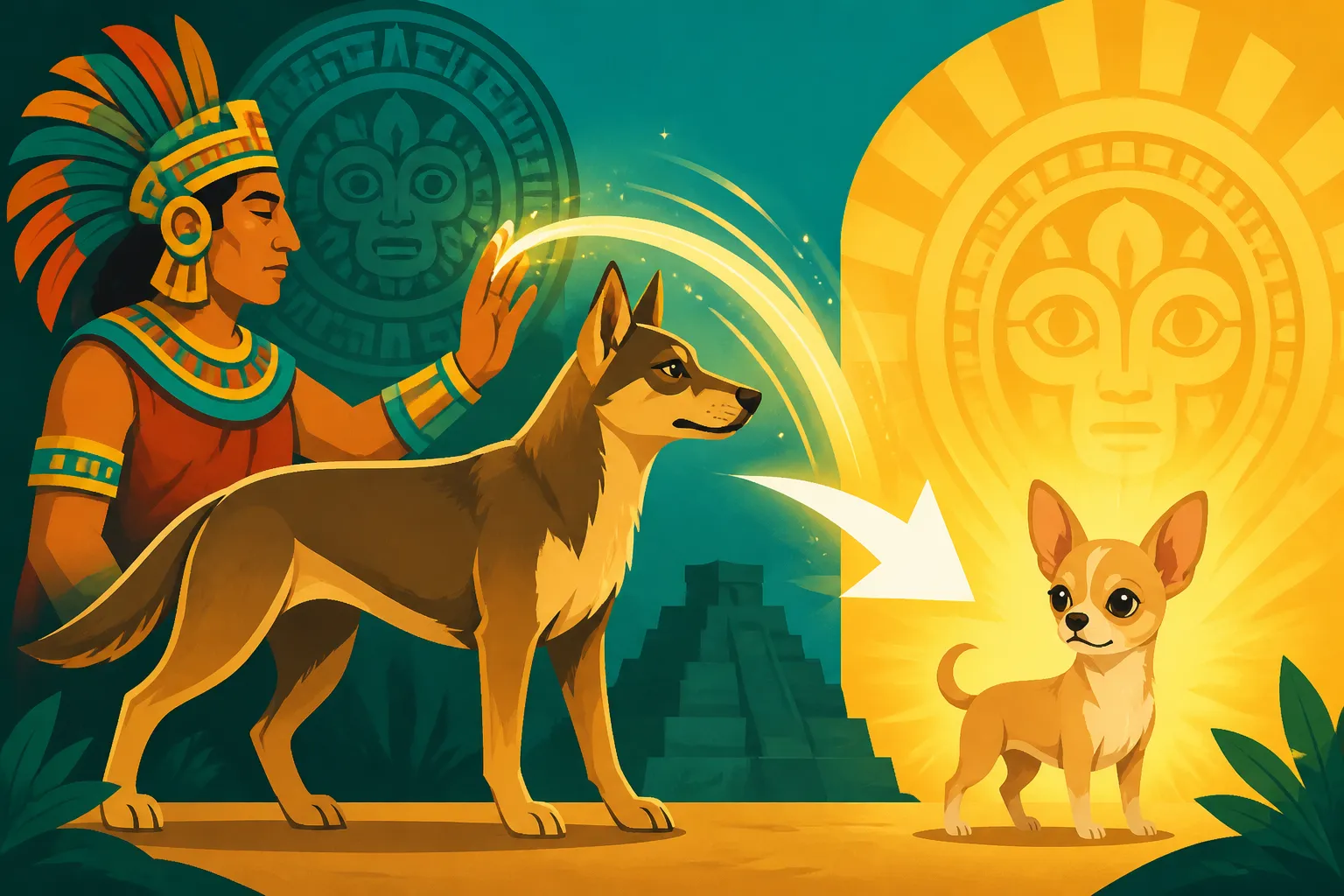
The most compelling theory behind the size reduction lies in the concept of selective breeding. While the Aztecs didn't have breed standards or dog shows, they absolutely understood the principle of choosing animals with desirable traits for reproduction. If smaller dogs were more manageable, consumed fewer resources, or fit better into specific cultural or spiritual roles, then naturally, those smaller individuals would be favored.
Imagine an Aztec family. A tiny, quiet dog might be easier to keep in a bustling city like Tenochtitlan, where space was at a premium. A dog that required less food was economically sensible. Furthermore, if small dogs were believed to be more effective at guiding souls, or if their size made them ideal companions for the elite, then individuals exhibiting these traits would be intentionally, or even subconsciously, encouraged to breed. Over generations, this consistent preference for smaller dogs would lead to a noticeable reduction in average size. Think of it as a subtle, centuries-long breeding program focused on diminishing stature. This wasn't about creating a "teacup" as we understand it today, but about fostering a smaller, more refined version of the Techichi that better suited their urbanized and ritualistic needs. This is where The Aztec Conquest and a Smaller Dog comes into play, marking a significant shift.
Dietary Factors and Environmental Pressures
Beyond deliberate selection, environmental factors and dietary influences could have played a crucial, albeit unintentional, role in the Techichi's shrinking. Life in a dense, urban environment like Tenochtitlan would have been vastly different from the more rural, perhaps even wilder, existence of earlier Techichi. Resources, while carefully managed, might have been more constrained, leading to smaller average sizes for all domestic animals.
A dog that eats less, particularly one kept as a companion or for spiritual purposes rather than rigorous hunting, might naturally trend smaller over time. If a dog's diet was less robust, or if they were living in conditions where only the most resource-efficient animals thrived, this could lead to generations of smaller-bodied dogs. Additionally, the climate and specific environmental conditions of the Aztec heartland could have favored smaller body sizes for thermoregulation or other adaptive reasons. It’s not just about what humans wanted but also about what the environment selected for in conjunction with human influence.
The Spiritual and Practical Role of Smaller Dogs
It's clear that small dogs held a dual significance for the Aztecs: spiritual and practical. As spiritual guides, their diminutive size might have been seen as an advantage, making them more ethereal or symbolic. They weren't guarding livestock; they were guarding souls. This subtle shift in their primary purpose could have favored a smaller, less physically imposing form.
Practically, these small dogs were sometimes used as "hot water bottles" or comforters for the sick and elderly. Their compact size and natural body warmth would have made them ideal for this therapeutic role. Keeping such dogs close, perhaps even sleeping with them for warmth or comfort, would have inadvertently continued the process of favoring smaller, more docile individuals. Imagine a tiny dog nestled against you for warmth on a cool night – it's a comforting image, and one that aligns perfectly with the practical needs of people without modern heating. This intimate companionship would have reinforced the value of smaller dogs within the household.
Connecting Ancient Dogs to the Modern Chihuahua
After the Aztec Empire, a new chapter began for the indigenous dogs of Mexico. The arrival of the Spanish Conquistadors in the 16th century brought dramatic changes, and for a long time, the fate of the Techichi and its descendants seemed uncertain.
The Post-Conquest Era and the Breed's Disappearance
When Hernán Cortés and his forces conquered the Aztec Empire, it led to a cataclysmic upheaval of society, culture, and even animal populations. The Spanish brought their own dogs, mostly larger hunting and war dogs, and had little regard for the indigenous breeds, which they often saw as primitive or even devilish. Many native dogs, including the Techichi and its smaller descendants, were likely culled, neglected, or interbred with the European arrivals. For centuries, the pure lineage seemed to vanish, becoming a shadowy figure in history. What the Spanish Conquest Did to the Chihuahua covers this tumultuous period in detail.
It's a period of "lost history" for the breed, where their numbers dwindled, and their pure form became incredibly rare. For over 300 years, there's very little documented evidence of these specific small dogs. They were still present, of course, surviving in remote villages and indigenous communities, but they were no longer a prominent part of the dominant culture. This hidden survival is a testament to their resilience and the enduring bond they shared with some human populations.
Modern DNA and Archaeological Evidence
The good news is that the story doesn't end there! In the mid-19th century, during archaeological excavations in the state of Chihuahua, Mexico, small dogs strikingly similar to the ancient Techichi carvings and modern Chihuahuas were rediscovered. This re-emergence sparked interest and eventually led to the development of the modern breed we recognize today. How Americans Found Chihuahuas in the 1800s explains this rediscovery and how the breed began its journey to international recognition.
More recently, advances in genetic science have allowed researchers to perform DNA Studies on Chihuahua Origins. These studies have provided compelling evidence linking the modern Chihuahua directly to ancient Mesoamerican dog breeds, confirming their unique heritage and putting to rest any lingering doubts about their pre-Columbian origins. While some interbreeding with European toy breeds undoubtedly occurred over the centuries, the core genetic signature of the ancient Techichi persists. This blend of historical accounts, archaeological finds, and cutting-edge genetic analysis paints a clear picture: our tiny Chihuahuas are living historical artifacts, direct descendants of those ancient dogs cherished by civilizations like the Toltecs and Aztecs, proving the remarkable journey of The Chihuahua From Techichi to American Lapdog.
Comparing the Ancestor to the Modern Chihuahua
It's truly remarkable to consider the transformation from the ancient Techichi to the beloved Chihuahua of today. Here's a quick look at some of the key differences and similarities.
| Feature | Ancient Techichi (Pre-Aztec/Aztec Era) | Modern Chihuahua |
|---|---|---|
| Size | Larger, sturdier (approx. 10-20 lbs) | Much smaller, refined (typically 2-6 lbs, rarely over 10 lbs) |
| Build | More robust, stockier | Delicate, compact, fine-boned |
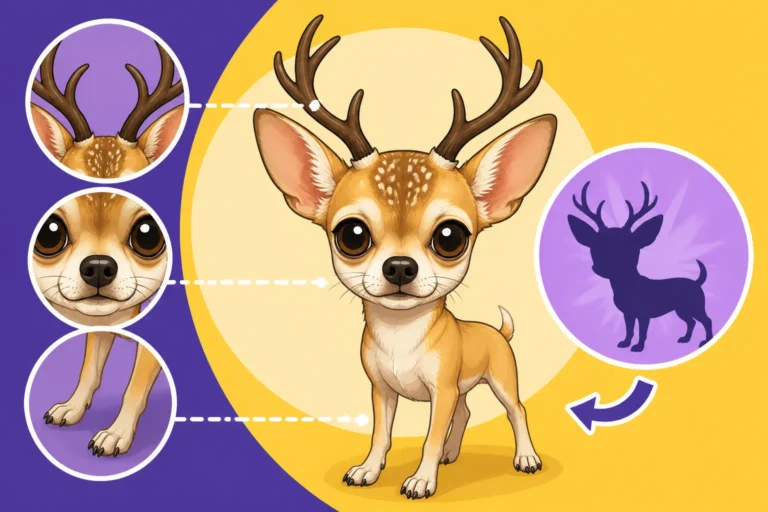
| Head Shape | Potentially varied, less exaggerated | Often prominent "apple head" (though "deer head" is also common but not standard) |
| Purpose | Spiritual guide, companion, warmth, food | Companion, lapdog, show dog |
| Temperament | Alert, likely adaptable | Fiercely loyal, confident, often "terrier-like" in spirit, can be wary of strangers |
| Habitat | Rural, then urban settlements | Predominantly indoor, highly adaptable to apartment living |
| Diet | Whatever was available, often varied | Carefully formulated commercial dog food (like premium options found at Chewy) |
It's clear that while the core spirit of the breed, its intelligence and loyalty, has persisted, human influence over thousands of years, especially during significant periods like the Aztec Empire, has dramatically shaped its physical form. This long history is part of what makes our Chihuahuas so utterly unique and captivating.
Disclaimer
This article is for general informational purposes only and does not constitute professional advice. Laws, prices and regulations vary by location and change over time. Consult a qualified professional for guidance on your specific situation.