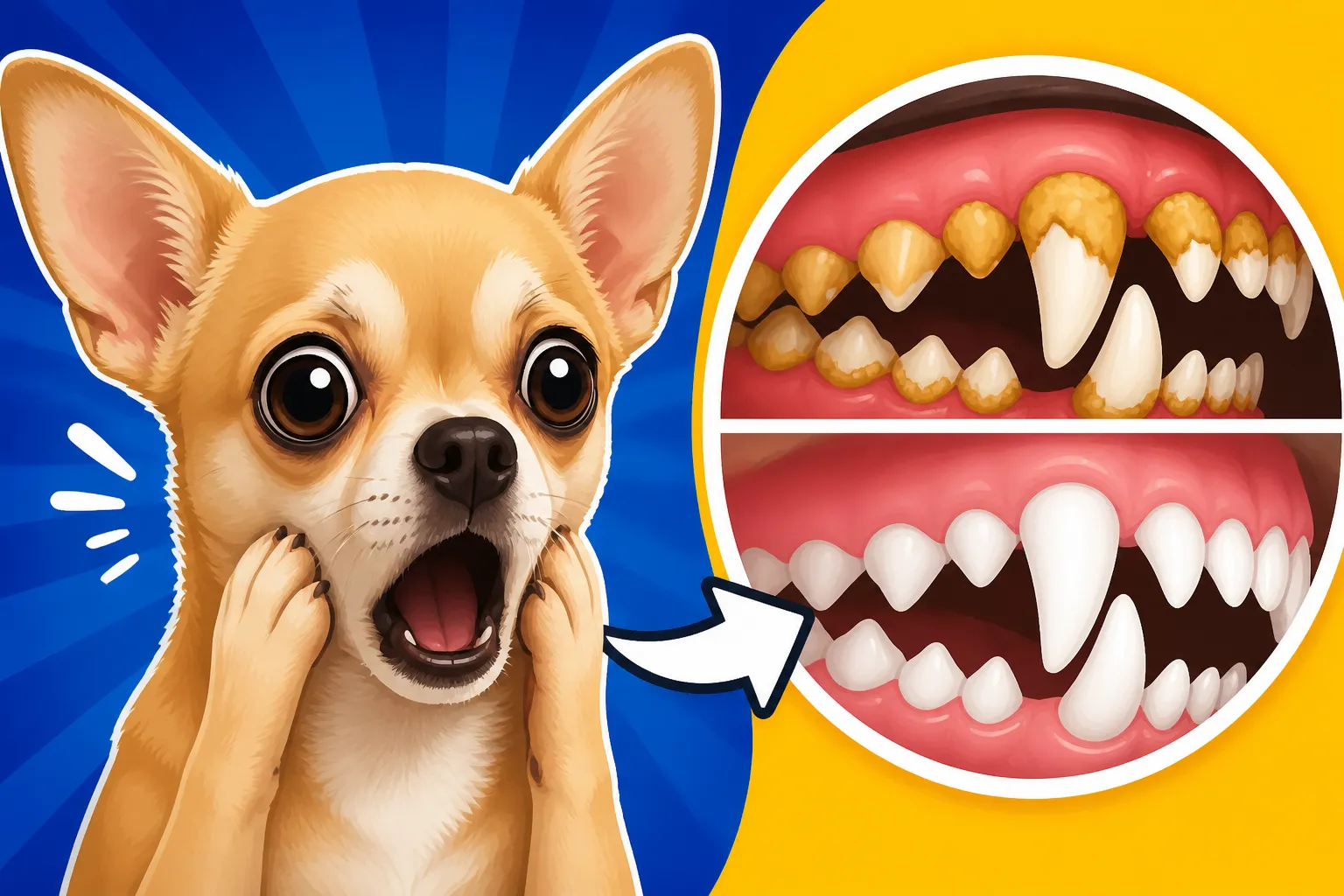
What 70 Percent Leaves on a Chihuahua Dental
The moment your veterinarian tells you your little Chihuahua needs a professional dental cleaning, possibly with extractions, a wave of dread often hits. We all know vet bills can be substantial, and for many, pet insurance seems like a smart way to cushion the blow. But understanding exactly what '70% reimbursement' really means for your out-of-pocket expenses on a Chihuahua dental can feel incredibly confusing and frustrating when you're looking at a bill that still seems hefty. This guide aims to clear up that confusion, breaking down the true cost of Chihuahua dental care and how pet insurance typically factors in, so you can be prepared.
The Inevitable Truth of Chihuahua Dental Care Costs
Let's face it: Chihuahuas, despite their small stature, come with big dental problems. It's not a matter of if your Chihuahua will need dental work, but when and how often. Their tiny mouths are simply not designed to hold 42 adult teeth comfortably, leading to overcrowding, plaque buildup, and rampant gum disease from a very young age. This anatomical reality means that preventive care is crucial, but often, professional intervention becomes necessary much sooner and more frequently than with larger breeds.
Why Chihuahua Dental Disease is So Prevalent
It's a common complaint among Chihuahua owners: "My vet always brings up their teeth!" And there's a good reason for it. Their compact jaws mean teeth are often rotated, crooked, or too close together. This creates perfect little pockets for food particles and bacteria to accumulate, quickly forming plaque and then hardening into tartar. Once tartar forms, no amount of brushing at home can remove it; it requires a professional cleaning under anesthesia. If left untreated, this leads to painful gum inflammation (gingivitis) and eventually periodontitis, which can destroy the bone supporting the teeth, leading to tooth loss and even systemic health issues. Many Chihuahuas will unfortunately require extensive dental work, including extractions, by the time they are just five or six years old. You can read more about Chihuahua Dental Disease in a Crowded Small Jaw to understand the specifics.
Dissecting a Typical Chihuahua Dental Bill
A standard dental procedure for a Chihuahua isn't just a quick scrub and polish. It’s a full medical procedure that requires significant professional time and resources. For a routine cleaning, you might expect to pay anywhere from $300 to $700, but this can easily skyrocket into the thousands if extractions are needed. The cost isn't just for the cleaning itself; it encompasses a range of critical services that ensure your tiny dog's safety and well-being.
Here’s a breakdown of what often contributes to the total bill:
- Pre-anesthetic Bloodwork: Essential to ensure your Chihuahua's liver and kidneys can safely process the anesthesia. This is a non-negotiable step, especially for small dogs. You'll likely see specific charges for Pre-Anesthetic Bloodwork Costs for a Chihuahua.
- Anesthesia: Administering and monitoring anesthesia in a tiny Chihuahua, which might weigh only a few pounds, is far more delicate and time-intensive than for a large dog. There are inherent Anesthesia Risk During a Chihuahua Dental factors due to their size.
- Dental X-rays: Crucial for evaluating the health of the tooth roots and jawbone, as much of the disease happens below the gumline. You can’t see this with the naked eye, and it's vital for a thorough assessment.
- Scaling and Polishing: The actual cleaning of the teeth, both above and below the gumline, and then polishing to smooth the enamel.
- Extractions: If teeth are diseased beyond repair, they must be extracted. Each extraction adds to the cost, especially if they are complex or involve surgical removal. This is where you might see the bill jump significantly, as Chihuahua Tooth Extractions From $500 to $1,500 can happen quickly.
- Medications: Post-procedure pain relief and antibiotics, if infection is present.
Considering these components, it's clear why even a "simple" dental can quickly become a significant expense.
Understanding the 70% Reimbursement Model in Pet Insurance
When your pet insurance policy states "70% reimbursement," it sounds straightforward, right? You pay the vet bill, and they send you back 70% of it. Unfortunately, it's usually not quite that simple. The reality is that the 70% applies after your deductible has been met, and before any annual limits or exclusions are applied. It’s a common misconception that 70% means a flat reduction on every bill.
The Deductible: Your Initial Out-of-Pocket
Before your insurance company starts to reimburse you for anything, you first have to meet your deductible. Think of it like the deductible on your car insurance or health insurance. This is the amount of money you are responsible for paying out-of-pocket for eligible veterinary expenses each policy term (usually annually) before your insurance coverage kicks in.
Let's say you have a $250 annual deductible. If your Chihuahua's first vet bill for the year is for a dental procedure costing $800, you'll pay the first $250 yourself. Only the remaining $550 ($800 – $250) will then be subject to the reimbursement percentage. It’s important to understand this because it’s a fixed cost you’ll incur regardless of your reimbursement rate. When looking at policies, make sure you understand Setting a Chihuahua Deductible Against Dental Bills and how it impacts your overall cost.
Co-insurance: Where Your 30% Comes Into Play
Once your deductible has been met, the co-insurance percentage comes into effect. If your policy offers "70% reimbursement," this means the insurance company will pay 70% of the eligible costs after the deductible, and you, the pet parent, are responsible for the remaining 30%.
Let's revisit our $800 dental bill with a $250 deductible.
- Total Bill: $800
- Deductible Met: -$250 (you pay this)
- Remaining Eligible Amount: $550
- Insurance Reimbursement (70%): $550 * 0.70 = $385
- Your Co-insurance (30%): $550 * 0.30 = $165
- Your Total Out-of-Pocket: $250 (deductible) + $165 (co-insurance) = $415
So, from an $800 bill, you'd still be paying $415 out of pocket, not just the implied 30% of $800 ($240) that some people might initially assume. This often surprises people, as the "70% reimbursement" often makes it sound like you're only responsible for a small fraction of the total bill.
Common Exclusions and Limitations to Consider
Even with a 70% reimbursement policy, not every single cost on your vet bill will necessarily be covered. Pet insurance plans have exclusions, and it's crucial to read your policy carefully. Common exclusions include:
- Pre-existing Conditions: If your Chihuahua showed signs of dental disease before you enrolled in the policy or during a waiting period, that specific issue might be considered pre-existing and excluded from coverage. This is a huge factor for Chihuahuas given their predisposition to dental issues.
- Routine Care/Wellness: Many standard accident & illness policies do not cover routine procedures like annual cleanings unless you purchase an additional wellness plan rider. This is where Wellness Plans That Cover Chihuahua Dentals become relevant, though they come with their own costs and limitations.
- Cosmetic Procedures: Anything deemed not medically necessary is typically excluded.
- Waiting Periods: Most policies have waiting periods (e.g., 14 days for illness, 6 months for orthopedic conditions) before certain conditions are covered.
The Practical Impact of 70% Reimbursement on Your Wallet
Knowing the mechanics is one thing, but seeing it applied to various real-world scenarios for Chihuahua dental care truly highlights the financial implications. The range of dental procedures a Chihuahua might need can vary wildly in cost, directly affecting your final out-of-pocket expense even with 70% reimbursement.
Scenario 1: A "Simple" Routine Dental Cleaning
Imagine your 3-year-old Chihuahua, Pip, needs his first dental cleaning. The vet performs pre-anesthetic bloodwork, a full cleaning, and polishing. No extractions are needed.
- Total Bill: $600
- Your Deductible: $250 (already met earlier in the year by another eligible claim)
- Eligible Amount for Reimbursement: $600
- Insurance Reimbursement (70%): $600 * 0.70 = $420
- Your Co-insurance (30%): $600 * 0.30 = $180
- Your Total Out-of-Pocket: $180 (since the deductible was already met)
In this case, with the deductible already met, 70% reimbursement left you responsible for $180 of the $600 bill. This isn't too bad for a routine procedure, but it's still a chunk of change.
Scenario 2: Extensive Extractions and Unexpected Complications
Now, consider poor little Luna, a 5-year-old Chihuahua who hasn't had a dental in years. She needs multiple extractions due to severe periodontal disease.
- Total Bill: $1,800 (including bloodwork, X-rays, anesthesia, several extractions, and post-op medication). This kind of bill is not uncommon, as Why Chihuahua Dental Costs Recur Every Year and worsen over time without intervention.
- Your Deductible: $250 (this is the first eligible claim of the year, so you pay it now)
- Eligible Amount for Reimbursement: $1,800 – $250 = $1,550
- Insurance Reimbursement (70%): $1,550 * 0.70 = $1,085
- Your Co-insurance (30%): $1,550 * 0.30 = $465
- Your Total Out-of-Pocket: $250 (deductible) + $465 (co-insurance) = $715
Here, even with 70% reimbursement, you’re still on the hook for over $700. This is a significant sum, and it illustrates how even good insurance doesn't eliminate large bills entirely, especially for more complex procedures.
Scenario 3: The Annual Recurrence of Dental Needs
Many Chihuahuas need yearly or bi-yearly dentals. Let's look at a scenario where your deductible resets annually.
Your Chihuahua, Peanut, needs a $700 dental in January, and then another smaller clean-up for a new issue in November of the same year, costing $400.
- January Dental (first eligible claim of the year):
- Bill: $700
- Deductible: $250 (you pay)
- Eligible: $450
- Insurance pays (70%): $315
- You pay (30% co-insurance): $135
- Your Jan Out-of-Pocket: $250 + $135 = $385
- November Dental (deductible already met):
- Bill: $400
- Deductible: $0 (already met)
- Eligible: $400
- Insurance pays (70%): $280
- You pay (30% co-insurance): $120
- Your Nov Out-of-Pocket: $120
- Total Out-of-Pocket for the year: $385 + $120 = $505 for $1,100 worth of dental care.
This table provides a summary of these scenarios:
| Scenario | Total Vet Bill | Deductible Met? | Deductible Paid | Eligible for Reimbursement | Insurance Pays (70%) | Your Co-insurance (30%) | Total Out-of-Pocket |
|---|---|---|---|---|---|---|---|
| Routine Clean (Deductible Met) | $600 | Yes | $0 | $600 | $420 | $180 | $180 |
| Extensive Extractions (Deductible Not Met) | $1,800 | No | $250 | $1,550 | $1,085 | $465 | $715 |
| Two Dentals in 1 Year (Deductible $250/yr) | $1,100 | N/A | $250 (1st dental) | $450 (1st) + $400 (2nd) | $315 (1st) + $280 (2nd) | $135 (1st) + $120 (2nd) | $505 |
As you can see, 70% reimbursement is certainly helpful, but it doesn't mean your costs vanish. You still need to be prepared for a substantial portion of the bill, especially with higher-cost procedures or if your deductible hasn't been met yet.
Strategies to Maximize Savings and Prepare for Dental Expenses
Even with the complexities of pet insurance and the high likelihood of recurring dental issues for your Chihuahua, there are proactive steps you can take to mitigate costs and ensure your furry friend receives the best care. It's all about a combination of preventive measures, smart insurance choices, and financial planning.
Proactive Dental Care at Home
The single most impactful thing you can do to reduce the frequency and severity of your Chihuahua's dental problems is consistent home care. This means daily tooth brushing. Yes, daily! While it might seem daunting for such a tiny mouth, with patience and positive reinforcement, it's entirely possible. Products available from retailers like Chewy, such as specific small-breed toothbrushes and poultry-flavored toothpaste, can make the process easier. Even a two-minute routine every day can significantly slow down plaque and tartar buildup.
Beyond brushing, consider dental chews that are appropriately sized and vet-approved. Look for products that carry the Veterinary Oral Health Council (VOHC) seal, indicating they meet standards for plaque and tartar control. Some specific water additives can also help, though they are usually supplemental to brushing, not a replacement. Regular brushing can sometimes delay the need for the How Young a Chihuahua Needs Its First Dental procedure or make it less extensive when it does happen.
Choosing the Right Insurance Plan
While 70% reimbursement is common, it's not your only option. Many pet insurance providers, like Healthy Paws, offer different reimbursement levels, such as 80% or even 90%. While these higher percentages usually come with slightly higher monthly premiums, they can dramatically reduce your out-of-pocket costs for large bills, as seen in our scenarios above. Weigh the monthly premium increase against the potential savings during a costly procedure.
Also, consider if a wellness add-on makes sense for you. As mentioned earlier, standard accident & illness plans often don't cover routine cleanings. A wellness rider, which is usually a separate monthly fee, might cover a portion of your Chihuahua's annual dental cleaning or other preventive care, helping you manage the Budgeting a Chihuahua Dental Every Year more predictably. Just be aware of the specific limits and what's included in such riders.
Building a Dedicated Dental Fund
Even with excellent pet insurance, you will always have some out-of-pocket expenses due to deductibles and co-insurance. For Chihuahuas, with their predictable dental needs, it’s incredibly wise to start a dedicated savings fund specifically for veterinary care, especially dental work. If you know your Chihuahua will likely need a dental every 1-2 years, saving $25-50 a month can quickly build up to cover your deductible and co-insurance portion when the time comes. This financial cushion can make a huge difference when that vet bill arrives. Being prepared for The Yearly Chihuahua Dental Cleaning Bill can alleviate a lot of stress.
Alternative Payment Options and Financial Aid
If you find yourself facing an unexpected, high dental bill even with insurance, or without it, there are still options. Many veterinary clinics offer payment plans directly, allowing you to spread out the cost over several months. Services like CareCredit function like a credit card specifically for healthcare expenses, often offering interest-free promotional periods if the balance is paid within a certain timeframe. Don't hesitate to discuss payment options with your veterinary office. They often have resources or suggestions to help you manage significant costs. Remember, addressing Chihuahua Bad Breath and What It Means quickly can prevent smaller issues from becoming huge, expensive problems.
Disclaimer
This article is intended for informational purposes only and does not constitute veterinary advice. Always consult with a qualified veterinarian for any health concerns or before making any decisions about your Chihuahua's care, diet, or treatment plans. Pet insurance policies vary, and it is crucial to read your specific policy documents carefully to understand your coverage, deductibles, reimbursement percentages, and exclusions.