Treats Small Enough for Chihuahua Training
It’s a common scenario for Chihuahua parents: you’re trying to teach your tiny companion a new trick or reinforce good behavior, and you grab a bag of "small dog" treats. But then you realize that what’s considered small for a Shih Tzu might be an entire meal, or even a choking hazard, for your three-pound Chihuahua. Finding treats that are genuinely bite-sized, low in calories, and still high-value enough to motivate your pint-sized pupil can feel like a quest, but this guide will walk you through exactly what to look for and how to manage those miniature morsels effectively.
Why Treat Size Isn't Just a Cute Problem for Chihuahuas
When we think about dog training, treats are often the first tool that comes to mind for positive reinforcement. However, for a breed as uniquely tiny as the Chihuahua, the size of that treat is far more critical than just aesthetics. It impacts everything from physical safety to the effectiveness of your training sessions and even their overall health.
The Miniature Mouth and Swallow Reflex
Imagine trying to eat a whole apple when your mouth can barely fit a grape. That's often what we ask our Chihuahuas to do with treats marketed for "small dogs." Their tiny jaws and delicate throats are simply not equipped for larger pieces of food. A treat that's too big can become a genuine choking hazard, causing panic for both you and your little dog. Beyond the immediate danger, struggling with an oversized treat can make training frustrating. If your Chihuahua has to work hard to chew or try to swallow a piece that's too much, their focus on the command itself diminishes, and the positive association with the treat can be lost. They need something they can quickly and safely consume to keep the training momentum going.
Calorie Control and Weight Management
Chihuahuas exist on a delicate calorie balance. With their often minuscule body weight, even a seemingly small treat can represent a significant percentage of their daily caloric intake. For example, a single "mini" biscuit designed for a ten-pound dog could easily be 15-20 calories. For a three-pound Chihuahua, who might only need Daily Calories for a Three to Seven Pound Chihuahua (around 120-200 total), that one treat is a huge chunk of their allowance. Giving just a few of these during a training session could push them into calorie excess, leading to rapid weight gain. We often see how quickly What One Extra Pound Does to a Chihuahua – it’s like a person gaining 30-40 pounds! Obesity, even mild, can exacerbate conditions like Patellar Luxation, the Chihuahua's Commonest Joint Problem or contribute to other health issues. Therefore, treat size is directly tied to their health and longevity.
Maintaining Training Flow
Effective training, especially with marker training techniques like those taught in programs such as Marker Training a Chihuahua From Eight Weeks, relies on immediate and precise reinforcement. Your Chihuahua performs a desired behavior, you mark it ("yes!" or click), and then immediately deliver the reward. If the treat is too large, it takes too long for your dog to chew and swallow. This delay breaks the flow of the training session and dilutes the association between the behavior and the reward. Imagine trying to teach "sit" if your dog spends ten seconds crunching on a treat instead of immediately looking to you for the next cue. For short, effective training bursts, often lasting only Three Minute Training Sessions With a Chihuahua, quick consumption is absolutely vital to keep their attention and motivation high.
What Makes an Ideal Chihuahua Training Treat
Now that we understand why treat size is so crucial, let's dive into the characteristics that make a treat truly ideal for your pint-sized protégé. It’s not just about being small; it’s about safety, palatability, and nutritional value.
Softness and Chewability
For a Chihuahua, a treat needs to be soft enough to be easily and quickly consumed without much effort. Their teeth, while sharp, are small and can be prone to issues like Chihuahua Dental Disease in a Crowded Small Jaw earlier than larger breeds. Hard, crunchy treats might seem appealing, but they can be difficult to break down, potentially causing discomfort or dental wear over time. Moreover, a very hard treat might shatter, creating sharp fragments that could injure their delicate mouth or throat. Look for treats that can be easily squished or broken by hand, ensuring quick ingestion and reducing any potential choking risk. Soft, chewy textures are generally preferred as they can be swallowed more readily, keeping the training pace snappy and rewarding.
Low Calorie and Nutritious Options
Given the strict calorie budget for Chihuahuas, every treat counts. The best training treats are low in calories but high in nutritional value. Single-ingredient treats are often a great choice because you know exactly what your dog is consuming, reducing the risk of hidden allergens or unnecessary fillers. Things like tiny pieces of cooked chicken breast, boiled lean ground beef, or even small bits of unseasoned sweet potato or carrot can be excellent, natural, and low-calorie options. Some commercial brands also formulate specific "training bites" that are exceptionally small and lower in calories per piece. Always check the ingredient list for fillers, artificial colors, and preservatives, which offer no nutritional benefit and can sometimes trigger sensitivities in a dog with a delicate digestive system.
High Value, High Motivation
Even if a treat is perfectly sized and low in calories, it won’t be effective if your Chihuahua doesn’t find it highly motivating. "High-value" means it's something your dog really loves and will work for. What constitutes high-value can vary from dog to dog, but often it's something particularly tasty, smelly, or novel. For some Chihuahuas, a tiny piece of their regular kibble might be enough, especially if they are very food-motivated or if you are using The Commands Every Chihuahua Should Know in a quiet environment. For more challenging behaviors or distracting environments, you might need to pull out the "big guns" – a whisper of cheese, a sliver of cooked hot dog, or specialized high-value training treats. The goal is to make the reward so irresistible that your Chihuahua's focus remains squarely on you and the task at hand. Remember, even a high-value treat needs to be tiny!
Sourcing and Preparing Tiny Treats
Finding or making truly appropriate treats for your Chihuahua's training sessions requires a bit of thoughtful preparation. It’s not just about grabbing the first small bag you see; it's about intentionality.
Commercial Treats and the Art of Breaking Them Down
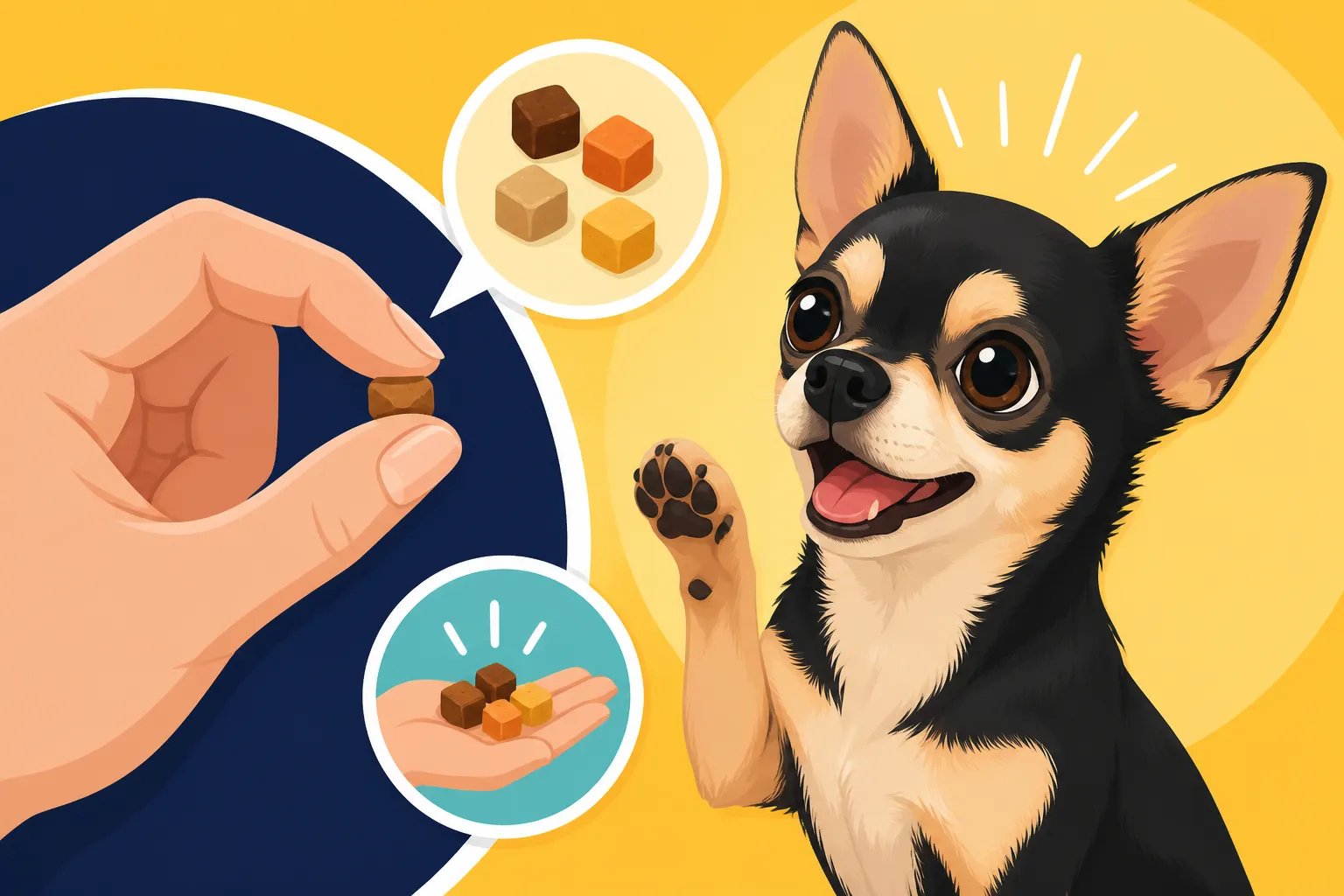
While some brands are catching on and producing genuinely tiny training treats, many are still too large for the average Chihuahua right out of the bag. Don't despair! Many of these can be easily broken or cut into smaller pieces. Look for treats that are soft and pliable, which makes them easier to divide. For instance, soft jerky-style treats or chewy training rolls can often be snipped with kitchen shears into dozens of miniature rewards. Even some harder, but crumbly, treats can be broken with your fingers.
When shopping, especially on platforms like Amazon, read product descriptions carefully for dimensions, and pay attention to reviews from other small dog owners. Sometimes, a treat marketed for "small breeds" might actually be perfect if you're willing to do a little prep work. The key is to aim for pieces no larger than a pea, or even half a pea, depending on your individual Chihuahua's mouth size and chewing habits.
Homemade Options and Precision Portioning
Creating your own treats offers ultimate control over ingredients and size. This can be especially beneficial if your Chihuahua has food sensitivities or you just want to ensure the freshest, healthiest options.
Here are a few ideas for homemade, Chihuahua-friendly training treats:
- Cooked Lean Meats: Boiled chicken breast, turkey, or lean ground beef cooked plain, then finely diced. A single chicken breast can yield hundreds of tiny training rewards.
- Cheese: Tiny slivers of mild cheese (like cheddar or mozzarella). Keep this in very small quantities due to its fat content.
- Plain Scrambled Eggs: Cooked without butter or oil, then crumbled into minute pieces.
- Vegetables: Steamed carrots, green beans, or sweet potato, cut into micro-cubes.
When preparing homemade treats, remember to cut them much smaller than you think you need. A tiny dice, almost like confetti, is ideal. Store them in an airtight container in the fridge for a few days, or freeze portions for longer storage. This precision portioning is crucial for both safety and calorie control.
The Role of a Training Program in Treat Usage
Structured training programs, such as those from BAXTER & Bella, often emphasize the specific mechanics of positive reinforcement, including the strategic use of treats. They’ll teach you about timing, consistency, and how to gradually reduce reliance on food rewards as your dog masters behaviors. For example, Why a Chihuahua Deserves Real Obedience Training is a core principle, and treats are an invaluable part of making that training engaging and successful.
A good program will often guide you on choosing appropriate rewards and how to transition from constant treat delivery to intermittent reinforcement. This means your Chihuahua learns that performing the behavior might earn them a super high-value treat, keeping them motivated without requiring a treat for every single correct response. This thoughtful approach ensures that treats remain a powerful tool for learning without becoming a dependency or contributing to weight gain.
Common Pitfalls and Smart Strategies for Chihuahua Treats
Even with the best intentions, it's easy to fall into common traps when using treats for such a tiny dog. Being aware of these and having smart strategies can make all the difference in your Chihuahua's training and health.
Overfeeding and Accidental Weight Gain
This is perhaps the biggest pitfall. Because Chihuahuas are so small, it’s alarmingly easy to overfeed them, especially with treats. A few extra grams a day can quickly add up to significant weight gain. Remember that treats should never make up more than 10% of your Chihuahua's daily calorie intake. If you're doing an intensive training session, consider reducing their main meal slightly to compensate for the extra calories from treats.
Keep a mental tally, or even a physical one, of how many treats you're giving throughout the day. It's often helpful to measure out a specific amount of training treats for the day in a small container, and once they're gone, they're gone! This helps prevent unconscious overfeeding. Be mindful of who else in the household might be slipping your Chihuahua "just one little treat" – coordination is key to managing their tiny calorie budget.
Dental Health Considerations
While we've stressed soft treats for safety, it's important to remember that some dental care involves chewing. However, very hard dental chews or bones are generally not recommended for Chihuahuas due to their small, sometimes fragile teeth and potential for Jaw Fractures From Chihuahua Dental Disease. Instead, focus on daily Chihuahua Dental Brushing as a Daily Job as the primary method for oral hygiene.
If you do use dental chews, choose options specifically designed for toy breeds, that are flexible and easily digestible, and always supervise your Chihuahua to ensure they are chewing safely. Never give large, hard bones or rawhides, as these pose a significant choking risk and can cause dental damage. The best training treats will be soft and quickly consumed, leaving their teeth free for proper brushing later.
Variety is the Spice of Life (and Training)
Just like people, Chihuahuas can get bored with the same old thing. If your dog isn't as enthusiastic about a particular treat as they once were, it might be time to switch it up! Having a rotation of 2-3 different high-value treats can keep them engaged and excited about training.
For example, you might use plain cooked chicken for everyday commands, but pull out a tiny bit of cheese or a specialized commercial high-value treat for more difficult tasks or in distracting environments. The novelty of a new flavor or texture can instantly re-ignite their motivation. This strategy is also useful if your Chihuahua suddenly becomes less interested in training – a new, exciting treat could be the key to getting them back on track.
Alternative Rewards Beyond Food
While food treats are incredibly effective, especially for initial learning and Why a Chihuahua Learns Everything a Big Dog Can, they shouldn't be your only form of reinforcement. Integrating other types of rewards can make your Chihuahua even more adaptable and less reliant solely on edibles.
Consider these alternatives:
- Praise: Enthusiastic verbal praise ("Good dog!", "Yes!") is a powerful motivator when paired with other rewards.
- Petting/Scratching: If your Chihuahua loves a good ear scratch or belly rub, this can be a wonderful, calorie-free reward. Be mindful of consent and their preferences; some Chihuahuas aren't huge fans of being handled unexpectedly. Letting a Chihuahua Choose to Approach or Asking Before You Lift a Chihuahua can build trust.
- Play: A quick game of tug with a tiny toy or a brief chase can be highly rewarding, especially for Chihuahuas who are very toy-motivated.
- Life Rewards: This means using something your dog wants to do as a reward for a behavior. For example, "Sit" before you open the door for a walk, or "Down" before they get to jump on the sofa.
By diversifying your reward system, you create a more well-rounded and resilient trainee.
Here's a quick comparison of commercial versus homemade treats for your consideration:
| Feature | Commercial Treats (Small Dog Specific) | Homemade Treats (Chihuahua-Prepped) |
|---|---|---|
| Convenience | High – ready-to-use, often resealable | Moderate – requires prep, but customizable |
| Ingredient Control | Variable – read labels carefully | High – you know exactly what goes in |
| Calorie Control | Moderate – check nutritional info per piece | High – precise portioning and low-cal options |
| Palatability | Variable – often formulated for taste appeal | High – can use favorite human-grade foods |
| Cost | Moderate to High | Low to Moderate – depends on ingredients |
| Storage | Shelf-stable; some need refrigeration after opening | Refrigerate for a few days, freeze for longer |
| Brand Examples | Zukes Mini Naturals, Wellness Soft Puppy Bites | Cooked chicken, lean beef, plain eggs, steamed veggies |
Ultimately, whether you choose commercial options readily available on Amazon or prefer to whip up your own gourmet bites, the most important factors remain the same: tiny size, low calories, and high appeal for your beloved Chihuahua. Thoughtful treat selection is a cornerstone of effective and safe training for these wonderful small dogs.
Disclaimer
This article is for general informational purposes only and does not constitute professional advice. Laws, prices and regulations vary by location and change over time. Consult a qualified professional for guidance on your specific situation.