Setting a Chihuahua Deductible Against Dental Bills
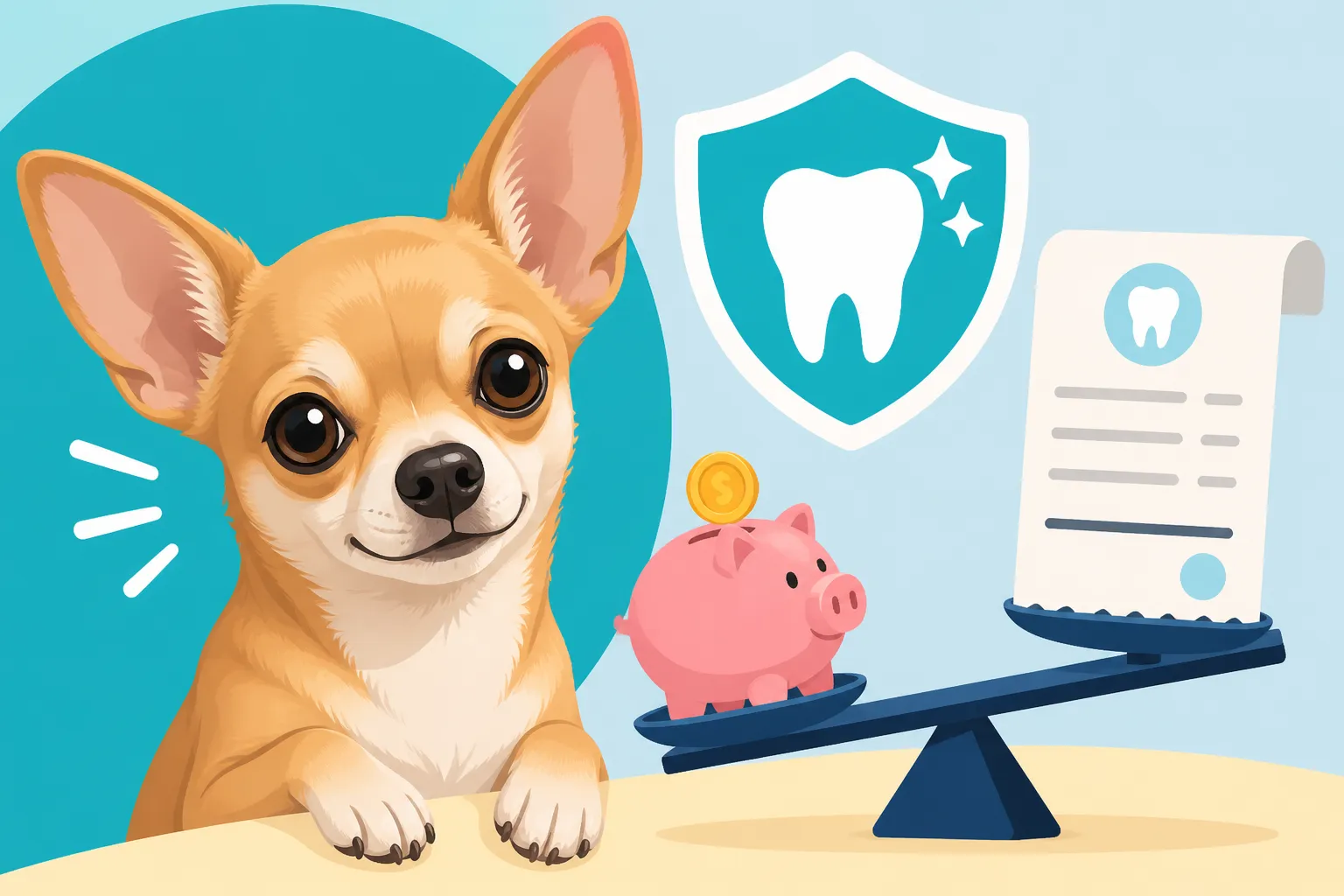
One of the biggest worries for any Chihuahua parent is those unexpected—or even expected, but still daunting—vet bills. When it comes to their tiny mouths, dental issues are almost a given, and the costs can really add up, leaving many of us wondering how to best prepare. This guide is all about navigating pet insurance deductibles specifically for those inevitable Chihuahua dental bills, helping you understand how to choose a plan that truly protects your wallet without breaking the bank upfront.
Understanding Pet Insurance Deductibles for Chihuahuas
Let's be honest, parsing through pet insurance policies can feel like reading a foreign language. But understanding your deductible, especially when it comes to your Chihuahua's teeth, is absolutely crucial for managing those often-high vet costs.
What a Deductible Actually Means and Why It's Tricky with Small Dogs
At its core, a deductible is the amount of money you need to pay out of your own pocket before your pet insurance company starts to cover costs. Think of it like this: if you have a $500 deductible and your Chihuahua's dental procedure costs $1,200, you'll pay the first $500, and then your insurance company will cover a percentage of the remaining $700 (based on your reimbursement rate, usually 70-90%).
For Chihuahuas, this can be particularly tricky because while they're small, their vet bills, especially for specialized care or procedures like dental work, can be just as high as, if not higher than, those for a much larger dog. This is because anesthesia, surgical time, and medications are often priced based on the procedure itself, not just the animal's weight. So, a $500 deductible might feel substantial for a routine cleaning that costs $700, but less so for an emergency extraction costing $1,500. It's not uncommon for a dental cleaning for a Chihuahua to cost anywhere from $300 to $700, and that's before extractions. This means that if your deductible is set at the higher end, you might find yourself paying most, if not all, of a "routine" dental cleaning bill out of pocket anyway.
How Deductibles Affect Dental Coverage
Dental coverage in pet insurance is often a nuanced area. Many standard accident and illness policies will cover dental procedures that are a result of an accident (like a broken tooth from chewing on something too hard) or illness (like gum disease leading to extractions). However, routine dental cleanings, often called "preventative care," are typically not covered by basic accident and illness plans unless you add a separate "wellness" rider or plan.
When dental procedures are covered under your main policy, your deductible will apply just like it would for any other covered condition. If your Chihuahua needs several teeth extracted due to advanced Chihuahua Dental Disease in a Crowded Small Jaw, and the total bill hits $1,500 after Anesthesia Risk During a Chihuahua Dental and X-rays, your deductible will kick in first. After you meet it, your insurance will reimburse you for your chosen percentage of the remaining amount. It's crucial to distinguish between policies that cover only accident-related dental issues versus those that also cover illness-related dental problems like periodontal disease, which is incredibly common in Chihuahuas.
Different Deductible Structures You Might Encounter
Not all deductibles are created equal, and understanding the different types can help you make a more informed decision for your little companion.
- Annual Deductible: This is the most common type. You pay this amount once per policy year, regardless of how many different conditions or incidents your Chihuahua has. Once met, all subsequent covered claims for that year are subject only to your reimbursement rate. This can be great if your Chihuahua has multiple health issues in one year, as you only pay the deductible once. This is often the structure seen with providers like Healthy Paws.
- Per-Incident/Per-Condition Deductible: With this structure, you pay a deductible each time your Chihuahua develops a new condition or illness. So, if your Chihuahua has a bad knee (patellar luxation) and later develops significant dental disease, you'd pay a deductible for the knee treatment and then another deductible for the dental treatment. This can quickly add up if your Chihuahua is prone to multiple health issues, even if they're minor.
- Lifetime Deductible (for specific conditions): Less common now, but some older policies or specialized plans might have a lifetime deductible for chronic conditions. This means once you meet the deductible for a specific chronic issue (like arthritis or a recurring skin allergy), you won't pay it again for that specific condition for the life of the policy. This is rarely applied to general dental care but could be relevant if a specific, ongoing dental condition (like an autoimmune oral disease) were covered this way.
Knowing which structure your potential policy uses is vital, especially since many Chihuahuas will face dental issues year after year. Understanding Why Chihuahua Dental Costs Recur Every Year is a big piece of this puzzle; an annual deductible often makes more sense for these predictable, recurring costs.
Strategies for Choosing Your Chihuahua's Dental Deductible
Choosing the right deductible isn't just about picking a random number; it's about finding a balance that works for your budget and your Chihuahua's potential health needs.
Balancing Premium Costs with Out-of-Pocket Max
There's a direct correlation between your deductible amount and your monthly premium: typically, a higher deductible means a lower monthly premium, and a lower deductible means a higher monthly premium. This is where you have to do a bit of a dance with your finances.
If you opt for a high deductible, say $1,000, your monthly payments might be very attractive. However, if your Chihuahua needs a routine dental cleaning that costs $600, you'll still be paying the entire $600 out of pocket because it's less than your deductible. You wouldn't get any reimbursement. If you choose a lower deductible, like $250, your monthly premiums will be higher, but for that same $600 dental cleaning, you'd pay $250, and your insurance would cover a percentage of the remaining $350.
Consider your financial comfort level for an unexpected bill. Can you easily afford a $500 or $1,000 out-of-pocket expense if your Chihuahua needs urgent dental care tomorrow? If not, a lower deductible, even with a slightly higher monthly premium, might provide more peace of mind. Remember, the goal is to protect against unaffordable bills, not necessarily every single one. For many Chihuahua owners, especially with the high likelihood of dental work, choosing a deductible that makes sense for the average cost of a Chihuahua Dental Cleaning at $300 to $700 is a smart move.
Considering Your Chihuahua's Age and Dental History
Your Chihuahua's age and existing dental health play a huge role in deductible selection.
- Puppies: For a young Chihuahua puppy, especially one under a year, dental disease is less likely to be a major concern right away, beyond retained baby teeth. However, insuring them young means you avoid pre-existing condition exclusions later. You might opt for a higher deductible initially if you're confident in their current health, planning to re-evaluate as they age. But be mindful of sudden accidents that could impact their teeth.
- Adult Chihuahuas (2-7 years): This is often when periodontal disease can start to become noticeable. By age three, many Chihuahuas already have significant tartar buildup, leading to Chihuahua Tartar Building Up by Age Three. If you're enrolling an adult Chihuahua, any existing dental conditions like gingivitis or established periodontal disease will likely be considered pre-existing and excluded from coverage. However, new dental issues or progression of disease that wasn't previously noted might still be covered. A moderate deductible here might be a good compromise, knowing that cleanings and potential extractions are on the horizon.
- Senior Chihuahuas (8+ years): For senior Chihuahuas, dental disease is almost a certainty. By age five, many Chihuahuas already have Gum Disease in a Five Year Old Chihuahua, and it only progresses. If you're enrolling a senior dog, it's highly probable that most dental issues will be considered pre-existing. This often means that even with insurance, you might be footing a significant portion of the dental bills. In this scenario, a higher deductible might mean you pay less monthly for a policy that offers limited dental benefit, or a wellness plan might be a better fit for routine cleanings if available.
It's also worth noting that pet insurance typically won't cover retained baby teeth extractions if they are discovered before or shortly after enrollment, as this is often considered a developmental or pre-existing issue. Always read the fine print!
The Impact of Pre-Existing Conditions on Dental Coverage
This is perhaps the most critical point for dental coverage. A pre-existing condition is any illness or injury that your pet had before their insurance policy started or during the waiting period. For Chihuahuas, whose mouths are so prone to issues, this can be a major hurdle for dental claims.
If your Chihuahua already has noticeable tartar, gingivitis, or any degree of periodontal disease when you enroll them, that specific condition (or any condition stemming from it, like tooth extractions due to advanced gum disease) will likely be excluded from coverage. This is why it's so important to enroll your Chihuahua when they are young and healthy.
Even if a policy does cover dental illness, it won't cover what's already there. So, if your vet notes "mild gingivitis" on an exam before your waiting period is up, any future treatment for that gingivitis might be denied. This can be incredibly frustrating when you're diligently trying to prepare for those inevitable Chihuahua Dental Bills as the Biggest Recurring Cost. Always try to get a full dental check-up before you apply for insurance, and then ensure your vet documents a perfectly clean bill of health if that's the case.
Real-World Scenarios: Applying Your Deductible to Chihuahua Dental Care
Let's look at some practical examples to see how deductibles might work out for your Chihuahua's dental care.
A Typical Chihuahua Dental Cleaning and Extraction
Imagine your 5-year-old Chihuahua, Pip, needs his annual dental. The vet performs an exam, bloodwork, anesthesia, scaling, polishing, and takes dental X-rays. They discover two molars that are severely infected and need extraction.
Here's a hypothetical cost breakdown:
- Pre-anesthetic bloodwork: $150
- Anesthesia (monitoring, medications): $350
- Scaling and polishing: $200
- Full mouth dental X-rays: $180
- Two tooth extractions: $500 ($250 per tooth, which is on the lower end for Chihuahua Tooth Extractions From $500 to $1,500)
- Post-op pain medication/antibiotics: $70
- Total Bill: $1,450
Now, let's see how different deductibles affect your out-of-pocket costs with an 80% reimbursement rate:
| Deductible | Amount You Pay First | Remaining Bill | Insurance Reimburses (80%) | Your Final Out-of-Pocket Cost (Deductible + 20% of remaining) |
|---|---|---|---|---|
| $250 | $250 | $1,200 | $960 | $250 + $240 = $490 |
| $500 | $500 | $950 | $760 | $500 + $190 = $690 |
| $750 | $750 | $700 | $560 | $750 + $140 = $890 |
| $1,000 | $1,000 | $450 | $360 | $1,000 + $90 = $1,090 |
As you can see, the deductible significantly impacts what you ultimately pay. A lower deductible means less upfront cash out of your pocket for this particular incident. This table is a great tool for Budgeting a Chihuahua Dental Every Year.
The Cumulative Effect of Annual Dentals
Chihuahuas often need annual or biennial dental cleanings. This means that if you have an annual deductible, you'll likely be paying that deductible each year your Chihuahua undergoes a professional dental.
For example, if you chose a $500 annual deductible and your Chihuahua needed a $700 cleaning (no extractions) every year:
- Year 1: You pay the $500 deductible, plus 20% of the remaining $200 ($40). Total out of pocket: $540.
- Year 2: You pay the $500 deductible again, plus 20% of the remaining $200 ($40). Total out of pocket: $540.
This highlights that for predictable, recurring costs like The Yearly Chihuahua Dental Cleaning Bill, a lower deductible might make more financial sense over the long term, even with slightly higher monthly premiums. Or, you might consider a wellness plan that specifically covers routine cleanings if your provider offers it, as these often bypass the deductible for those particular services.
When a Deductible Might Not Feel Worth It and When It Definitely Is
Sometimes, after paying premiums all year, you might wonder if insurance is truly worth it for a small bill.
When it might not feel worth it:
If your Chihuahua is incredibly healthy and only ever needs a basic dental cleaning that costs $400, and your deductible is $500, you'll still pay the entire $400 out of pocket. In this scenario, your insurance hasn't directly saved you money on that specific bill. This is where people feel frustrated, thinking they've paid for insurance for nothing. However, remember that insurance is for the unexpected and the catastrophic.
When it definitely is worth it:
Consider Pip's earlier scenario with the $1,450 bill. With a $250 deductible, you saved $960. That's a huge relief! Or imagine if Pip needed a complicated root canal, or if he developed Mitral Valve Disease in an Older Chihuahua on top of his dental issues, leading to multiple specialist visits and medications. Those types of bills can quickly run into thousands of dollars. Having a policy with a manageable deductible can be the difference between getting your beloved Chihuahua the care they need without going into debt, versus having to make difficult financial decisions.
Making Smart Choices for Long-Term Chihuahua Dental Health and Your Budget
Taking care of your Chihuahua's teeth is a long-term commitment, and your financial planning should reflect that.
Proactive Dental Care Beyond Insurance
While pet insurance is a fantastic safety net, it's not a magic bullet. The best way to reduce your dental bills (and thus the impact of your deductible) is to practice excellent preventative care at home. This means regular, ideally daily, dental hygiene for your Chihuahua.
Establishing The Two Minute Daily Chihuahua Tooth Routine by brushing their teeth can significantly slow the progression of plaque and tartar buildup. Look for veterinary-approved toothbrushes and toothpaste specifically designed for dogs (never use human toothpaste!). You can also incorporate dental chews, like those from Greenies or other brands available on Chewy, that are appropriately sized and formulated to help reduce plaque, though these are never a substitute for brushing. Water additives can also offer a small benefit. By keeping their teeth cleaner for longer, you might extend the time between professional cleanings, or at least reduce the severity of disease when they do go in, potentially meaning fewer costly extractions.
Comparing Providers
Not all pet insurance companies are created equal, and their approaches to dental coverage and deductibles can vary widely. It’s always smart to get quotes and compare policies from several reputable providers. Look beyond just the monthly premium and consider:
- Deductible options: What are the available deductible amounts, and do they align with what you can realistically afford out of pocket?
- Reimbursement rates: Do they offer 70%, 80%, or 90%? A higher reimbursement rate means less out-of-pocket after the deductible.
- Annual limits: Is there a cap on how much they’ll pay out in a year? For long-lived breeds like Chihuahuas who may need multiple procedures over time, an unlimited annual payout can be valuable.
- Dental illness coverage: Do they cover periodontal disease, root canals, and extractions due to illness, or just accidents? This is crucial for Chihuahuas.
- Waiting periods: How long do you have to wait after enrollment before dental coverage kicks in? This varies from a few days for accidents to weeks or months for illnesses.
Companies like Healthy Paws are known for their comprehensive accident and illness plans, but always dive into the details of their dental coverage. Some plans may require annual dental check-ups and cleanings for dental illness coverage to remain valid, so make sure you're aware of any such requirements.
Exploring Wellness Plans for Routine Dental
As mentioned, many traditional accident and illness pet insurance policies don't cover routine dental cleanings (the preventative kind) under their standard plans. This is where "wellness plans" or "preventative care add-ons" come into play. These are separate packages that you can often add to your main policy or sometimes purchase independently.
Wellness plans typically cover things like annual exams, vaccinations (which are very important for a toy-sized dog, but remember to consider Chihuahua Vaccination and Anesthesia at Toy Size), and yes, often a portion of or even a full routine dental cleaning. They usually don't have a deductible; instead, you pay a fixed monthly fee, and they reimburse you a set amount for specific services.
For Chihuahuas, given the high likelihood of needing annual dentals, a wellness plan that covers a significant portion of a routine cleaning could be a smart investment. It allows you to budget for these predictable expenses, rather than hoping you hit your deductible with a larger, more urgent issue. Some vets offer their own in-house wellness packages, or you might find them through major pet retailers like Chewy or even fresh pet food delivery services like Ollie that also offer pet care advice. While a wellness plan may not cover extensive dental extractions, it can certainly help offset the cost of The Yearly Chihuahua Dental Cleaning Bill, making preventative care more accessible and hopefully reducing the need for more expensive interventions down the line.
Remember, the best approach for your Chihuahua's long-term dental health and your wallet often involves a combination of diligent home care, a robust pet insurance policy with a thoughtfully chosen deductible, and potentially a wellness plan to cover those essential routine cleanings.
Disclaimer
Please remember that this article is intended for informational purposes only and is not a substitute for professional veterinary advice. Always consult with your veterinarian for specific guidance regarding your Chihuahua's health, dental care, and appropriate pet insurance choices. Policy terms and coverage can vary significantly, so thoroughly review any insurance policy documents before making a decision.