Bilateral Knee Surgery on a Chihuahua
The moment you realize your little Chihuahua might need knee surgery is tough enough, but hearing that both knees are affected, or likely will be, can feel overwhelming. It’s a huge decision, both emotionally and financially, to put your tiny companion through such an intensive process, especially when you consider their delicate size and how much they rely on those little legs for everything. This guide is here to walk you through everything you need to know about bilateral knee surgery for your Chihuahua, from understanding the condition to navigating the recovery, so you can feel confident in making the best choices for their health and happiness.
Understanding Patellar Luxation in Chihuahuas
Patellar luxation, often called a "slipping kneecap," is incredibly common in Chihuahuas, but when it affects both hind legs, it becomes what veterinarians refer to as bilateral patellar luxation. This isn't just a minor inconvenience; it's a structural issue where the patella, or kneecap, dislocates from its normal position in the trochlear groove of the femur. For a tiny Chihuahua, even a slight shift can cause pain, lameness, and long-term joint damage.
What Bilateral Patellar Luxation Means
When we talk about bilateral luxation, it simply means both the left and right stifles (knees) are experiencing this dislocation. In Chihuahuas, this condition is often congenital, meaning they're born with the anatomical predisposition for it, though it might not manifest clinically until they're puppies or even adults. The quadriceps muscle, patella, and patellar ligament form a "quadriceps mechanism" that typically runs in a straight line over the knee. With patellar luxation, this alignment is off, causing the kneecap to pop out, usually to the inside (medial luxation), but sometimes to the outside (lateral luxation).
Imagine a tiny train on a track. The kneecap is the train, and the trochlear groove is the track. If the track isn't deep enough, or if the angle of the train's pull is off, the train will derail. For a Chihuahua, this derailment can happen repeatedly, leading to wear and tear on the cartilage and bone, eventually causing significant pain and degenerative joint disease. Because Chihuahuas are so small, and often have slightly bowed legs or other conformational issues, their chances of developing this on both sides are much higher than in larger breeds. You can learn more about Patellar Luxation, the Chihuahua's Commonest Joint Problem to get a broader overview of the condition.
Signs Your Chihuahua Might Need Bilateral Surgery
Recognizing the signs of bilateral patellar luxation can be tricky, especially because Chihuahuas are incredibly adept at compensating for discomfort. If only one knee is affected, you might notice a distinct skip in their gait, where they pick up one leg for a few steps and then put it back down, as described in The Skipping Gait That Signals a Chihuahua Knee. However, when both knees are luxating, your Chihuahua might not skip or limp as obviously because both legs are equally affected, making the compensation harder to spot.
Instead, look for more subtle indicators. They might show a general reluctance to jump on and off furniture, or they might struggle going up or down stairs. You might see them shake or hold their hind legs stiffly. They might seem less active, or perhaps hesitant to engage in play. Sometimes, a Chihuahua with bilateral luxation might adopt a slightly crouched or "bow-legged" stance as they try to keep their kneecaps in place. A soft yelp or cry when they stand up or stretch can also be a tell-tale sign of discomfort. Over time, the muscles in their hind legs might even appear less developed due to disuse or altered movement patterns. Don't dismiss these changes as just "getting old" or "being a lazy Chihuahua"; they could be serious indicators of underlying knee pain.
The Importance of Early Diagnosis and Intervention
Ignoring the signs of patellar luxation, particularly bilateral, can lead to much more significant problems down the line. Each time the kneecap slips out, it causes friction and trauma to the joint cartilage, which eventually leads to painful arthritis. This arthritis can become debilitating, making surgery more complex and recovery more challenging later on. Furthermore, chronic instability in the knees can put undue stress on other joints, like the hips and spine, potentially leading to secondary issues.
Early diagnosis typically involves a thorough physical examination by your veterinarian, who will gently manipulate your Chihuahua's knees to feel for the characteristic "slip" of the kneecap. They will also assess the severity using a grading system, which you can read about in The Four Grades of a Slipping Chihuahua Kneecap. Grades 1 and 2 might sometimes be managed conservatively with physical therapy, joint supplements, and strict weight management, but Grade 3 and 4 luxations, especially when bilateral, almost always require surgical intervention to provide long-term relief and improve quality of life. X-rays are also crucial to assess the bone structure, degree of arthritis, and rule out other orthopedic conditions.
The Surgical Process for Bilateral Patellar Luxation
Deciding on surgery is a big step, especially when it involves both knees. It's not a decision to be taken lightly, but for many Chihuahuas, it's the only way to alleviate chronic pain and prevent further joint damage. The surgical approach for bilateral patellar luxation is a specialized procedure that aims to correct the anatomical abnormalities causing the kneecap to slip.
Deciding to Operate on One or Both Knees
This is often one of the most agonizing decisions for Chihuahua owners. Your vet, or more likely a board-certified veterinary surgeon, will help you weigh the options: operating on one knee at a time (sequential surgery) or operating on both knees during a single anesthetic event (concurrent or simultaneous surgery).
- Sequential Surgery: This involves fixing one knee, allowing it to recover completely, and then operating on the second knee a few weeks or months later. The main advantage here is that your Chihuahua always has at least one "good" or recovering leg to bear weight, which can make the initial recovery feel less daunting. It also halves the immediate financial burden. However, it means two separate anesthetic events, two surgical recoveries, and potentially a longer overall rehabilitation period. It also means your dog lives with pain in the un-operated knee for longer.
- Concurrent Surgery: This means both knees are repaired in the same surgery. The biggest benefit is only one anesthetic event, one recovery period, and getting all the pain out of the way at once. Financially, sometimes the overall cost might be slightly less as you only pay for one anesthesia setup and hospital stay. The major drawback is the challenge of post-operative mobility. Your Chihuahua will be recovering from two major surgeries simultaneously, making movement, standing, and even potty breaks much harder. Intensive nursing care is absolutely critical for concurrent surgery, and not every Chihuahua, or every owner, is a candidate for this demanding recovery.
The choice often comes down to the severity of luxation in each knee, your Chihuahua's overall health (especially their heart, which is a common concern in Chihuahuas and relevant to Chihuahua Heart Disease as the Breed Ages), your veterinarian's recommendation, and your capacity for intense post-operative care. It's a conversation you'll have in depth with your surgical team.
What the Surgery Entails
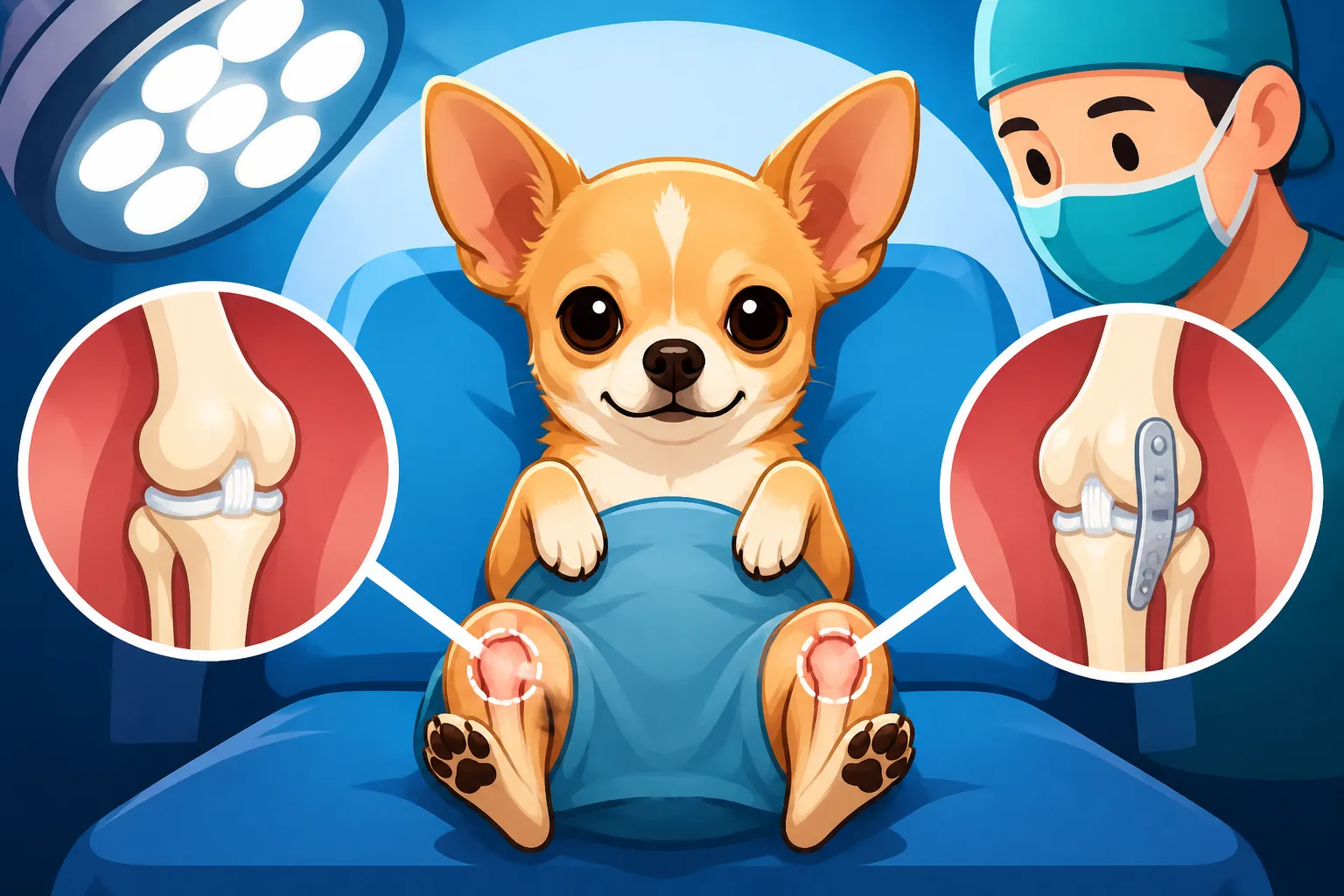
The goal of patellar luxation surgery is to realign the quadriceps mechanism and ensure the kneecap stays firmly within the trochlear groove. Several techniques are typically used in combination, tailored to your Chihuahua's specific anatomy:
- Trochlear Groove Deepening (Trochleoplasty): In many Chihuahuas, the trochlear groove (the "track" where the kneecap sits) is too shallow, allowing the patella to easily pop out. The surgeon will deepen this groove, often by removing a wedge or block of bone and cartilage, deepening the groove, and then replacing the bone fragment. This creates a more secure channel for the kneecap.
- Tibial Crest Transposition: The tibial crest is the bony prominence on the shin bone (tibia) where the patellar ligament attaches. If this attachment point is misaligned, it pulls the kneecap out of the groove. The surgeon will cut this piece of bone, move it to a new, correctly aligned position, and then secure it with pins. This changes the angle of pull on the kneecap.
- Soft Tissue Release or Tightening: Sometimes, the soft tissues around the knee joint (joint capsule and ligaments) are too tight on one side or too loose on the other, contributing to the luxation. The surgeon may release tight tissues or tighten loose ones to help stabilize the kneecap in its proper position.
These procedures are delicate and require significant skill, especially on the tiny anatomy of a Chihuahua. It's crucial to have a surgeon experienced in small animal orthopedics. Anesthesia is always a concern for toy breeds, and your vet will perform thorough pre-anesthetic bloodwork and potentially cardiac evaluations to minimize risks. You can read more about general concerns with Anesthesia Risk During a Chihuahua Dental, which shares some commonalities with other procedures for toy-sized dogs.
Post-Operative Care Immediately After Surgery
The period immediately following surgery is critical for your Chihuahua's recovery. They will likely stay at the veterinary hospital for one to three days, depending on whether one or both knees were operated on and how well they are recovering. During this time, the veterinary team will focus on:
- Pain Management: Your Chihuahua will receive strong pain medication to keep them comfortable. This might include injectable pain relievers, anti-inflammatory drugs, and nerve blocks. Managing pain effectively is paramount, as pain can inhibit movement and slow recovery.
- Wound Care: The incision sites will need to be kept clean and dry. Your vet will monitor for any signs of infection or swelling. Your Chihuahua might wear an E-collar (cone of shame) to prevent them from licking or chewing at the stitches, which could lead to infection or reopening the wound.
- Activity Restriction: This is perhaps the most challenging aspect. Strict crate rest and restricted activity are essential to allow the bones and soft tissues to heal properly. Your Chihuahua will only be allowed out for very short, controlled potty breaks, always on a leash, and never allowed to jump or run. Even carrying them needs to be done carefully to avoid stressing the healing knees.
- Initial Physical Therapy: In some cases, gentle passive range of motion exercises might begin in the hospital, performed by the veterinary staff, to prevent stiffness and promote healthy joint movement.
This initial phase sets the stage for the longer recovery period at home. Be prepared for a very dependent little patient who needs constant supervision and adherence to all instructions from your vet.
Managing Recovery and Long-Term Care for Both Knees
Bringing your Chihuahua home after bilateral knee surgery is just the beginning of a dedicated rehabilitation journey. It's a marathon, not a sprint, and your commitment to their recovery will directly impact their long-term success.
The Rehabilitation Journey for Bilateral Surgery
The recovery period for patellar luxation surgery, especially when bilateral, can be extensive, typically lasting 8 to 12 weeks, sometimes longer. It requires immense patience and consistency.
Your vet or a certified canine rehabilitation therapist will likely provide a detailed exercise protocol. This often includes:
- Strict Crate Rest: Continuing the activity restriction at home is vital. Your Chihuahua should be confined to a small, comfortable space where they cannot jump or run.
- Controlled Leash Walks: Gradually increasing the duration and distance of very slow, controlled walks is key. These walks help rebuild muscle strength and promote normal gait without putting excessive stress on the healing joints.
- Passive Range of Motion (PROM) Exercises: You’ll gently flex and extend your Chihuahua’s knees multiple times a day. This helps maintain joint flexibility, reduces stiffness, and prevents scar tissue formation. Your vet or therapist will demonstrate the correct technique.
- Therapeutic Exercises: As healing progresses, exercises like gentle weight-bearing shifts, controlled standing, and walking over cavalettis (low bars) may be introduced to improve balance, coordination, and muscle strength. For more specific guidance, consider looking into Rehab Visits After a Chihuahua Patella Repair.
Managing two recovering legs simultaneously presents unique challenges. Your Chihuahua will need help standing, navigating steps, and may even need assistance with toileting. It’s a demanding period that requires a strong support system for both you and your pet. Remember, consistency is key, even when your Chihuahua seems to be feeling better; overdoing it too soon can lead to setbacks.
Life After Bilateral Knee Surgery
With successful surgery and diligent rehabilitation, many Chihuahuas go on to live full, active, and pain-free lives. However, it's important to manage expectations realistically. Even with the best surgical outcomes, there’s always a potential for some degree of arthritis to develop in the joint later in life, especially if the luxation was severe or present for a long time.
Ongoing joint support is essential. This includes:
- Environmental Modifications: Creating a safe home environment is crucial. Provide ramps or steps for furniture to prevent jumping, which can put strain on the knees. Brands like Chewy offer a wide variety of pet ramps and steps designed for small breeds. Remove throw rugs that can slip and cause falls.
- Weight Management: Keeping your Chihuahua at a healthy weight is paramount. Even an extra half-pound on a tiny frame can significantly increase stress on the knee joints. This is a common issue, as discussed in What One Extra Pound Does to a Chihuahua.
- Regular Vet Check-ups: Regular visits to your veterinarian will allow them to monitor your Chihuahua's knee health, assess for any signs of arthritis, and adjust their care plan as needed.
Consider how you might adjust your daily routine. Perhaps shorter, more frequent walks are better than one long one, or you might incorporate more indoor enrichment activities.
Preventing Future Issues and Maintaining Joint Health
Beyond the immediate recovery, maintaining your Chihuahua's joint health for the rest of their long life requires a proactive approach.
- Appropriate Exercise: While strict rest is important initially, consistent, moderate exercise is vital long-term. Daily controlled walks and gentle playtime are beneficial for muscle strength and joint lubrication. Avoid high-impact activities, sudden stops, or excessive jumping.
- Nutritional Support: A high-quality diet is fundamental. Some pet food brands, like Ollie, offer fresh, human-grade food that can be customized to your dog's specific needs, including ingredients that support joint health. Look for foods or supplements rich in omega-3 fatty acids, glucosamine, and chondroitin, which can help reduce inflammation and support cartilage. For more information, you might explore Joint Supplements for a Chihuahua With Bad Knees.
- Weight Management: We can't stress this enough. Obesity is a major contributor to joint problems. Work closely with your vet to ensure your Chihuahua stays at an ideal body condition.
- Regular Physical Therapy/Massage: Even after formal rehab ends, continuing gentle stretches or massages at home can help keep muscles supple and joints mobile.
- Warmth and Comfort: Chihuahuas have very little body fat, making them susceptible to cold, which can exacerbate joint stiffness. Ensure they have warm, comfortable bedding and appropriate clothing in colder weather.
- Proactive Care for Aging: As your Chihuahua enters their senior years, even if surgery was successful, arthritis can still set in. Be vigilant for signs of discomfort and work with your vet to implement strategies for Chihuahua Arthritis in the Teenage Years, such as pain management and mobility aids. Pet insurance, like policies from Healthy Paws, can be invaluable in helping to cover these ongoing costs, especially if your policy was in place before any conditions were considered pre-existing.
Here's a quick comparison of the two surgical approaches:
| Feature | Sequential Bilateral Surgery | Concurrent Bilateral Surgery |
|---|---|---|
| Anesthesia Events | Two separate events | One single event |
| Initial Recovery Burden | One leg recovers at a time, potentially easier mobility | Both legs recover simultaneously, very challenging mobility |
| Overall Recovery Time | Potentially longer total time (two distinct rehab periods) | Shorter overall timeframe (one continuous rehab) |
| Cost | Two separate bills, spread out over time | One larger bill, potentially slightly less overall |
| Pain Management | Manage one leg's pain at a time | Manage pain in both legs simultaneously |
| Owner Commitment | High, for two separate periods | Very high, intense period of care |
| Risk of Complications | Two separate chances for anesthesia/surgical complications | One chance for anesthesia/surgical complications |
Remember, the goal is to give your Chihuahua the best possible quality of life. Bilateral knee surgery is a significant undertaking, but with proper planning, skilled veterinary care, and dedicated post-operative attention, your beloved companion can reclaim their happy, bouncy self.
Disclaimer
This article is intended for informational purposes only and does not constitute medical advice. Always consult with a qualified veterinarian for any health concerns or before making any decisions about your pet's medical care.