Chihuahua Hip Problems at Toy Size
When a four-pound companion suddenly hesitates before hopping onto the couch, holds up a hind leg, or lets out a sharp squeal when picked up around the waist, it breaks a pet parent’s heart. Toy-breed hips are exceptionally delicate, and structural issues often go unnoticed until pain sets in. This comprehensive guide breaks down the underlying causes of toy-sized joint failure, helps you spot early warning signs, and details actionable medical and lifestyle steps to restore your dog’s mobility and comfort.
Understanding Toy-Sized Hip Architecture and Common Pathologies
The mechanics of a toy-sized dog’s rear assembly are a marvel of biological engineering, but operating on such a miniature scale leaves virtually no room for error. When a dog weighs under six pounds, the ball-and-socket mechanism of the hip joint is smaller than a marble. Minor developmental anomalies or disruptions in blood flow can result in significant pain and loss of function. Understanding the specific conditions that target these tiny joints is the first step in advocating for your companion’s mobility.
Legg-Calve-Perthes Disease: The Collapsing Femoral Head
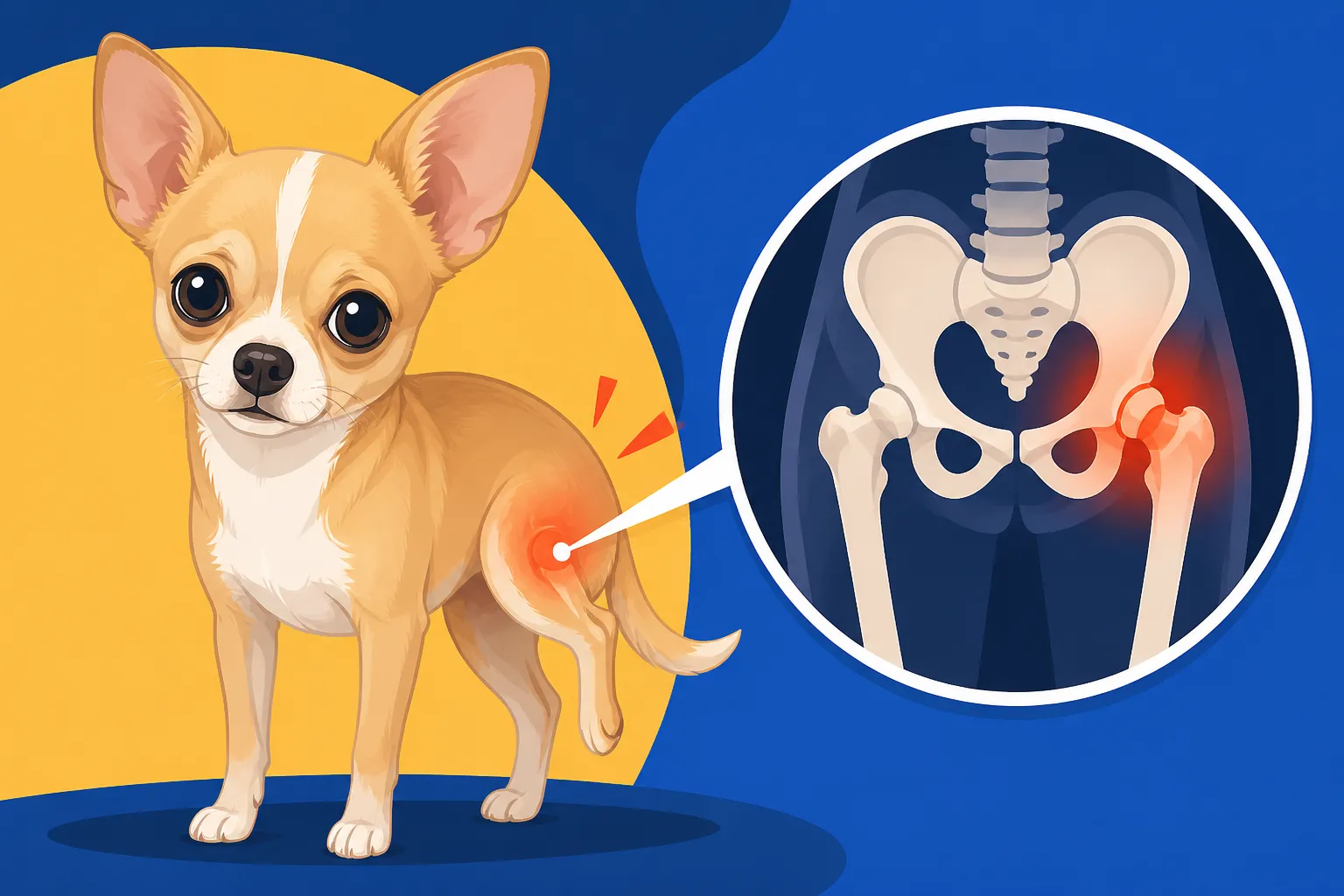
One of the most devastating hip conditions affecting toy breeds in early life is aseptic necrosis of the femoral head, commonly known as Chihuahua Legg-Calve-Perthes Disease. This condition occurs when the blood supply to the top of the thigh bone (the femoral head) is spontaneously disrupted. Without adequate blood flow, the bone tissue dies, disintegrates, and fractures under normal daily activity.
This condition typically manifests in young dogs between five and twelve months of age. Owners often notice a gradual onset of lameness that quickly escalates to complete non-weight-bearing pain. Because the bone structure literally crumbles, conservative resting rarely resolves the issue, often making surgical intervention necessary to remove the crumbling bone entirely. For many owners navigating early-life genetic conditions, having active pet insurance from providers like Healthy Paws prior to diagnosis can help absorb the sudden cost of specialized orthopedic surgery.
Hip Dysplasia in Micro-Sized Joints
While larger breeds are famous for hip dysplasia, toy-sized dogs are far from immune. In small dogs, hip dysplasia is a developmental condition where the hip socket (acetabulum) is too shallow to hold the femoral head securely. Instead of a smooth, gliding ball-and-socket action, the bone slides, grinds, and wobbles within the joint capsule.
Over time, this loose fit causes severe friction, stretching the joint capsule and eroding protective cartilage. The body attempts to stabilize the loose joint by laying down extra bone, which leads to painful, early-onset arthritis. Unlike large dogs who display heavy, dragging gait shifts, a tiny dog with dysplasia might simply appear stiff after a nap or develop an awkward, swaying gait when walking down the hallway.
Distinguishing Hip Issues From Knee and Spine Problems
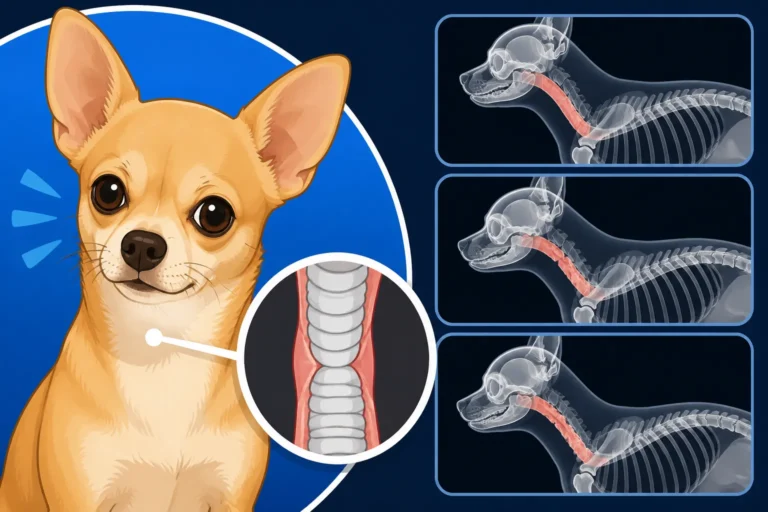
A common frustration for toy dog owners is determining exactly where the pain originates. Small dogs frequently experience concurrent rear-leg issues, making accurate home monitoring difficult. A limp that looks like a hip problem could easily stem from The Four Grades of a Slipping Chihuahua Kneecap or acute Chihuahua Back and Neck Pain.
To help differentiate between these overlapping orthopedic issues, consider how the symptoms present in daily movement:
| Suspected Issue | Typical Physical Gait | Behavioral Indicator | Common Trigger |
|---|---|---|---|
| Hip Dysplasia / Perthes | Swaying rear end, stiffness upon waking, “bunny hopping” at speed | Reluctance to jump up, irritability when rear quarters are touched | Rising after long rest, cold weather |
| Patellar Luxation | Occasional skipping step, holding leg out briefly then kicking it back in | Sudden brief yelp, continuing to run as if nothing happened | High-speed running, sharp turns |
| Lumbar Spine Issues | Hunched back, shaky or weak hind limbs, scuffing toenails | Trembling, reluctance to lower head to eat, screaming when lifted | Jumping off furniture, sudden twisting |
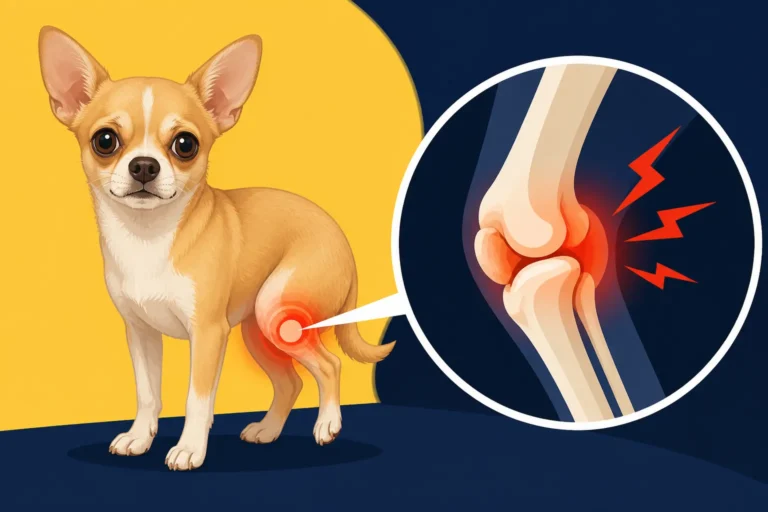
When dealing with a fragile toy frame, secondary issues like Chihuahua Hip Problems at Toy Size can overlap with knee instability. A dog compensating for a slipping kneecap often places awkward mechanical stress on the hip joint, accelerating wear and tear on both socket and cartilage.
Recognizing Early Signs and Behavioral Shifts in Your Chihuahua
Toy breeds are notoriously tough and often mask physical discomfort until a joint issue has advanced significantly. Because these dogs are small enough to be carried, owners sometimes unknowingly miss early mobility declines. Recognizing subtle shifts in movement and attitude is critical for early veterinary intervention.
The Subtle “Bunny Hop” Gait and Stiffness
One of the earliest visual cues of hip strain is the “bunny hop.” When trotting or running, a dog with hip pain will move both hind legs forward together rather than alternating them smoothly. This gait adjustment reduces the rotational weight placed on a single painful hip joint by distributing the thrusting force across both limbs simultaneously.
You may also notice stiffness when your dog first stands up after sleeping. A dog that used to leap out of bed eagerly might now stretch out its back legs slowly, hesitate, or shake out its limbs before taking a few awkward, tight steps. Once the dog moves around for a few minutes and the joint fluid warms up, the stiffness may temporarily fade, luring owners into believing it was just a temporary cramp.
Vocalization, Irritability, and Reluctance to Jump
Behavioral shifts are often a direct reflection of hidden physical pain. A dog that was once a velcro companion, following you from room to room, might begin staying behind in its crate or on a dog bed. When lifted around the ribcage or flanks, a dog experiencing deep hip ache may growl, snap, or let out a sharp cry.
It is vital not to dismiss these outbursts as sudden bad temperament or “toy dog attitude.” In many cases, you are seeing A Chihuahua Snapping Because Its Knee Hurts or reacting to a deep, burning ache in the pelvis. Reluctance to tackle familiar obstacles—such as hesitating at the base of the stairs or refusing to jump onto a low footstool—is almost always a physical cry for help rather than stubbornness.
Muscle Atrophy and Postural Shifts
As hip pain persists, a dog will naturally shift its center of Gravity forward to take weight off its painful hindquarters. Over weeks and months, this mechanical shift causes visible physical changes:
- Front-End Bulking: The chest, shoulders, and neck muscles become noticeably larger and more defined as they carry up to 70% or more of the dog’s body weight.
- Rear-End Wasting: The thigh muscles (quadriceps and hamstrings) shrink and feel soft or stringy. The pelvis may begin to look pointy or bony under the coat.
- Narrow Stance: When standing still, the rear feet may be placed unnaturally close together, or the dog may stand with one leg slightly turned outward to relieve socket pressure.
Checking your dog’s muscular symmetry by running your fingers gently down both thighs simultaneously can help you catch muscle loss early, long before it becomes obvious from a distance.
Diagnostic Pathways, Treatment Options, and Daily Management
When you suspect a hip issue, securing a definitive medical diagnosis is essential. Treating a delicate hip condition requires a clear picture of the bone structure, cartilage health, and joint alignment.
Veterinary Imaging and Diagnostic Expectations
A thorough orthopedic evaluation begins with a physical examination, including range-of-motion tests, hip extension, and palpation to check for crepitus (a crunching or grinding feeling inside the joint). However, because toy dogs can tense up their muscles tightly during an exam due to stress, conscious physical exams only tell part of the story.
Definitive diagnosis requires digital radiography (X-rays). To get clear, readable hip images, your veterinarian may recommend mild sedation. Sedation relaxes the surrounding musculature, allowing the vet to position the tiny legs precisely into standard extended-leg positions without causing the dog distress. These X-rays will reveal whether the femoral head is smooth or flattened, if the socket is deep enough, and whether arthritic bone spurs have developed.
Surgical Interventions vs. Conservative Medical Management
Depending on the underlying cause, severity, and age of your dog, treatment strategies fall into surgical or conservative categories:
- Femoral Head Ostectomy (FHO): This is often the gold-standard surgical fix for toy breeds with severe Perthes disease, bad fractures, or end-stage hip dysplasia. The surgeon removes the damaged ball of the thigh bone entirely. Over several weeks, the body builds a fibrous “false joint” out of scar tissue. Because toy dogs carry so little body weight, they recover exceptionally well from FHO surgery and can enjoy a pain-free, fully active life without a metal replacement.
- Total Hip Replacement (THR): Extremely specialized micro-implants now exist for tiny breeds, replacing the socket and femoral stem. While highly effective, it requires a dedicated veterinary orthopedic specialist and carries higher risks of dislocation.
- Conservative Medical Management: For mild hip dysplasia or secondary arthritis, a non-surgical route may be recommended. This includes targeted anti-inflammatory medications (NSAIDs), joint lubricants like polysulfated glycosaminoglycan injections, cold-laser therapy, and targeted physical rehab to maintain thigh muscle mass.
Managing surgical or diagnostic procedures for joint conditions can involve unexpected costs. Maintaining a comprehensive insurance policy through a provider like Healthy Paws helps ensure that diagnostic imaging, specialty surgical care, and follow-up rehabilitation remain accessible options throughout your dog’s life.
Environmental Adjustments for Joint Preservation
Whether your companion is recovering from hip surgery or managing chronic joint stiffness, modifying your living space is mandatory to protect tiny joints from high-impact trauma.
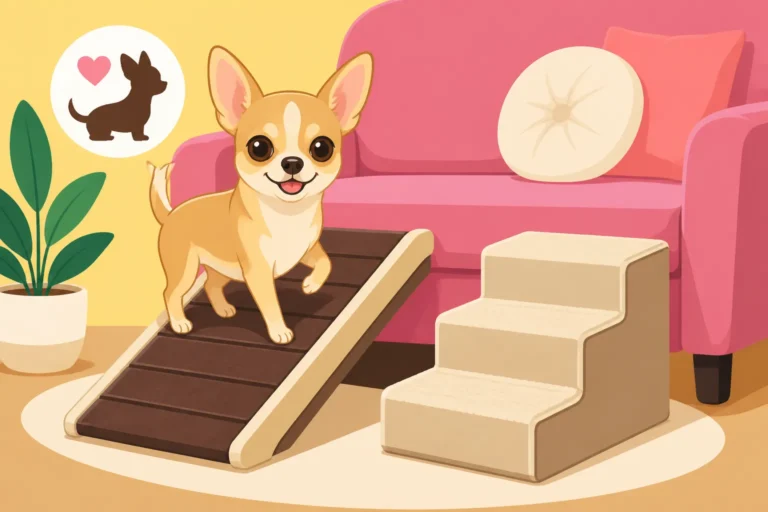
A critical step is eliminating high-impact jumps. Jumping off a couch onto a hard hardwood floor subjects a toy dog’s front legs and pelvis to forces several times its total body weight. Placing non-slip indoor runners over slick tile or wood flooring gives weak hind legs traction. Investing in specialized pet stairs or ramps—such as installing Ramps and Steps for a Chihuahua Sofa—allows your dog to join you on the furniture without placing crushing forces on decaying or healing hip sockets. Training your dog early on Keeping a Chihuahua Off Furniture to Protect Knees and hips preserves joint cartilage for years to come.
Long-Term Quality of Life, Financial Planning, and Daily Care
Managing a long-term orthopedic condition in a toy breed is a marathon, not a sprint. Because small dogs routinely live well into their teens, a hip diagnosis at two or three years old means you will be managing their mobility for over a decade.
Managing Daily Comfort and Weight Control
There is no single factor more influential in managing hip pain than strict weight control. A tiny dog carrying even a fraction of an extra pound experiences immense strain on its joint structures. Understanding What One Extra Pound Does to a Chihuahua is eye-opening; on a five-pound dog, gaining one pound is equivalent to a 150-pound human gaining 30 pounds almost overnight.
Keep your companion at a lean body condition score where you can easily feel their ribs without pressing hard and see a defined waistline from above. Pair strict calorie monitoring with targeted daily supplements, such as high-quality omega-3 fatty acids and joint compounds (glucosamine, chondroitin, and hyaluronic acid) tailored to micro-weights.
As your dog advances into its golden years, hip pain often merges with generalized joint wear. Watching for compounding symptoms like Chihuahua Arthritis in the Teenage Years allows you to adjust comfort measures, such as introducing orthopedic memory-foam heating pads and low-entry litter boxes or potty pads.
Navigating Veterinary Costs and Pet Insurance Options
Orthopedic care for toy dogs carries real financial commitments. From initial diagnostic X-rays and specialist consultations to surgical FHO procedures, laser therapy sessions, and lifelong anti-inflammatory prescriptions, the costs accumulate quickly.
Planning ahead by securing coverage through Healthy Paws early in your pet’s life—ideally before any signs of limping or joint stiffness appear—ensures that future orthopedic diagnoses, emergency visits, and surgical interventions are covered without pre-existing condition exclusions. Pet owners who establish a solid financial safety net early are far better positioned to choose advanced diagnostic pathways and surgical cures over forced pain management.
Building a Sustainable Home Rehabilitation Routine
Long-term management relies heavily on consistent daily support at home. You can help maintain muscle mass and joint flexibility through simple, low-impact daily routines:
- Controlled Leash Walks: Ditch long, erratic free-roaming backyard sessions in favor of two or three short, 10-minute controlled leash walks on flat, grassy surfaces every day.
- Passive Range of Motion (PROM): Under veterinary guidance, gently flex and extend your dog’s rear hip joints while they lie comfortably on their side. Never force a joint past its natural point of resistance or press if your dog displays pain.
- Targeted Warmth: Apply a warm, wrapped compress to the hips for 5 to 10 minutes before outdoor walks during chilly weather to ease stiff joint fluid.
- Therapeutic Balance Work: Encourage your dog to stand with its front feet on a slightly elevated cushion or low foam pad for 30-second intervals to gently engage and strengthen the gluteal and thigh muscles.
By combining proactive veterinary diagnostics, effective environmental changes, strict weight management, and steady home care, you can ensure that a hip diagnosis never limits your small companion’s big life.
Disclaimer
This article is for general informational purposes only and does not constitute professional advice. Laws, prices and regulations vary by location and change over time. Consult a qualified professional for guidance on your specific situation.