Chihuahua Dental Disease in a Crowded Small Jaw
It’s a heart-wrenching reality for so many Chihuahua owners: you look into your sweet companion's mouth, and despite your best efforts, their tiny teeth already show signs of trouble. It feels like one day they're a puppy, and the next, they're battling dental disease that seems to have appeared out of nowhere. The truth is, Chihuahuas are uniquely predisposed to severe oral health issues, making their dental care a critical, often frustrating, part of their lives. This comprehensive guide will delve deep into why this happens, what signs to watch for, and how to best protect your little one’s precious smile and overall well-being.
The Unique Challenges of a Chihuahua's Mouth
Owning a Chihuahua means understanding that their small stature isn't just about fitting into a handbag; it impacts almost every aspect of their health, especially their dental health. Their adorable, petite mouths, while perfect for their tiny faces, are unfortunately a major hotspot for problems. It’s not just a matter of size; it’s a matter of proportion and genetics that set them up for a lifetime of potential oral woes.
Anatomy of a Tiny Jaw
Imagine fitting 42 adult teeth – the same number a Golden Retriever has – into a jaw that's perhaps one-tenth the size. That's essentially the challenge facing every Chihuahua. Their jaws are incredibly delicate and small, offering very little room for all those pearly whites to sit comfortably. This anatomical reality means that crowding is almost a given, and straight, well-spaced teeth are a rarity. This natural overcrowding creates nooks and crannies where food particles and bacteria can easily hide, becoming breeding grounds for plaque and tartar. It's a design flaw, not a lack of effort on your part, that makes their oral hygiene such an uphill battle from day one.
Beyond the sheer lack of space, the bone structure itself can be quite fragile. A Chihuahua's jawbone is not only tiny but can also be quite thin, especially in the areas where roots are shallow due to overcrowding. This delicate structure means that when infection sets in and starts to erode bone, the integrity of the jaw can be compromised much faster than in a larger breed with a denser jawbone. The roots of their teeth are also proportionally long for their small jaw, meaning there's less bone supporting each individual tooth than you might expect, contributing to instability once periodontal disease takes hold.
Why Tooth Crowding Is Inevitable
Tooth crowding isn't just about aesthetics; it's a direct catalyst for dental disease. When teeth are packed too closely together, they can rotate, overlap, and even grow in at awkward angles. This creates an uneven surface that makes it virtually impossible for your dog’s tongue or any natural chewing action to clean effectively. Even the most diligent brushing, if you can manage it in such a tight space, struggles to reach all the surfaces where plaque accumulates. This means that even with regular home care, your Chihuahua is fighting against their own biology.
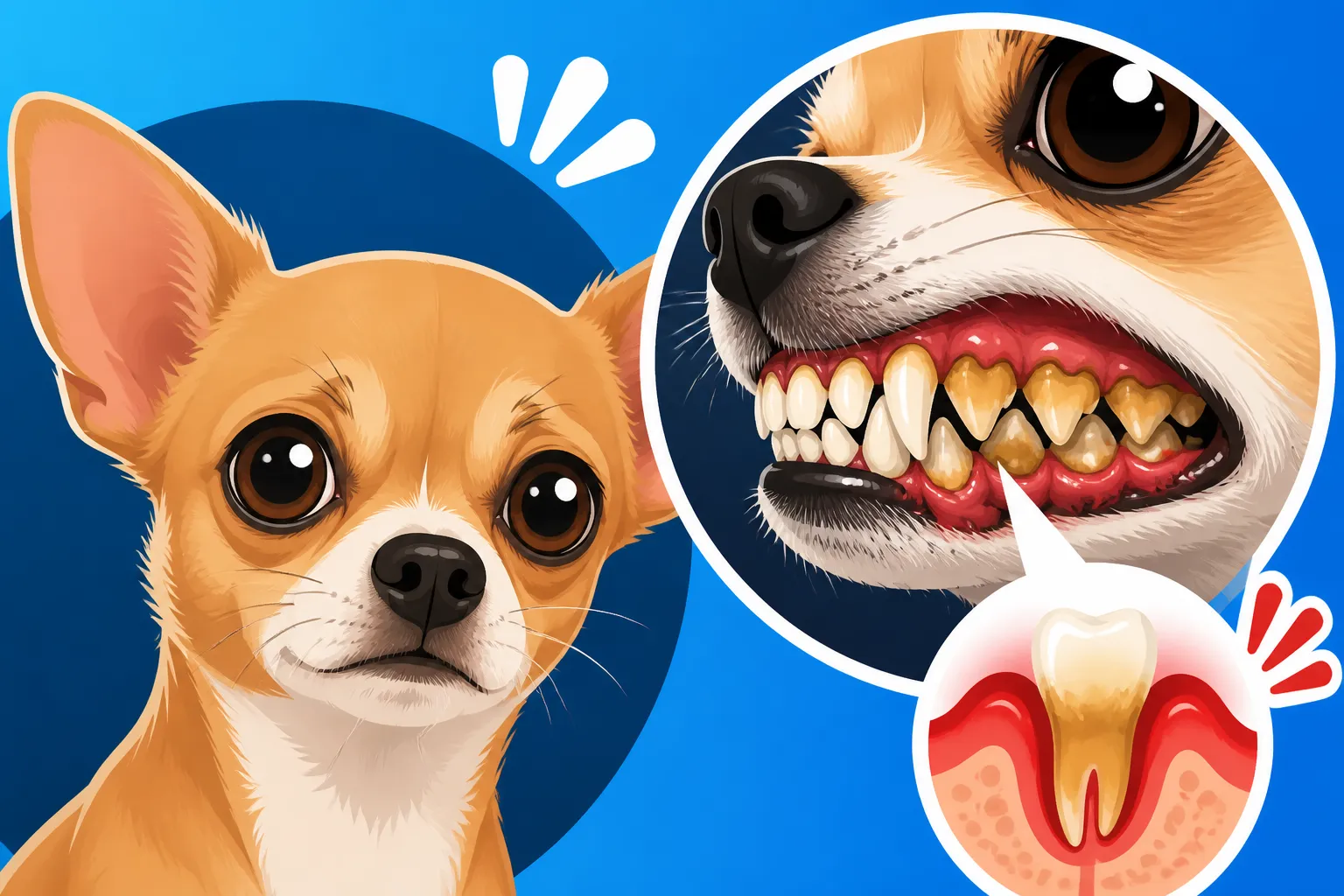
This consistent lack of natural cleaning, exacerbated by tight spaces, leads to a much faster buildup of plaque and subsequent hardening into tartar. Tartar is like concrete for bacteria, firmly attaching to the tooth surface and gum line, irritating the gums and initiating the cycle of inflammation that leads to periodontal disease. Because the teeth are so close together, this process can spread rapidly from one tooth to the next, quickly overwhelming the entire mouth. For many owners, it feels like one day their dog has relatively clean teeth, and the next, a thick yellow-brown layer has seemingly appeared overnight.
The Problem of Retained Baby Teeth
One of the most common and often overlooked issues in Chihuahua puppies is Chihuahua Tooth Crowding and Retained Baby Teeth. Unlike larger breeds where puppy teeth usually fall out to make way for adult teeth with minimal fuss, Chihuahuas frequently hold onto their deciduous (baby) teeth. This happens because the adult teeth often erupt slightly off-kilter or the roots of the baby teeth don't resorb properly, failing to push out the primary tooth. When both a baby tooth and an adult tooth occupy the same socket, it’s called a "retained deciduous tooth."
This retention creates a double-whammy of problems. Firstly, it further exacerbates the already severe crowding in the jaw, making it even harder for your dog to chew properly and for you to clean. Secondly, the presence of two teeth in one spot creates a narrow crevice where food, hair, and bacteria easily get trapped. This tiny, un-cleanable pocket acts as a perfect incubator for plaque and tartar, which can form incredibly fast. Many vets will recommend extracting these retained baby teeth when your Chihuahua is spayed or neutered, often around six months of age, to prevent these issues from spiraling out of control before they even begin. Ignoring them almost guarantees early onset of dental disease.
How Dental Disease Develops So Quickly
The speed at which dental disease progresses in Chihuahuas is genuinely alarming and can catch many well-meaning owners off guard. It's not just that they get dental disease; it's how rapidly it can advance from a mild irritation to a severe, painful infection. Understanding this progression is key to appreciating why proactive and consistent care is so vital for this breed.
Plaque and Tartar Buildup
It all starts innocently enough: with plaque. Plaque is a sticky, colorless film of bacteria that constantly forms on teeth, even on perfectly healthy ones. In Chihuahuas, due to their crowded mouths, plaque adheres quickly and easily in those hard-to-reach areas. If not removed within a day or two, plaque begins to mineralize, transforming into a hard, calcified substance known as tartar, or calculus. Once tartar forms, you can’t simply brush it away; it requires professional scaling tools to remove.
Tartar is insidious because it creates a rough surface that attracts even more plaque, accelerating the cycle. It also acts as an irritant to the gum tissue, lying in wait along the gum line. The issue with Chihuahuas is that this process seems to be on fast-forward. Owners report noticing significant tartar buildup in dogs as young as two or three years old, a timeline that would be considered premature in many larger breeds. This rapid accumulation highlights the constant battle against bacterial proliferation in their tiny oral environments.
Progression to Gingivitis and Periodontal Disease
Once tartar forms along the gum line, it triggers the next stage of dental disease: gingivitis. Gingivitis is simply the inflammation of the gums, characterized by redness, swelling, and sometimes bleeding. You might notice your Chihuahua's gums looking a little puffier or a darker shade of red than a healthy pink. While gingivitis is reversible with thorough professional cleaning and diligent home care, it’s a clear warning sign that things are heading in the wrong direction.
If gingivitis is left untreated, it inevitably progresses to periodontal disease, which is far more serious and, crucially, irreversible. Periodontal disease means the infection has spread deeper, affecting the structures supporting the teeth – the periodontal ligament and the alveolar bone. The bacteria migrate into the pockets between the teeth and gums, creating deeper "periodontal pockets." Here, they release toxins that destroy the supporting bone and tissue. This is a painful process that can lead to loose teeth, abscesses, and even jaw fractures. Unfortunately, Why Chihuahuas Lose Teeth Younger Than Big Dogs is often a direct consequence of this rapid progression of periodontal disease, as their small roots and delicate jawbones succumb quickly to infection and bone loss.
The Role of Diet and Chewing Habits
While genetics and anatomy are primary drivers, diet and chewing habits certainly play a role in how fast dental disease sets in. Many commercial kibbles, especially those designed for small breeds, claim to have dental benefits, but their effectiveness can vary. The tiny size of Chihuahua kibble, while appropriate for their small mouths, often means it crumbles quickly, offering little abrasive action against plaque. Soft, wet, or home-cooked diets, while potentially palatable, provide virtually no mechanical cleaning and can even leave more residue on teeth, accelerating plaque formation.
Chewing on appropriate dental chews can help, but it’s critical to choose items specifically designed for their tiny, delicate mouths. Hard bones or antlers meant for larger dogs can easily fracture a Chihuahua's small teeth or even damage their fragile jaws. Supervised use of veterinary-approved dental chews that have some flexibility and texture can contribute to mechanical cleaning. However, no amount of chewing, no matter how good the chew, can fully counteract the anatomical predisposition to dental disease in Chihuahuas. It's an aid, not a solution.
Recognizing the Early Signs of Trouble
The challenging part about dental disease is that dogs are masters at hiding pain. By the time they show obvious signs, the condition is often quite advanced and painful. This is especially true for Chihuahuas, whose stoic nature can mask significant discomfort. As a diligent owner, learning to spot the subtle, early clues is paramount to getting them the help they need before things become critical.
Bad Breath and Its Significance
Let's be honest, no dog's breath smells like roses, but if your Chihuahua's breath could knock a buzzard off a outhouse, it's definitely a red flag. Chihuahua Bad Breath and What It Means is not just an unpleasant odor; it's almost always a sign of bacterial overgrowth in the mouth, indicating plaque, tartar, and likely gingivitis or worse. Healthy gums and teeth, even in a dog, should have a relatively neutral smell, or at least not overtly foul. If the stench is persistent and pungent, often described as a "rotting" smell, it's highly probable that your little one is harboring significant oral infection.
This odor, medically termed halitosis, is caused by volatile sulfur compounds produced by anaerobic bacteria thriving in the plaque and tartar. It's not just a superficial issue; it signifies an active bacterial assault on the gum tissue and surrounding bone. Don't dismiss it as "just dog breath." For a Chihuahua, persistent bad breath is often the very first noticeable symptom that their dental health is rapidly deteriorating and warrants immediate attention from your veterinarian.
Visible Changes to Gums and Teeth
Beyond the smell, a visual inspection can reveal much, though it takes a practiced eye and a cooperative dog. Healthy gums should be a pale pink, firm, and hug tightly around the teeth. In contrast, look for gums that appear red, swollen, or bleed easily when touched. You might even notice a purplish tinge, indicating severe inflammation. Tartar itself is often visible as a yellow-brown or even green-black crust along the gum line, particularly on the outside surfaces of the upper canine teeth and molars.
Pay close attention to individual teeth. Are any discolored, perhaps brown or gray? This could indicate a dead tooth. Are any loose or wobbly? That's a sign of significant bone loss. Look for missing teeth or empty sockets, which means teeth have either fallen out or been extracted in the past. Sometimes, you might even see pus oozing from around the gum line, which signals a serious infection or abscess. Don't forget to check for retained baby teeth alongside adult teeth, a common issue in Chihuahuas that contributes to rapid plaque buildup.
Behavioral Clues Your Chihuahua Is in Pain
Because Chihuahuas are so good at hiding discomfort, their behavioral changes might be subtle. You might notice them favoring one side of their mouth when chewing, or dropping food more often. Some Chihuahuas become reluctant to eat hard kibble or chew toys they once loved, opting for softer foods or simply refusing to eat as much. They might shy away from you touching their face or head, or even become irritable when approached, which is completely out of character.
Other signs can include excessive drooling, pawing at their mouth, rubbing their face on furniture or the carpet, or a general lethargy. In more severe cases, they might exhibit symptoms of an oral-nasal fistula, where infection has eroded through the bone into the nasal cavity, causing nasal discharge, sneezing, or even bubbles of food to come from their nose. Any deviation from their normal eating habits, playfulness, or interaction levels should prompt a thorough dental check-up. Remember, a lack of obvious yelping doesn't mean a lack of pain; it often just means they're enduring it silently.
The Serious Health Risks Beyond the Mouth
It’s easy to think of dental disease as just a problem with teeth, but for a tiny breed like a Chihuahua, the implications stretch far beyond their mouth. A rotting tooth isn't an isolated incident; it's a gateway for bacteria to enter their bloodstream, posing significant threats to their internal organs and overall health. Overlooking dental health can genuinely shorten your Chihuahua’s lifespan and diminish their quality of life.
Systemic Infections and Organ Damage
One of the most alarming consequences of untreated dental disease is the risk of systemic infection. The mouth is highly vascular, meaning it's rich in blood vessels. When there's a severe infection in the gums or around a tooth root, bacteria can easily enter the bloodstream, traveling to distant organs. The most common targets are the heart, kidneys, and liver. For example, bacterial endocarditis, an infection of the heart valves, can be directly linked to chronic dental disease, which contributes to conditions like Chihuahua Heart Disease as the Breed Ages.
These bacteria can cause inflammation and damage to these vital organs, leading to conditions like kidney failure, liver disease, or worsening heart conditions. This is particularly concerning for Chihuahuas, who are already prone to certain health issues as they age. A constant low-grade infection from their mouth puts an immense strain on their immune system and organs, potentially accelerating the onset or progression of other age-related diseases. It’s a vicious cycle where poor dental health can compromise overall health, making their tiny bodies work harder to fight off persistent infection.
Jaw Fractures in Advanced Cases
Given the incredibly delicate and thin jawbones of Chihuahuas, advanced periodontal disease carries a unique and terrifying risk: jaw fractures. As the infection progresses, the bacteria destroy the bone surrounding the tooth roots. In severe cases, particularly with the long roots of the canine teeth, so much bone can be lost that the jaw becomes paper-thin. A seemingly innocuous action – a fall off the couch, a rough chew on a toy, or even a sneeze – can be enough to cause a pathological fracture of the mandible (lower jaw).
Repairing a fractured Chihuahua jaw is an incredibly complex and costly surgical procedure, often requiring specialized veterinary dental surgeons. It’s painful for the dog and a tremendous stressor for the owner. This is one of the most devastating outcomes of neglected dental disease, a stark reminder that what starts as "just bad breath" can escalate into a life-threatening emergency. The best pet insurance policies, like those from Healthy Paws, typically cover accidental injuries, but dealing with pre-existing conditions related to long-standing dental neglect can be trickier, emphasizing the need for proactive care.
Chronic Pain and Quality of Life
Beyond the potential for systemic disease and catastrophic injury, simply living with chronic dental pain severely impacts a Chihuahua's quality of life. Imagine having a persistent toothache, mouth sores, or exposed nerves – that’s what many Chihuahuas endure silently every day. This constant discomfort can lead to a significant change in their demeanor. They might become withdrawn, less playful, irritable, or even aggressive when their mouth is touched.
Their joy in eating, which is often a significant part of a dog's life, can be diminished or entirely lost. They might struggle to pick up kibble, chew slowly and painfully, or stop eating altogether in severe cases. This chronic pain also contributes to overall stress, which can suppress the immune system and make them more susceptible to other illnesses. Ultimately, untreated dental disease robs your Chihuahua of comfort, happiness, and potentially years of a joyful life. It’s a compelling reason to prioritize their dental health as much as any other aspect of their veterinary care.
Preventative Care: What You Can Do at Home
While Chihuahuas are predisposed to dental problems, that doesn't mean you're helpless. In fact, consistent home care is your most powerful weapon against the rapid onset and progression of dental disease. It requires dedication, patience, and the right tools, but the effort you put in now can save your Chihuahua from significant pain and expensive treatments down the road.
The Daily Brushing Routine
This is the gold standard for home dental care, and honestly, nothing else comes close. Just like humans, dogs need their teeth brushed to remove plaque before it hardens into tartar. For a Chihuahua, the ideal is daily brushing, but even every other day is significantly better than nothing. The key is to start early when they are puppies, making it a positive experience with lots of praise and tasty dog-specific toothpaste (never human toothpaste!).
You'll need a toothbrush designed for small dogs, or even a finger brush. Focus on the outside surfaces of the teeth, especially the upper canines and molars, where plaque tends to accumulate most rapidly. Many owners find it helpful to lift the lip rather than trying to open the entire mouth, which can be less intimidating for a tiny dog. Consistency is paramount. Think of it like this: The Two Minute Daily Chihuahua Tooth Routine can quite literally add years of comfort and health to your Chihuahua's life. It takes time to get them accustomed, but it's an investment that truly pays off.
Dental Chews and Water Additives
While brushing is king, other tools can supplement your efforts. Veterinary Oral Health Council (VOHC) approved dental chews can offer some mechanical abrasion to help reduce plaque. It's crucial to select chews that are appropriately sized for a Chihuahua – too large, and they won't chew them effectively; too hard, and they risk fracturing their delicate teeth. Look for chews that have some flexibility and are designed to last a bit, allowing for sustained chewing action. Brands like Greenies or Virbac C.E.T. VeggieDents are often good choices, but always consult your vet for recommendations specific to your dog.
Water additives are another convenient option, designed to reduce bacteria in the mouth or inhibit plaque formation. These are simply added to your Chihuahua's drinking water daily. While they offer minimal mechanical cleaning, they can certainly help reduce bacterial load. It's important to understand that these are supplemental aids, not replacements for brushing or professional cleanings. They can, however, contribute to a healthier oral environment, especially for Chihuahuas who are resistant to brushing or between professional cleanings.
Regular Vet Check-ups and Early Intervention
No matter how diligently you brush, regular veterinary check-ups are non-negotiable for a Chihuahua. Your vet can perform an oral examination, assess the extent of plaque and tartar, identify gingivitis, and recommend when a professional cleaning is necessary. Remember, How Young a Chihuahua Needs Its First Dental can be surprisingly early, sometimes by age two or three, especially if retained baby teeth were an issue. Early intervention is always less invasive, less costly, and less risky than waiting until severe disease has set in.
During these check-ups, your vet can also screen for other potential problems, such as a fractured tooth, oral masses, or signs of an underlying systemic issue. They can provide guidance on proper brushing techniques, recommend specific dental products, and answer any questions you have about your Chihuahua's oral health. Don’t wait until you notice foul breath or obvious pain; make dental health a regular topic of discussion during your Chihuahua's annual wellness visits.
Professional Dental Cleanings: A Crucial Necessity
Despite the best home care, virtually every Chihuahua will need professional dental cleanings under anesthesia at some point in their lives, often multiple times. This isn't a failure of your care; it's a testament to their unique anatomy and predisposition. These procedures are vital for removing the hardened tartar that home brushing can't touch and for thoroughly assessing the health of each tooth below the gum line.
Understanding the Anesthesia Process
The thought of anesthesia for a tiny Chihuahua can be incredibly daunting for owners, and it's a completely valid concern. However, modern veterinary anesthesia protocols are very safe, especially when appropriate precautions are taken. For a dental cleaning, anesthesia is absolutely necessary because it allows the veterinary team to perform a thorough and safe procedure. This includes scaling all surfaces of the teeth, both above and below the gum line, probing for periodontal pockets, and taking full-mouth dental X-rays – none of which could be done on an awake, squirming dog, especially one in pain.
Before any procedure, your vet will conduct a thorough physical exam. They will calculate anesthetic dosages meticulously based on your Chihuahua's exact weight, often using micrograms rather than milligrams to ensure precision. During the procedure, your Chihuahua will be continuously monitored by a dedicated veterinary nurse using advanced equipment that tracks heart rate, respiratory rate, blood pressure, oxygen saturation, and body temperature. This constant monitoring allows the team to react immediately to any changes, making the process as safe as possible.
The Importance of Pre-Anesthetic Bloodwork
Pre-anesthetic bloodwork is a non-negotiable step, especially for a small dog like a Chihuahua and certainly as they get older. This bloodwork provides crucial information about your Chihuahua's internal organ function – particularly their liver and kidneys, which are responsible for metabolizing and eliminating anesthetic drugs. It also checks for anemia, infection, and clotting abnormalities. Identifying any underlying issues before anesthesia allows your vet to adjust the anesthetic protocol, choose different medications, or even postpone the procedure until any health concerns can be addressed.
For example, if the bloodwork reveals early signs of kidney or liver dysfunction, your vet might use a lighter anesthetic protocol or provide intravenous fluids to support organ function during the procedure. This is a critical safety measure that significantly reduces the risks associated with anesthesia, making it a wise investment in your Chihuahua's well-being. Never skip this step; it's a vital safety net for your tiny companion.
What Happens During a Professional Cleaning
A professional dental cleaning for a Chihuahua is much more involved than a simple "scrape and polish." Once your dog is safely anesthetized, the procedure typically includes:
- Oral Examination: A thorough visual exam of the entire mouth, including the back of the throat and tongue.
- Full-Mouth Dental X-rays: This is perhaps the most critical part, as 60% of dental disease lies below the gum line and is invisible to the naked eye. X-rays reveal bone loss, abscesses, unerupted teeth, and root problems.
- Scaling: Using specialized ultrasonic and hand instruments, the veterinary team meticulously removes all plaque and tartar from every tooth surface, both above and below the gum line.
- Probing: A periodontal probe is used to measure the depth of the gum pockets around each tooth, identifying areas of infection and bone loss.
- Polishing: After scaling, the teeth are polished to smooth out any microscopic etches on the enamel, which makes it harder for plaque to adhere again.
- Fluoride Treatment (Optional): Some clinics apply a fluoride treatment to strengthen enamel and reduce sensitivity.
- Extractions (if needed): If X-rays or probing reveal severely diseased or damaged teeth, extractions will be performed.
The entire process is incredibly detailed and thorough, designed to restore your Chihuahua's mouth to as healthy a state as possible. After the cleaning, you'll often receive a detailed dental chart showing the condition of each tooth and any procedures performed. For many Chihuahuas, The Yearly Chihuahua Dental Cleaning Bill becomes a standard part of their annual health budget, a necessary expense for their comfort and longevity.
Addressing Advanced Dental Disease and Extractions
Sometimes, despite your best efforts, dental disease progresses to a point where simple cleaning isn't enough. For Chihuahuas, this can happen surprisingly quickly. When infection has caused significant damage, tooth extractions become necessary to eliminate pain, prevent further spread of infection, and protect your dog's overall health. This can be a scary prospect for owners, but it’s often the kindest solution.
When Extractions Become Necessary
The decision to extract a tooth is never taken lightly. It's usually based on a combination of visual inspection, probing for deep periodontal pockets, and most importantly, dental X-rays. X-rays are invaluable for revealing irreversible bone loss around a tooth, root abscesses, fractured roots, or severe internal tooth resorption – issues that can't be seen from the outside. If a tooth is loose (Grade 3 mobility), severely infected, or causing significant pain, extraction is often the best course of action.
Your veterinarian will discuss these findings with you, explaining why a particular tooth needs to go. While it might seem drastic to remove teeth from such a tiny mouth, leaving a diseased tooth in place is far more detrimental than removing it. A rotten tooth is a source of constant pain and ongoing infection, compromising your Chihuahua's health every single day. The goal is always to eliminate pain and infection, even if it means sacrificing a few teeth. Understanding What Chihuahua Extractions Cost Per Tooth can help you prepare for the financial aspect of this necessary procedure.
Post-Extraction Care and Recovery
After extractions, your Chihuahua will need careful post-operative care. They will typically go home with pain medication and antibiotics to manage discomfort and prevent infection. You'll need to monitor their mouth for any signs of swelling, excessive bleeding, or discharge. It's usually recommended to feed soft food for a week or two to allow the extraction sites to heal properly. Your vet might also provide a protective rinse or gel to apply to the gums.
The recovery period is usually smooth, and most Chihuahuas bounce back surprisingly quickly. The relief from chronic pain is often immediate, and owners report seeing a dramatic improvement in their dog's energy levels, appetite, and overall demeanor within days. They might start playing more, eating with enthusiasm, and generally acting like a puppy again – a clear indication of how much pain they were silently enduring. Ensuring your Chihuahua stays warm and calm during recovery is also essential, something we covered in Warming a Chihuahua Through an Anesthetic.
Living with Fewer Teeth: Diet Adjustments
It's natural to worry about how your Chihuahua will eat with fewer teeth, especially if multiple extractions were necessary. However, dogs adapt incredibly well. Even Chihuahuas who lose most or all of their teeth can thrive on an appropriate diet. Their primary chewing action actually comes from their back molars and pre-molars, and if these are gone, they learn to swallow smaller pieces or use their tongues more effectively.
For dogs with significant extractions, a soft food diet, or kibble softened with water or broth, is often recommended for the long term. Many Chihuahuas actually prefer this, as it eliminates any discomfort associated with crunching hard food. You might also need to cut up treats into smaller, more manageable pieces. The key is to ensure they are still getting adequate nutrition. Your vet can provide specific dietary recommendations to ensure your Chihuahua remains healthy and happy, even with a significantly less crowded, but healthier, mouth. Find more tips in Eating a Chihuahua After Tooth Extractions.
Budgeting for Lifelong Chihuahua Dental Care
Let's be realistic: dental care for a Chihuahua isn't cheap, and it’s certainly not a one-time expense. Given their genetic predisposition to rapid dental disease, it's something you need to budget for consistently throughout their long life. Understanding the costs and planning ahead can alleviate a lot of stress and ensure your furry friend gets the care they need.
Typical Costs of Dental Procedures
The cost of veterinary dental procedures can vary widely depending on your geographic location, the specific clinic, and the severity of your Chihuahua's condition. A routine dental cleaning, which includes anesthesia, scaling, polishing, and basic monitoring, can range from $300 to $700. However, this number can climb significantly if extractions are needed, especially for complicated teeth like canines or if there's significant bone loss. Each extraction can add $50 to $200 (or more for surgical extractions) to the total bill. Pre-anesthetic bloodwork, dental X-rays, and post-operative medications are also additional costs.
For a Chihuahua, it’s not uncommon for a dental procedure with a few extractions to reach $800 to $1,500 or even more, particularly if they need to see a board-certified veterinary dentist for complex issues like jaw fractures or root canals. Considering that many Chihuahuas need these cleanings every one to three years, sometimes sooner, the cumulative cost over their Chihuahua Lifespan and Why the Breed Reaches Sixteen can be substantial. Being aware of these figures upfront helps you plan accordingly.
The Value of Pet Insurance
This is where pet insurance can truly be a lifesaver, especially for a breed with predictable health challenges like Chihuahuas and their teeth. While most pet insurance policies won't cover routine dental cleanings (these often fall under "wellness plans" as an add-on), they do typically cover the costs associated with treating dental disease, such as extractions, root canals, and treatments for periodontal disease, as long as the condition isn't pre-existing. This means enrolling your Chihuahua when they are young and healthy is crucial.
Many owners find that the monthly premium, often quite reasonable for a Chihuahua, pays for itself after just one major dental procedure. For instance, if your Chihuahua needs several extractions costing $1,200, and your policy covers 80% after a $250 deductible, that's a significant saving. Companies like Healthy Paws offer comprehensive coverage that can help mitigate the financial shock of unexpected dental surgeries. Understanding Chihuahua Dental Coverage and Its Limits is key to choosing the right plan for your companion.
Long-Term Financial Planning
Even with pet insurance, it’s wise to have a long-term financial plan for your Chihuahua's dental health. This might involve setting aside a small amount each month into a dedicated "Chihuahua Dental Fund." This fund can cover routine cleaning costs not covered by insurance, your deductible, or any co-pays. Think of it as an ongoing savings account for their oral health.
Consider that a Chihuahua could live 15-20 years. If they need a cleaning every two years, that's potentially 7-10 procedures over their lifetime. Being prepared for these recurring expenses is simply part of responsible Chihuahua ownership. A proactive approach to both home care and budgeting for professional cleanings will ensure your little one receives the best possible dental care throughout their life, saving them from pain and you from unexpected financial strain. You might find that Setting a Chihuahua Deductible Against Dental Bills helps you manage these costs effectively.
Disclaimer
The information provided in this article is for general informational and educational purposes only and is not a substitute for professional veterinary advice. Always consult with a qualified veterinarian for any health concerns or before making any decisions related to your Chihuahua's care.