How Short to Cut a Chihuahua Nail
One of the most common anxieties we Chihuahua parents face is the dreaded nail trim. It's not just about wrangling a squirming, tiny dog; it's about the very real fear of cutting too short, hitting the quick, and causing pain and bleeding. That sharp yelp and the sight of blood can be enough to make anyone dread the task, and suddenly, those little nails are clicking on your hardwood floors, growing longer and longer. This guide is here to walk you through exactly how short a Chihuahua's nails should be, how to achieve that length safely, and how to maintain it for your tiny companion's comfort and long-term health.
Understanding Chihuahua Nail Anatomy
Before we even think about picking up clippers or a dremel, it's crucial to understand what exactly you're trimming and what you absolutely need to avoid. A Chihuahua's nail, despite its size, is a complex structure, and understanding it is the first step to successful and stress-free trims.
The Quick: A Sensitive Blood Supply
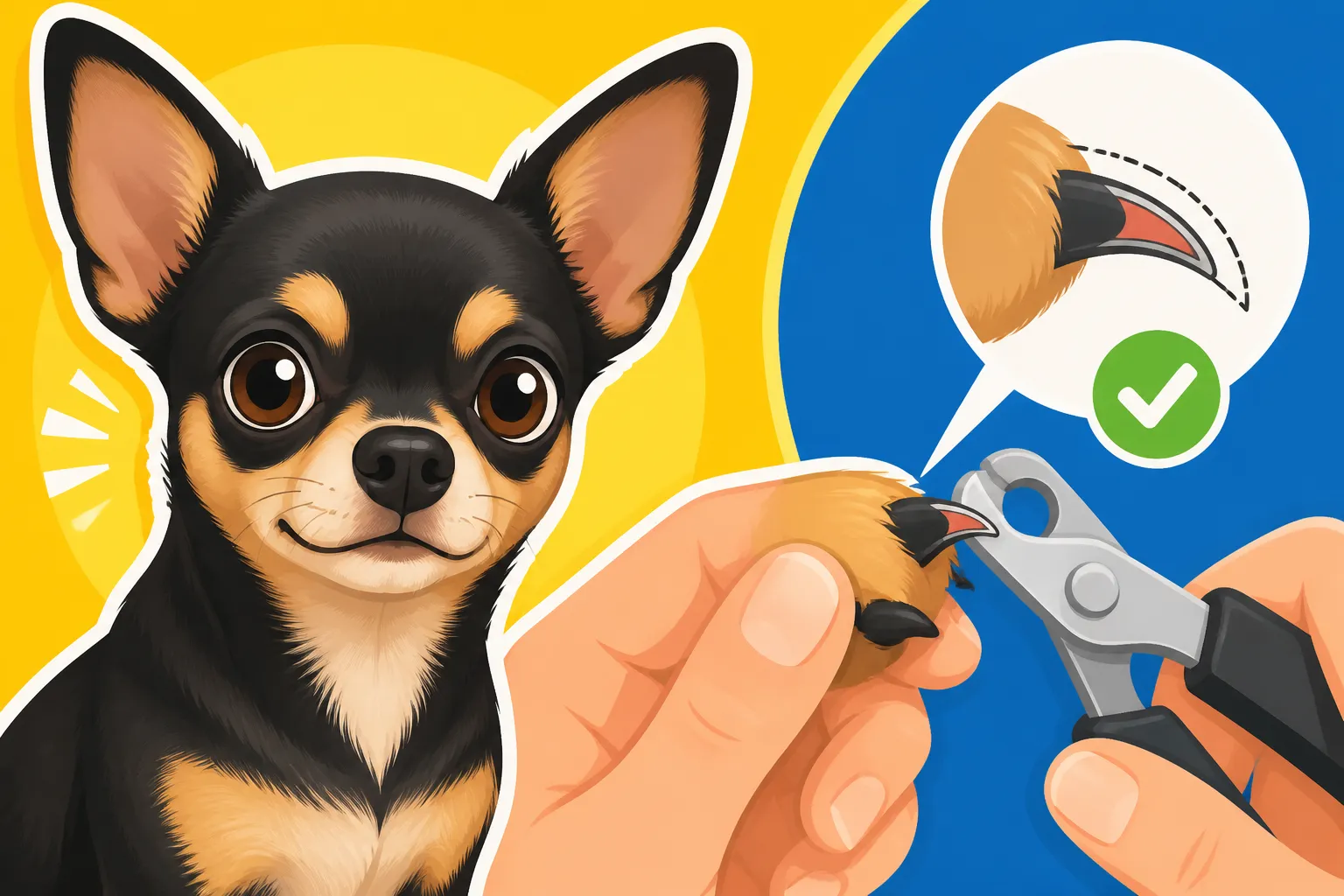
Inside every single one of your Chihuahua's nails is something called the "quick." This isn't just a nerve; it's a living tissue that contains both blood vessels and nerves. Think of it as the nail's lifeline. When you cut into the quick, it doesn't just hurt; it bleeds, and sometimes quite a bit, making a mess and causing significant discomfort for your little one. That pain and the bleeding create a negative association that can make future nail trims a nightmare for both of you.
The quick grows with the nail. If your Chihuahua's nails are allowed to get long, the quick will also extend further down the nail. This is why it feels like you can never get them as short as you'd like without causing a bleed. The good news is that with consistent, frequent trimming, the quick can actually recede over time. It's a slow process, but it's incredibly rewarding because it eventually allows you to trim the nails shorter and closer to the paw pad, which is the ultimate goal for paw health.
The Nail Casing: White, Black, and Clear
Chihuahua nails come in a range of colors, and this can dramatically impact how easy or difficult it is to see the quick. Many Chihuahuas have clear or white nails, which are a dream for trimming. With these nails, you can usually see a pinkish shadow inside the translucent nail – that's the quick! You want to trim just ahead of that pink line, taking off only the white, non-sensitive tip. It’s like looking through a frosted window; you can usually make out the shape.
However, many Chihuahuas also have black or very dark nails, and this is where the real challenge lies. With dark nails, the quick is completely hidden from view. You can't see the pink line, so you have to rely on other visual cues and a bit more caution. For black nails, you'll want to trim tiny, thin slivers off the tip, looking at the cut surface of the nail each time. As you get closer to the quick, the center of the cut nail will start to show a small, greyish-white circle. As you get even closer, this circle will become a little darker, perhaps more moist or even blackish, indicating you are right at the edge of the quick. Stop immediately when you see that darker circle. It's a game of millimeters, and it requires patience.
The Paw Pad and Toe Structure
The goal of a perfectly trimmed Chihuahua nail is for it to be short enough that it doesn't touch the ground when your dog is standing naturally. Imagine your Chihuahua standing on a flat, hard surface. The nails should ideally be flush with the paw pad or just slightly above it, so they don't bear any weight or make contact with the floor. This allows the toes to splay naturally and the paw to function correctly.
Overgrown nails can actually change the structure of your Chihuahua's paw over time. When nails are too long, they push the toes up and back, putting pressure on the toe joints and altering their natural alignment. This constant, unnatural pressure can lead to discomfort, pain, and even long-term orthopedic issues. It's not just about aesthetics; it's about the biomechanics of your dog's tiny feet and ensuring they stay healthy and pain-free as they age. This is especially important for a breed prone to joint issues like Patellar Luxation, the Chihuahua's Commonest Joint Problem.
The Ideal Length for Chihuahua Nails
So, what does "just right" really look like for a Chihuahua's nail? It’s not about getting them down to the quick every time, but about achieving a functional, comfortable length that promotes good paw health.
The "No Click" Rule
This is probably the easiest way to determine if your Chihuahua's nails are too long. When your dog walks across a hard surface like tile, hardwood, or concrete, you shouldn't hear their nails clicking. If you do, it means their nails are too long and are making contact with the ground. This constant contact puts pressure on their nail beds and toe joints, which over time can be very uncomfortable and even painful.
Think about walking in shoes that are too tight or always push your toes upwards – it’s not pleasant. For your Chihuahua, those clicking nails are essentially doing the same thing. The "no click" rule serves as a simple, audible reminder that it's time for a trim. For active Chihuahuas who get lots of walks on varied surfaces, this clicking might be less frequent. But for indoor Chihuahuas, or those who mostly walk on soft grass, you'll be relying on your clippers more often than not.
Recessing the Quick Over Time
As mentioned, the quick tends to grow along with the nail. If your Chihuahua has had long nails for a while, the quick will be extended, making it impossible to get the nails as short as you'd like in one go without causing a bleed. This is where patience and persistence truly pay off.
The trick to receding the quick is to trim a tiny amount off the nail very frequently – ideally every 5-7 days. Even if it's just a hair's breadth, consistent pressure on the quick will encourage it to pull back slightly over time. Imagine a gardener pruning a hedge; frequent small trims keep the hedge in shape, whereas leaving it to grow wild makes it harder to bring back to size. With each tiny trim, the quick will slowly, incrementally recede, allowing you to gradually take the nails shorter and shorter. This process can take weeks or even months, but the long-term benefits for your Chihuahua's comfort and paw health are absolutely worth the effort. It helps prevent problems like Chihuahua Arthritis in the Teenage Years by ensuring proper weight distribution.
Risks of Overgrown Nails
The consequences of allowing a Chihuahua's nails to become too long are often underestimated. It's not just an aesthetic issue; it can lead to a cascade of painful and debilitating problems for your tiny friend.
First, overgrown nails can cause your Chihuahua's toes to splay out unnaturally. This compromises their balance and can make walking uncomfortable or even painful, especially on hard surfaces. Imagine trying to walk with perpetually extended toenails; it forces you to shift your gait. This altered gait puts undue stress on the toe joints, the tiny bones in their feet, and even higher up into their legs, potentially contributing to conditions like Chihuahua Legg-Calve-Perthes Disease or exacerbating existing patellar luxation.
Beyond structural issues, long nails are more prone to snagging and tearing. A nail tear can be incredibly painful, often requiring a vet visit, antibiotics, and even sedation to properly remove the damaged part. In severe cases, the entire nail bed can become infected. Moreover, nails that curl under can actually grow into the paw pad, causing excruciating pain, infection, and making every step agonizing. It's a silent source of chronic pain that can significantly impact a Chihuahua's quality of life, often leading to behavioral changes like reluctance to walk or being unusually grumpy when their paws are touched.
Techniques for Trimming Chihuahua Nails Safely
Now that we understand the 'why,' let's tackle the 'how.' Getting comfortable with the tools and techniques is essential for a positive experience for both you and your Chihuahua.
Choosing the Right Tools
The market is flooded with nail trimming tools, and finding the right one for a tiny Chihuahua is key. You essentially have two main options: clippers or grinders.
Nail Clippers:
- Scissor-style clippers: These are often recommended for smaller breeds like Chihuahuas. They look like a pair of pliers with a sharp, curved cutting edge. They offer good control and a clean cut. Brands available on Chewy or Amazon often include small scissor-style clippers specifically designed for toy breeds.
- Guillotine-style clippers: While effective for many dogs, some owners find them less precise for very small nails and prefer the control offered by scissor-style.
When using clippers, always ensure they are sharp. Dull clippers can crush the nail rather than cut it cleanly, which is painful and can make the quick more sensitive. Make sure you have styptic powder (like Kwik Stop) on hand before you start, just in case of an accidental quicking. This powder helps to stop bleeding quickly and effectively.
Nail Grinders (Dremels):
A nail grinder, often a rotary tool with a sanding drum attachment, is an excellent alternative to clippers, especially for Chihuahuas with dark nails or those who are very fearful of the clipping sensation. Grinding allows you to take off tiny amounts of nail at a time, giving you much more control and reducing the risk of hitting the quick. It also creates a smoother finish, preventing sharp edges.
The downside is the noise and vibration, which can be scary for some Chihuahuas. You'll need to slowly desensitize your dog to the grinder. Start by just letting them see and hear it, offering treats, then gradually introduce it to their paw. For a Chihuahua, a cordless, low-noise model is often preferred.
Here's a quick comparison of the two main types:
| Feature | Nail Clippers (Scissor Style) | Nail Grinders (Dremel) |
|---|---|---|
| Control | Good, precise cut | Excellent, slow, incremental removal |
| Speed | Fast, quick trims | Slower, but less risk of over-trimming |
| Noise/Vibration | Silent (just the click of the cut) | Can be noisy and vibrate, requires desensitization |
| Quick Visibility | Better for light nails, harder for dark | Excellent for dark nails, as you see the "dust" |
| Finish | Can leave sharp edges | Smooth, rounded finish |
| Fear Factor | Sudden 'snap' can be startling | Noise/vibration can be scary initially |
| Cost | Generally lower initial cost | Higher initial cost, requires batteries/charging |
Gradual Trimming and Desensitization
If your Chihuahua already has a strong aversion to nail trims, you can't just dive in. You need to approach this with patience and positive reinforcement. This process of Chihuahua Handling and Consent is crucial for building trust.
- Start Small: Don't try to trim all nails at once. Aim for just one or two nails in a session, especially at the beginning.
- Positive Association: Introduce the clippers or grinder. Let your Chihuahua sniff it. Give a high-value treat (like a tiny piece of cheese or cooked chicken). Repeat this without even touching a nail.
- Touch and Reward: Gently touch the clippers/grinder to a paw, then immediately reward with a treat. Don't even press or turn on the grinder yet. The goal is to make the tool a predictor of good things.
- Simulated Trims: For clippers, gently hold a paw and lightly tap the clipper against a nail without actually cutting. Reward. For a grinder, turn it on in another room so they hear the noise, then come back and reward. Gradually move closer, letting them hear it while being rewarded.
- The First Cut/Grind: When you're ready to make a trim, aim for the very tip. Just a tiny, tiny amount. Immediately follow with lavish praise and treats. Make it the best experience ever.
- Consistency: Short, frequent, positive sessions are far more effective than long, stressful battles. Try to do a little bit every day or every other day until your Chihuahua becomes more comfortable.
- Comfortable Positioning: Find a position that is comfortable for both of you. Some Chihuahuas do well lying on their back in your lap, while others prefer to be held standing. Make sure they feel secure.
Remember, this is a marathon, not a sprint. Your goal is to make nail trims a neutral, or even pleasant, experience, not just a necessary evil.
What to Do If You Cut the Quick
Even with the utmost care, sometimes accidents happen, especially when you're learning or if your Chihuahua suddenly moves. Don't panic!
- Stay Calm: Your Chihuahua will react to your energy. If you freak out, they'll freak out more. Take a deep breath.
- Apply Styptic Powder: Immediately grab your styptic powder. Take a pinch of the powder and firmly press it onto the bleeding nail. Hold it there for about 15-30 seconds. The pressure combined with the powder usually stops the bleeding quite quickly. Cornstarch or flour can be used in a pinch if you don't have styptic powder, but they are less effective.
- Reassure Your Chihuahua: Once the bleeding has stopped, offer comfort and reassurance. Give them a special treat and plenty of gentle praise. Don't scold them or appear angry. You want to rebuild positive associations.
- Give a Break: Don't try to continue trimming immediately after a quicking incident. Give your Chihuahua a break and revisit the remaining nails another day, or even a few hours later, after they've had time to relax.
- Learn from the Experience: If you quicked your Chihuahua, take note of how short you went. It's a clear indicator that the quick is longer than you might have anticipated in that particular nail. Adjust your trimming strategy to take off even less next time, or switch to grinding if you were using clippers. The key is to learn and prevent it from happening again.
The momentary pain of a quicked nail is forgotten far quicker if you handle it calmly and reassuringly, rather than making it a traumatic event.
Maintaining Nail Health Between Trims
Trimming is just one piece of the puzzle. What happens between those sessions is equally important for keeping your Chihuahua's paws in top shape.
Frequency of Trimming
For most Chihuahuas, especially those who spend a lot of time indoors or on soft surfaces, weekly or bi-weekly nail trims are ideal. This consistent schedule helps keep the quick recessed, prevents overgrowth, and makes each trimming session quicker and less stressful. If you wait too long, the quick will lengthen, and you'll be back to square one, trying to slowly work it back.
Think of it as maintenance: a little bit often is much easier than a big, arduous task every few months. For some very active Chihuahuas who frequently walk on concrete or rough pavement, their nails might naturally wear down enough that you can extend the time between trims, but always keep an eye (and ear!) on them. Even then, you might still need to trim dewclaws, which typically don't touch the ground.
Importance of Regular Walks
While not a complete substitute for trimming, regular walks on varied surfaces play a significant role in natural nail wear. Concrete, asphalt, and even hard-packed dirt trails can act like natural sandpaper, slowly filing down your Chihuahua's nails. This is especially true for the nails on their weight-bearing toes.
Aim for daily walks, even if it's just a Walking a Chihuahua Twenty Minutes a Day jaunt around the block. The more your Chihuahua's nails come into contact with abrasive surfaces, the less work you'll have to do with clippers or a grinder. Of course, always be mindful of hot pavement in summer or icy, salted sidewalks in winter, as these can be harsh on tiny Chihuahua paws. Regular outdoor activity is beneficial not just for nails, but for overall physical and mental health.
Diet and Nail Quality
Believe it or not, your Chihuahua's diet can influence the health and strength of their nails. A balanced, high-quality diet provides the necessary nutrients for strong nails, healthy skin, and a shiny coat. If your Chihuahua's nails are unusually brittle, prone to chipping, or excessively soft, it might be worth discussing their diet with your veterinarian.
Look for foods that list a high-quality animal protein as the first ingredient and contain a good balance of vitamins and minerals. Some owners find that fresh food diets, like those offered by services like Ollie, can contribute to overall healthier nails due to their nutrient density. Omega-3 fatty acids, often found in fish oil supplements (dosed correctly for a small Chihuahua), can also support nail and skin health. While diet won't eliminate the need for regular trimming, good nutrition ensures the nails you are trimming are as healthy as can be, making the process smoother and less prone to issues like splintering.
Conclusion
Mastering the art of trimming your Chihuahua's nails to the correct length is a cornerstone of their long-term health and comfort. It's a skill that requires patience, a bit of bravery, and a commitment to consistency, but the rewards are immense. By understanding the quick, aiming for the "no click" rule, and using the right tools and techniques (many of which are readily available on platforms like Chewy or Amazon), you can transform a once-dreaded chore into a routine act of care. Remember, short, healthy nails mean a happier, more mobile Chihuahua, free from the pain and discomfort that overgrown nails can cause. Keep at it, and your tiny companion's paws will thank you!
Disclaimer
This article is for general informational purposes only and does not constitute professional advice. Laws, prices and regulations vary by location and change over time. Consult a qualified professional for guidance on your specific situation.