Hot Pavement and a Chihuahua’s Small Feet
Summer is wonderful, but for Chihuahua owners, the warmer months bring a hidden danger that's literally underfoot: scorching hot pavement. It's a terrifying thought to realize that the ground you comfortably walk on can be hot enough to cause severe burns to your tiny companion's delicate paws. This guide is here to help you understand why your Chihuahua's paws are so vulnerable and, more importantly, how to protect them from the silent threat of hot surfaces.
Why Your Chihuahua's Paws Are Uniquely Vulnerable to Hot Surfaces
It's easy to assume that all dog paws are created equal, robust enough to handle whatever the world throws at them. But for Chihuahuas, with their diminutive size and specific physiology, their paws are far more delicate than you might realize. What feels like a warm sidewalk to you can be an agonizing hot plate to your little one.
The Delicate Nature of Chihuahua Paw Pads
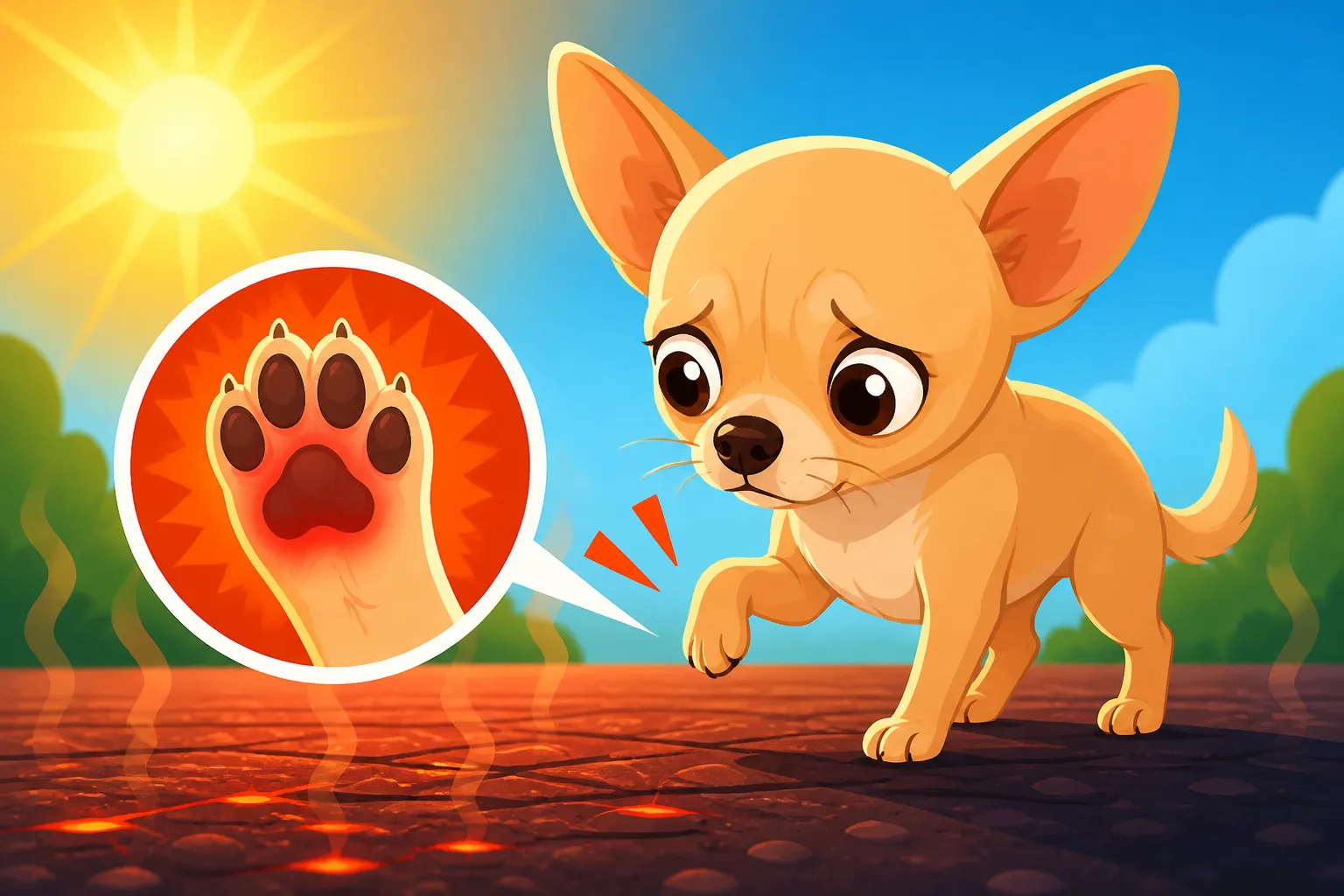
Chihuahua paw pads, while seemingly tough, are not designed for extreme heat. Unlike their larger canine cousins who might have thicker, more calloused pads from traversing varied terrains, many Chihuahuas spend a good portion of their lives on softer indoor surfaces or being carried. This often means their paw pads haven't developed the same resilience. Think of it like a baby's foot versus a seasoned hiker's foot – vastly different levels of toughness. These pads are primarily made of fatty tissue, elastic fibers, and collagen, with a protective outer layer of keratinized skin. While this provides cushioning and traction, it's not an impenetrable barrier against heat. When exposed to hot pavement, this delicate skin can quickly blister, peel, and become severely burned, leading to intense pain and potential infection. It’s a huge problem, and one that often goes unnoticed until the damage is done.
Proximity to the Ground and Body Mass
Here's a factor that often gets overlooked: a Chihuahua's height, or lack thereof. They are so close to the ground that they're essentially walking on a griddle when the pavement gets hot. The radiant heat coming off the asphalt isn't just affecting their paw pads; it's radiating upwards, surrounding their entire tiny body. Imagine being just a few inches from a searing surface – the heat envelops them. This close proximity means they're exposed to higher ground temperatures than a taller dog, and their small body mass offers very little thermal inertia. A larger dog might have more body volume to absorb and dissipate heat, but a Chihuahua can overheat much faster, not just from the paws but from overall ambient ground temperature. This combination of delicate paws and low stature makes them particularly susceptible to Hot Pavement and a Chihuahua's Small Feet.
How to Determine if Pavement is Too Hot for Your Chihuahua
The biggest challenge for owners is knowing when it's safe to walk. What feels fine to our well-shod or naturally tough feet can be detrimental to a Chihuahua. Thankfully, there are straightforward ways to assess the danger, and they don't involve a fancy thermometer.
The Five-Second Rule: Your Best Defense
This rule is a lifesaver, literally. Before you even consider taking your Chihuahua for a walk, place the back of your hand or your bare foot flat on the pavement for five full seconds. If you can't comfortably hold it there for the entire duration, then it is absolutely too hot for your Chihuahua's paws. Period. No exceptions. This isn't just a guideline; it's a critical safety measure. The asphalt and concrete absorb and retain heat far more efficiently than air, meaning a pleasant 75-degree Fahrenheit day can quickly turn into a paw-scorching 120-degree pavement surface. It's a difference most of us don't instinctively register, which is why the five-second rule is so crucial. Don't guess, don't assume, just check.
Understanding Temperature Differences in Surfaces
Not all surfaces heat up equally. While asphalt is notorious for becoming extremely hot, concrete sidewalks can also pose a significant risk. Darker surfaces, naturally, absorb more sunlight and heat faster. But even lighter-colored concrete can get dangerous. Think about those black roads in parking lots versus a light grey sidewalk – the difference can be astounding. Grass, on the other hand, provides a much cooler and safer alternative. However, even grass can get warm, especially if it's been in direct sunlight for hours, or if it's artificial turf. Artificial turf, while seemingly soft, can retain heat even more efficiently than natural grass and can be just as dangerous as pavement. Always test any surface your Chihuahua will walk on, whether it's pavement, concrete, or even artificial grass, using the five-second rule. It's not about the ambient air temperature; it's about the surface temperature where their tiny feet will be.
Practical Strategies for Protecting Your Chihuahua's Paws
Knowing the danger is the first step; actively protecting your Chihuahua is the next. There are several proactive measures you can take to ensure their paws stay safe and sound, even during warmer weather.
Timing Walks and Seeking Shade
The simplest solution often involves adjusting your daily routine. During warm seasons, aim to walk your Chihuahua in the early morning or late evening. These are the times when surfaces have had a chance to cool down considerably. A walk at 7 AM or after 8 PM might be a bit of a shift, but it's far better than risking a burn. Avoid midday and early afternoon walks entirely. Even if you only plan a quick trip to the mailbox, the pavement can reach dangerous temperatures in just minutes of sun exposure.
When you do walk, make a conscious effort to stick to shaded areas. Walking on the shady side of the street, under trees, or along grassy verges can make a world of difference. Sometimes, this means altering your usual route, but your Chihuahua's comfort and safety are worth the detour. Keep an eye out for patches of direct sunlight, even small ones, and guide your dog around them. Remember, for a small dog, even a short dash across a hot patch can cause damage.
Utilizing Paw Protection: Boots and Balms
Sometimes, avoiding hot surfaces entirely isn't feasible, or you might live in an area where even early morning walks are risky. This is where paw protection comes into play. Dog boots, specifically designed for small breeds like Chihuahuas, can offer an excellent barrier against heat. It's crucial to get a good fit – not too tight, not too loose – and to gradually introduce them to your dog. Start by putting them on indoors for short periods, praising them and offering treats. You can find a wide variety of tiny dog boots on platforms like Chewy or Amazon, often with breathable mesh and rubber soles. Look for options specifically designed for heat protection, not just winter traction.
Paw balms, while not offering the same level of protection as boots, can help create a conditioning barrier. Products containing natural waxes and oils can moisturize and toughen paw pads over time, making them more resilient to minor abrasions and dryness. They won't protect against scorching pavement, but they can support overall paw health. Apply a small amount before and after walks, gently massaging it into the pads. Just be sure to choose a balm that is non-toxic, as your Chihuahua will inevitably lick their paws.
Exploring Alternative Exercise Options
If the pavement is consistently too hot, or if your Chihuahua is resistant to wearing boots, consider alternative ways to provide exercise and mental stimulation.
- Indoor Play: Chihuahuas don't need vast spaces to get their exercise. Indoor games like fetch with soft toys, hide-and-seek with treats, or even training sessions with a clicker can burn energy and engage their minds. Indoor Games for a Chihuahua offers many excellent ideas. Puzzle toys, readily available from online retailers, can also keep them occupied.
- Carried Walks/Stroller Rides: For those who still want to experience the outdoors with their companion, a pet stroller or carrier can be a fantastic option. Your Chihuahua can enjoy the sights and smells without their paws ever touching the hot ground. This is especially good for older Chihuahuas or those with joint issues like Chihuahua Arthritis in the Teenage Years.
- Designated Cool Areas: If you have a yard, create a shaded, grassy path for them. Use tarps, umbrellas, or natural tree cover to ensure a cool spot where they can relieve themselves or get a quick sniff-around safely. Small kiddie pools filled with an inch or two of cool water can also offer a refreshing spot for a quick dip for brave Chihuahuas.
| Paw Protection Method | Pros | Cons | Best Use Case |
|---|---|---|---|
| Timing Walks | Free, effective, natural | Limits flexibility, requires planning | General daily walks, always the first line of defense |
| Seeking Shade | Free, immediate relief | Limited availability in some areas | Short trips, urban environments |
| Dog Boots | Excellent physical barrier | Can be pricey, requires training, fit crucial | Unavoidable hot surfaces, prolonged outdoor exposure |
| Paw Balms | Conditions paws, minor protection | No significant heat protection | General paw health, supplemental to other methods |
| Indoor Play | Safe, weather-independent | Less sensory enrichment than outdoors | Extremely hot days, alternative exercise |
| Strollers/Carriers | Full protection, allows outdoor experience | May not fulfill exercise needs, cost | Senior dogs, short outings, crowded areas |
Recognizing and Treating Paw Burns
Even with the best precautions, accidents can happen. Knowing the signs of a paw burn and how to react quickly is essential for your Chihuahua's well-being.
Signs of Burned Paw Pads
Your Chihuahua might not be able to tell you in words that their paws hurt, but they will show you through their behavior. It's crucial to be vigilant, especially after any outdoor excursion on a warm day. Look for these common indicators:
- Limping or Refusing to Walk: This is often the most obvious sign. If your Chihuahua is suddenly favoring a paw, lifting it off the ground, or simply refusing to put weight on it, pain is very likely. They might take very short, hesitant steps, or even sit down and refuse to move.
- Licking or Chewing at Paws: Excessive licking, chewing, or biting at their paw pads is a clear sign of irritation or pain. They are trying to soothe themselves or address the discomfort.
- Redness, Blisters, or Peeling Skin: Visually inspect their paw pads. Fresh burns might appear red and inflamed. In more severe cases, you might see blisters forming on the pads, similar to how human skin reacts to a burn. The worst cases will show skin peeling away, revealing raw and sensitive tissue underneath.
- Darker Than Normal Pads: Some burns can cause the paw pads to darken or discolored, especially around the edges.
- Whimpering or Crying: While Chihuahuas are generally tough little dogs, severe pain can make them vocalize. Whimpering, yelping, or crying when their paws are touched or when they try to move indicates intense discomfort.
- Swelling: The paw pads might appear swollen or puffy to the touch.
If you observe any of these signs, act immediately. Time is of the essence to minimize damage and pain.
Immediate First Aid for Paw Burns
If you suspect paw burns, your first priority is to cool the affected area and alleviate pain.
- Get Off the Hot Surface: The very first thing is to remove your Chihuahua from the hot pavement immediately. Carry them to a cool, shaded area or indoors.
- Cool the Paws: Gently rinse their paws with cool (not ice-cold) water for about 10-15 minutes. You can use a hose on a low setting, a cool damp cloth, or stand their paws in a shallow bowl of cool water. The goal is to bring down the tissue temperature. Do not use ice, as this can cause further tissue damage.
- Prevent Licking: Once you've cooled the paws, try to prevent your Chihuahua from licking them. Licking can introduce bacteria and worsen the burn. A clean sock (secured gently with tape, not too tight) or an Elizabethan collar (e-collar) can help.
- No Home Remedies: Avoid applying any creams, ointments, or butter to the burns unless specifically instructed by a veterinarian. Many human products can be toxic or irritate the injury further.
- Contact Your Vet: Even if the burn appears minor, it's always best to contact your veterinarian immediately. Paw burns can be much more severe than they appear on the surface, and infection is a significant risk due to bacteria on the ground. Your vet can assess the severity, prescribe pain medication, and provide appropriate wound care instructions or treatments. They can also check for other heat-related issues like dehydration.
Veterinary Treatment and Recovery
Once your Chihuahua is at the vet, they will thoroughly examine the paws and determine the grade of the burn. Treatment will vary depending on severity:
- Minor Burns: For first-degree burns (redness, superficial damage), your vet might clean the area, apply a soothing, antiseptic ointment, and bandage the paws to protect them. They'll likely prescribe oral pain medication and possibly antibiotics to prevent infection.
- Moderate to Severe Burns: Second-degree (blisters) and third-degree (skin loss, deep tissue damage) burns require more intensive care. This could involve debridement (removing damaged tissue), special medicated bandages, stronger pain relief, and a course of antibiotics. In very severe cases, your Chihuahua might need specialized burn care or even skin grafts.
- Aftercare at Home: Recovery can take several weeks. Your vet will provide detailed instructions for at-home care, which typically includes keeping the paws clean and dry, changing bandages regularly, administering medication, and limiting activity. This might mean keeping your Chihuahua strictly indoors or only allowing them outside for potty breaks on soft, clean surfaces, often requiring a lift or a specific path. It's similar to the careful recovery needed after Chihuahua kneecap surgery. Regular follow-up visits will be necessary to monitor healing and prevent complications. Throughout this time, patience and diligent care are key to ensuring a full recovery for your tiny friend.
Disclaimer
This article is for general informational purposes only and does not constitute professional advice. Laws, prices and regulations vary by location and change over time. Consult a qualified professional for guidance on your specific situation.