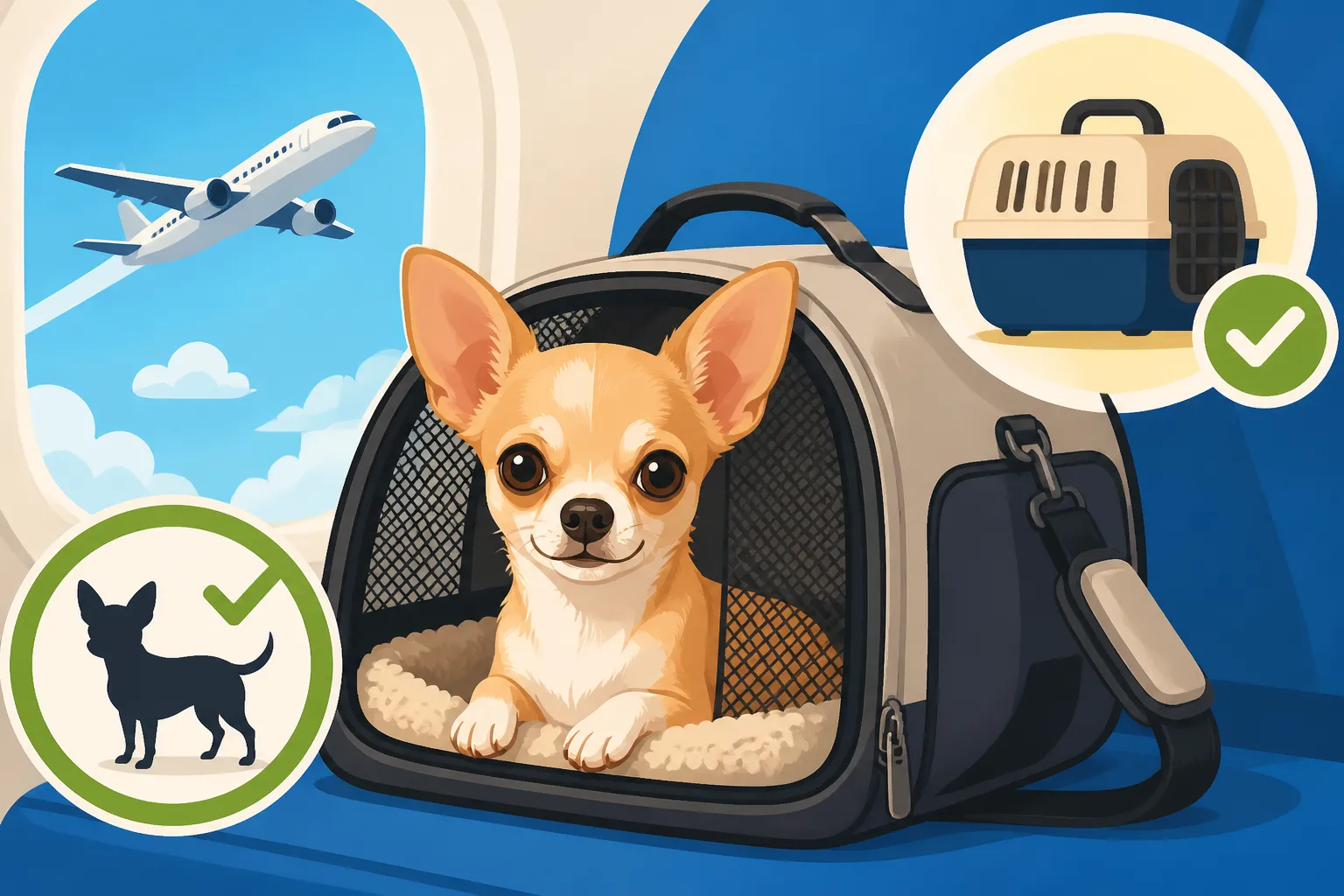
Chihuahua Carriers That Meet Airline Rules
Thinking about flying with your tiny Chihuahua can feel like navigating a maze blindfolded. You've got your flight booked, your little companion is ready, but then comes the anxiety-inducing question: "Will my carrier actually pass muster at the airport gate?" This guide is here to untangle the often-confusing world of airline pet carrier rules, helping you choose the right carrier so your beloved Chihuahua can travel safely and comfortably right by your side in the cabin.
Why Flying with a Chihuahua Presents Unique Carrier Challenges
Bringing a Chihuahua on a plane is a wonderful way to keep your best friend with you, but it's not as simple as grabbing any pet carrier off the shelf. Airlines have stringent rules, and because Chihuahuas are so small, owners sometimes make assumptions that can lead to big headaches at check-in or even at the gate. The biggest challenge isn't usually the weight of your Chihuahua—they rarely exceed the typical airline pet weight limit for in-cabin travel—but rather the dimensions and features of the carrier itself. It's a cruel twist that the smallest dogs often require the most specific considerations for air travel.
The "Under-Seat" Dilemma: One Size Does Not Fit All
Every airline, without exception, requires your Chihuahua's carrier to fit comfortably under the seat in front of you. This isn't just a suggestion; it's a non-negotiable rule. The frustration often stems from the fact that "under-seat" dimensions aren't universal. What works perfectly on one airline's Boeing 737 might be a tight squeeze or an outright refusal on another's regional jet. It’s enough to make you want to pull your hair out! Even within the same airline, different aircraft models can have slightly varying under-seat clearances, which isn't always clearly communicated when you book your ticket. This uncertainty means you can't just buy a carrier once and assume it will always work.
Beyond the numerical dimensions, there's the critical factor of flexibility. Hard-sided carriers, while offering more rigidity and protection, are often too tall or too wide to be pushed under the seat without crushing them, which is a definite no-go. Soft-sided carriers, on the other hand, can often be gently compressed a few inches, making them much more accommodating to varied under-seat spaces. However, even with a soft-sided carrier, you don't want your Chihuahua crammed in like a sardine. The carrier must be large enough for them to stand up, turn around, and lie down naturally, even when slightly compressed.
Stress Points: Check-In, Security, and Boarding
The journey through the airport itself can be a gauntlet of potential snags, especially if your carrier isn't quite right. At the check-in counter, agents will meticulously scrutinize your carrier's dimensions, sometimes even asking you to demonstrate that your Chihuahua can indeed stand and turn inside. Then, at the security checkpoint, you'll need to remove your Chihuahua from the carrier and carry them through the metal detector while the empty carrier goes through the X-ray machine. This is a moment of potential stress for both you and your dog, highlighting the need for a carrier that allows easy, secure retrieval and re-entry.
Boarding the plane brings another layer of scrutiny. Flight attendants are trained to ensure all carry-on items, including pet carriers, comply with the under-seat requirement. If your carrier is too large, too rigid, or appears uncomfortable for your Chihuahua, you could be asked to check your pet as cargo (if that's an option, and often it isn't for small breeds or in certain temperatures), or even worse, denied boarding entirely. It’s a terrifying prospect that makes choosing the right carrier paramount. Ensuring you've also considered factors like Traveling With a Chihuahua in Cabin can save a lot of last-minute panic.
Decoding Airline Carrier Dimensions and Requirements
Navigating the specific dimension requirements from various airlines can feel like you need a degree in advanced calculus. It's not just about length, width, and height; it's about understanding the nuances of how these measurements apply to different carrier types and aircraft. The goal is to find a carrier that provides ample space for your Chihuahua while still being able to tuck neatly into that tight spot under the seat.
The General Rule of Thumb for Under-Seat Carriers
While specific numbers vary by airline and even by aircraft, a good general rule of thumb for most domestic flights is a carrier that measures roughly 18 inches long, 11 inches wide, and 11 inches high. However, let me repeat: these are approximate. You absolutely, positively must check the specific airline's website for their current pet policy and carrier dimensions for your booked flight. Don't rely on old information or what worked for a friend last year. Airlines revise their policies, aircraft change, and what was once acceptable may no longer be. If you’re unsure, a quick call to the airline’s customer service can sometimes clarify the exact dimensions for the specific plane you’ll be on.
For Chihuahuas, their small size often means they'll have more than enough room within these general guidelines. The challenge isn't usually if your Chihuahua fits inside the carrier, but if the carrier fits under the seat. It’s important that your chosen carrier explicitly states it is "airline approved" or "in-cabin approved," though this is merely a starting point. Always verify those dimensions yourself against the airline's stated maximums. When thinking about pet supplies like carriers, reputable online retailers such as Chewy often list dimensions clearly, which can be a huge help when comparing options.
Soft-Sided Versus Hard-Sided: Why Flexibility Matters
When it comes to airline travel with a Chihuahua, soft-sided carriers almost always win out over hard-sided ones for in-cabin travel. The reason is simple: flexibility. A soft-sided carrier, usually made of sturdy fabric like nylon or mesh, can often be slightly compressed in height or width to squeeze into an awkward under-seat space without causing discomfort to your dog. Imagine trying to fit a rigid box into a space that's just a hair too small – it's impossible. Now imagine doing that with a slightly pliable bag – it often works.
Hard-sided carriers, while great for car travel or as a home crate, typically lack this crucial flexibility. They're designed for protection and airflow, but their fixed dimensions are a major disadvantage for airline travel. Unless the hard-sided carrier perfectly matches the most restrictive under-seat dimensions, you're risking refusal. For the peace of mind and the higher likelihood of smooth travel, a well-constructed soft-sided carrier is almost always the better choice for your Chihuahua. You might also want to explore options for Chihuahua Crate Size and Setup to ensure your pup is comfortable in their travel space even before the flight.
Essential Features of an Airline-Approved Chihuahua Carrier
Once you've wrapped your head around the dimension puzzle, it's time to consider the features that make a carrier truly "airline approved" and, more importantly, truly comfortable and safe for your Chihuahua. This isn't just about meeting regulations; it's about ensuring your tiny traveler has the best possible experience during what can be a stressful event.
Ventilation, Security, and Comfort
A good carrier must prioritize ventilation. Chihuahuas can be prone to overheating or getting anxious, so ample mesh windows or panels are critical for airflow and for your dog to see their surroundings. Imagine being in a stuffy box for hours; it's not pleasant. Look for carriers with mesh on at least three sides, preferably four, to ensure good cross-ventilation.
Security is another non-negotiable. The carrier must have strong, self-locking zippers or secure buckles that your clever Chihuahua can't nudge open. A double-zipper system that can be secured with a small carabiner clip is an excellent feature, preventing accidental escapes in a busy airport. The thought of your tiny friend getting loose in a terminal is enough to give any Chihuahua parent nightmares.
Comfort features might seem secondary to rules, but they are vital. A soft, washable fleece pad at the bottom of the carrier is a must. This provides cushioning and absorbs any small accidents. Look for carriers with a waterproof bottom as well, to contain any spills or messes. Having a familiar blanket or toy inside can also provide immense comfort. Remember, you can't access your Chihuahua during the flight, so making their space as cozy as possible beforehand is key. This focus on comfort also ties into general Chihuahua care and nutrition considerations, ensuring their overall well-being.
Access Points and Convenient Storage
Ease of access for you and your vet is paramount. Look for a carrier with multiple entry points: a top-loading zipper, a side zipper, and possibly an end zipper. The top-loading feature is especially handy for gently placing your Chihuahua inside or for reassuring them without having to completely open the carrier on its side. It's also critical at security checkpoints, allowing you to quickly and safely remove your Chihuahua without fumbling.
Thoughtful storage features can make a huge difference in your travel experience. Pockets on the side of the carrier are perfect for stashing essentials like a small bag of treats, a leash, waste bags, or even your own passport and boarding pass. This keeps important items within easy reach, so you're not digging through your carry-on bag at critical moments. Some carriers even come with collapsible water bowls, which are incredibly useful for offering a quick drink during a layover. When considering your overall packing for the trip, think about what you might need, much like planning for Chihuahua Treats Inside a Tiny Calorie Budget for training or just keeping them happy on the go.
Durability and Carrying Options
A travel carrier needs to be tough enough to withstand the rigors of airport floors, overhead bins, and jostling crowds. Look for high-quality, rip-resistant materials and strong stitching. A flimsy carrier isn't just a waste of money; it's a safety hazard for your Chihuahua. Reinforced corners and a sturdy frame (even in soft-sided carriers, this can be achieved with internal wiring) will ensure the carrier holds its shape and protects your pet.
Multiple carrying options are also a huge plus. Most carriers come with padded shoulder straps, which are essential for hands-free transport, especially when you're managing luggage and tickets. Some also feature a handle for carrying it like a briefcase, and a strap or sleeve on the back that allows it to slide over the handle of your rolling luggage. This feature, in particular, can be a lifesaver, making it much easier to navigate through crowded terminals without straining your arm. Think about how much you appreciate your Harnesses That Spare a Chihuahua Windpipe – similarly, the right carrier carrying options spare you the strain.
Here's a quick look at essential carrier features:
| Feature | Why It Matters for Chihuahua Travel |
|---|---|
| Airline Approved Dimensions | Must fit under the seat; verify before every flight. Often 18"L x 11"W x 11"H (flexible) |
| Soft-Sided Design | Allows for gentle compression to fit varied under-seat spaces. |
| Ample Ventilation | Mesh windows on 3-4 sides to prevent overheating and reduce anxiety. |
| Secure Zippers/Latches | Prevents accidental escapes in busy airport environments. |
| Comfortable Interior | Soft, washable pad; waterproof bottom for accidents. |
| Multiple Access Points | Top-loading for easy entry/exit, critical at security checkpoints. |
| External Pockets | Handy for leash, treats, waste bags, and your travel documents. |
| Sturdy Construction | Durable, rip-resistant material and strong stitching for safety. |
| Multiple Carrying Options | Padded shoulder strap, hand strap, luggage trolley sleeve. |
| Leash Clip Inside | Keeps your Chihuahua secure even if the carrier opens momentarily. |
Preparing Your Chihuahua and Carrier for a Smooth Journey
Even with the perfect carrier, your Chihuahua's first flight (or even their tenth!) can be a bit daunting. Proper preparation, both for the carrier itself and for your dog, is key to minimizing stress and ensuring a truly smooth travel experience. A little planning goes a long way in making the journey as comfortable as possible for your tiny co-pilot.
Acclimating Your Chihuahua to the Carrier
Don't just spring the travel carrier on your Chihuahua the day before the flight. That's a recipe for anxiety! Instead, introduce the carrier weeks, or even months, in advance. Leave it open in your home with the soft bedding inside, allowing your Chihuahua to explore it at their leisure. Make it a positive, inviting space. Place treats, favorite toys, or even feed them meals inside the carrier. This helps them associate the carrier with comfort and safety, not just travel.
Practice closing the carrier door for short periods, gradually increasing the duration. Take your Chihuahua on short car rides in the carrier to simulate movement and sounds. The more accustomed they are to being in their carrier, the less stressful the actual travel day will be. A calm Chihuahua means a calmer you! This proactive approach is similar to how you might tackle Chihuahua Crate Training at home, building positive associations step by step.
Packing Essentials and In-Flight Comfort
What you pack in and with the carrier is just as important as the carrier itself. Inside the carrier, beyond the comfy bedding, include a small, familiar blanket and a favorite soft toy that smells like home. These familiar scents can be incredibly reassuring. Attach a small bag of their regular food (pre-portioned, perhaps from a brand like Ollie, which offers convenient fresh food options), a collapsible water bowl, and a small, sealed bag of high-value training treats.
Don't forget essentials for you as well. Have your Chihuahua's vaccination records and any necessary health certificates readily accessible. Pack waste bags, a small bottle of water, and some paper towels for unexpected clean-ups. On long flights, small, quiet chew toys can help distract and soothe your Chihuahua. Remember, it's about making their small space feel like a safe haven. It's similar to how you manage their regular Daily Calories for a Three to Seven Pound Chihuahua, ensuring they have everything they need for their specific size.
Health and Safety Considerations
Before you fly, make sure your Chihuahua is up-to-date on all vaccinations and has a clean bill of health from your veterinarian. Many airlines and destinations require a health certificate issued by a licensed vet within a specific timeframe before travel. Discuss any potential travel anxiety with your vet; they might suggest natural calming aids or, in some cases, mild sedation (though this is often discouraged by airlines due to respiratory risks in small breeds at altitude).
It’s always a good idea to research Chihuahua Vaccination and Anesthesia at Toy Size before any major vet visits or travel planning. Ensure your Chihuahua is microchipped and that your contact information is current. Attach a temporary tag to their collar with your cell phone number and destination contact information. While a good insurance plan from a provider like Healthy Paws can offer peace of mind for unexpected veterinary needs during your trip, prevention and preparedness are always the best strategies.
Finally, resist the urge to feed your Chihuahua a large meal right before the flight. A light meal a few hours prior is usually best to avoid an upset stomach. Offer water frequently during layovers but limit it right before boarding to minimize accidents. A tired Chihuahua is a calmer traveler, so a good walk before heading to the airport can help them settle down for the journey ahead. Consider their Chihuahua Exercise Needs Every Day even on a travel day to burn off some energy.
Disclaimer
This article is for general informational purposes only and does not constitute professional advice. Laws, prices and regulations vary by location and change over time. Consult a qualified professional for guidance on your specific situation.