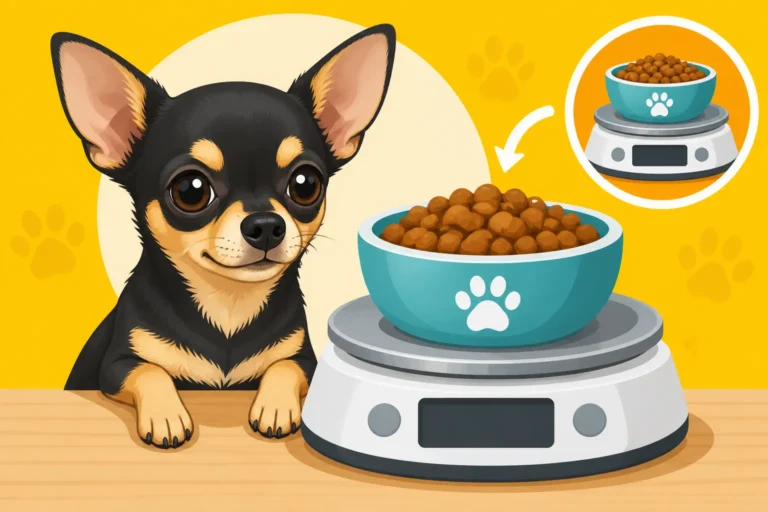
Measuring Chihuahua Food to the Gram
For Chihuahua owners, the smallest details make the biggest difference, and nowhere is this more true than with their food. It’s incredibly easy to accidentally overfeed a tiny dog, leading to significant health issues because their calorie requirements are so minimal. This guide will walk you through precisely why and how to measure your Chihuahua’s food down to the gram, ensuring they get exactly what they need to thrive without putting their health at risk.
Why Precision Feeding Matters for Chihuahuas
When you're dealing with a dog that might weigh less than a newborn human baby, every single kibble counts. The sheer tininess of Chihuahuas means their metabolic systems are incredibly delicate, and even a slight miscalculation in their daily meals can have profound and lasting effects on their health. It's not just about avoiding obesity; it's about providing the right fuel for their unique physiology.
The Tiny Calorie Budget
Imagine trying to balance a budget where every penny is crucial – that's essentially your Chihuahua's daily calorie intake. These little dogs operate on an incredibly lean energy allowance. While a Labrador might consume hundreds, if not thousands, of calories a day, your Chihuahua often needs only around 200-300 calories, depending on their activity level, age, and individual metabolism. This isn't a lot of food, and it makes every morsel significant. If their food packaging suggests, say, 40 calories per pound of body weight, a five-pound Chihuahua needs just 200 calories. A few extra pieces of kibble, a slightly larger treat, or an unmeasured portion can quickly add up to a substantial percentage of their total daily intake, throwing their entire system off balance. You can dive deeper into this topic in Daily Calories for a Three to Seven Pound Chihuahua.
Preventing Obesity and Its Dangers
Given their miniature size, Chihuahuas are incredibly susceptible to weight gain. What might be a negligible amount of weight for a larger breed is a significant burden for a Chihuahua. A single pound of extra weight on a Chihuahua weighing five pounds is a 20% increase in body mass, equivalent to a 150-pound person gaining 30 pounds! This extra weight puts immense strain on their delicate joints, especially if they are already prone to issues like patellar luxation, which is common in the breed. Obesity can also exacerbate breathing problems, particularly if your Chihuahua is one of the many who suffer from collapsing trachea. Excess fat around their organs can impact heart function, increase the risk of diabetes, and generally shorten their impressive lifespan. Understanding What One Extra Pound Does to a Chihuahua can really drive home this point, as can learning about Chihuahua Obesity on a Six Pound Frame.
Managing Blood Sugar Levels
Chihuahuas, especially as puppies, are famously prone to hypoglycemia, or dangerously low blood sugar. Their small size means they have fewer fat reserves to convert into glucose when their blood sugar dips. Consistent, accurately measured meals are vital to keeping their blood sugar stable throughout the day. Skipping a meal, or providing too small a meal due to inaccurate measurement, can lead to lethargy, weakness, trembling, and in severe cases, even seizures or collapse. This is why many Chihuahua owners feed multiple small meals a day, rather than one or two large ones. Precision in feeding ensures they get the consistent energy supply they need, mitigating the risk of these sudden and scary sugar crashes. For more information, check out Chihuahua Hypoglycemia and the Puppy Emergency.
The Pitfalls of "Eyeballing" and Measuring Cups
It's tempting to think that a standard measuring cup or even just "eyeballing" a portion is good enough, especially when the amount of food is so small. However, this approach can be surprisingly inaccurate, and for a Chihuahua, even minor inconsistencies can have major consequences. This isn't about being overly obsessive; it's about acknowledging the unique physiological needs of a toy-sized dog.
The Inaccuracy of Volume Measurements
Most dog food manufacturers provide feeding guidelines based on volume, often using standard cups. However, these cups are designed for much larger dogs and much larger portions. For a Chihuahua, the difference between a slightly loose cup and a tightly packed one can be substantial in terms of caloric intake. Think about it: kibble size, shape, and density vary dramatically between brands and formulas. A cup of dense, small kibble might weigh significantly more than a cup of lighter, airier kibble. Furthermore, the scoops often provided with dog food bags are rarely standardized. They can vary in size and aren't designed for the meticulous accuracy a Chihuahua needs. Relying on volume rather than weight introduces an unacceptable margin of error when your dog's entire daily ration is so tiny. This is why Why a Measuring Cup Is Useless for a Chihuahua is such a crucial read for any Chihuahua owner.
The Real-World Impact of Small Errors
Let's do some quick math to illustrate the problem. If your Chihuahua needs 200 calories per day, and you consistently over-measure by just 10% (which is incredibly easy to do with a measuring cup), you're giving them an extra 20 calories a day. While that might not sound like much, over a year, that adds up to 7,300 extra calories. Considering that approximately 3,500 extra calories typically equate to one pound of weight gain, your Chihuahua could gain over two pounds in a year from this seemingly minor error. For a dog that should only weigh five pounds, that's a 40% increase in body weight! This isn't a hypothetical scenario; it's a very common reason why Chihuahuas slowly creep into an unhealthy weight range. Over time, these small, consistent overfeeds can lead directly to the obesity-related health problems we discussed earlier, quietly jeopardizing their long-term well-being. What a Half Pound Means on a Chihuahua helps break down these tiny increments.
How to Measure Chihuahua Food to the Gram
Moving from imprecise volume measurements to accurate gram-based feeding might seem daunting at first, but it's a simple change that yields immense benefits for your Chihuahua's health. It quickly becomes second nature and provides peace of mind that you're fueling your little companion just right.
Investing in a Digital Kitchen Scale
The first and most crucial step is to get yourself a reliable digital kitchen scale. These aren't expensive or complicated gadgets; you can find excellent options on platforms like Amazon or Chewy. Look for a scale that measures in grams (g) and has a "tare" function. The tare function allows you to place an empty bowl on the scale, zero it out, and then add food, so you're only measuring the weight of the food itself, not the bowl. Accuracy is key, so choose one that measures to at least the nearest gram, or even better, to a tenth of a gram for truly tiny portions. This scale will quickly become one of your most used tools, right alongside your Chihuahua's food bowl.
The Step-by-Step Weighing Process
Once you have your digital scale, the process is straightforward and consistent:
- Place the Empty Bowl: Put your Chihuahua's meal bowl (or a small container) directly onto the digital kitchen scale.
- Tare the Scale: Press the "tare" button. The display should now read "0g" (or "0.0g"). This effectively subtracts the weight of the bowl.
- Add Food Slowly: Begin to add your Chihuahua's kibble (or wet food) to the bowl. Do this slowly, a little at a time, watching the display as the numbers increase.
- Reach Your Target: Stop adding food when the scale shows your precise target weight in grams. It's often easier to slightly under-fill and then add individual pieces of kibble if needed to hit the exact number.
- Serve: Remove the bowl from the scale, and serve your perfectly portioned meal to your happy Chihuahua.
Making this a part of your daily routine ensures consistency and eliminates guesswork.
Understanding Calorie Density and Grams
To measure accurately, you first need to know how many grams of food correspond to your Chihuahua's required calories. This information is usually found on the dog food packaging under the "Guaranteed Analysis" or "Feeding Guidelines" section. It will typically list "kcal/kg" (kilocalories per kilogram) or "kcal/cup."
- Convert kcal/kg to kcal/g: If your bag says 3,500 kcal/kg, that means there are 3.5 kcal per gram (3500 divided by 1000 grams in a kilogram).
- Determine daily caloric needs: Consult your vet for an accurate assessment of your Chihuahua's ideal daily calorie intake based on their age, weight, and activity level. Let's say your vet recommends 200 calories a day.
- Calculate grams needed: Divide your Chihuahua's daily calorie needs by the calories per gram of your chosen food. Using our example: 200 calories / 3.5 kcal/g = 57.14 grams. So, you'd aim for approximately 57 grams of food per day.
This simple calculation ensures you're feeding precisely the right amount, taking all the guesswork out of mealtime. For a more detailed look at calorie calculation, refer to Calculating a Chihuahua Ration at Forty Calories a Pound.
Integrating Gram-Based Feeding into Daily Life
Once you've mastered the mechanics of gram-based feeding, the next step is seamlessly integrating it into your daily routine. This involves not just weighing the main meals, but also accounting for everything else your Chihuahua eats, and making smart adjustments as their needs change.
Planning Daily Rations and Treats
A common mistake is to diligently weigh out meals but then overlook the calories added through treats. For a Chihuahua, even a small training treat can represent a significant percentage of their daily caloric intake. The key is to calculate your Chihuahua's total daily gram allowance and then mentally (or actually, if you're meticulous!) divide that into meals and treats. If your Chihuahua needs 57 grams of food per day, and you know they'll get, say, 5 grams worth of training treats throughout the day, then their main meals should total 52 grams. This ensures their entire intake for the day remains within their healthy caloric budget. Many owners break larger treats into tiny, pea-sized pieces to stretch them further and reduce caloric impact. This approach is thoroughly explored in Chihuahua Treats Inside a Tiny Calorie Budget. When you buy treats, consider where you're getting them – platforms like Chewy or Amazon offer a huge variety, making it easy to find smaller, lower-calorie options.
Adjusting for Activity Levels and Age
Just like humans, a Chihuahua's caloric needs aren't static. A young, energetic puppy will require more calories per pound than a sedentary senior. Similarly, a day spent romping in the park (weather permitting, of course!) might warrant a slight increase in food compared to a rainy day spent napping on the couch. It's important to be observant and make gradual adjustments. If you notice your Chihuahua is starting to look a little thin, you might add a few grams to their daily ration. If they're gaining a little too much, a small reduction might be in order. Any significant changes, especially for senior dogs or those with health conditions, should always be discussed with your veterinarian. They can provide tailored advice and ensure your adjustments are appropriate for your dog's specific health needs. Comprehensive advice on this can be found in Senior Chihuahua Care Through the Teenage Years.
Monitoring Weight and Body Condition
Regular monitoring is critical for success with gram-based feeding. While the scale provides the exact amount of food, your Chihuahua's body will tell you if it's the right amount.
- Weekly Weight Checks: Invest in a small pet scale, or simply weigh yourself, then weigh yourself holding your Chihuahua, and subtract the difference. Doing this weekly or bi-weekly helps you catch any upward or downward trends early.
- Body Condition Scoring: Learn to assess your Chihuahua's body condition by feeling their ribs, waist, and spine. You should be able to easily feel their ribs without pressing hard, and they should have a discernible waistline when viewed from above. Their spine should also be palpable. If their ribs are too prominent, they might need more food; if they're hard to feel, they might need less. Your vet can show you how to accurately perform a body condition assessment. For a deep dive into what to look and feel for, read Feeling a Chihuahua's Ribs and Waist. Consistent monitoring allows you to fine-tune your gram-based feeding for optimal health.
Choosing the Right Food for Precise Measurement
While gram-based feeding can be applied to almost any type of dog food, some formulas and brands lend themselves better to this precision approach. The type of food you choose can significantly impact the ease and accuracy of your daily measuring routine.
Kibble vs. Wet vs. Fresh Food
Each food type has its own characteristics when it comes to gram-based measurement:
- Kibble: Generally the easiest to measure precisely by weight. Its uniform nature means that a specific weight of kibble will consistently have a certain caloric value. Look for smaller kibble sizes that are easy for Chihuahuas to chew and swallow.
- Wet Food: Can also be measured by weight, but sometimes it's messier. If using canned food, be aware that the moisture content can vary slightly between batches, but the caloric density per gram is usually stable enough for accurate measurement. Many Chihuahuas enjoy wet food for its palatability, which can be a plus for picky eaters.
- Fresh Food: This category, often delivered frozen or refrigerated, can be an excellent option for precise feeding. Brands like Ollie, for instance, often offer pre-portioned meals based on your dog's specific caloric needs. While this might come at a higher cost, it takes the guesswork out of daily measuring, as the work has already been done for you. This can be a huge time-saver and provide great peace of mind that your Chihuahua is getting exactly what they need.
Reading Food Labels Critically
Becoming adept at reading dog food labels is an invaluable skill for any Chihuahua owner. The front of the bag might catch your eye, but the back holds the critical information for precise feeding.
- Caloric Content (kcal/kg or kcal/cup): As discussed, this is the most important number for converting your Chihuahua's calorie needs into a specific gram weight. Ensure you understand how to convert it to kcal/gram.
- Guaranteed Analysis: This tells you the minimum percentages of protein and fat, and maximum percentages of fiber and moisture. While important for nutritional balance, it's the caloric content that truly guides precise portioning.
- Ingredients List: Pay attention to the first few ingredients. For a Chihuahua, you want high-quality, digestible ingredients. If your Chihuahua has allergies or sensitivities, this is where you'll look for specific proteins or grains to avoid.
Always cross-reference the manufacturer's feeding guidelines with your veterinarian's recommendations, as the bag typically provides a broad range and your vet can give you a personalized target. Understanding What to Read on a Chihuahua Food Bag ensures you're making informed choices for your little one's diet.
Here's a quick comparison of feeding methods:
| Feature | Eyeballing/Measuring Cup | Digital Kitchen Scale (Gram Measurement) |
|---|---|---|
| Accuracy | Low; prone to significant daily variations and errors | High; precise measurement ensures consistent caloric intake |
| Ease of Use | Seems easy initially, but requires constant estimation | Quick once set up; becomes routine in minutes per meal |
| Health Impact | Increased risk of obesity, under/overfeeding, unstable blood sugar | Optimal weight management, stable blood sugar, reduced health risks |
| Cost | No initial cost (if using existing tools) | Small initial investment for a digital scale (available on Amazon, Chewy) |
| Peace of Mind | Low; constant worry about whether you're feeding enough/too much | High; confidence your Chihuahua is getting exactly what they need |
| For Chihuahuas | Not recommended due to tiny calorie budget | Highly recommended as best practice for all Chihuahuas |
Disclaimer
This article is for general informational purposes only and does not constitute professional advice. Laws, prices and regulations vary by location and change over time. Consult a qualified professional for guidance on your specific situation.