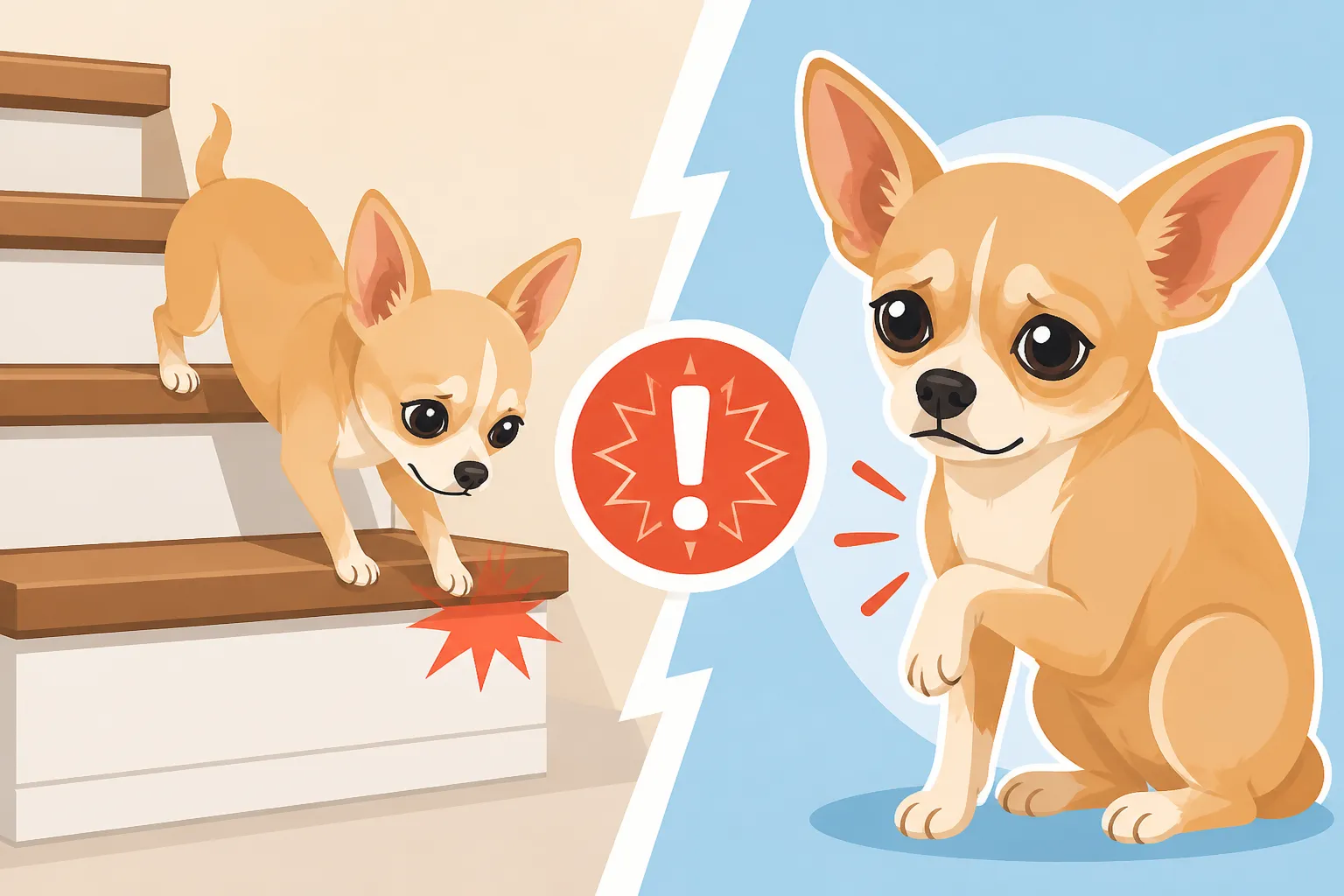
Stairs and Jumping That Hurt a Chihuahua
It’s easy to look at your tiny Chihuahua, see them zip across the floor, and assume their small size makes them invincible when it comes to jumping off the sofa or navigating a flight of stairs. Many of us have watched our little companions launch themselves fearlessly, thinking, "They're so agile, it's fine!" But as many devoted Chihuahua parents sadly discover, those seemingly small leaps can lead to big, painful problems down the line. This guide is all about understanding why stairs and jumping pose such a significant risk to your little companion and, most importantly, how to create a safer home environment to protect their delicate joints and spine.
The Unique Vulnerabilities of a Chihuahua's Body
When you hold a Chihuahua, you feel just how delicate they are. Their tiny bones, shallow joints, and compact spine are simply not built for the impact and twisting motions that larger breeds might tolerate. This isn't about being clumsy; it's about fundamental differences in skeletal structure and body mass distribution. Imagine a full-sized human jumping off a small step versus a child doing the same – the relative impact can be quite different. For a Chihuahua, a jump from even a standard sofa height is like a human leaping from a significant height, putting immense strain on their small frame.
Delicate Bone Structure and Joint Mechanics
Chihuahuas possess a remarkably fine bone structure, which is part of what gives them their dainty appearance. However, this delicate framework means their bones are more susceptible to fractures and micro-traumas from repeated high-impact activities like jumping. Beyond just bones, their joints are particularly vulnerable. Many Chihuahuas are predisposed to conditions like patellar luxation, where the kneecap slips out of its groove. Patellar Luxation, the Chihuahua's Commonest Joint Problem is a common concern, and a hard landing or a sudden twist from a jump can easily exacerbate this issue or even cause it in a previously unaffected dog. The shallow nature of their knee joint's trochlear groove, where the patella (kneecap) sits, means there's less anatomical security to begin with, making external forces from jumping or landing especially destabilizing.
Furthermore, a Chihuahua's small size often means their muscles are proportionally less developed to cushion these impacts compared to a larger, more muscular breed. They might have boundless energy and the desire to be wherever you are, but their physical construction isn't always up to the task of their adventurous spirit. Repeated stress on these delicate joints can lead to inflammation and degeneration over time, laying the groundwork for chronic pain and mobility issues as they age.
Spinal Stress and Disc Concerns
While patellar luxation often gets the spotlight for Chihuahuas, their spine is equally, if not more, at risk from jumping and stair use. Chihuahuas, like many small breeds, can be prone to intervertebral disc disease (IVDD), where the cushions between their vertebrae either bulge or rupture, pressing on the spinal cord. Each jarring landing from a jump, or the repeated strain of navigating stairs, sends a shockwave up their spine. This constant compression and twisting motion can contribute to the breakdown of these vital discs.
Think about it: every time your Chihuahua launches off a bed, they are landing with force on their tiny paws, and that force travels directly into their leg joints and then into their back. The sudden impact, especially if they land awkwardly, can cause significant trauma to the discs. Over time, this cumulative stress can lead to inflammation, pain, nerve damage, and in severe cases, paralysis. It’s not just big, dramatic falls that are dangerous; even seemingly minor daily jumps can contribute to long-term spinal degradation. Protecting their back is just as crucial as protecting their knees. You can read more about specific issues in Chihuahua Back and Neck Pain.
Common Injuries from Jumps and Stairs
The innocent acts of leaping onto the sofa or trotting down the stairs can have serious, sometimes life-altering, consequences for Chihuahuas. Owners often don't realize the extent of the danger until an injury occurs, which is why prevention is so critical. These injuries range from acute, sudden trauma to gradual, degenerative conditions that worsen over time with repeated stress.
Patellar Luxation and Cruciate Ligament Tears
As mentioned, patellar luxation is a hallmark issue for Chihuahuas. This condition means the kneecap (patella) moves out of its normal groove. Jumping, especially from heights, puts immense pressure on this joint. A bad landing can force the patella out of place, causing sudden pain and lameness. While some dogs might "pop" it back in themselves, repeated luxations cause wear and tear on the joint cartilage, leading to arthritis and further instability. The Four Grades of a Slipping Chihuahua Kneecap explains the progression of this issue.
Even more severe are cruciate ligament tears. The cranial cruciate ligament (CCL) in a dog's knee is analogous to the ACL in humans. A sudden twist, a misstep while jumping down, or a hard impact on an already compromised knee can tear this ligament. This is an incredibly painful injury that almost always requires surgery to correct, followed by a long, challenging recovery period. Imagine the cost, the pain for your little one, and the frustration for you. It’s a stark reminder that these small bodies aren't invincible. The long-term effects of uncorrected patellar luxation can also increase the risk of a CCL tear, as the abnormal movement stresses other knee structures. You might notice a distinctive gait associated with knee problems, like The Skipping Step That Means a Chihuahua Knee.
Spinal Injuries and Disc Herniations
Beyond patellar issues, spinal trauma is a grave concern. A hard landing can cause a disc in your Chihuahua’s spine to herniate or rupture, leading to immense pain, nerve compression, and potential neurological deficits. This is known as intervertebral disc disease (IVDD). Symptoms can vary from mild pain and reluctance to move to complete paralysis of the hind limbs. The sudden jarring motion of a jump can push a disc out of place or cause it to extrude its contents, compressing the delicate spinal cord.
The consequences of IVDD can be devastating. Emergency veterinary care, including specialized imaging like MRIs, and potentially complex spinal surgery, can be required. Even with surgery, recovery is often extensive, involving strict crate rest, pain medication, and physical rehabilitation. Preventing these injuries is far less traumatic and costly than treating them. This is why careful home modifications are not just helpful; they’re often essential for a Chihuahua's long-term health.
Fractures and Soft Tissue Damage
While less common than joint or spinal issues, a severe fall or awkward jump can certainly lead to fractures in a Chihuahua's delicate leg bones. Because their bones are so fine, they can break more easily than a larger dog's. A fall from a significant height, like off a tall bed or kitchen counter, can result in a broken leg or even more serious injuries.
Beyond bones, soft tissue injuries like sprains and strains are also common. A Chihuahua might pull a muscle or strain a ligament in their leg or back from a clumsy jump or a sudden twist while navigating stairs. These injuries, while not always as dramatic as a fracture or disc rupture, can still cause considerable pain, limping, and require rest and pain management. Repeated soft tissue injuries can also weaken the affected areas, making them more prone to further injury or developing chronic Chihuahua Arthritis in the Teenage Years.
Creating a Safer Home Environment
The good news is that preventing these injuries is largely within our control as dedicated Chihuahua parents. By making a few thoughtful adjustments around the house, you can drastically reduce the risks associated with jumping and stairs, ensuring your little one can move about safely and comfortably.
Ramps and Steps for Furniture Access
One of the most effective ways to protect your Chihuahua is to provide easy, low-impact access to their favorite elevated spots. Instead of letting them launch themselves off the sofa or struggle to climb onto your bed, invest in pet ramps or steps. These come in various sizes and styles, so you can find ones that match your furniture and your home décor. Brands like Chewy and Amazon offer a wide selection, from carpeted ramps that provide good traction to sturdy wooden steps designed specifically for small breeds.
When choosing a ramp or set of steps, consider the height of the furniture they need to access and the incline of the ramp. A gradual incline is always better than a steep one, as it places less stress on their joints. Similarly, steps should be shallow enough for their short legs to navigate easily. Place them strategically at all key furniture points where your Chihuahua likes to cuddle up, such as beside the sofa, your armchair, and the bed. Consistency is key; teach them to use these aids every time, rather than letting them revert to jumping. You'd be surprised how quickly they adapt when it means easier access to snuggle time! You can learn more about specific solutions in Ramps and Steps for a Chihuahua Sofa.
| Feature | Pet Steps | Pet Ramp |
|---|---|---|
| Best For | Confident climbers, lower furniture | Anxious dogs, dogs with mobility issues, higher beds |
| Space | Generally more compact | Can be longer, requiring more floor space |
| Incline | Series of flat surfaces | Continuous, gentle slope |
| Joint Impact | Minimal, but requires lifting legs | Very low impact, continuous support |
| Training Ease | May require more encouragement to step up | Often easier for dogs to grasp the concept of walking up |
| Portability | Often lightweight and foldable | Can be heavier, but some models are portable |
Restricting Stair Access
Stairs can be particularly hazardous for Chihuahuas. The repeated jarring motion of going down, and the strain of climbing up, can both contribute to joint and spinal problems. If you have stairs in your home, consider restricting your Chihuahua's access, especially if they are young, elderly, or have known joint issues.
Baby gates or pet gates are an excellent solution. Place them at the top and bottom of staircases to create a clear boundary. This means you’ll be doing a bit more carrying, but it’s a small price to pay for your dog's long-term health. When carrying your Chihuahua, always support their entire body, especially their hindquarters and back, to prevent accidental twists or falls. Never carry them by just their front legs or under their chest, as this can put strain on their spine. Think of it as a crucial safety measure, just like childproofing for toddlers. For senior Chihuahuas, limiting stair access becomes even more paramount to manage Chihuahua Arthritis in the Teenage Years and other age-related mobility issues.
Thoughtful Handling and Carrying
It might sound obvious, but how you pick up and carry your Chihuahua makes a huge difference. Because they're so small, many people scoop them up without thinking, but improper handling can cause injury. Always use two hands, supporting their chest and hindquarters, ensuring their spine is straight and not bent awkwardly. Lift them smoothly and gently, avoiding sudden movements that might startle them or cause them to wriggle free.
Teaching children how to properly handle a Chihuahua is also vital. Young kids often don't understand how delicate these tiny dogs are, and rough handling or accidental drops can be devastating. Supervise interactions closely and teach kids to sit on the floor when cuddling, ensuring the Chihuahua doesn't have far to fall. Encouraging guests to ask before they pick up your dog is also a good habit, allowing you to ensure safe handling or politely decline if your dog isn't comfortable.
Training for Safe Movement and Joint Longevity
While physical modifications to your home are crucial, training also plays a significant role in protecting your Chihuahua from jumping-related injuries. You can teach them how to navigate their world more safely, building good habits that safeguard their joints and spine for years to come.
Teaching to Use Ramps and Steps
It's one thing to buy pet steps, another to get your Chihuahua to actually use them. The key is positive reinforcement and patience. Start by luring them onto the first step or the bottom of the ramp with high-value treats. Hold a treat at the top of the step or ramp and encourage them to walk up. As soon as they take a step or two, praise them enthusiastically and give them the treat. Repeat this process, gradually increasing the distance they need to travel.
Make it a fun game, not a chore. Place their favorite toy at the top, or have their meal waiting for them at the highest point. Some Chihuahuas are naturally cautious, so take it slow and never force them. If they seem hesitant, try a ramp first, as the continuous surface can feel less daunting than individual steps. Once they're comfortable going up, practice going down the same way. Consistent training over a few days or weeks will build their confidence and make using the mobility aids second nature. Regular practice will reinforce this new, safer behavior and make it a habit.
Managing Excitement and Impulsive Jumping
Chihuahuas are often bundles of joy and excitement, especially when you walk through the door. This enthusiasm, while endearing, can lead to impulsive jumps and leaps that put them at risk. Training can help channel this energy into safer behaviors. Instead of letting them jump on you to greet you, teach them an alternative, like "sit" or "four on the floor" (meaning all four paws on the ground).
When you arrive home, pause at the door and wait for them to calm down before offering greetings. If they jump, turn your back and walk away for a few seconds, then try again. When they keep all four paws on the ground, immediately reward them with praise and a treat. This teaches them that calm behavior gets attention, while jumping does not. Consistent practice, especially during exciting moments like meal times or when guests arrive, will help them learn to manage their impulses and keep their paws safely on the ground.
Building Core Strength for Support
While you want to prevent jumping, you do want to encourage controlled, low-impact exercise to build and maintain strong muscles, which provide essential support for their joints and spine. Regular, gentle walks are excellent. A well-fitting harness, rather than a collar, is crucial for Chihuahuas to protect their delicate trachea and neck, particularly during walks. You can find comfortable, small harnesses on Chewy or Amazon that distribute pressure evenly.
Beyond walks, consider gentle indoor exercises. Structured play sessions with toys can help, as can simple "doggy push-ups" (sit-stand-sit repeats) or short, slow weaves between your legs. These activities build core strength and improve proprioception (their awareness of their body in space) without putting undue stress on their joints. Consult your vet or a certified canine rehabilitation therapist for specific exercises tailored to your Chihuahua's age and health status. A healthy weight, supported by quality nutrition, is also vital. Some dog food providers like Ollie offer fresh, balanced meals that can be formulated to support overall health, including joint health through appropriate nutrient levels. Keeping them lean is one of the best ways to protect their joints, as even a small amount of extra weight puts significant strain on their tiny frame. What One Extra Pound Does to a Chihuahua can be quite impactful.
The Long-Term Impact of Repeated Joint Stress
The choices we make for our Chihuahuas today have a profound effect on their quality of life years down the road. Ignoring the dangers of jumping and stairs might seem harmless in the moment, but the cumulative effect of repeated stress on their tiny bodies can lead to chronic conditions that significantly diminish their comfort and mobility as they age.
Early Onset Arthritis
Every time a joint takes a hard impact, or a kneecap slips out of place, it causes microscopic damage to the cartilage. Cartilage is the smooth, protective tissue that allows bones to glide past each other without friction. Once this cartilage is damaged, it doesn't repair itself perfectly. Instead, the body tries to compensate, often laying down new, rougher bone, leading to inflammation and pain – the hallmarks of arthritis.
For Chihuahuas, this means that repeated jumping from furniture or daily stair use can lead to the early onset of Chihuahua Arthritis in the Teenage Years, sometimes appearing even before they reach their senior years. While arthritis is often considered an age-related disease, chronic joint stress can accelerate its development. Imagine your precious companion struggling with stiff, painful joints at a relatively young age, making simple movements a chore. It's a heartbreaking prospect, but one that can largely be mitigated through proactive prevention and careful management of their environment.
Chronic Pain and Mobility Issues
The long-term consequence of early arthritis, untreated patellar luxation, or recurring spinal issues is often chronic pain. This pain isn't always obvious; Chihuahuas are masters at hiding discomfort. You might notice subtle changes: a reluctance to jump, slower movements, less enthusiasm for walks, irritability, or even changes in their house training habits. This isn't just about their physical comfort; chronic pain impacts their mental well-being, their personality, and their overall enjoyment of life.
Eventually, these issues can lead to significant mobility problems. A Chihuahua might struggle to stand up, walk, or even get comfortable lying down. This can necessitate ongoing pain management, physical therapy, and even more extensive home modifications as they enter their senior years. Mobility Help for a Fifteen Year Old Chihuahua becomes crucial for dogs facing such challenges. Preventing these long-term issues by being mindful of their environment from day one is truly an act of love. It allows your Chihuahua to enjoy a longer, more comfortable, and active life by your side, free from preventable pain and limitations.
Disclaimer
This article is for general informational purposes only and does not constitute professional advice. Laws, prices and regulations vary by location and change over time. Consult a qualified professional for guidance on your specific situation.