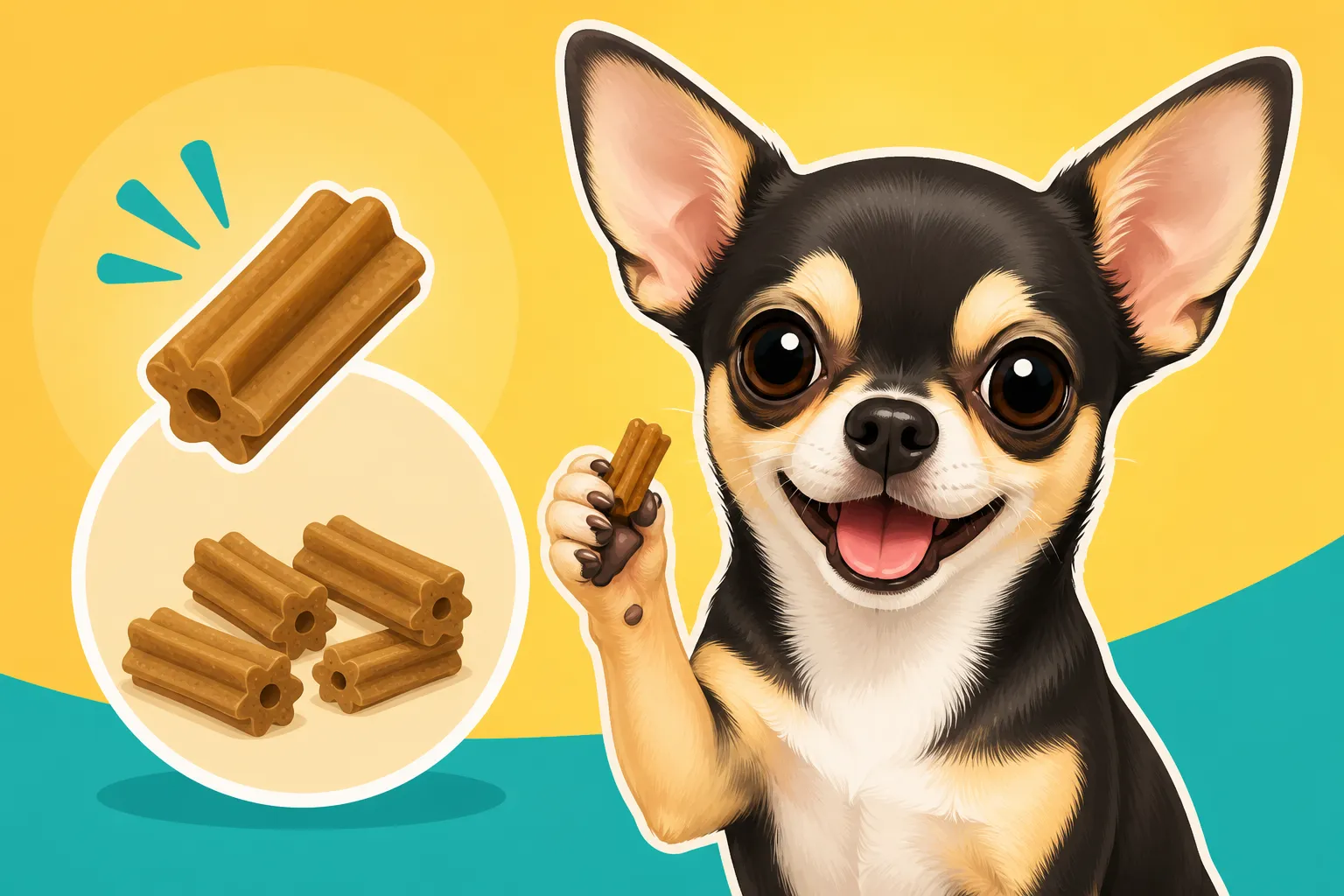
Dental Chews Small Enough for a Chihuahua
One of the biggest struggles we face as Chihuahua owners is ensuring our little companions have healthy teeth. It feels like every time you blink, tartar is building up again, and finding dental chews that are actually safe and effective for such tiny mouths can feel like an impossible quest. This guide is here to walk you through exactly what to look for in dental chews that genuinely help your Chihuahua's oral health, without posing a risk.
The Unique Dental Challenges of Chihuahuas
It's no secret that Chihuahuas are prone to dental problems. As loving owners, we often feel like we're fighting a losing battle, and it's frustrating to see our tiny friends suffer from issues that seem to plague them more than larger breeds. Understanding why this happens is the first step in tackling it effectively.
Why Chihuahuas Need Extra Dental Care
Chihuahuas have incredibly small jaws, which often means their teeth are simply too big for the space they have. This leads to what veterinarians call "tooth crowding," where teeth are packed too tightly together, sometimes even overlapping. This crowding creates nooks and crannies where food particles and bacteria love to hide, making it a perfect breeding ground for plaque and tartar. Unlike larger dogs who might get away with less diligent dental care for a while, a Chihuahua's small mouth can accumulate significant tartar buildup at an alarming rate, often starting when they're surprisingly young. It's not uncommon to see visible tartar on a Chihuahua's teeth by age three, sometimes even earlier. This rapid accumulation quickly leads to gingivitis and then periodontitis, which is the full-blown dental disease we all dread. If you've ever wondered why your Chihuahua seems to need dental cleanings more often, this is why – their anatomy sets them up for it. Many Chihuahuas also experience Chihuahua Tooth Crowding and Retained Baby Teeth, where their puppy teeth don't fall out when the adult teeth emerge, doubling the trouble by creating even more spots for plaque to gather. All these factors contribute to why Chihuahua Dental Disease in a Crowded Small Jaw is such a prevalent issue for our beloved little ones.
The Problem with Standard Dental Chews
When you walk into a pet store, the dental chew aisle is usually overflowing, but how many of those options are truly suitable for a Chihuahua? Most of them are simply too large, designed for a Labrador or a German Shepherd, not a six-pound dog. Offering a chew that's too big not only means your Chihuahua can't get their mouth around it properly to clean their teeth, but it also creates a significant choking hazard. Imagine trying to eat a bagel designed for an adult human when you're a toddler – it’s just not going to work safely or effectively.
Beyond size, the hardness of many standard dental chews is another major concern. Some chews are so rock-hard that they can actually fracture a Chihuahua's tiny, delicate teeth. This is a painful and expensive problem to fix, often requiring extractions and potentially general anesthesia, which always carries some Anesthesia Risk During a Chihuahua Dental. Then there's the issue of digestibility and calorie count. Many dental chews, even small ones, are packed with calories, and for a Chihuahua living on a tight Daily Calories for a Three to Seven Pound Chihuahua budget, those extra calories can quickly lead to unwanted weight gain, pushing them towards Chihuahua Obesity on a Six Pound Frame. Owners often lament that their Chihuahuas either ignore the chews, try to swallow them whole, or just get frustrated because they can't properly chew them. It feels like throwing money away on something that just doesn't work for their unique needs.
What Makes a Dental Chew "Chihuahua-Friendly"?
Navigating the world of dental chews for a Chihuahua requires a bit more discernment than for a larger dog. It's not just about picking up the smallest package on the shelf; it's about understanding the specific needs of their tiny mouths and delicate digestive systems.
Size and Shape Considerations
When we talk about "small enough" for a Chihuahua, we're not just looking for something labeled "toy breed." We need to consider the actual dimensions and how your particular Chihuahua's mouth can manipulate it. Ideal dental chews for Chihuahuas should be long and thin, or small and disc-shaped, allowing them to easily get their teeth around it and actually chew, rather than just try to gulp it down. Think about something roughly the size of your pinky finger or a quarter, rather than a thick bone-shaped treat. The goal is to encourage a chewing motion that scrapes against the tooth surface, not just a quick swallow. If a chew is too wide, they can't get their jaws around it properly. If it's too short, they might try to swallow it whole, which is a significant choking risk. You want a shape that forces them to engage their molars and canines, cleaning all those tight spots where Chihuahua Tartar Building Up by Age Three often begins.
Texture and Hardness for Tiny Teeth
This is where many dental chews fail the Chihuahua test. While we want a chew to provide abrasive action against plaque, it absolutely cannot be so hard that it risks tooth fractures. A good rule of thumb is that if you can't easily break or bend the chew with your hands, it's likely too hard for your Chihuahua's tiny teeth. The texture should be somewhat pliable or have a slight give. It needs to be firm enough to provide mechanical scrubbing action on the tooth surface as they chew, but not so rigid that it puts undue stress on their delicate jaw structure or risks chipping a tooth. Many dental chews specifically formulated for small breeds achieve this by having a more porous or slightly softer, rubbery texture. These materials allow the chew to conform slightly to the tooth, getting into those tight spaces between overcrowded teeth. This balance is crucial because Why Chihuahuas Lose Teeth Younger Than Big Dogs is often tied to the progression of dental disease, and we certainly don't want to accelerate that with inappropriate chews.
Ingredients to Look For and Avoid
Just like with their regular meals, the ingredients in your Chihuahua's dental chews matter. You want to look for ingredients that actively support dental health, but also avoid those that could be detrimental to their overall well-being.
Look For:
- Abrasive Textures: Ingredients like rice flour or cellulose can provide a gentle scrubbing action.
- Enzymes: Some chews contain enzymes like glucose oxidase or lactoperoxidase, which help break down plaque.
- Antimicrobial Agents: Ingredients like zinc gluconate or chlorophyll can help reduce bacteria and freshen breath.
- Limited Calories: Since Chihuahuas have such a small Daily Calories for a Three to Seven Pound Chihuahua budget, opt for chews with lower calorie counts.
- Natural Ingredients: Whole food ingredients, without excessive artificial colors, flavors, or preservatives, are generally preferred.
Avoid:
- Hard Bones or Antlers: These are far too hard and can easily cause tooth fractures.
- Excessive Sugars or Starches: While some starches are used for texture, high sugar content can actually contribute to dental problems and weight gain.
- Artificial Dyes and Flavors: These offer no nutritional or dental benefit and can sometimes cause sensitivities.
- Grain-Heavy Formulas (if your dog has sensitivities): While not inherently bad for dental health, if your Chihuahua has food sensitivities, opt for grain-free options.
- Chews with Poor Digestibility: Some chews can cause upset stomachs or blockages if not easily digested. Always monitor your dog after introducing a new chew.
Choosing wisely means providing a treat that actively works for their oral health without introducing other health issues or risks.
Top Picks and Recommendations for Chihuahua Dental Chews
Finding the perfect dental chew for your tiny terror can feel like a quest for the holy grail, but thankfully, there are some great options out there if you know what to look for. The key is seeking out products specifically engineered for the unique challenges of a Chihuahua's mouth.
Softer, Chewable Options
For Chihuahuas, especially those with sensitive gums, or who are new to dental chews, softer, more pliable options are often the best starting point. These chews tend to be more forgiving on tiny teeth while still providing that essential abrasive action. Brands like Greenies offer "Teenie" or "Petite" sizes that are notably smaller and have a more flexible texture than their larger counterparts. Another excellent option comes from Zuke's Mini Naturals, which aren't strictly dental chews but are so small and soft they can be used effectively for training, allowing you to use them more frequently. Some softer, brush-shaped chews are designed to get into the crevices of tiny teeth, working almost like a mini toothbrush as your dog chews. You can often find these types of chews easily on platforms like Amazon or Chewy, where you can filter by "toy breed" or even "mini." Always check the ingredients and calorie count, as even "soft" chews can sometimes be surprisingly dense in calories. Remember that a chew is still a treat, and those calories add up, especially for a Chihuahua whose entire Daily Calories for a Three to Seven Pound Chihuahua might only be around 200.
Longer-Lasting, Gentle Abrasives
While softer chews are great, some Chihuahuas benefit from a chew that lasts a bit longer, encouraging extended chewing sessions for deeper cleaning. The trick here is finding something that's durable without being hard. Look for chews made from materials like specific starches or plant-based fibers that become more pliable with chewing and saliva, yet still provide a robust texture. Some dental-specific brands create spiral or ridged designs that are excellent for reaching different tooth surfaces and massaging the gums. These types of chews might not seem as "soft" out of the package as the previous category, but they are designed to soften appropriately during chewing, preventing damage to those small teeth. Examples might include certain VOHC-approved chews (Veterinary Oral Health Council) that specifically market small-breed or even "toy" sizes. Always read reviews from other small dog owners, as their experiences can be incredibly insightful when making a selection.
Where to Find Chihuahua-Sized Dental Chews
The good news is that access to appropriate dental chews has never been easier, thanks to online retailers and dedicated pet supply chains.
- Online Retailers: Websites like Amazon and Chewy are fantastic resources. They offer extensive filtering options that allow you to narrow down products by "toy breed," "small size," or even weight range. This can save you hours of searching in brick-and-mortar stores. Plus, you can often read dozens of reviews from other Chihuahua owners to see what has worked well (or not) for their dogs. When ordering online, always double-check the dimensions of the chew if they're listed, to truly gauge if it's appropriate for your particular dog.
- Specialty Pet Stores: Larger pet supply stores like Petco or PetSmart often have dedicated sections for small breed dogs. While the selection might not be as vast as online, you can physically inspect the chews for size and hardness, which is a huge advantage. Don't hesitate to ask store associates for recommendations, though always cross-reference their advice with your own research and veterinarian's guidance.
- Veterinary Clinics: Your vet clinic might carry specific prescription dental chews or recommended brands that they know are safe and effective for tiny mouths. These are often backed by scientific studies and formulated to address specific dental health needs. It's always a good idea to consult your vet before introducing any new dental product, especially if your Chihuahua already has known dental issues or sensitivities.
- Subscription Services: Some pet food subscription services, like Ollie, focus on fresh, high-quality ingredients, and while they might not exclusively offer dental chews, they often include treats that are soft, easily digestible, and portioned appropriately for small dogs. While these might not be "dental chews" in the traditional sense, their focus on quality and digestibility means they're less likely to cause other issues.
Regardless of where you shop, always scrutinize the packaging for explicit sizing recommendations and ingredient lists.
Incorporating Dental Chews into a Chihuahua's Routine
Getting your Chihuahua to actually use a dental chew, and ensuring it contributes positively to their oral health, involves more than just tossing one on the floor. It's about strategic integration and consistent effort as part of a broader dental hygiene plan.
How Often and When to Offer Dental Chews
The frequency with which you offer dental chews depends on a few factors: the chew's caloric content, its effectiveness, and your Chihuahua's overall dental health. For many dental chews, offering one every other day or a few times a week can be beneficial. If the chew is low in calories, you might even be able to offer a small piece daily, but always factor it into their Daily Calories for a Three to Seven Pound Chihuahua to prevent unwanted weight gain.
Timing can also play a role. Some owners find giving a dental chew after a meal helps dislodge any leftover food particles. Others prefer to give it as a special midday treat. What's most important is consistency. If your Chihuahua is prone to Chihuahua Hypoglycemia and the Puppy Emergency, you might want to avoid giving a large, distracting chew right before a meal, as it could delay eating their main food. Instead, consider offering it as part of their Chihuahua Meal Timing Against Low Blood Sugar plan, perhaps as a small, quick chew an hour or so after a main meal. Always consider your dog's individual needs and consult your vet for personalized advice on frequency, especially if they have existing health conditions.
Supervising Chew Time
This cannot be stressed enough: always supervise your Chihuahua when they are enjoying a dental chew. Their small size makes them particularly vulnerable to choking hazards. Some Chihuahuas are "gulpers" – they'll try to swallow a chew whole or in large pieces rather than taking their time to gnaw. This is incredibly dangerous and can lead to choking or internal blockages.
Supervision means being in the same room, actively watching how they interact with the chew. If you notice them struggling, trying to swallow large pieces, or if the chew breaks into sharp shards, immediately remove it. You might need to teach them to "drop it" or "leave it." Consider offering the chew in a quiet, confined space where they won't be distracted or feel the need to guard their treat, which can be an issue for some Chihuahuas who exhibit Chihuahua Food and Toy Guarding. The goal is to ensure they are safely chewing, allowing the product to work its magic on their teeth, not just become a swallow hazard.
Dental Chews as Part of a Comprehensive Dental Plan
While dental chews are a wonderful addition to your Chihuahua's oral hygiene regimen, they are not a standalone solution. Think of them as one tool in a larger toolkit. The gold standard for preventing Chihuahua Dental Disease in a Crowded Small Jaw remains daily tooth brushing. If you're not already doing it, commit to at least The Two Minute Daily Chihuahua Tooth Routine using a brush and paste specifically designed for dogs. Dental chews simply can't reach all the surfaces of every tooth in the same way a physical brush can.
Here's how dental chews fit into the bigger picture:
| Dental Care Component | Purpose | Chihuahua Relevance |
|---|---|---|
| Daily Tooth Brushing | Mechanical removal of plaque, reaching all tooth surfaces. | Essential for their crowded jaws; prevents rapid tartar buildup. |
| Dental Chews | Gentle abrasion, plaque reduction, gum massage; a supplement. | Provides additional scrubbing action, especially helpful for back teeth if sized well. |
| Veterinary Dentals | Professional cleaning, scaling, polishing under anesthesia. | Absolutely necessary to remove hardened Chihuahua Tartar Building Up by Age Three. |
| Water Additives/Gels | Inhibits bacterial growth, freshens breath; supplemental. | Offers continuous, low-level support, but doesn't replace brushing or chews. |
| Appropriate Diet | Supports overall health, some kibbles designed for dental health. | Important for managing calorie intake and promoting general well-being. |
Ultimately, regular veterinary check-ups are paramount. Your vet will assess your Chihuahua's dental health and recommend professional cleanings as needed. These professional cleanings, while an investment (you can read more about The Yearly Chihuahua Dental Cleaning Bill), are crucial for removing calculus that daily brushing and chews simply can't touch. By combining all these efforts, you give your Chihuahua the best possible chance at a long, healthy life free from the pain and complications of severe dental disease.
Disclaimer
This article is for general informational purposes only and does not constitute professional advice. Laws, prices and regulations vary by location and change over time. Consult a qualified professional for guidance on your specific situation.