Wet Food and Chihuahua Dental Disease
It's a common dilemma, isn't it? You want to give your beloved Chihuahua the very best, and often, wet food seems like a fantastic option. It's palatable, easy for tiny mouths, and feels like a treat. But then you hear whispers, or worse, outright warnings, about wet food contributing to dental disease, and suddenly, that easy meal comes with a side of worry. This guide will walk you through the real connection between wet food and the unique dental challenges Chihuahuas face, helping you make informed choices without the guilt or confusion.
The Appeal and Reality of Wet Food for Chihuahuas
Let's be honest, there's a strong pull towards feeding our tiny companions delicious, soft food. It just looks more appealing, both to us and often to them! But it's important to understand the various facets of wet food before we dive into its dental implications.
Why Wet Food Seems Like a Good Idea
For many Chihuahua owners, wet food feels like a natural fit. First off, palatability is a huge factor. Chihuahuas, like many toy breeds, can sometimes be notoriously picky eaters. A fragrant, meaty wet food often stimulates their appetite in a way dry kibble simply can't. Imagine offering a tiny bowl of savory stew versus dry crunchies – it's no wonder your little one might prefer the former! This can be especially true for puppies transitioning from mother's milk or older Chihuahuas who might have a diminished sense of smell or taste.
Then there's the ease of eating. Those little mouths, those tiny teeth! Sometimes even small kibble can seem like a monumental task for a Chihuahua to chew. Wet food, by its very nature, is softer and easier to lap up or gently chew. This is a significant consideration for Chihuahuas with jaw issues, sensitive gums, or those who may already be missing a few teeth. Plus, many wet foods boast higher moisture content, which can be a bonus for Chihuahuas who don't drink as much water as they should, helping to keep them hydrated throughout the day. You might find a wide variety of these specialized wet foods, often available through retailers like Chewy, which cater to specific dietary needs or preferences.
The Nutritional Landscape of Wet Food
When we talk about wet food, it's not a single, monolithic category. Just like dry kibble, there's a vast range in quality, ingredients, and nutritional balance. Some wet foods are packed with high-quality protein sources, beneficial fats, and easily digestible carbohydrates, offering a complete and balanced meal. Brands like Ollie, for instance, specialize in fresh, human-grade food that's often served in a softer, more palatable form, specifically portioned for your dog. Others might be laden with fillers, artificial flavors, and less-than-ideal ingredients, making them less than optimal for your Chihuahua's overall health, regardless of dental considerations.
It's crucial to scrutinize ingredient lists. Look for whole meat as the first ingredient, and be wary of products with excessive by-products or vague "meat meals" further up the list. Also, consider the calorie density. Wet food often has fewer calories per gram than dry kibble due to its high moisture content. This means your Chihuahua might need to eat a larger volume of wet food to get the same caloric intake, which can be a good thing if they need to gain weight, but something to monitor closely to prevent overfeeding and obesity. Understanding these nutritional differences is the first step in making informed decisions for your Chihuahua's diet.
How Wet Food Contributes to Dental Disease
This is where the rubber meets the road, or rather, where the soft food meets the tooth. While wet food has its undeniable benefits, its texture and composition do present specific challenges for your Chihuahua's oral health.
The Mechanism of Plaque and Tartar Buildup
The primary reason wet food gets a bad rap for dental health comes down to physics and chemistry. Dry kibble, even if it's small, offers some degree of mechanical abrasion against the tooth surface as your dog chews. This isn't to say kibble is a magic toothbrush (it's not!), but it provides a mild scraping action that can help dislodge food particles and some plaque.
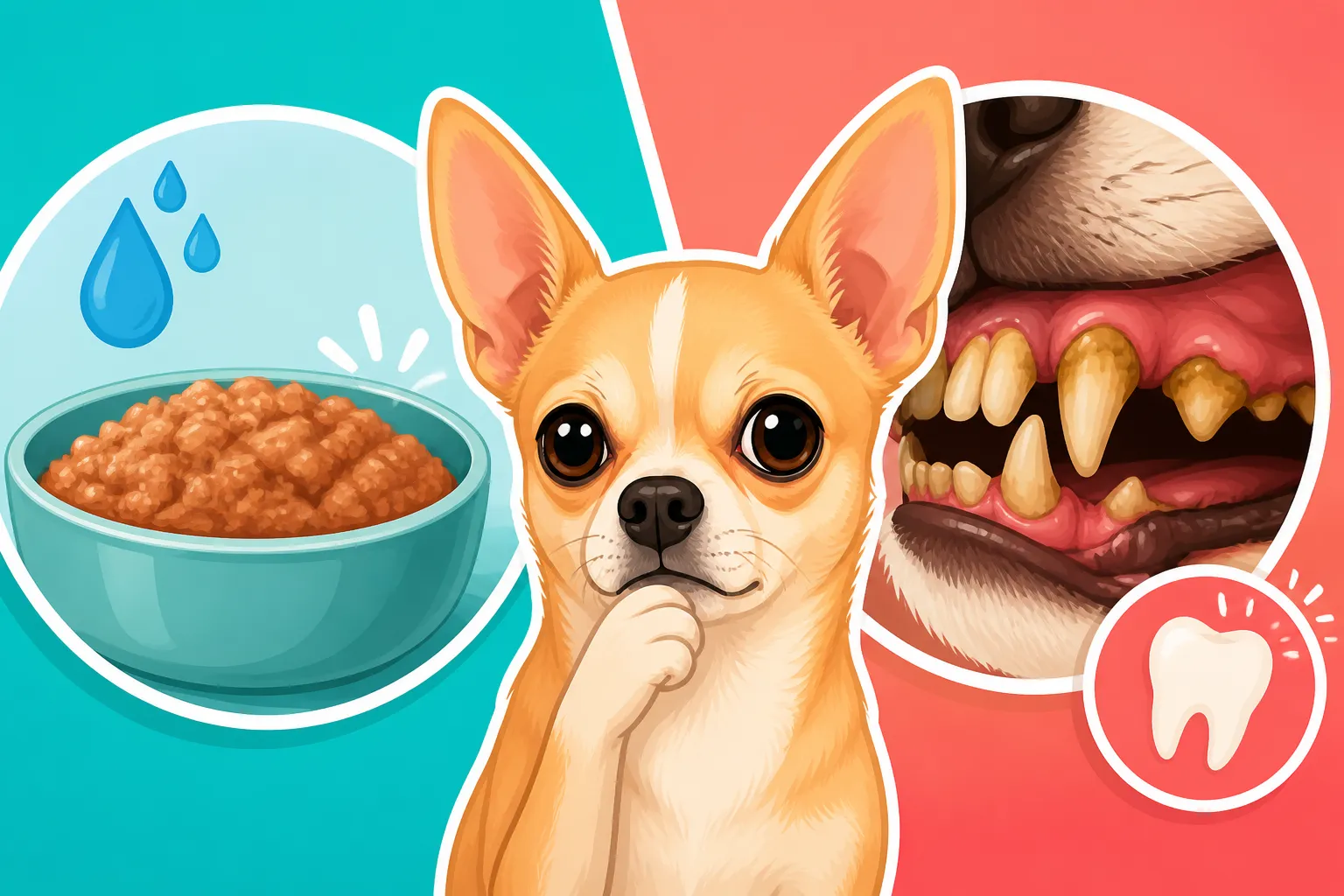
Wet food, on the other hand, is soft. It typically requires very little chewing, often being licked or gently mashed. This means there's almost no mechanical action to clean the teeth. What's more, the sticky, soft consistency of many wet foods can adhere more readily to the tooth surface and gum line. These lingering food particles, combined with bacteria naturally present in the mouth, quickly form a sticky film called plaque. If this plaque isn't removed through brushing or other means, it hardens into tartar (or calculus) within a matter of days. Tartar is rough and porous, providing an ideal surface for even more plaque and bacteria to accumulate, leading to inflammation of the gums (gingivitis) and eventually, periodontal disease. This is a serious concern, as Chihuahua Dental Disease in a Crowded Small Jaw is already such a prevalent issue for the breed.
The Chihuahua's Unique Dental Challenges
It’s not just the wet food; it's the wet food combined with the Chihuahua's predisposed dental anatomy that really compounds the problem. Chihuahuas have small mouths, but they're still expected to fit the same number of teeth as much larger breeds. This often results in severely Chihuahua Tooth Crowding and Retained Baby Teeth. When teeth are crowded, they overlap, twist, or are too close together, creating tiny nooks and crannies where food particles and bacteria can easily hide. These tight spaces are nearly impossible for even dedicated brushing to reach effectively, let alone the minimal cleaning action of dry kibble.
Furthermore, Chihuahuas are known for retaining their puppy canines, leading to a double set of teeth that trap even more debris. This inherent crowding means that any food that sticks to the teeth, like soft wet food, has ample opportunity to fester in these hard-to-clean areas, accelerating the development of plaque and tartar. Without regular intervention, this can lead to gum recession, bone loss, and eventually, painful tooth extractions. It's a sad reality that Why Chihuahuas Lose Teeth Younger Than Big Dogs is often tied back to these anatomical challenges and the diet they consume. The combination of wet food's sticky nature and the Chihuahua's crowded mouth creates a perfect storm for rapid dental decay.
Mitigating Dental Risks While Feeding Wet Food
The good news is that feeding wet food doesn't automatically condemn your Chihuahua to a life of dental woes. With proactive and consistent dental care, you can absolutely enjoy the benefits of wet food while keeping your pup's pearly whites as healthy as possible.
The Importance of Daily Dental Hygiene
Let's be clear: when feeding wet food, daily dental hygiene transitions from a recommendation to an absolute necessity. Brushing your Chihuahua's teeth every single day is the single most effective way to combat plaque and tartar buildup. Think of it like brushing your own teeth – you wouldn't go days without it, especially after eating sticky foods. For Chihuahuas, a small, soft-bristled toothbrush and a dog-specific enzymatic toothpaste are your best friends. Start slowly, make it a positive experience with treats and praise, and aim for at least two minutes, focusing on the outside surfaces of the teeth where plaque accumulates most. For more detailed guidance, check out Brushing a Chihuahua's Teeth Every Single Day.
Beyond brushing, consider incorporating dental rinses or water additives into their routine. These products, often containing ingredients that help reduce bacteria or loosen plaque, can provide an extra layer of defense, especially in those crowded areas you can't quite reach with a brush. You can find a wide selection of these dental care aids on platforms like Chewy or Amazon. While they are never a substitute for brushing, they can certainly support your efforts.
Incorporating Dental Chews and Appropriate Toys
Another excellent strategy is to provide dental chews designed to help clean teeth. The key here is "designed for dental health" and "size-appropriate." Not all chews are created equal. Look for dental chews that are soft enough not to break your Chihuahua's tiny teeth but firm enough to provide some abrasive action as they chew. Avoid anything too hard, like real bones or antlers, which can easily fracture small teeth. You also want to ensure the chew is the right size – too large, and your Chihuahua might struggle with it; too small, and it could be a choking hazard.
Furthermore, certain chew toys can encourage healthy chewing habits. Rubber toys with nubs or grooves can help massage gums and gently scrape teeth. Always supervise your Chihuahua with any new chew or toy to ensure it's safe and doesn't pose a choking risk. These supplemental chewing activities, when chosen carefully, can contribute to reducing plaque and keeping gums stimulated.
Regular Veterinary Dental Check-ups and Cleanings
Even with the most diligent home care, professional veterinary dental cleanings are a non-negotiable part of Chihuahua ownership, especially if feeding wet food. These cleanings, performed under anesthesia, allow your vet to thoroughly scale away plaque and tartar, both above and below the gum line. They can also perform dental X-rays to check for problems lurking beneath the surface, such as abscesses or bone loss, which are common in these little dogs. We all dread the bill, but understanding The Yearly Chihuahua Dental Cleaning Bill and budgeting for it is a crucial part of responsible ownership.
Your vet will assess your Chihuahua's overall health and recommend appropriate pre-anesthetic bloodwork to ensure they are a good candidate for the procedure, addressing concerns like Anesthesia Risk During a Chihuahua Dental. Don't wait until you notice severe bad breath or obvious signs of pain. By then, the disease is often advanced. Regular check-ups allow your vet to monitor their oral health and recommend cleanings before problems become severe. Many Chihuahuas benefit from annual or bi-annual cleanings due to their predisposition to dental issues.
| Dental Care Strategy | Description | Frequency | Key Benefit |
|---|---|---|---|
| Tooth Brushing | Using a dog-specific brush and enzymatic toothpaste. | Daily | Direct removal of plaque, prevents tartar formation. |
| Dental Chews | Size-appropriate, vet-approved chews for mechanical cleaning. | Daily or several times/week | Reduces plaque, satisfies chewing instinct. |
| Water Additives | Liquid added to drinking water to reduce bacteria/plaque. | Daily | Helps inhibit bacterial growth throughout the mouth. |
| Professional Cleaning | Full dental scaling, polishing, and X-rays under anesthesia by a vet. | Annually/Bi-annually (as advised) | Removes hardened tartar, addresses subgingival disease. |
| Oral Rinses | Antiseptic rinses applied directly to the gums and teeth. | As recommended | Reduces bacteria, freshens breath, supports gum health. |
Balancing Wet Food with Dental Health Strategies
So, how do you manage to give your Chihuahua the wet food they love while still protecting their tiny teeth? It's all about strategic feeding and a comprehensive dental care plan.
Hybrid Feeding Approaches
One of the most practical solutions for many Chihuahua owners is a hybrid feeding approach. This involves combining wet food with a diet specifically formulated for dental health, or even just incorporating some dry kibble. For example, you might offer wet food for one meal and dental-specific kibble for another. Or, you could use a small amount of wet food as a topper or "flavor enhancer" for their regular dry food. This way, your Chihuahua gets the palatability and moisture of wet food while still benefiting from some of the mild mechanical cleaning action of dry kibble.
When adopting a hybrid approach, remember to carefully calculate your Chihuahua's daily calorie needs. It's easy to overfeed when mixing different food types, leading to unwanted weight gain, which can exacerbate other health issues. Always measure portions accurately using a kitchen scale, not just a scoop. This method allows you to strike a balance between dietary preference and dental health, ensuring your Chihuahua receives all the necessary nutrients without compromising their oral hygiene.
When Wet Food is Medically Necessary
There are certainly times when wet food isn't just a preference, but a medical necessity. Older Chihuahuas, for instance, might suffer from severe tooth loss or painful gum disease, making it incredibly difficult for them to chew dry kibble. For these seniors, a soft, easily digestible wet food ensures they continue to get adequate nutrition and hydration. If you have an older Chihuahua who is struggling to eat, reading up on Feeding an Old Chihuahua That Has Lost Molars can offer valuable insights.
Chihuahuas with certain health conditions, such as kidney disease or inflammatory bowel disease, might also require a prescription wet diet. In these cases, the therapeutic benefits of the wet food far outweigh the dental risks, especially when those risks are actively managed through diligent home care and regular veterinary cleanings. You might also find that Chihuahuas recovering from oral surgery or dealing with severe jaw pain need a soft food diet temporarily.
In these situations, the focus shifts even more heavily onto your at-home dental care routine. Daily brushing becomes absolutely critical, and your vet might recommend additional measures like medicated rinses or specialized supplements to support oral health. The goal is to ensure your Chihuahua remains comfortable, nourished, and as free from dental pain as possible, even when their primary diet isn't the most "dental-friendly." It's about tailoring the care to the individual needs of your precious companion.
Disclaimer
This article is for general informational purposes only and does not constitute professional advice. Laws, prices and regulations vary by location and change over time. Consult a qualified professional for guidance on your specific situation.