Chihuahuas in Early American Show Rings
It's truly fascinating to look back at the origins of our beloved Chihuahuas in the American show ring. For many of us, the image of a perfectly groomed, confident little dog strutting its stuff under the bright lights of a modern dog show feels entirely normal, but it wasn't always this way. This tiny breed had a long and sometimes challenging journey to gain acceptance and recognition in the nascent American dog fancy, facing skepticism and the monumental task of establishing a breed standard from scratch. This guide will take you on a journey through time, exploring how Chihuahuas first entered the competitive arena, the people who championed them, and the unique hurdles they overcame to become the show ring darlings we know today.
The Dawn of Chihuahua Recognition in America
Imagine a time when the Chihuahua was not the widely recognized breed it is today, but rather an exotic curiosity. This was the landscape of late 19th and early 20th century America, where the breed was just beginning its foray into the public eye and, eventually, the competitive show circuit.
From Mexican Strays to American Homes
The story of the Chihuahua in America really begins south of the border, in its native Mexico. Travelers and merchants, particularly those in the American Southwest, started encountering these small, spirited dogs and bringing them back across the border. They were often found as companion animals in Mexican villages, sometimes even living semi-feral, but always captivating with their tiny size and bold personalities. These early Chihuahuas weren't necessarily the refined specimens we see today; they were more rustic, reflecting their diverse origins. As more Americans brought them home, often as souvenirs or unique pets, their charm quickly spread. It wasn't long before some forward-thinking individuals saw beyond the "curiosity" factor and recognized the potential for these dogs to be something more than just personal companions. They envisioned a future where the Chihuahua could stand proudly alongside other established breeds in the rapidly growing world of dog shows. This early period was crucial for building the breed's initial foothold and sparking the interest that would lead to formal recognition. You can learn more about this initial journey in How Americans Found Chihuahuas in the 1800s.
The Pioneer Exhibitors and Their Vision
Bringing a relatively unknown breed, especially one as diminutive and distinct as the Chihuahua, into the formal show ring was no small feat. It required a unique blend of passion, perseverance, and a willingness to challenge the prevailing norms of the dog fancy. These pioneer exhibitors were often individuals who had fallen in love with the breed and believed in its inherent qualities, even if those qualities didn't yet align with any formalized standard. They scoured the Southwest and even traveled into Mexico to find dogs that they felt best represented the breed's potential. They faced the challenge of educating judges and the public, many of whom were accustomed to larger, more traditional breeds like terriers or hounds. Imagine presenting a tiny, apple-headed dog with huge ears next to a stately Collie or an imposing Bulldog! These early champions had to articulate what made the Chihuahua special, highlighting its intelligence, loyalty, and unique physical characteristics, paving the way for eventual acceptance. Their dedication was instrumental in moving the Chihuahua from an obscure regional dog to a contender in national competitions.
Navigating the Early Show System
Once Chihuahuas started appearing in American homes, the desire to formalize their presence and celebrate their unique qualities led to their introduction into the burgeoning world of dog shows. This transition was filled with challenges, from defining their very essence to figuring out how to showcase such a small animal effectively.
Establishing the Breed Standard
One of the most critical steps for any breed to gain legitimacy in the show ring is the establishment of a breed standard. This document outlines the ideal physical characteristics and temperament traits that judges use to evaluate dogs in competition. For the Chihuahua, this was a collaborative effort, drawing on observations of the dogs being imported and bred, as well as discussions among early enthusiasts. The early American Kennel Club (AKC) played a pivotal role in this process. By 1904, the AKC officially recognized the Chihuahua, a monumental step that gave the breed a clear pathway into sanctioned events. The very first Chihuahua to be registered with the AKC was a smooth-coated male named Midget, belonging to H. Raynor. AKC Recognition of the Chihuahua in 1904 details this significant event. This initial standard set the foundation for what judges looked for, often emphasizing the distinct apple-head, large expressive eyes, and erect ears that are still hallmarks of the breed today. There were debates, of course, as with any new standard—some advocating for specific coat types or head shapes over others—but the overarching goal was to create a consistent vision for the breed.
The Unique Challenges of Showing a Toy Breed
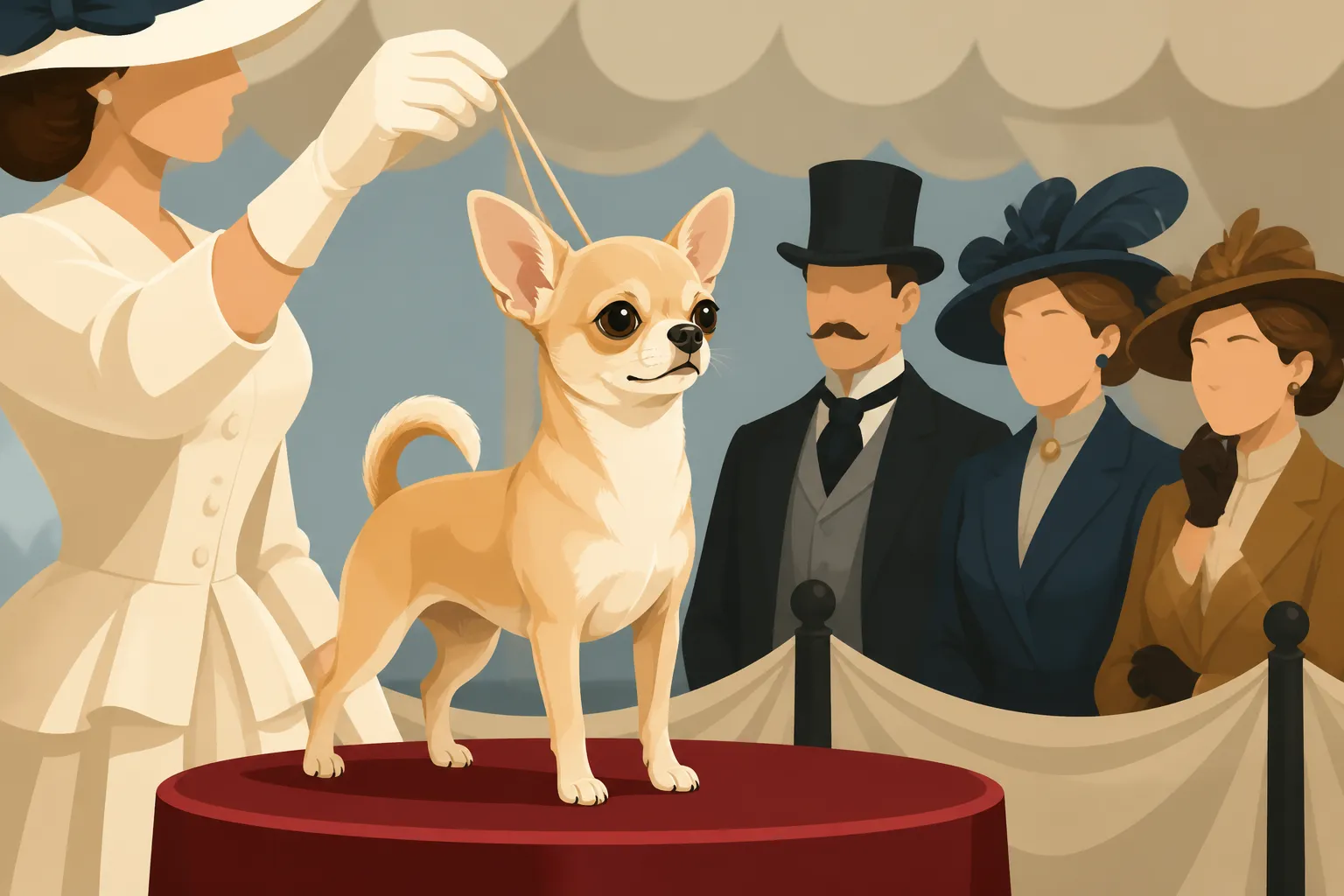
Showing a Chihuahua in the early days was vastly different from exhibiting a larger, more robust breed. Their diminutive size presented a host of practical considerations. Judges were accustomed to dogs moving with powerful gaits, easily visible from a distance. A Chihuahua, by contrast, required judges to get down on their level, or for the dog to be placed on a table for examination, a practice that became standard for toy breeds. Imagine the delicate handling required to assess bone structure or gait without causing distress to such a tiny creature. Furthermore, keeping these small dogs safe and comfortable during transport and at crowded show venues was a constant concern. They were vulnerable to being accidentally stepped on or overwhelmed by the sheer size and noise of other dogs. Exhibitors had to be meticulous about their care, ensuring they were well-fed (a few extra grams of food could push them over an ideal weight), well-rested, and presented in the best possible light. Grooming, though less elaborate for the smooth coat, still required attention to detail, while the emerging long-coat variety presented its own set of challenges. Understanding How Early Chihuahuas Looked in Old Photographs can give you a real sense of the standard they were aiming for.
What Set Early Chihuahuas Apart
The allure of the Chihuahua in the early show rings wasn't just about their novelty; it was about their distinct physical traits and, perhaps even more so, their vibrant personalities. Judges and spectators alike were learning to appreciate what made these tiny dogs truly unique.
Physical Traits and Temperament on Display
When Chihuahuas first stepped into the American show ring, judges were looking for consistency, even as the breed standard was still firming up. The most striking features were, of course, their small stature, typically weighing in at just a few pounds, and their distinct head type. The "apple head" with its domed skull and often a soft spot, or molera, was already a recognized characteristic, along with those wonderfully large, expressive eyes and ears that stood up like radar dishes. Coat variety was present, with both smooth and long coats making an appearance, though the nuances of their presentation were still evolving.
Beyond the physical, the temperament of these early Chihuahuas was a crucial factor. The breed's inherent alertness and vivacious spirit, often described as "terrier-like" by enthusiasts, quickly became a defining trait. They were bold, confident, and didn't back down easily, despite their size. This spirited demeanor, coupled with a deep loyalty to their owners, was something judges began to value. It showed that despite their delicate appearance, these were dogs with real character, far from fragile wallflowers. This energetic and watchful nature is still a key aspect of the breed, as explored in The Chihuahua Alertness the Standard Calls Terrier-Like. Exhibitors worked to showcase this confidence, proving that a Chihuahua could command attention in the ring just as effectively as a much larger dog.
The Impact of Early Wins and Losses
Every win in the early show rings for a Chihuahua was more than just a ribbon; it was a step forward for the entire breed. Successful dogs not only brought prestige to their owners and breeders but also served as living examples of the breed standard, influencing future breeding decisions and solidifying public perception. A win at a prominent show like Westminster, even if it was just a Best of Breed, meant that the Chihuahua was being taken seriously by the wider dog community. These victories helped to dispel the notion that Chihuahuas were mere "lap warmers" or "fashion accessories" and underscored their legitimacy as serious show dogs.
Conversely, losses or inconsistent judging also played a role in refining the breed. They highlighted areas where the standard needed clearer definition or where breeding programs needed to focus more intensely on specific traits. The feedback from judges, whether positive or negative, provided valuable guidance. This early period was a critical time for the breed to establish its identity and gain traction. The initial successes fueled interest, leading to more breeders, more entries, and ultimately, a more robust presence in the dog fancy. These foundational years truly shaped What Changed for the Breed After 1904 and how Chihuahuas are perceived today.
Evolution of the Show Chihuahua
The journey of the Chihuahua in the American show ring wasn't a static one; it was a continuous evolution. Over the decades that followed their initial recognition, both the breed itself and the way it was judged underwent significant shifts, moving toward the refined ideal we recognize today.
Shifting Ideals and Breed Type
As the Chihuahua gained more traction in the show world, the interpretation and emphasis within the breed standard naturally evolved. Early on, the focus was often on simply having dogs that consistently exhibited the core traits of the breed – the small size, the apple head, and the erect ears. However, as breeding programs became more sophisticated and more Chihuahuas were imported or bred within the U.S., breeders began to refine specific aspects. The roundness of the skull, the set and size of the eyes, the elegance of the neck, and the straightness of the legs all became points of meticulous attention. Discussions about the ideal length and texture of the long coat, for instance, became more specific.
What was considered "correct" for a Chihuahua in 1904 might have subtly shifted by 1920, and again by mid-century. This wasn't about completely reinventing the breed, but rather about honing its aesthetic and ensuring health and soundness were maintained. External influences, such as popular dogs winning big shows, could also subtly guide breeding trends, as everyone wanted to produce a winner. This ongoing refinement is a natural part of any breed's development within the show world, leading to the sophisticated understanding we have today of How the Chihuahua Standard Has Shifted over time.
Beyond the Ring: Early Chihuahuas as Companions
While the show ring provided a platform for Chihuahuas to gain prestige and define their breed type, it's vital to remember that these dogs were, first and foremost, companions. The very traits that made them intriguing show prospects—their small size, portability, and lively temperament—also made them exceptional house pets. Even as breeders and exhibitors worked tirelessly to perfect the "show Chihuahua," the vast majority of Chihuahuas remained cherished members of families. Their ability to adapt to various living situations, from bustling city apartments to quieter suburban homes, further cemented their place in American hearts.
The show ring's role, in this sense, was multifaceted: it validated the breed's existence, guided its development, and, perhaps inadvertently, increased its appeal to the general public. People seeing these charming, confident little dogs winning ribbons might have been more inclined to bring one home. This dual role—a serious contender in the show ring and an adored family member—has always been central to the Chihuahua's identity. Indeed, the very presence of these dogs in the formal arena helped showcase their incredible personalities and adaptability, traits that still What Surprises People in Their First Chihuahua Year when they welcome one into their home.
Here's a look at some key milestones in the Chihuahua's early journey into the American show scene:
| Year/Period | Key Event/Development | Significance for Show Chihuahuas |
|---|---|---|
| Late 1800s | Increased presence in American Southwest | Breed began to gain public awareness beyond its native lands. |
| 1890s | First Chihuahuas exhibited informally | Individuals started showing interest in formal display, testing waters. |
| 1904 | AKC recognition and first registered Chihuahua | Official breed status, opening doors for formal competition. |
| Early 1900s | Development of breed standard discussions | Attempts to codify desired traits, laying groundwork for judging criteria. |
| 1910s-1920s | Growth in entries and regional clubs | Increasing participation, showing the breed's rising popularity. |
The Chihuahua's Lasting Legacy in the Show World
The early efforts to introduce and establish the Chihuahua in American show rings laid a critical foundation for the breed's enduring popularity and presence. From those pioneering individuals who first believed in the potential of these tiny dogs to the detailed work of crafting and refining the breed standard, every step was crucial.
Paving the Way for Future Generations
The dedicated work of early exhibitors and breeders wasn't just about winning ribbons in their time; it was about ensuring the breed's future. By bringing Chihuahuas into the public eye through competitive events, they created a lineage of dogs that met specific aesthetic and temperamental criteria. This rigorous selection process, guided by the evolving breed standard, helped to stabilize the breed's characteristics, ensuring that future generations of Chihuahuas would largely conform to a recognized "type." Without these early champions advocating for the breed and meticulously documenting pedigrees and traits, the Chihuahua might have remained a regional curiosity rather than a globally beloved companion and show dog.
Moreover, the establishment of the breed in the AKC system meant that careful health considerations and ethical breeding practices, while still evolving, could begin to be discussed within a formalized structure. This foresight contributed to the overall health and vitality of the breed for decades to come, including understanding common breed-specific issues like Chihuahua Dental Disease in a Crowded Small Jaw. The commitment to showcasing Chihuahuas in the early rings truly secured their place in the heart of the American dog fancy.
From Novelty to Mainstay
What started as the introduction of a somewhat exotic and tiny breed blossomed into a significant presence in the American dog show scene. The Chihuahua moved from being a curiosity to a consistent and respected competitor. This transformation is a testament to the breed's inherent appeal and the relentless efforts of its early proponents. Today, Chihuahuas continue to be popular entries in dog shows across the country, showcasing their vibrant personalities and exquisite conformation. They are no longer seen as an anomaly but as a deeply embedded and celebrated part of the toy group, capable of winning top honors at the most prestigious events. Their journey from the hidden corners of Mexico to the bright lights of the American show ring is a remarkable tale of passion, perseverance, and the undeniable charm of a truly unique breed. Their success helped to pave the way for other small breeds and solidified the role of toy dogs in the competitive world, showcasing that spirit and character are not measured in size. The story of The Chihuahua from Techichi to American Lapdog is truly inspiring.
Disclaimer
This article is for general informational purposes only and does not constitute professional advice. Laws, prices and regulations vary by location and change over time. Consult a qualified professional for guidance on your specific situation.