Chihuahua Eye Treatment Costs
Oh, the Chihuahua eyes! If you're a Chihuahua parent, you know that those big, beautiful, soulful eyes are one of their most captivating features. But you also know they come with a fair share of worry, don't they? Their very prominence, while charming, sadly makes them incredibly vulnerable to everything from a stray branch to chronic conditions. It's truly heartbreaking to see your tiny companion in discomfort, and the looming question of "how much will this cost?" only adds to the stress. This comprehensive guide is here to shed light on the common eye problems Chihuahuas face and, more importantly, break down the associated treatment costs so you can be prepared and make informed decisions for your beloved little one.
Understanding Why Chihuahua Eyes Are So Vulnerable
It's not just your imagination; your Chihuahua's eyes are different. Unlike many breeds with deeper-set eyes, Chihuahuas have been bred to have that distinctive, round, and often very prominent ocular structure. This unique anatomy, while adorable, sadly places them at a higher risk for a variety of injuries and conditions, leading to unexpected trips to the vet and, of course, associated costs.
The Anatomy of a Chihuahua's Prominent Eyes
Think of a Chihuahua's head. Many, especially the classic "apple-head" variety, have a very domed skull and a relatively short muzzle. This combination often means their eyes protrude more than those of, say, a Labrador Retriever. There's less protective bone structure around the eye, making the eyeball itself more exposed. The eyelids might not fully cover the eye when they sleep, or they might be prone to conditions where the eyelids roll in or out. This exposure means that even minor irritants that another dog might shake off can become serious issues for a Chihuahua. A simple bump into furniture, an adventurous sniff in a bush, or even just dust in the air can cause significant problems. Their shallow eye sockets also contribute to this vulnerability, leaving the delicate surface of the eye more susceptible to external threats. You might notice your little one blinking a lot or rubbing their face more often than you'd expect, and this could be an early sign of irritation.
Common Environmental and Lifestyle Risks
Because their eyes are so exposed, Chihuahuas face everyday risks that other dogs might not. Imagine your Chihuahua excitedly exploring the park. A low-hanging branch that a larger dog would simply walk under could easily poke your Chihuahua directly in the eye, causing a painful scratch or Chihuahua Eye Injuries and Prominent Eyes. Even indoor environments pose threats. Sharp corners on furniture, playful swatting from a cat, or even roughhousing with a larger housemate can lead to injuries. Beyond physical trauma, their low stature means they're closer to dust, allergens, and irritants on the ground. Think about walking past a freshly mowed lawn, or even just the pollen count on a windy day – all these factors are literally at eye-level for a Chihuahua. Furthermore, if you're like many Chihuahua owners, you probably love to carry your tiny friend around. While this is wonderful for bonding, it can sometimes put their eyes at risk from your own hair, clothing, or even a casual bump if you're not careful. Keeping them protected, whether by being mindful of their surroundings or even considering doggy goggles in certain situations, becomes a crucial part of their care, and ignoring these risks can quickly lead to expensive vet bills.
Common Chihuahua Eye Conditions and Their Initial Diagnostic Costs
When something seems off with your Chihuahua's eyes, the first step is usually a trip to the vet. The diagnostic process is crucial for understanding what's going on and can vary in cost depending on the tests needed. These initial visits lay the groundwork for effective treatment, and understanding them helps manage expectations regarding the overall financial commitment.
Corneal Ulcers and Scratches
A corneal ulcer is essentially an open sore on the surface of the eye, the cornea. It often starts as a simple scratch, perhaps from a cat's claw, a sharp piece of debris, or even rubbing their face on rough carpet. For Chihuahuas with their prominent eyes, these scratches are unfortunately common. The initial signs might be squinting, excessive tearing, redness, or your dog pawing at their eye. When you take your Chihuahua to the vet, they'll likely perform a fluorescein stain test. This involves applying a special orange dye to the eye; if there's an ulcer, the dye will stick to the exposed deeper layers of the cornea and glow bright green under a blue light. This test is quick and generally costs between $30 and $70, not including the consultation fee.
If an ulcer is confirmed, treatment usually begins with antibiotic eye drops or ointment to prevent infection, and sometimes pain medication. A common course of drops might cost $20-$60 per bottle, and your vet might recommend an Elizabethan collar (e-collar) to prevent further self-trauma, which can be another $15-$30. For simple, superficial ulcers, these conservative treatments are often enough, and follow-up visits might be scheduled to ensure healing. However, deeper or non-healing ulcers can escalate quickly in cost and complexity, potentially requiring more specialized care and more frequent vet visits. It’s vital to address any suspicious eye issues promptly to prevent minor scratches from becoming major, painful, and expensive problems.
Dry Eye Syndrome (Keratoconjunctivitis Sicca – KCS)
Dry eye, or KCS, is a condition where the eye doesn't produce enough tears to keep itself lubricated. This can lead to chronic irritation, inflammation, and if left untreated, serious damage to the cornea, including pigmentation and vision loss. Chihuahuas are not as commonly afflicted by KCS as some other breeds like the Cavalier King Charles Spaniel or Shih Tzu, but it can still occur. Signs include chronic redness, thick discharge, blinking, and a dull appearance to the eye.
Diagnosing KCS involves a Schirmer Tear Test, which measures tear production. Small strips of filter paper are placed inside the lower eyelid for one minute, and the amount of moisture absorbed is measured. This test is painless and typically costs $25-$50, again, in addition to the vet consultation. If KCS is diagnosed, treatment is usually lifelong and involves daily eye medications to stimulate tear production and provide lubrication. Medications like cyclosporine (e.g., Optimmune) or tacrolimus drops are common, and these can be quite an investment, sometimes ranging from $40-$80 per tube or bottle, needing replacement every 1-3 months. Over a year, this can easily add up to $480-$960 just for medication. Some vets might recommend artificial tears or lubricating gels as well, which are generally less expensive ($15-$30 a bottle) but still add to the recurring expense. Early diagnosis and consistent treatment are key to managing Dry Eye Behind a Chihuahua's Prominent Eyes and preventing permanent damage, saving you from even higher costs down the line.
Conjunctivitis and Infections
Conjunctivitis, commonly known as "pink eye," is inflammation of the conjunctiva, the membrane that lines the inside of the eyelids and covers the white part of the eyeball. It can be caused by allergies, irritants, or bacterial/viral infections. In Chihuahuas, their low stature means they're more exposed to environmental allergens like pollen or dust, making allergic conjunctivitis a fairly common occurrence. You might notice redness, swelling, discharge (clear, watery, or thick and colored), and your dog rubbing its eyes.
Diagnosis typically involves a thorough eye exam by your veterinarian. They'll look for foreign bodies, check for ulcers with a fluorescein stain, and might take a sample of the discharge for cytology (examining cells under a microscope) or bacterial culture if an infection is suspected. A cytology exam might cost $40-$80, while a culture and sensitivity test could be $80-$150, determining the best antibiotic. For simple conjunctivitis, treatment often involves topical antibiotic drops or ointment, which range from $20-$60 per tube/bottle, or anti-inflammatory drops if allergies are the culprit. Sometimes, your vet might recommend a systemic antibiotic (oral medication) if the infection is severe or persistent. These can cost anywhere from $30-$70 for a course. Keeping their environment clean and avoiding known irritants can help prevent recurrence, but when it flares up, prompt veterinary attention is vital to prevent it from worsening or becoming chronic.
| Condition | Initial Diagnostic Cost (Estimate) | Typical Medication Cost (Estimate) | Notes |
|---|---|---|---|
| Corneal Ulcer/Scratch (simple) | $30 – $70 (Fluorescein stain) | $20 – $60 (Antibiotic drops/ointment) + $15-$30 (E-collar) | Consultation fee additional. Deeper ulcers can be significantly more expensive. |
| Dry Eye (KCS) | $25 – $50 (Schirmer Tear Test) | $40 – $80 (Cyclosporine/Tacrolimus drops, monthly) | Lifelong medication, recurring costs. Annual total can be $480-$960. |
| Conjunctivitis/Infection | $40 – $150 (Cytology/Culture) | $20 – $70 (Antibiotic/Anti-inflammatory drops/oral) | Depending on cause (allergy, bacterial, viral). Consultation fee additional. |
Note: These costs are estimates and can vary significantly based on your geographic location, veterinary clinic, and the specific medications prescribed. They do not include the initial consultation fee, which can range from $60-$120.
Diving Deeper into Advanced Treatment Costs
While many Chihuahua eye issues can be managed with medication, some conditions require more intensive intervention, often involving specialist veterinarians and surgical procedures. These advanced treatments come with a significantly higher price tag, and it’s important to understand what might be involved if your Chihuahua's eye problem doesn't resolve with standard care.
Surgical Interventions for Severe Ulcers or Injuries
Sometimes, a corneal ulcer doesn't heal with drops, especially if it's deep or becomes infected, or if your Chihuahua keeps rubbing it despite an e-collar. These non-healing or complicated ulcers can lead to serious complications, including vision loss or even rupture of the eyeball. In such cases, surgery becomes necessary. A common procedure is a grid keratotomy or debridement for superficial non-healing ulcers, which involves gently scraping the surface of the cornea to encourage new cell growth. This can cost $300-$800. For deeper or more serious ulcers, a conjunctival flap surgery might be performed, where a piece of conjunctiva (the pink membrane lining the eyelid) is surgically attached over the ulcer to provide blood supply and promote healing. This is a more complex procedure performed by a veterinary ophthalmologist and can range from $1,500 to $3,000 or even more, especially if it requires a specialist facility.
In cases of severe trauma, such as a penetrating injury or a ruptured eyeball, an enucleation (surgical removal of the eye) might be the only option to relieve pain and prevent further infection. While this sounds drastic, Chihuahuas adapt remarkably well to life with one eye. An enucleation can cost $800-$2,500, including anesthesia, surgical fees, and post-operative care. All surgical costs will also include pre-anesthetic bloodwork, which is crucial for tiny Chihuahuas due to their size and potential anesthesia risks, adding another $100-$250. Post-operative care typically involves pain medication, antibiotics, and follow-up visits, which add to the overall expense. It's truly a situation where prompt action can sometimes prevent the need for more invasive and costly surgeries.
Managing Chronic Conditions Like KCS
For Chihuahuas diagnosed with Dry Eye Behind a Chihuahua's Prominent Eyes, the management is usually lifelong, as mentioned earlier. While initial treatment involves daily drops, some dogs don't respond adequately to medication alone, or they have severe, unresponsive KCS. In such cases, a parotid duct transposition might be considered. This highly specialized surgery involves rerouting one of the salivary ducts from the mouth to the eye, allowing saliva to provide lubrication instead of tears. This is a complex procedure performed by a veterinary ophthalmologist and can cost anywhere from $3,000 to $6,000. It's not a common surgery and is typically reserved for severe cases where medical management has failed completely.
Even without surgery, managing KCS is a continuous financial commitment. Besides the daily prescription eye drops, regular recheck appointments are needed to monitor tear production and eye health. These rechecks might be quarterly or semi-annually, costing $60-$120 per visit. Over a Chihuahua's long lifespan, these recurring costs for medication and appointments can become substantial. Owners often look for ways to save, and services like Chewy can be helpful for ordering prescription refills at competitive prices, making a slight dent in the ongoing budget.
Addressing Other Age-Related Eye Issues: Cataracts and Glaucoma
As Chihuahuas age, they can develop other eye conditions similar to humans. Chihuahua Cataracts in Older Dogs are a common age-related issue where the lens of the eye becomes cloudy, impairing vision. While many cataracts are benign and don't require treatment beyond monitoring, severe cataracts that significantly impede vision can be surgically removed. Cataract surgery is performed by a specialist, and it's an intricate procedure that can cost $3,000-$5,000 per eye. This price usually includes the pre-operative work-up (which can be extensive, given the need for a healthy eye and patient suitable for anesthesia), the surgery itself, and post-operative medications and follow-ups.
Glaucoma is another serious condition where pressure builds up inside the eye, causing pain and rapid vision loss. It can be primary (inherited) or secondary to other eye conditions. Glaucoma requires immediate veterinary attention to prevent permanent blindness. Treatment involves various eye drops to reduce pressure, which can cost $30-$80 per bottle and might be needed multiple times a day, sometimes for life. If medical management isn't enough, surgical options like laser cyclophotocoagulation or placing a shunt can be considered, each costing $2,000-$4,000. For eyes that are blind and painful, enucleation (removal of the eye) might be recommended, as discussed above. These age-related conditions highlight the importance of regular senior vet checks for your Chihuahua to catch problems early, potentially saving significant costs and preserving your dog's comfort and vision.
The Role of Preventative Care in Cost Savings
It sounds simple, but preventing eye problems is always less expensive and less stressful than treating them. For Chihuahuas, whose eyes are naturally more prone to issues, a proactive approach to care can make a huge difference in their long-term health and your wallet.
Daily Eye Cleaning and Regular Vet Checks
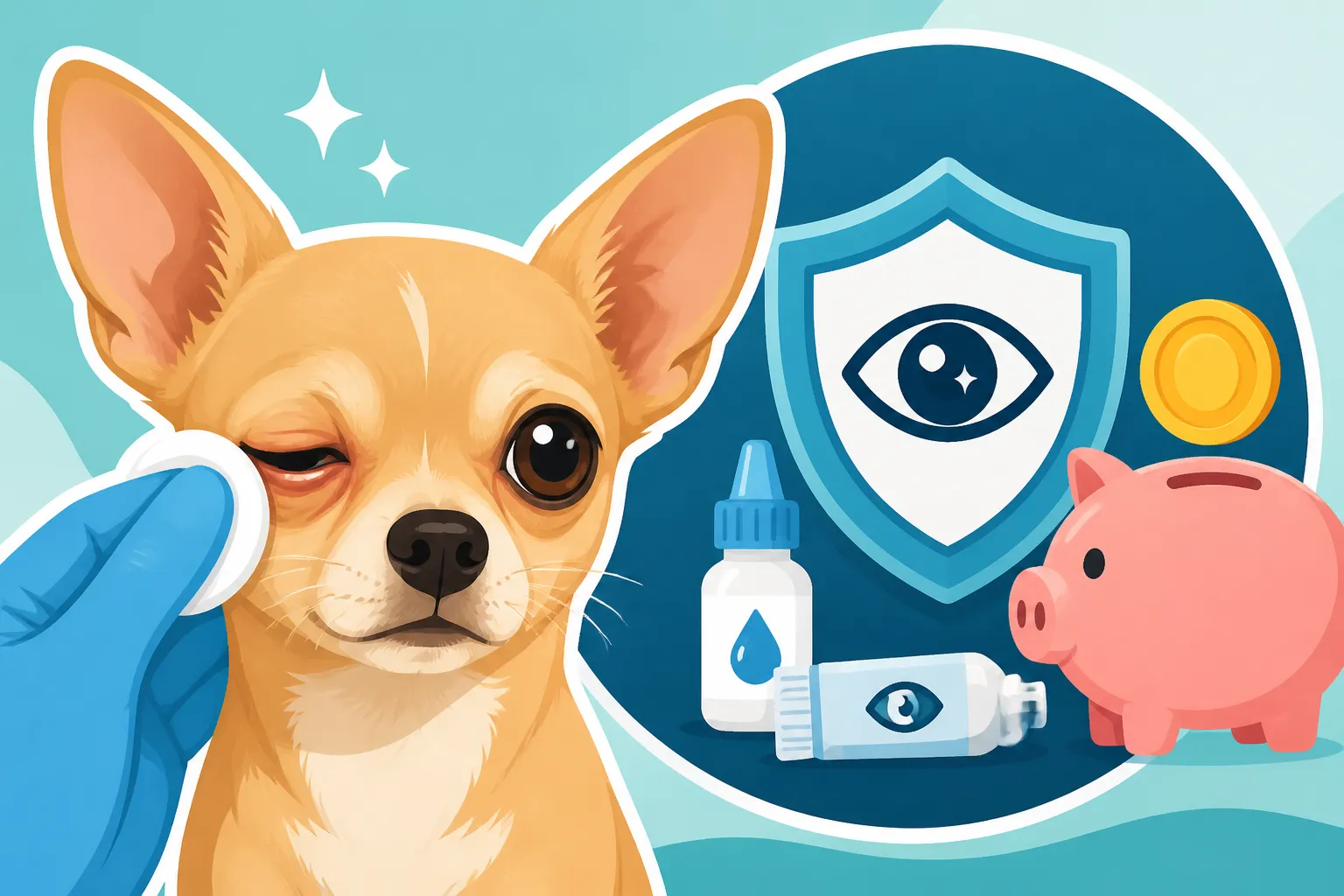
One of the most straightforward ways to protect your Chihuahua's eyes is through daily cleaning. Because their eyes can protrude and some Chihuahuas have tear staining, debris, dust, or even dried tears can accumulate around the eye, leading to irritation or infection. Gently wiping around their eyes with a soft, damp cloth or a veterinarian-approved eye-cleaning solution helps keep the area clear. Products specifically designed for pet eye cleaning are generally inexpensive, ranging from $10-$20 a bottle, and last a long time. Incorporating this into your daily routine is a small effort that can prevent larger issues.
Equally important are regular veterinary check-ups. For younger, healthy Chihuahuas, annual visits might suffice, but as they reach their senior years, twice-yearly check-ups are often recommended. During these visits, your vet will perform a general physical exam, including a look at their eyes. They might do a quick eye check, looking for redness, discharge, or changes in appearance. Catching conditions like early dry eye, a minor scratch, or the beginning of cataracts during a routine visit can mean the difference between simple, inexpensive treatment and costly advanced interventions. Remember, the earlier a problem is detected, the easier and cheaper it usually is to treat. These preventative measures, while not glamorous, are the bedrock of responsible pet ownership and effective cost management.
Environmental Modifications to Protect Their Eyes
Given the vulnerability of a Chihuahua's prominent eyes, making some adjustments to their living environment can significantly reduce the risk of injury. One common sense approach is to minimize access to areas with sharp edges or low-lying obstacles. For instance, if you have low coffee tables with sharp corners, consider child-proofing covers for those areas. When walking outdoors, especially in brushy or overgrown areas, keeping your Chihuahua on a short leash and being extra vigilant about eye-level hazards is crucial. Some owners even opt for specialized dog goggles, like Doggles, for adventurous Chihuahuas who enjoy hiking or car rides with the windows down. While this might sound excessive, they offer excellent protection against wind, dust, and debris, potentially preventing expensive corneal injuries.
Inside the home, consider the types of toys your Chihuahua plays with. Avoid toys with sharp points or rough textures that could accidentally scratch an eye during play. Even simple things like keeping household plants out of reach can prevent a curious Chihuahua from poking an eye while sniffing around. If you have other pets, especially cats with sharp claws, ensure supervised interactions and provide separate spaces where your Chihuahua can retreat. Creating a safer environment for your tiny friend is an ongoing process, but these thoughtful modifications are a proactive investment in their eye health, potentially saving you thousands in emergency vet bills and specialist treatments.
Navigating Financial Burdens: Insurance, Savings, and Support
Let's be honest, veterinary care, especially for specialized treatments like eye surgery, can hit your wallet hard. It’s a common frustration to want the absolute best for your furry family member but also feel the pressure of rising costs. Thankfully, there are several ways to prepare for and manage the financial aspect of Chihuahua eye care, from proactive planning to seeking assistance when needed.
How Pet Insurance Can Help with Eye Conditions
Pet insurance is becoming an invaluable tool for many pet parents, offering a safety net against unexpected veterinary bills. For a Chihuahua, who can live a long life and potentially face various health issues, including eye problems, a good insurance policy can be a lifesaver. When looking for coverage, especially for potential eye conditions, it’s crucial to understand what is covered. Most comprehensive accident and illness plans will cover diagnostics, medications, and surgeries for new conditions like corneal ulcers, glaucoma, or cataracts. However, pre-existing conditions (any illness or injury your pet had before the policy started or during the waiting period) are typically not covered. This means if your Chihuahua is diagnosed with dry eye before you get insurance, future treatment for that specific condition might be excluded.
This highlights the importance of enrolling your Chihuahua in a pet insurance plan as early as possible, ideally when they are a puppy, before any conditions manifest. Companies like Healthy Paws are popular choices, often offering customizable plans with various deductibles and reimbursement percentages. While a basic plan might run around $30-$50 a month for a Chihuahua, it can make the difference between paying $3,000 out-of-pocket for cataract surgery and only paying your deductible and a percentage (e.g., $250 deductible + 10% of the remaining bill). Make sure to carefully read the policy details, paying close attention to what's covered for specialist visits and chronic conditions. It's a proactive step that can alleviate significant financial stress down the line. Chihuahua Pet Insurance and Its Low Premium compared to larger breeds makes it a sensible investment.
Budgeting for Ongoing Chihuahua Eye Care
Even with pet insurance, there will always be some out-of-pocket costs, whether it's your deductible, co-insurance, or treatments not covered. For chronic conditions like KCS, which requires lifelong medication, budgeting becomes essential. Think about setting aside a small amount each month into a dedicated "pet emergency fund." Even $20-$50 a month can add up over time and provide a cushion for unexpected vet visits or medication refills. This financial discipline can prevent you from dipping into your personal savings or feeling overwhelmed by a sudden bill.
Another strategy is to compare prices for medications. While your vet will prescribe the initial treatment, you can often get ongoing prescriptions filled at various pharmacies, sometimes at a lower cost. Online pet pharmacies or even human pharmacies like CVS or Walgreens might carry common pet medications. Websites like Chewy not only offer pet supplies but also have a pharmacy section where you can often get prescription refills delivered to your door, potentially saving a few dollars and the trip to the vet's office for pickup. Always check with your vet first to ensure the medication and dosage are correct from any external pharmacy. Remember, The Yearly Reserve a Chihuahua Owner Needs should ideally include a buffer for these potential health issues.
Alternative Financial Assistance Options
Despite careful planning, sometimes unforeseen circumstances or particularly expensive treatments can still overwhelm a budget. If you find yourself in a difficult financial situation and your Chihuahua needs urgent eye care, don't despair—there are resources available. Many veterinary clinics offer payment plans through third-party services like CareCredit, which allows you to pay off medical bills over time, often with deferred interest options if paid within a certain period. This can be a lifesaver for larger, unexpected expenses like emergency eye surgery.
Beyond payment plans, numerous non-profit organizations offer financial assistance for pet owners. Groups like The Pet Fund, RedRover, and the Animal Cancer Foundation (which sometimes covers eye-related cancers) provide grants to help with veterinary costs for qualifying individuals. Local humane societies or breed-specific rescues might also have funds or be able to direct you to local resources. For instance, if your Chihuahua needs extensive dental work in addition to eye care, knowing that Chihuahua Dental Bills as the Biggest Recurring Cost are often high can prompt you to explore these options more broadly. Don't hesitate to talk openly with your veterinarian about your financial concerns; they often have experience guiding clients to available assistance programs or even suggesting alternative treatment plans that are more budget-friendly without compromising care. They are there to help your pet, and sometimes that means helping you navigate the costs.
Disclaimer
This article is intended for informational purposes only and does not constitute veterinary advice. Always consult with a qualified veterinarian for any health concerns or before making any decisions about your Chihuahua's medical care. Costs provided are estimates and can vary widely based on location, clinic, and specific medical needs.