The State of Chihuahua and the Breed’s Name
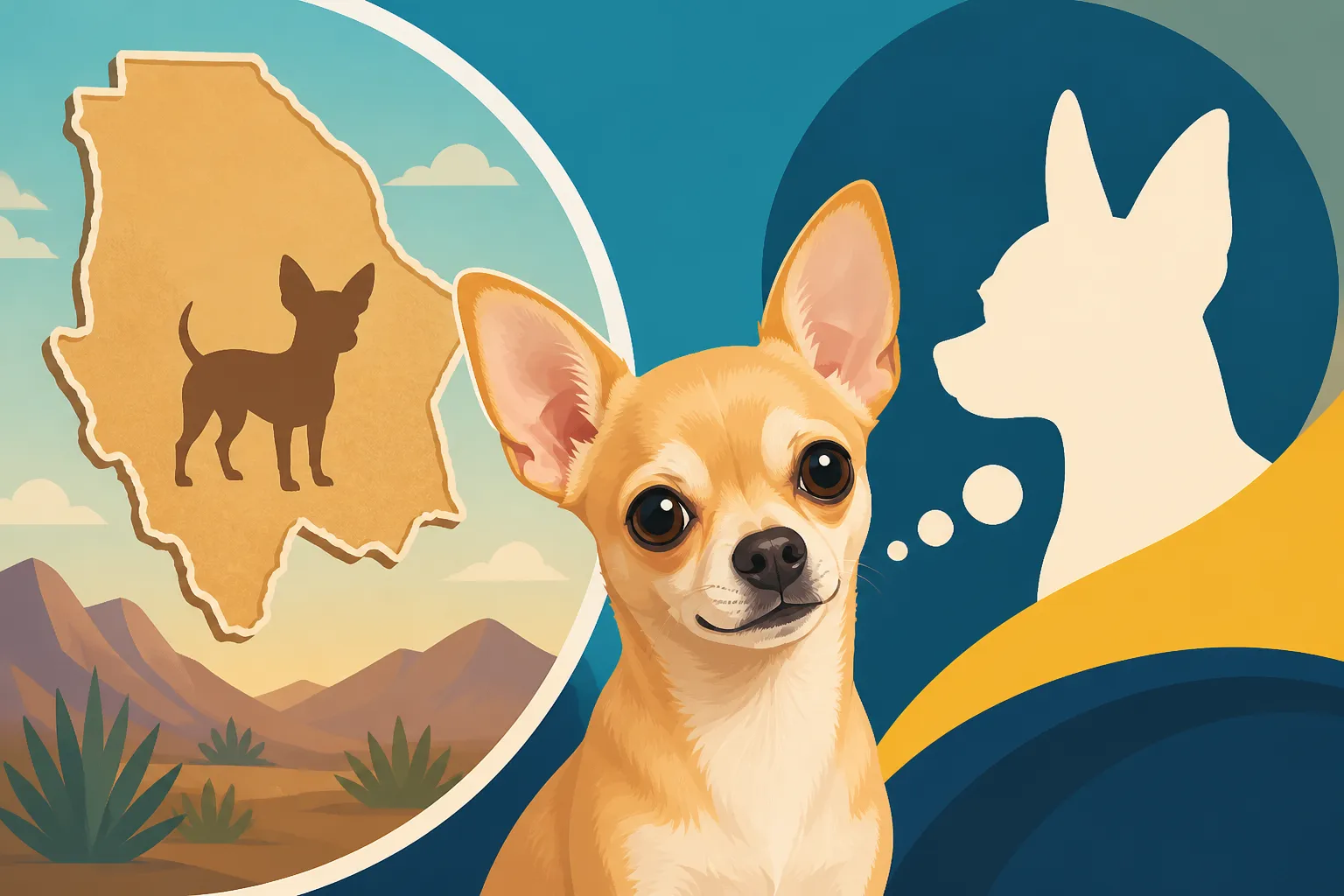
Many Chihuahua enthusiasts find themselves wondering about the origins of their beloved companions' name. It’s not uncommon to hear people assume the breed was simply found in the state of Chihuahua, Mexico, and that's the whole story. But as with any ancient breed, the truth is far richer and more complex than a simple discovery, weaving through centuries of history, culture, and even a bit of mystery. This guide will take a deep dive into the fascinating connection between the Mexican state of Chihuahua and the tiny dog breed that shares its name, exploring the historical journey that led to this distinctive nomenclature.
The Chihuahua Breed's Ancient Roots in Mexico
To truly understand how our Chihuahuas got their name, we have to travel back in time, long before European explorers ever set foot on American soil. The story of the Chihuahua isn't just a 19th-century tale; it's deeply embedded in the ancient civilizations of Mesoamerica. These aren't just myths; archaeological evidence and historical accounts paint a picture of small, revered dogs that are direct ancestors of the Chihuahuas we know and love today.
Tracing the Techichi: A Pre-Columbian Ancestor
Before the modern Chihuahua emerged, there was a dog known as the Techichi. Imagine a small, stocky dog, perhaps a bit longer in body than the Chihuahuas you see strutting around town now, but unmistakably a small canine. These dogs were integral to the lives of various pre-Columbian cultures, particularly in what is now Mexico. Evidence of their existence dates back as far as 300 BC, found in ancient tombs and depicted in art. It really gives you pause to think that the lineage of your little lapdog stretches back for millennia, doesn't it? They weren't just pets in the way we think of them; they held significant cultural and even spiritual importance. The Chihuahua Ancestor Carved in 300 BC shows just how deeply these dogs were integrated into early societies.
Archaeologists have unearthed skeletal remains of these small dogs in burial sites, suggesting they were sometimes interred with their human companions. This practice wasn't merely about companionship in the afterlife; it often carried spiritual symbolism. Some beliefs held that these dogs acted as guides for the deceased through the underworld, helping them navigate the challenges of the journey. This speaks volumes about the profound bond these ancient people shared with their canine friends, a bond that in many ways echoes the deep connections we form with our Chihuahuas today. It's truly amazing to consider how much a tiny dog could mean to an entire civilization.
Toltec and Aztec Reverence for Small Dogs
As civilizations rose and fell, the Techichi continued to play a role. The Toltec civilization, which flourished in central Mexico between the 10th and 12th centuries, is often credited with having a significant influence on the development of these small dogs. They were depicted in their art and sculptures, reinforcing their presence and importance. What the Toltecs Kept the Chihuahua's Ancestor For delves into the specifics of their purpose within Toltec society, which went beyond simple pet ownership. It’s thought they were kept for companionship, ceremonial purposes, and even as a food source, which, while jarring to modern sensibilities, was a reality in many ancient cultures where every resource had value.
Later, the Aztec Empire, which eventually dominated much of Mesoamerica, also embraced and further developed these small dogs. Historical accounts and artifacts from the Aztec period show a continued reverence for small canines. There's even a theory that the Aztecs actively bred them to be smaller, perhaps for specific ceremonial uses or simply to enhance their companion qualities. How the Aztecs Shrank the Chihuahua's Ancestor explores this fascinating aspect of their breeding practices. The Aztecs, known for their sophisticated society, valued these dogs not just as animals, but as living symbols intertwined with their spiritual beliefs and daily lives. Imagine a tiny dog being part of an emperor's retinue – it wasn't just a status symbol, but a creature imbued with meaning.
The Arrival of Europeans and the Breed's Transformation
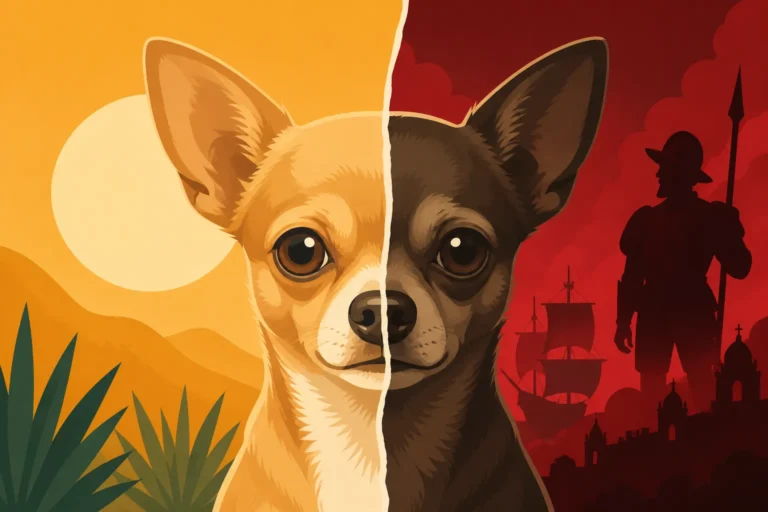
The arrival of the Spanish in the 16th century marked a cataclysmic shift for all indigenous cultures and species in the Americas, and the ancestral Chihuahua was no exception. This period of upheaval led to the disappearance of many native breeds and a profound transformation for others.
Spanish Conquest and Its Impact on Native Breeds
When Hernán Cortés and his conquistadors arrived, their priority was conquest and resource acquisition, not canine preservation. The introduction of European dogs, often larger and more aggressive, posed a significant threat to the smaller native breeds. Many indigenous dogs were either hunted, fell victim to new diseases carried by the European animals, or interbred with the newcomers, leading to the dilution or complete loss of their unique genetic lines. What the Spanish Conquest Did to the Chihuahua details the challenging environment these ancient dogs faced. It’s hard to imagine the chaos and disruption this brought to the delicate balance of native ecosystems and cultures.
For many years after the conquest, specific records of the Techichi or similar small dogs became sparse. It's a testament to the sheer scale of the disruption that such a culturally significant animal could seemingly vanish from the historical record. This period represents a long, quiet stretch in the breed's documented history, where its survival was likely precarious and largely unnoticed by the new ruling powers. It was a time when many unique aspects of pre-Columbian life faded into obscurity, and the small Mexican dog was nearly one of them.
The Survival and Seclusion of the Chihuahua's Forebears
Despite the immense challenges, the Techichi lineage didn't vanish completely. Instead, it's believed that populations of these small dogs survived by retreating into more remote, isolated regions of Mexico. These pockets of survival were often in areas less impacted by the direct routes of colonial expansion, allowing their unique traits to persist. Think of the mountainous and arid regions of northern Mexico, particularly the area that would later become the state of Chihuahua. These were ideal havens where small, resilient dogs could continue to thrive away from the heaviest European influence and competition from introduced breeds. How the Chihuahua Survived Three Centuries Unrecorded paints a vivid picture of this period of quiet resilience.
Over these centuries of relative isolation, these dogs continued to evolve, likely adapting to their specific environments. They would have continued to be companions to indigenous peoples living in these remote areas, preserving their lineage through generations. This period of natural selection and adaptation, combined with continued human interaction, is what likely shaped the modern Chihuahua into the distinct breed we recognize today. It speaks to the enduring spirit of these little dogs and the people who cherished them, allowing their story to continue even when larger historical forces threatened to erase it.
The Mid-19th Century: Rediscovery and Renaming
Fast forward to the mid-19th century, a time of increasing trade and travel between the United States and Mexico. It was during this era that the small, distinctive dogs of Mexico began to catch the eye of curious American travelers and traders. This period of "rediscovery" is where the breed finally received the name we all use today.
American Travelers Discovering "Chihuahua Dogs"
As the US expanded westward and relations with Mexico became more frequent, particularly after the Mexican-American War, American merchants, prospectors, and tourists ventured further south. It was in the larger towns and markets of the state of Chihuahua that these small dogs were most commonly encountered and purchased. Imagine a bustling market in a small Mexican town, full of vibrant colors and sounds, and there, nestled amongst other goods, are these tiny, alert little dogs. They would have been quite the novelty for Americans, accustomed to larger working breeds or more established European companion dogs. Americans Buying Chihuahuas in the Mid-1800s provides some fascinating anecdotes from this time.
These travelers often brought the dogs back north, sharing stories of their unique "Chihuahua dogs" — a simple, practical way to identify where they had acquired them. The sheer charm and distinct appearance of these canines quickly made them desirable souvenirs. It wasn't a formal naming convention, but rather an organic, descriptive label that naturally stuck. Think about how we might refer to a specific type of coffee by its region of origin; it's a similar phenomenon. And as more and more of these little dogs made their way across the border, often through dealers who bought them in the state of Chihuahua, the name solidified.
Why the Name "Chihuahua" Stuck
The name "Chihuahua" became firmly attached to the breed primarily because it was the most prominent region where these dogs were encountered and traded by outsiders. It was the hub, the most common point of origin for these dogs entering the United States and later, Europe. Even if some dogs originated from other Mexican states, the majority of the early imports and sales seemed to stem from or pass through the state of Chihuahua. It's a classic example of a geographic identifier becoming synonymous with the product itself. The convenience and consistency of the name helped it to persist, much like how a brand name, once established, becomes difficult to dislodge.
This informal naming process highlights how organic the early development and recognition of dog breeds often were. There wasn't an official registry or a committee deciding on names at this point; it was simply common usage that cemented the association. And let's be honest, "Chihuahua" has a certain ring to it, doesn't it? It's distinct and memorable, easily differentiating these unique little dogs from others. The name evokes a sense of their exotic origin, a touch of the mystique of Mexico. It wasn't long before dog fanciers and emerging kennel clubs began to adopt this popular designation, solidifying its place in canine history.
The State of Chihuahua: A Brief Overview
So, what about the state itself? To fully appreciate the name, it helps to understand a little about the geographic and cultural entity it represents. The state of Chihuahua is the largest state in Mexico by area, a diverse and historically rich region that offers much more than just the origin story of a beloved dog breed.
Geography and Environment of Chihuahua, Mexico
The state of Chihuahua is located in northwestern Mexico, bordering the United States (New Mexico and Texas). It's a region of vast and varied landscapes, from the arid Chihuahuan Desert in the east to the rugged Sierra Madre Occidental mountain range in the west. This geographical diversity is quite striking. The desert areas are characterized by vast plains, scrubland, and cacti, while the mountains boast dense pine and oak forests, deep canyons (including the famous Copper Canyon, which is larger and deeper than the Grand Canyon), and rivers. This environment would have certainly played a role in shaping the resilience and perhaps even the physical traits of the ancestral dogs living there. Think about how a smaller dog might navigate such varied terrain, finding shelter and resources.
The climate varies significantly across the state, with hot, dry summers and cold winters, especially at higher altitudes. These conditions demand hardiness from any creature living there. It's not a soft, easy environment, which perhaps contributes to the Chihuahua's reputation for being feisty and tough, despite its small size. The isolation provided by these vast and often harsh landscapes was likely crucial for the survival of the ancestral Chihuahuas, allowing them to remain distinct from other dog populations for centuries. When you’re looking at your Chihuahua wrapped in a cozy Chewy blanket on the sofa, it’s a far cry from the environment its ancient ancestors navigated!
Cultural Significance Beyond the Dog Breed
Beyond being the namesake for our little canine companions, the state of Chihuahua has its own deep cultural and historical significance. It's a region rich in indigenous heritage, with various Native American groups having called it home for millennia. The Tarahumara (Rarámuri) people, famous for their incredible long-distance running abilities, still reside in the Sierra Madre Occidental. Their traditions and way of life are a vital part of the state's identity.
Furthermore, Chihuahua played a crucial role in Mexican history, particularly during the Mexican Revolution, with figures like Pancho Villa having strong ties to the region. It's an important agricultural and mining state, contributing significantly to Mexico's economy. The state capital, also named Chihuahua City, is a bustling center with beautiful colonial architecture and a vibrant modern culture. So, while we dog lovers often associate the name primarily with the breed, it's important to remember that the state itself is a place of immense history, natural beauty, and cultural depth, predating and continuing far beyond its connection to our four-legged friends.
Formal Recognition and the Breed's Global Journey
The journey from an ancient Mexican companion to a formally recognized international breed was a gradual one, marked by the efforts of early dog fanciers and the establishment of kennel clubs. This formalization cemented the name "Chihuahua" globally and propelled the breed into widespread popularity.
AKC Recognition and the Breed Standard
The turning point for the Chihuahua's formal recognition came in the early 20th century, specifically in the United States. In 1904, the American Kennel Club (AKC) officially recognized the Chihuahua as a breed. This was a monumental step, transitioning the "Chihuahua dog" from a regional curiosity to a legitimate, pedigreed breed with a set standard. AKC Recognition of the Chihuahua in 1904 highlights this pivotal moment. The first Chihuahua registered with the AKC was named Midget, a testament to the breed's small stature, and this registration opened the floodgates for others. The Chihuahua That Opened the AKC Stud Book offers even more detail about this foundational registration.
With AKC recognition came the establishment of a breed standard, a detailed description of the ideal physical traits and temperament for the Chihuahua. This standard covered everything from head shape (favoring the "apple head" we often see today) to coat type, eye color, and tail carriage. This formal framework helped breeders work towards a consistent type and ensured the breed's unique characteristics were preserved and developed. It’s important to remember that this process wasn't instantaneous; it involved years of dedication from early breeders and enthusiasts who saw the potential in these captivating little dogs. This standardization also allowed the breed to be exhibited in dog shows, further increasing its visibility and desirability.
The Global Popularity of the Breed
Once formally recognized, the Chihuahua’s popularity soared, first in the United States and then around the world. Its small size made it an ideal companion for city dwellers and those with limited space, a trait that remains highly valued today. The breed's distinctive looks, coupled with its often feisty and devoted personality, captured the hearts of many. It became particularly fashionable among celebrities and socialites, further boosting its profile. Suddenly, everyone wanted a tiny "Chihuahua dog." The Chihuahua From Techichi to American Lapdog beautifully narrates this entire journey, from ancient times to modern celebrity status.
The name "Chihuahua" traveled with the breed, becoming synonymous with this tiny, spirited canine on a global scale. Today, you'll find Chihuahuas thriving in homes across continents, from bustling European cities to quiet Asian towns, all carrying the name of that Mexican state where they were "rediscovered." This widespread adoption has led to a rich diversity within the breed, with different lines and interpretations of the standard developing over time. Whether it's a smooth coat or a long coat, an apple head or a deer head (though only the apple head is standard-compliant), the core identity of the Chihuahua, tied to its Mexican origins, remains strong. Even today, you can find a vast array of Chihuahua-specific gear, food, and toys available at retailers like Chewy, a testament to their enduring popularity.
To put the journey into perspective, here's a look at the key historical periods and how they shaped the Chihuahua's name and identity:
| Historical Period | Key Development for Chihuahua | Significance for Breed Name |
|---|---|---|
| Pre-Columbian Era (300 BC+) | Techichi ancestors, spiritual and cultural roles | Ancient roots, pre-dating modern name |
| Spanish Conquest (16th Century) | Disruption, near disappearance, retreat to remote areas | Period of seclusion, survival of lineage |
| Mid-19th Century | "Rediscovery" by American travelers in Chihuahua state | Direct origin of the name "Chihuahua" |
| Early 20th Century | AKC recognition, formal breed standard | Global establishment of the name and breed |
| Modern Era | Widespread popularity as a companion dog | Continuation of the name globally |
Ultimately, the connection between the Mexican state of Chihuahua and the dog breed is a beautiful blend of history, geography, and cultural exchange. It’s a story of survival, rediscovery, and the enduring appeal of a tiny dog with a massive personality. The next time you call your little one by its breed name, remember the long and winding journey that led to it.
Disclaimer
This article is for general informational purposes only and does not constitute professional advice. Laws, prices and regulations vary by location and change over time. Consult a qualified professional for guidance on your specific situation.