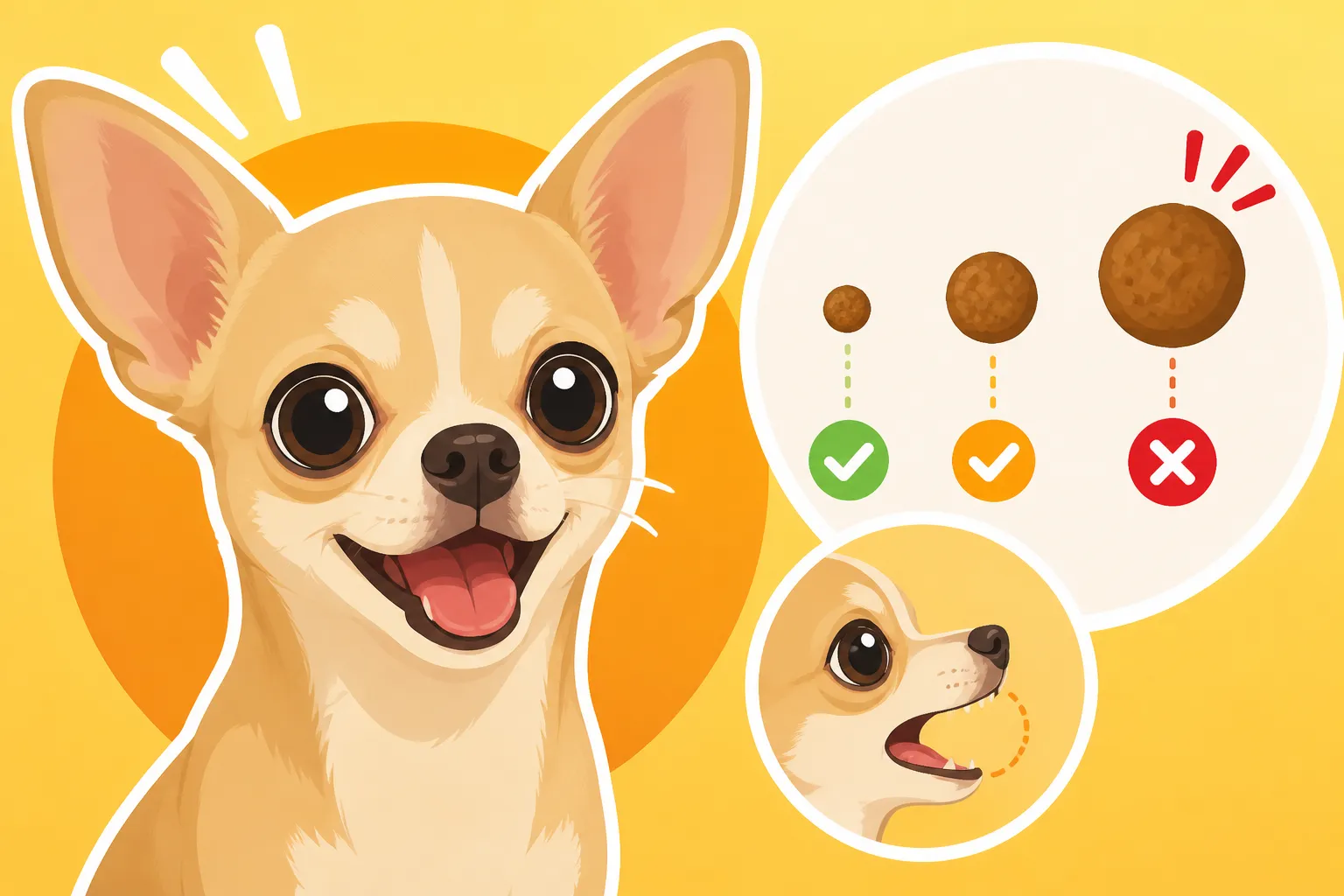
Kibble Size a Chihuahua Mouth Can Handle
One of the most common frustrations I hear from fellow Chihuahua parents is trying to find dog food their tiny companions can actually eat without struggle. You open a new bag, pour it into their little bowl, and watch them either painstakingly try to pick up pieces that are clearly too big, or worse, gulp down kibble whole, leading to worries about choking or upset tummies. This guide is all about helping you navigate the world of kibble sizes, understand why it's such a big deal for our pint-sized pals, and find the perfect fit for your beloved Chihuahua.
Why Kibble Size Matters More for a Chihuahua
When you look at a big bag of dog food, you often see pictures of happy Labradors or Golden Retrievers. But our Chihuahuas are a world apart in scale, and their unique physical makeup means that something as seemingly simple as kibble size can have a huge impact on their health and well-being. It’s not just about what they can eat, but how they should eat for optimal digestion and long-term health.
The Anatomy of a Chihuahua's Mouth
Let's get realistic for a moment: Chihuahuas have tiny mouths. It's a fundamental truth of the breed. Their jaws are delicate, and their teeth, while sharp, are often crowded. This isn't just an aesthetic point; it directly affects how they interact with their food. Imagine trying to eat a giant cookie with a child-sized mouth – it's awkward, messy, and you might just give up. For a Chihuahua, kibble that's too large presents a similar challenge.
Their small jaws mean they can't always get a good grip on bigger pieces of food. They might try to chew, but if the piece is too wide or too hard, it becomes a frustrating experience. This can lead to them dropping food, getting disheartened, or simply trying to swallow it whole out of sheer determination. Beyond the immediate struggle, the crowded nature of a Chihuahua's teeth also plays a role in their predisposition to dental issues. Larger kibble, while sometimes marketed as "dental friendly," often doesn't actually scrape the teeth effectively because the dog isn't truly crunching it down in a way that cleans. Instead, it can become another obstacle in a mouth already prone to plaque and tartar buildup. Chihuahua Dental Disease in a Crowded Small Jaw is a constant battle for many of us, and making smart choices about their daily food is one piece of the puzzle.
Digestion and Swallowing Whole Concerns
Now, what happens when your little one decides to just inhale their food? It’s a common sight: a Chihuahua will pick up a piece of kibble, give it a quick once-over, and down it goes, barely touching the sides of their mouth. While Chihuahuas are robust little creatures, their digestive systems are still designed for food to be broken down, primarily through chewing, before it hits the stomach. When kibble is swallowed whole, it means the stomach has to work extra hard to break down larger, undigested pieces. This can lead to a few issues.
Firstly, proper chewing stimulates the release of digestive enzymes in the mouth, beginning the breakdown process even before the food reaches the stomach. Skipping this step can lead to less efficient digestion overall, potentially causing gas, bloating, or even nutrient malabsorption over time. It’s like trying to dissolve a whole block of ice in a glass of water versus crushed ice – the surface area makes a difference. Secondly, and perhaps more urgently, there's the very real concern of choking. A piece of kibble that seems perfectly safe to a larger dog can become a serious obstruction in a Chihuahua's tiny throat. I've had many sleepless nights worrying about my own pups and a sudden gag or cough, and the thought of them truly choking is terrifying. While Chihuahua Hypoglycemia and the Puppy Emergency is often about blood sugar, efficient digestion and nutrient absorption from well-chewed food can indirectly support stable energy levels, especially in growing puppies. Ensuring they chew their food can help prevent these kinds of digestive stresses that can impact overall health.
Identifying the Right Kibble Size for Your Tiny Dog
So, how do you find that sweet spot? It's not always about grabbing the bag that says "small breed" and hoping for the best. There's an art and a science to it, and a lot comes down to observing your own dog's eating habits and understanding what makes for good kibble design for a tiny mouth. We're looking for something that encourages them to engage with their food, chew properly, and ultimately, enjoy their meal without risk or frustration.
Visual Cues for Appropriateness
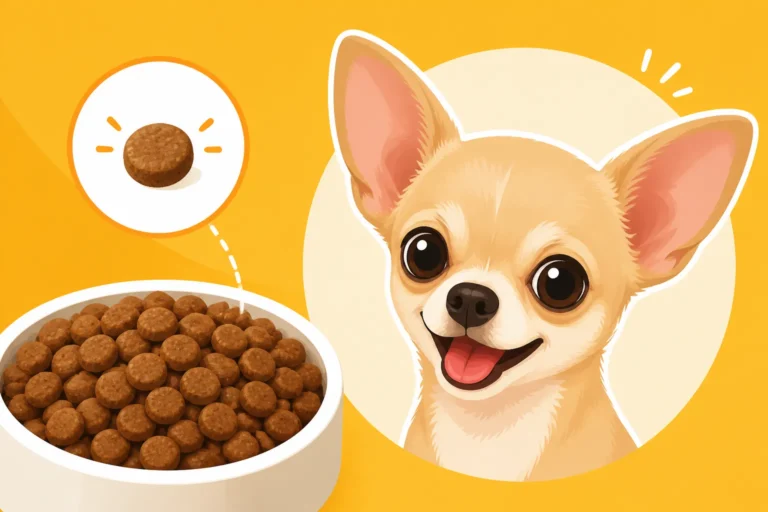
When you're standing in the pet food aisle, or scrolling through options on Chewy or Amazon, it can feel overwhelming. Every brand claims to be the best! But for Chihuahuas, the first thing to zero in on is the kibble itself. Take a close look at the shape and diameter. Ideally, you want kibble that is small enough for your Chihuahua to easily pick up with their tiny lips and teeth, but large enough that it can't be simply inhaled. Think of it as fitting comfortably between their molars for a good crunch.
Round, flat discs are often a good starting point, but some brands have developed unique shapes specifically designed to fit into a small dog's mouth and encourage chewing. The key is that the piece isn't so minuscule it vanishes into their gullet, nor so massive it resembles a pebble they might find in the garden. Observe your Chihuahua during mealtime. Are they diligently chewing each piece, or are they vacuuming it up like a tiny, furry dustbuster? If they're gulping, the kibble might be too small, too easy to swallow without effort. If they're struggling to pick it up, pawing at it, or leaving pieces behind, it's likely too large. Don't just rely on the "small breed formula" label; often, these are still geared towards dogs like Beagles or Jack Russells, which are significantly larger than most Chihuahuas. Look for specific claims about "toy breed" or "miniature breed" kibble if available, but always confirm with your eyes and your dog's eating behavior.
The "Goldilocks" Principle: Not Too Big, Not Too Small
Finding the perfect kibble size for your Chihuahua is truly an exercise in the "Goldilocks" principle: it needs to be just right. Too often, owners mistakenly believe that any "small breed" kibble will do, only to find their Chihuahua still struggling or, conversely, swallowing everything whole. The goal is to encourage a healthy chewing motion, which aids digestion and can, to a limited extent, contribute to dental health. Why Chihuahuas Lose Teeth Younger Than Big Dogs is a sad reality for many of us, and while kibble isn't a magic bullet for dental care, choosing one that promotes chewing can play a small supportive role.
If the kibble is too small, your Chihuahua will likely just swallow it. This defeats the purpose of chewing, can lead to indigestion, and misses any potential mechanical cleaning action on their teeth. They just don't have to work for it, and that's not always a good thing. On the other hand, if the kibble is too large, you risk frustrating your dog, potentially causing them to reject the food altogether, or, as we discussed, attempting to swallow pieces that could pose a choking hazard. Think about the texture too – a kibble that's hard as a rock, even if appropriately sized, might be difficult for a Chihuahua with sensitive teeth or an older dog whose jaw strength isn't what it once was. A moderately hard, easy-to-crunch kibble is often the best compromise, offering both safety and a bit of dental engagement. It's a fine line, but one worth exploring for your little one's comfort and health.
Here's a quick comparison of common kibble considerations:
| Kibble Type | Pros for Chihuahuas | Cons for Chihuahuas | Best Suited For |
|---|---|---|---|
| Tiny Round Kibble | Easy to pick up, less likely to be ignored | Can be swallowed whole, less chewing engagement | Young puppies, very tiny Chihuahuas |
| Small Flat Kibble | Easier to crunch, encourages some chewing | Can still be swallowed whole if too thin/small | Most adult Chihuahuas, promotes some dental action |
| Specially Shaped Small Breed Kibble | Designed for small jaws, can aid cleaning | Might be too hard for older dogs with dental pain | Active adult Chihuahuas with good dental health |
| Softened Kibble / Wet Food | Easier to eat for sensitive mouths, hydration | Messier, higher dental plaque risk if not brushed | Senior Chihuahuas, those with missing teeth |
Common Challenges with Kibble and How to Address Them
Even with the "perfect" kibble size, you might still encounter some challenges. Our Chihuahuas, bless their little hearts, can be quirky eaters. Some are food inhalers, others have very particular preferences, and dental health always looms large for the breed. Understanding these common hurdles and having a few tricks up your sleeve can make mealtime a much more peaceful and productive experience for both of you.
Chihuahuas Who Gulp Their Food
The sight of a Chihuahua practically inhaling their dinner can be a source of anxiety for any pet parent. You worry about choking, upset stomachs, and whether they're even tasting their meal! If your Chihuahua is one of these speedy eaters, regardless of kibble size, there are several strategies you can employ to slow them down and encourage more mindful eating.
One of the simplest yet most effective methods is using a slow-feed bowl. These bowls have ridges or obstacles built into them, forcing your dog to navigate around them to get to the food. This extends mealtime significantly and prevents large gulps. Another fantastic option is a puzzle feeder, especially for Chihuahuas. These toys dispense kibble piece by piece as your dog manipulates them, engaging their brain and turning mealtime into a fun activity. Even scattering their kibble on a clean floor or a snuffle mat can work wonders, as they have to sniff out and pick up each piece individually. Supervised mealtimes are also key, especially when introducing new methods. You want to ensure they're safely engaging with their food and not getting too frustrated. Remember, patience is a virtue, and consistent, positive reinforcement for slower eating habits will pay off. You can even incorporate a "slow" cue into their routine, similar to training commands for Three Minute Training Sessions With a Chihuahua, making mealtime another opportunity for learning.
Dental Health and Kibble Texture
For Chihuahuas, dental health is a perpetually hot topic. We know they are predisposed to severe dental disease, and many kibble brands claim their formulas can help "clean teeth" or reduce tartar. While some kibble designs might have a slightly abrasive texture intended to scrape plaque, it’s crucial to understand that kibble alone is never a substitute for active dental care.
The truth is, for kibble to effectively clean teeth, a dog needs to genuinely crunch and chew each piece, allowing the kibble to rub against the tooth surface. If your Chihuahua is swallowing small kibble whole, or if the kibble is too soft to offer any abrasive action, then any purported dental benefits are largely lost. Furthermore, even if they do chew, kibble typically only cleans the very tips of the teeth, leaving the critical gumline – where plaque and tartar wreak the most havoc – untouched. This is why daily tooth brushing is, without a doubt, the single most effective thing you can do for your Chihuahua's oral hygiene. Brushing a Chihuahua's Teeth Every Single Day should be a non-negotiable part of your routine. While a good quality kibble supports overall nutrition, don't let marketing claims about "dental kibble" lull you into a false sense of security regarding your Chihuahua's pearly whites. Always prioritize regular brushing and veterinary dental check-ups.
Transitioning to New Kibble and Brand Considerations
Deciding to switch your Chihuahua's kibble, whether due to size, ingredients, or a recommendation from your vet, is a thoughtful process. It's not something to do overnight, as sudden changes can lead to digestive upset in sensitive systems. Plus, with so many brands out there, knowing where to start looking for a truly Chihuahua-friendly option can feel like a maze. Let's break down how to make the switch smoothly and what to look for in terms of reputable brands.
Gradual Introduction to Prevent Upset Stomachs
Our Chihuahuas, despite their mighty personalities, often have delicate digestive systems. A sudden change in diet can throw them off, leading to upset stomachs, diarrhea, or even a refusal to eat. The golden rule when transitioning to a new kibble is always to do it gradually, giving their system time to adjust. This typically means a slow introduction over 7 to 10 days, sometimes even longer for particularly sensitive pups.
Start by mixing a very small amount of the new kibble with their old food – about 25% new, 75% old – for the first few days. If your Chihuahua is eating well and their stool looks normal, you can then gradually increase the proportion of the new food while decreasing the old. Move to a 50/50 mix for a few days, then 75% new and 25% old, until eventually, they are eating 100% of the new kibble. Throughout this process, keep a close eye on their appetite, energy levels, and most importantly, their stool. Any signs of diarrhea, vomiting, or significant changes in appetite mean you should slow down the transition or consult your veterinarian. It’s a marathon, not a sprint, and patience here prevents a lot of discomfort for your little one. Reading What to Read on a Chihuahua Food Bag is essential to understand ingredients and nutritional profiles before you even start the transition.
Brands Known for Small Breed Formulas
When it comes to finding appropriate kibble for your Chihuahua, it helps to know which brands tend to cater well to small breeds. While I can't endorse specific products, I can tell you that many pet parents find success looking at brands that specifically formulate for "toy" or "miniature" breeds, rather than just "small" breeds. You might find a wide selection of these options available on large pet supply retailers like Chewy, which often allow you to filter by breed size or kibble dimensions, making your search a little easier.
When evaluating brands, always check the AAFCO statement on the packaging. This ensures the food meets the minimum nutritional requirements for your dog's life stage. Look for high-quality protein sources as the first ingredient, and be mindful of excessive fillers or artificial additives. Some brands, like those offering fresh or gently cooked food (such as Ollie), might provide alternatives to traditional dry kibble with textures that are naturally easier for small mouths to handle. If you're looking for convenience and a broad range of choices, platforms like Amazon also offer many different small-kibble options, often with detailed descriptions of kibble size and shape. Just be sure to cross-reference product reviews, especially those from other Chihuahua owners, to gauge real-world experiences. Ultimately, finding the right brand often comes down to a combination of reputable manufacturing, appropriate kibble size, and how well your individual Chihuahua thrives on it, considering their Daily Calories for a Three to Seven Pound Chihuahua.
Beyond Kibble: Other Considerations for Chihuahua Feeding
While finding the right kibble is paramount, a Chihuahua's diet and eating experience extend beyond just the dry bits in their bowl. There are other forms of food to consider, especially as they age or if they have specific health needs, and simple elements like water access are incredibly important for their tiny systems. Thinking holistically about their nutrition helps ensure they live a long, healthy, and happy life.
Wet Food and Softened Kibble
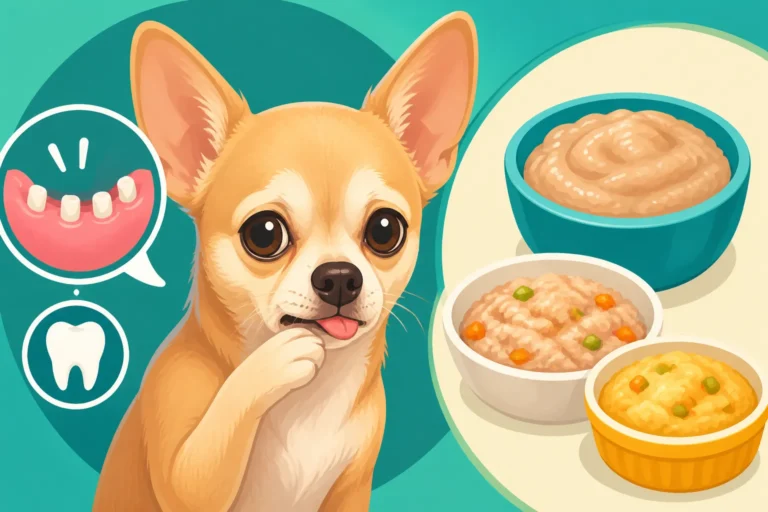
Sometimes, despite your best efforts to find the perfect kibble, your Chihuahua might still struggle, especially if they are older or have significant dental problems. In these cases, wet food or softened kibble can be a game-changer. Wet food is, by its nature, much easier to chew and swallow. It also adds a significant amount of moisture to their diet, which can be beneficial for hydration, especially for Chihuahuas who don't drink a lot of water. It's often highly palatable, which can tempt a picky eater or a senior dog whose appetite might be waning.
However, wet food isn't without its considerations. It typically doesn't offer any dental benefits and can, in fact, contribute to quicker plaque buildup if not followed by diligent dental hygiene. So, if you opt for wet food, Brushing a Chihuahua's Teeth Every Single Day becomes even more critical. Another excellent option is simply softening their regular kibble with warm water or a low-sodium broth. Just pour enough liquid to cover the kibble and let it sit for 5-10 minutes until it's soft. This makes it much easier to chew while still providing the familiar taste and nutrients of their regular food. This can be particularly helpful for Feeding an Old Chihuahua That Has Lost Molars or pups recovering from dental procedures. Always make sure the softened food isn't left out for too long to prevent bacterial growth, especially if you live in a warm climate.
The Importance of Fresh Water
We often focus so much on what goes into the food bowl that we sometimes forget the equally vital component: the water bowl. For a Chihuahua, with their small body mass and sometimes high metabolism, staying adequately hydrated is incredibly important. This is especially true if they are on a primarily dry kibble diet. Dehydration can quickly lead to serious health issues in such tiny dogs, impacting everything from kidney function to overall energy levels.
Always ensure your Chihuahua has constant access to fresh, clean water. Change their water multiple times a day, and wash their water bowl daily to prevent bacterial buildup. Some Chihuahuas can be particular about their water, so you might try different types of bowls – ceramic, stainless steel, or even a pet fountain – to see what they prefer. A pet fountain can encourage more drinking by providing circulating, filtered water that many dogs find more appealing. Consider the height of their bowl as well. A bowl that is too low can be uncomfortable, especially for older Chihuahuas or those with neck or back issues, while a bowl that is too high might be difficult for them to reach. Just like with food, observe your Chihuahua's drinking habits. If they seem to be drinking excessively or too little, it's always worth a chat with your vet. Ensuring proper Chihuahua Water Intake at Low Body Weight is a fundamental aspect of their daily care that should never be overlooked.
Disclaimer
This article is for general informational purposes only and does not constitute professional advice. Laws, prices and regulations vary by location and change over time. Consult a qualified professional for guidance on your specific situation.